Category: Hiking

A long, vigorous walk, usually on trails (footpaths), in the countryside.

  • Old, Reliable Gear – Bal Taschit

    Old, Reliable Gear – Bal Taschit

    One of my biggest gripes about backpacking is the overstated focus on gear. When I completed my first thru-hike, I did it with “crap gear,” some of it replaced during the trip with more “crap gear”, namely whatever “backpacking-ish” tent was on sale at K-Mart. I bought my first pair of boots for the hike from Payless, and I finished my hike with another pair of boots from Payless, which interestingly, survived another decade after my hike.

    I didn’t have any of the name brand of anything. When I researched doing the Appalachian Trail, I checked out books from the library and had the assortment of maps from whatever trail association I could find.

    By the time I topped Katahdin, all of the gear I had pretty much went in the trash. If I remember any particular piece of gear, it’s because it flies in the face of today’s conventional wisdom on the long trails.

    I had an epiphany reading the latest issue of Backpacker. I noticed the new skis in the November-December issue, and looked over at my aging Rossignol T3s, which I’ve used at resorts and in the backcountry for almost a decade.
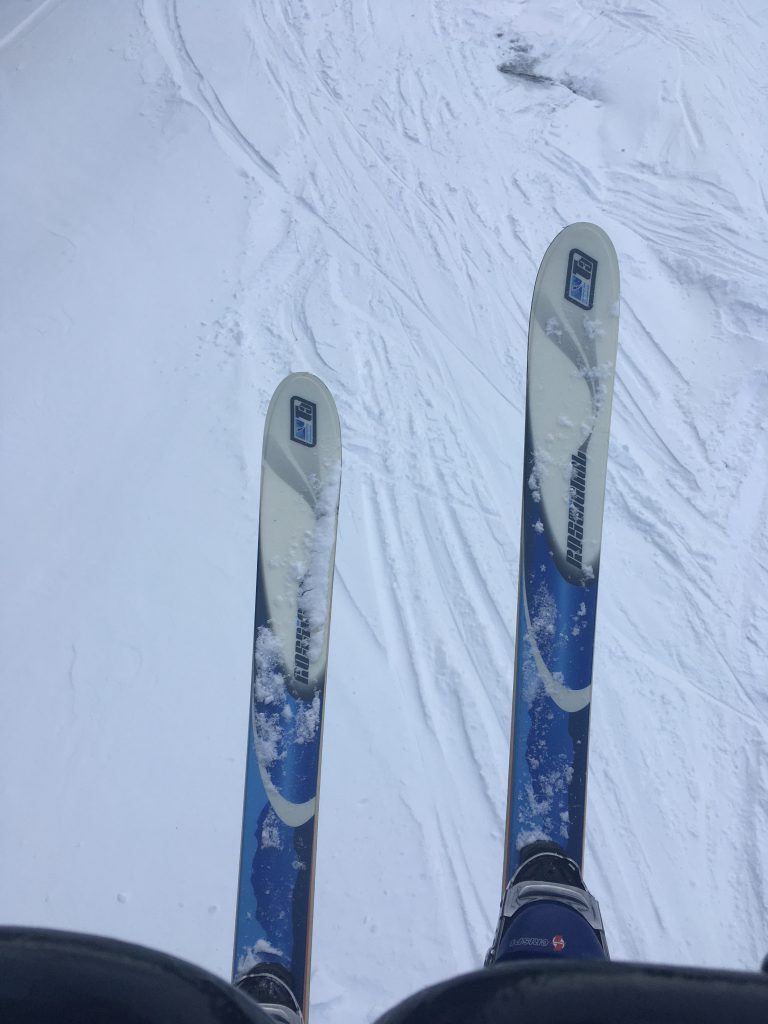
    In the shed I have a pair of Fisher skis with a 3-pin tele binding, and I’ve had those for over two decades.  I use those for romping around my Maine land in winter, if I don’t just use my late 1990s MSR snowshoes!

    The only pressure I feel to replace these workhorses comes from within when I see the shiny new as advertised.

    When I started “The Kosher Backpacker,” my goal was to perhaps do gear reviews, but really, there is only one thing I really want to focus on: the intersection of Torah and wilderness.

    There are other sites that do gear reviews. You can watch the “gear shakedown” videos of aspiring thru-hikers who most of the time will quit a few weeks into their trip. I wish they’d realize just how uninspired their trips seem when they drone on about the latest ultra-light tarp or tent.

    Does it work? Good. Shut up about it.

    It was brought home for me again this weekend. After a modest dump of snow last week, this weekend was almost 70 degrees in Maine. My daughter and I figured we’d pitch a tent on our acreage and enjoy some outdoors time.

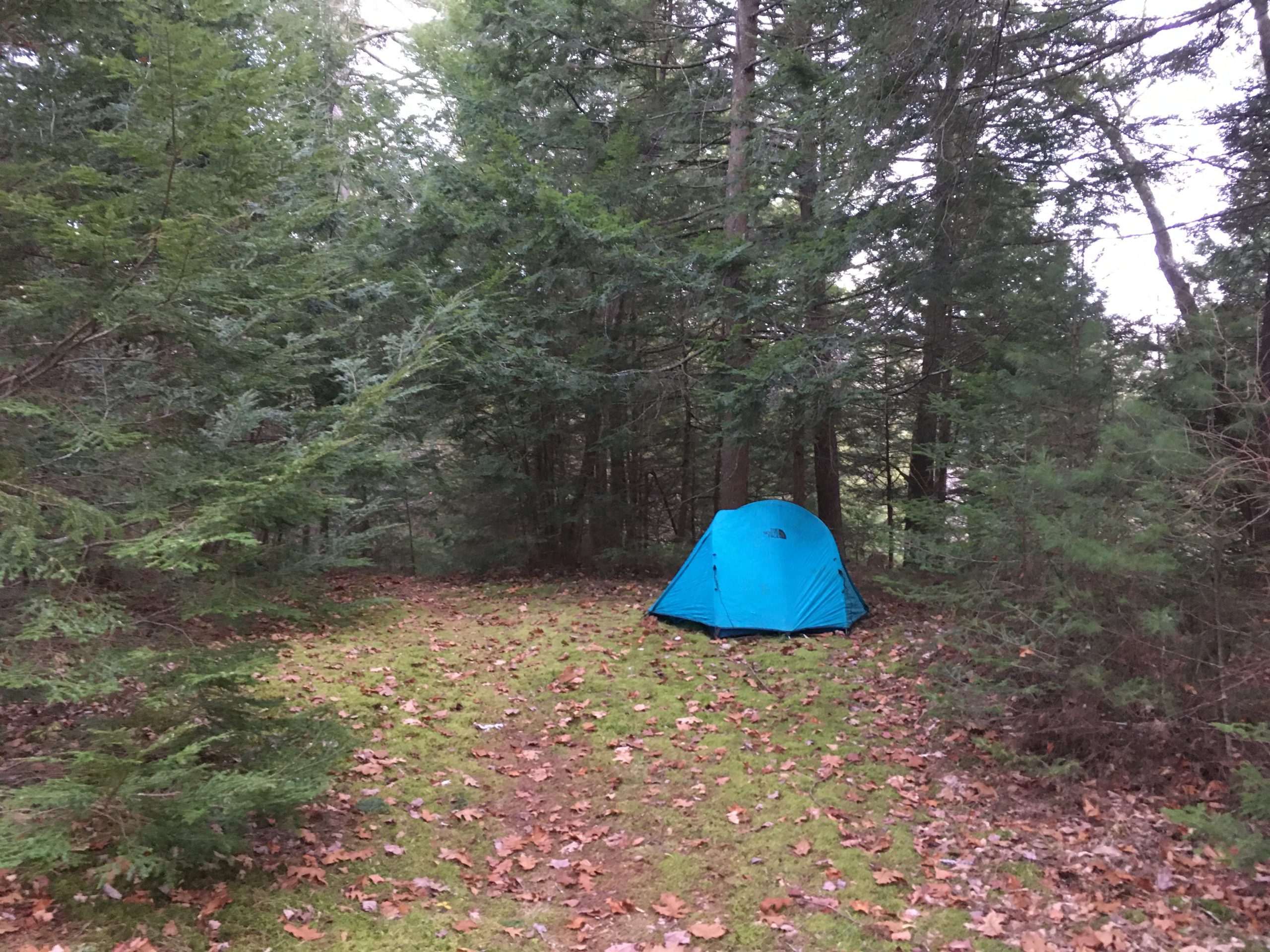
    On a lark, I grabbed my old The North Face Coriolis tent out of the shed. It smelled kind of bad, but I bought it in 1997 or 1998, like so much of my gear, at the Anchorage, Alaska REI. On its first outing, we stayed by an alpine tarn in Hatcher Pass. In the years to come, that tent went from the wilds of Alaska, several trips to the Adirondacks, section hikes of the Appalachian Trail in Pennsylvania and Virginia, all over the Sierras, and now, for the first time, in Maine.

    It needs some work. After 20 years, some of the netting is torn. There’s a hole in the floor I’ll need to patch. The seams on the rainfly definitely need resealed.
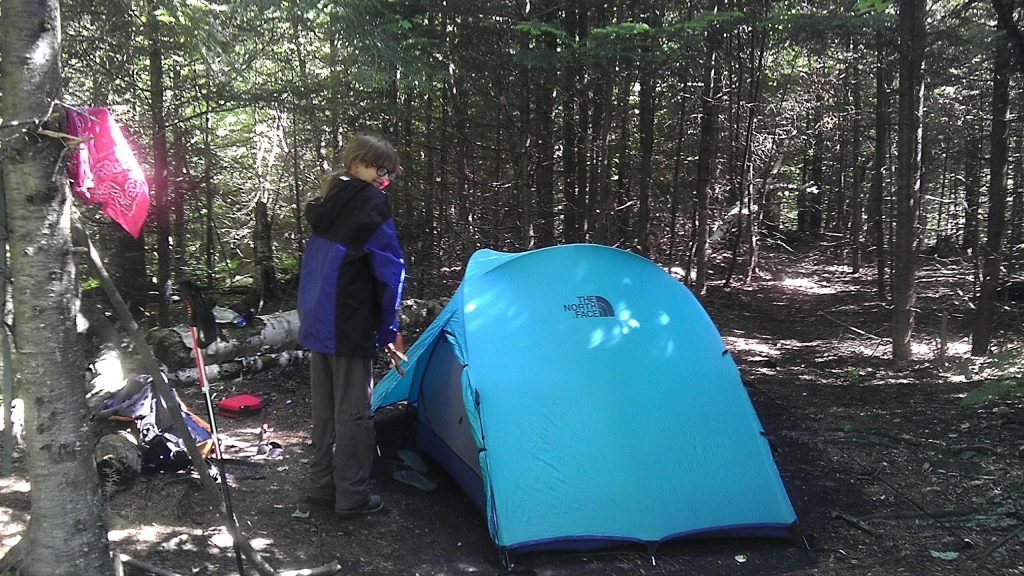
    Amelia and I in the Adirondacks High Peaks

    But the aluminum poles, even with a slight memory, still are properly shock-corded. The stitching still holds up.

    I recall a longer section hike, another traveller looked at me pitching this tent incredulously and said, “don’t you want to buy something lighter?”

    #1) After 20 years in Airborne or light infantry, my body will not feel the difference between a 2lb tent and a 5lb tent.  It will feel it if my tent topples in the rain or one of my kids has to sleep cramped right on top of me, which has happened in some of the smaller non-freestanding rigs I’ve field tested.
    #2) I sleep dry in this tent, same as I did in gale force winds and a downpour the first time I used it in Alaska.  That’s 20+ years of money well-spent.

    As Jews, we have an interesting body of law deriving from Deuteronomy 20:19-20. The text tells us not to destroy trees while we’re laying siege to a city.

    As our sages looked at this, it became the basis for injunctions against waste and unnecessary damage. While I’m more likely to apply these principles to the Leave No Trace ethic, it also goes for gear. “Bal taschit,” in a way, can be applied to gear. If your Gore-Tex jacket is a decade old and isn’t fashionable, one could argue that it would be wasteful to sideline it for something fancier. Maybe you give away or recycle your old gear, and that’s fine.

    There are other considerations. With the explosion of the outdoor gear market, manufacturers are required to update models on a yearly basis, like automobiles, in order to justify you, the consumer buying a new one. We seldom think of the carbon footprint in a yearly gear purchasing cycle. The generation and shipping of those textiles, the manufacture – all parts of the supply chain, even as many companies strive for carbon neutrality, will never approach the carbon neutrality of extending your own purchasing cycle out a decade.
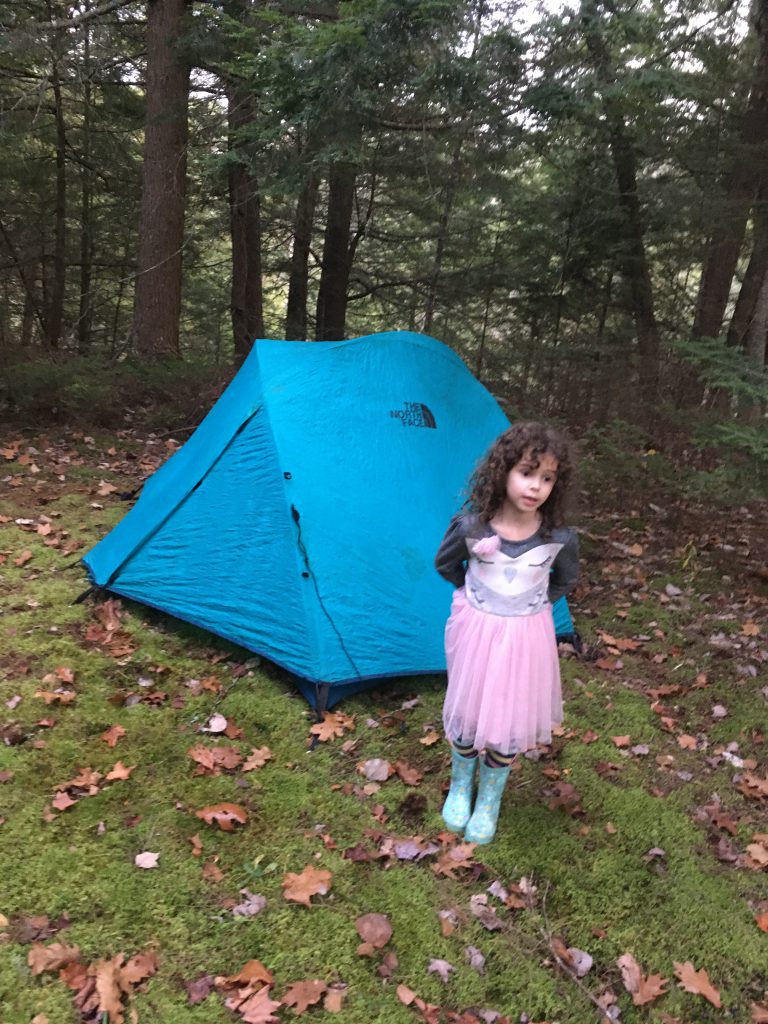
    Two daughters have lived in this tent in the wilds, as have four dogs and this author.

    Gear is important. Knee deep in my career, with one kid in college and two on the way, another thru-hike may or may not be in the cards for me any time soon. I live vicariously through trail documentaries. Guys like Brad McCartney, who has extensively documented his Triple Crown and amazing bike tours, doesn’t ignore gear. He posts his reviews and gear lists on his website, but they’re never a focus of some trail video.

    For me, a Jew in the wilderness, it’s about hitbodedut. It’s about the view at the top of the mountain or the bottom of the valley, and feeling that connection to HaShem.
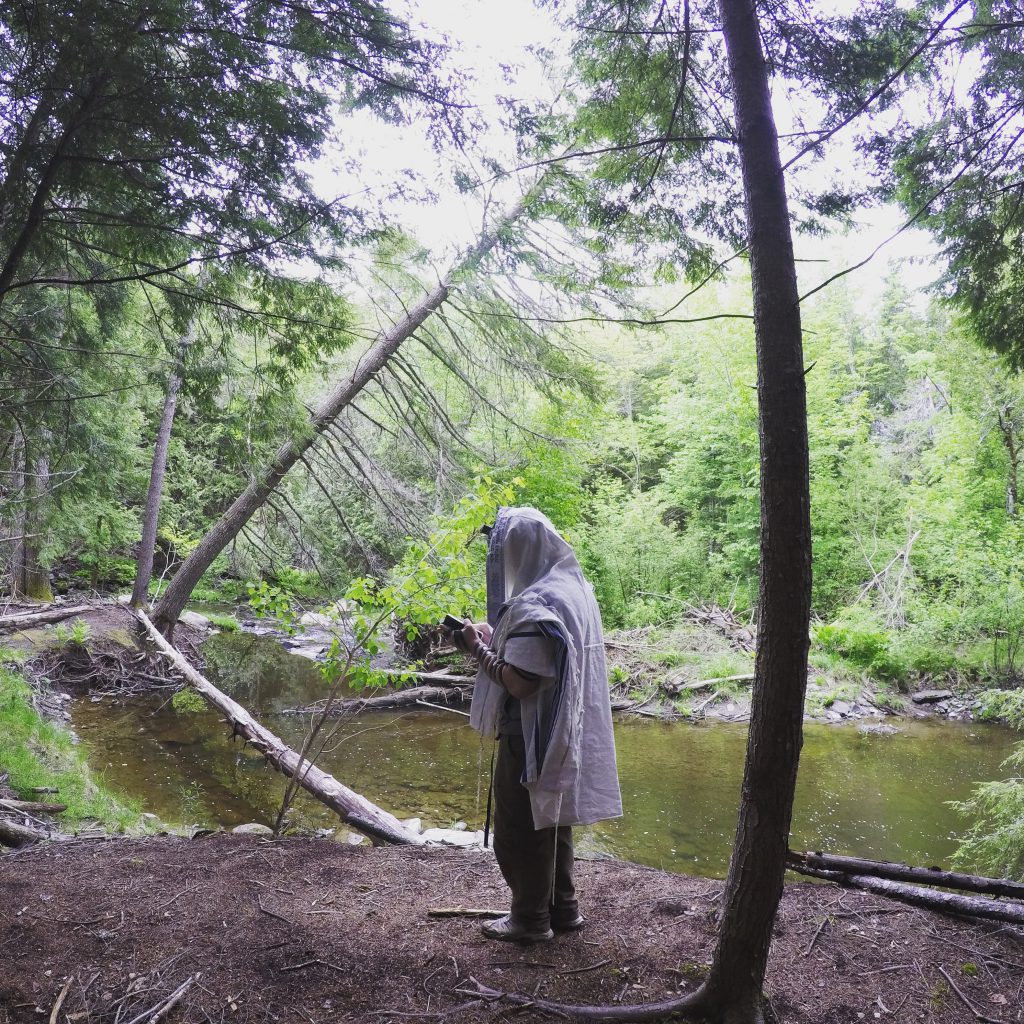
    Davening by Cove Brook in Winterport, Maine
    DCIM\100GOPRO\GOPR1264.

    The gear must be reliable and enhance your safety, of course, but it should be an afterthought.
  • Destination: Katahdin Woods & Waters Monument

    Destination: Katahdin Woods & Waters Monument

    Over the course of August 2020, I visited Katahdin Woods and Waters National Monument twice. This marvelous and remote stretch of land is a solitude-lover’s paradise. Winding streams, green-tunnel woodland paths, navigable rivers, backcountry ponds, and modest mountains all await the explorer.

    Katahdin Woods and Waters is also staggeringly remote. You can tackle the Park Loop Road with a front-wheel drive vehicle, but I wouldn’t recommend it. The road is dirt and gravel, and some trailheads, such as the one I will be writing about at Wassataquoik Stream, may not be passable in anything but a high-clearance four wheel-drive vehicle. Babyheads and blowdowns. My Jeep Wrangler handles things fairly well, but when I came up here in a Toyota RAV4, I was worried I didn’t have the clearance for some spots.

    Obey the 15MPH speed limit and you’ll be fine.

    Katahdin Loop Road

    The first time you come to the National Monument, it is my recommendation you take a trip around the 17-mile Katahdin Loop Road. Access from Maine Route 11 in Stacyville is via Swift Brook Road.

    There are numerous scenic views, ample short hiking opportunities. The closer you drive to dawn and dusk, the higher the likelihood that you see moose, foxes, porcupines, and the occasional bear.

    A view of Katahdin from a Loop Road overlook.
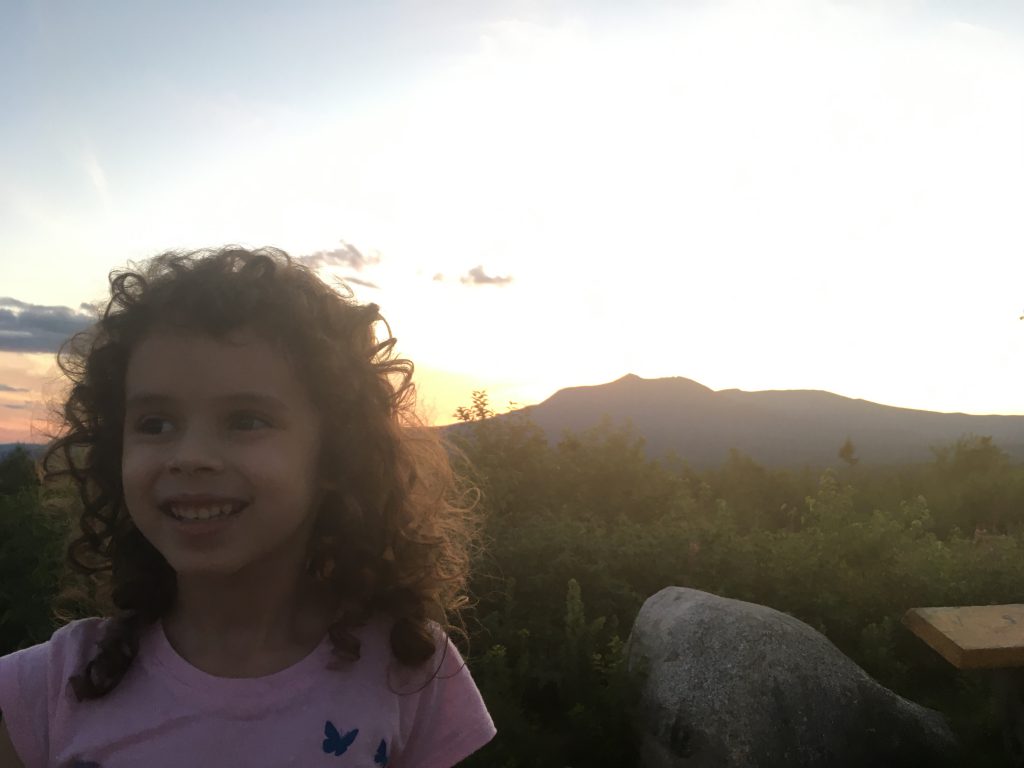
    The author’s daughter, Nezzie, enjoys an overlook of Mt. Katahdin and Millinocket Lake from the Park Loop Road.

    As it relates to your car’s suspension, it’s not an altogether pleasant drive. You must watch out for the occasional logging truck, but as far as isolation goes, it’s much less of a hassle than adjacent Baxter State Park.

    My Latest Hike

    My daughter, Nezzie, and I attempted to hike a portion of the International Appalachian Trail in the National Monument towards the beginning of August. We practiced for this by camping out on a remote portion of our own acreage in Winterport, Maine. She enjoyed fording Wassataquoik Stream.

    After the ford, the IAT follows the bank of the stream for a little while, before it pivots across some old beaver dams. It then heads up towards Deasey Mountain. Our intention was to summit Deasey and then Lunksoos Mountain, and then stay the night at Lunksoos Shelter.

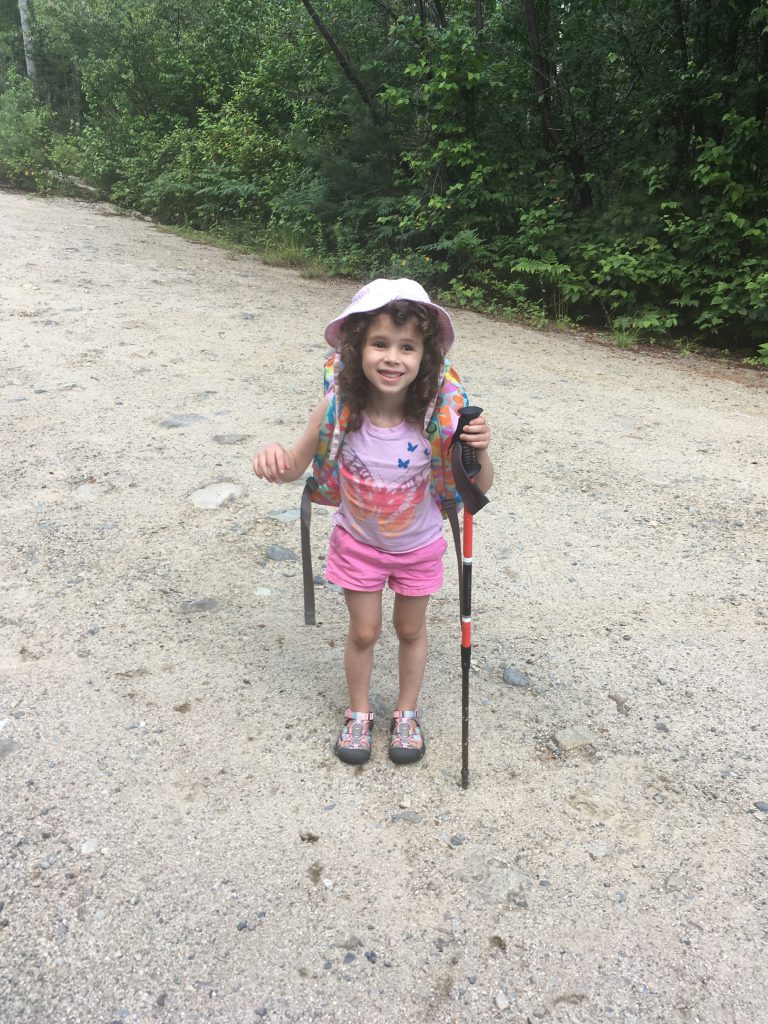
    The author's daughter is ready for a backpacking trip, or so she thought.
    Nezzie is all geared up and ready to hike.

    Nezzie, unfortunately, was apprehensive about spending a night in such a remote location. I wasn’t going to force her. My older daughter, Amelia, went on her first 10-mile backpacking trip at the same age along the Appalachian Trail in Pennsylvania, but in fairness, starting from Route 501 is a far less isolating experience. We returned and simply enjoyed some shorter hikes and the road until night began to fall.

    I, however, was determined to return and at least overnight in the National Monument backcountry. I again followed the International Appalachian Trail towards Deasey Mountain, only this time turning on to the Ed Werler Trail to head towards the Big Sebois campsite.

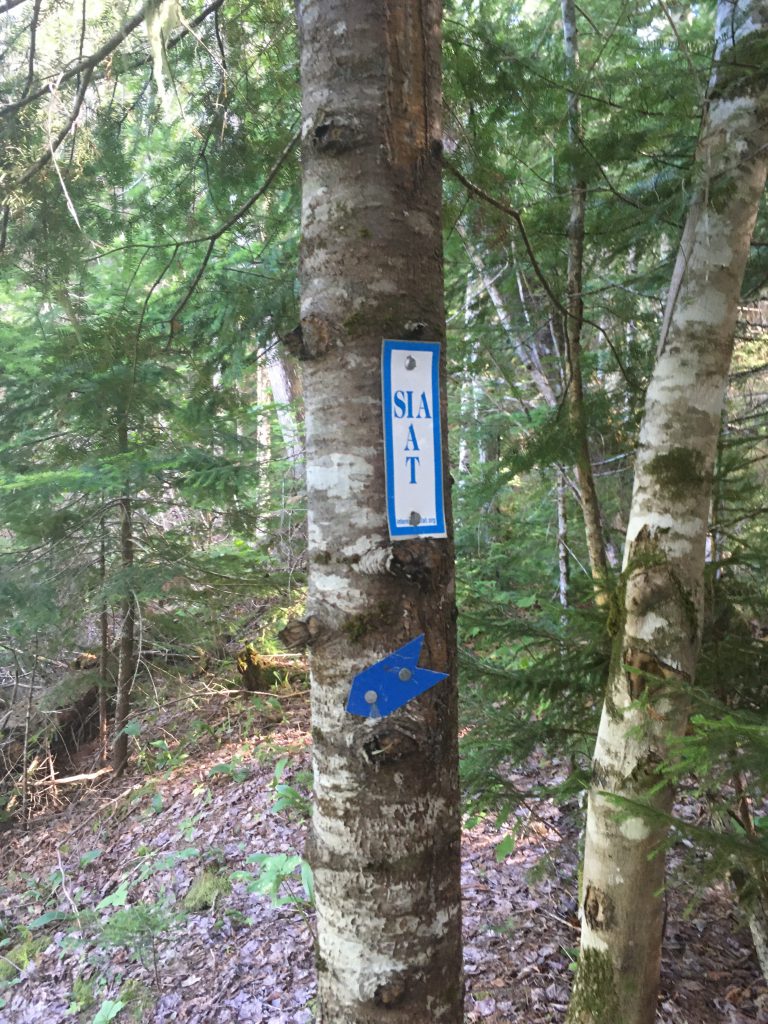
    An International Appalachian Trail Marking
    International Appalachian Trail Marker. The SIA stands for “Sentier International des Appalaches.” Since the trail travels through Quebec, even acronyms are mandated to be in French.

    The Ed Werler Trail

    The trail is named after the late, great Ed Werler, who for three years, from 1947 to 1950, was the fire watchman on Deasey Mountain. Ed passed away at the age of 102 in 2016. He and his wife, Mary Jane, lived in a small cabin, which you can still see in its deteriorated state along the trail to his old lookout booth on Deasey’s summit.

    Ed Werler wrote a great book about his time on Deasey and life as a Baxter State Park Ranger, titled “The Call of Katahdin”.

    The trail named in his honor, however, is a little less groovy. At just under a mile, it calls for better-than-average route-finding skills, and a patience for blowdowns. It’s a little bit of a relief when it intersects with the old East Branch Road. Still, if you attach the romance of a woodsman from another age coming up from the river to his mountaintop post, you can look past the challenge and enjoy the nostalgia for the age of wool, flannel, and cotton duck.

    From there, I proceeded generally south until the old road intersected with the trail to Big Sebois on the East Branch Penobscot.

    Serenity Now!

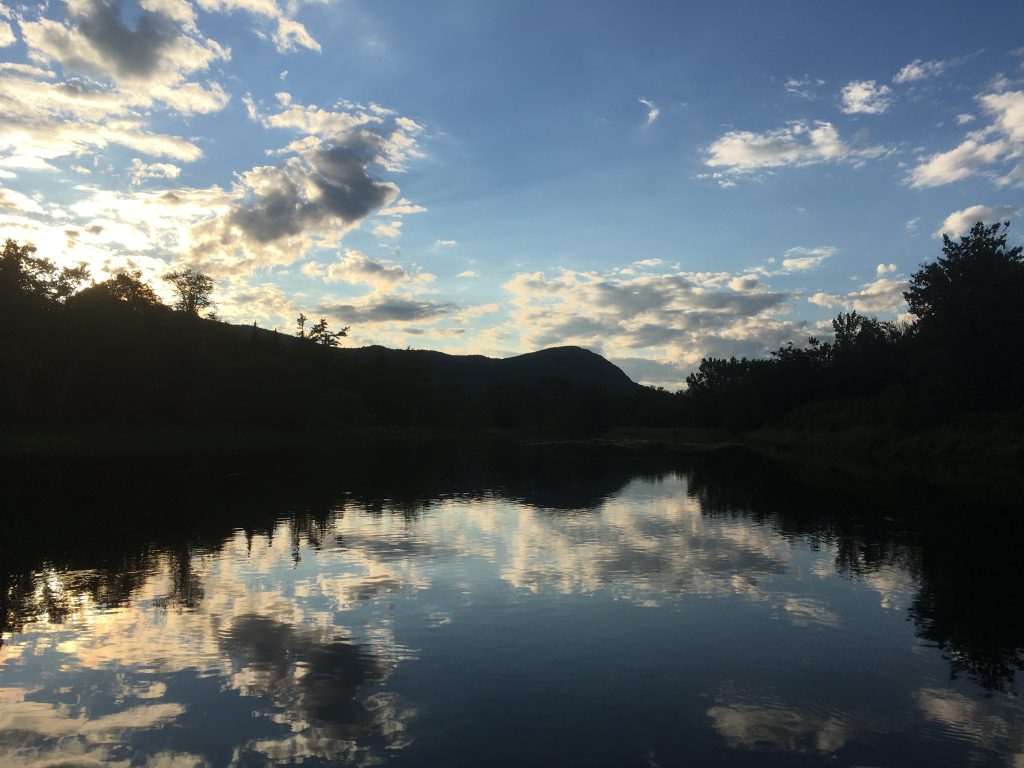
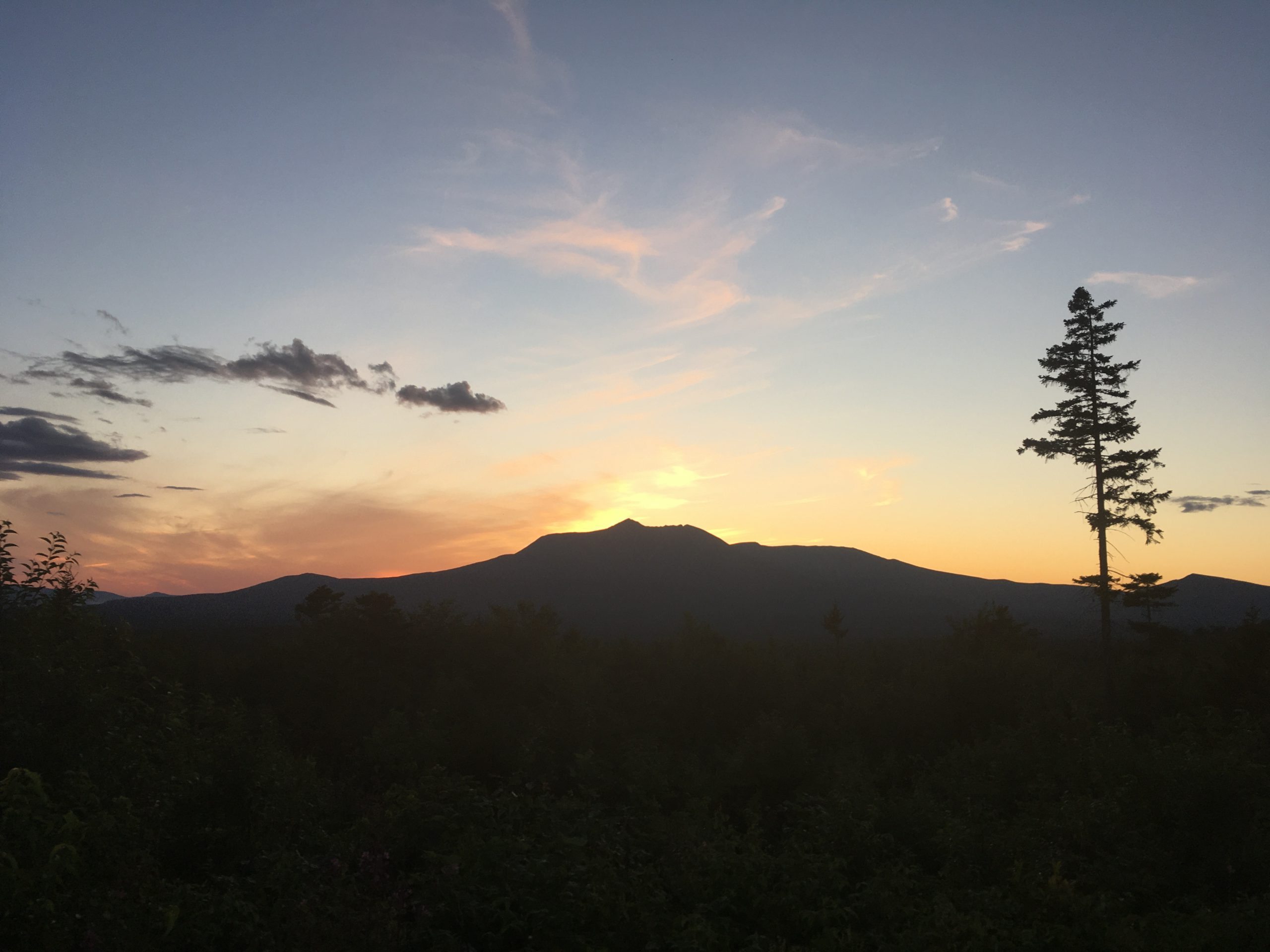
    The view from my campsite along the East Branch Penobscot as evening fell, with the silhouette of Lunksoos Mountain in background.

    The Big Sebois campsite is a lovely, well-maintained parcel overlooking a bend in the East Branch Penobscot River. It has a couple of picnic tables and some fire rings (permit required). It has level spaces for tenting, and ample trees for stringing up a hammock, as I did.

    I’ve stayed at this campsite before, though I paddled in during an extremely buggy July. Whereas on this trip I could comfortably recline in my hammock, my dog and I hastily retreated to the confines of our tent to escape the black flies. Choose your travel timing around black fly season wisely!

    Overnight, I heard a couple of crashes as neighboring beavers did their work. The placid waters occasionally were disturbed by the splash of a fish. What could have only been a moose noisily rambled through the water in the wee hours.

    The next day I walked out the way I came, reluctantly leaving this rare slice of tranquility behind.

    The Future of Katahdin Woods and Waters National Monument

    Many of us, since the current administration took office, have been worried about any executive order that would undo the National Monument designation. We’ve seen what happened to Bears Ears and other jewels.

    So far, it seems that the explicit rights of the Executive to designate a National Monument does not come with the implicit right to remove a designation.

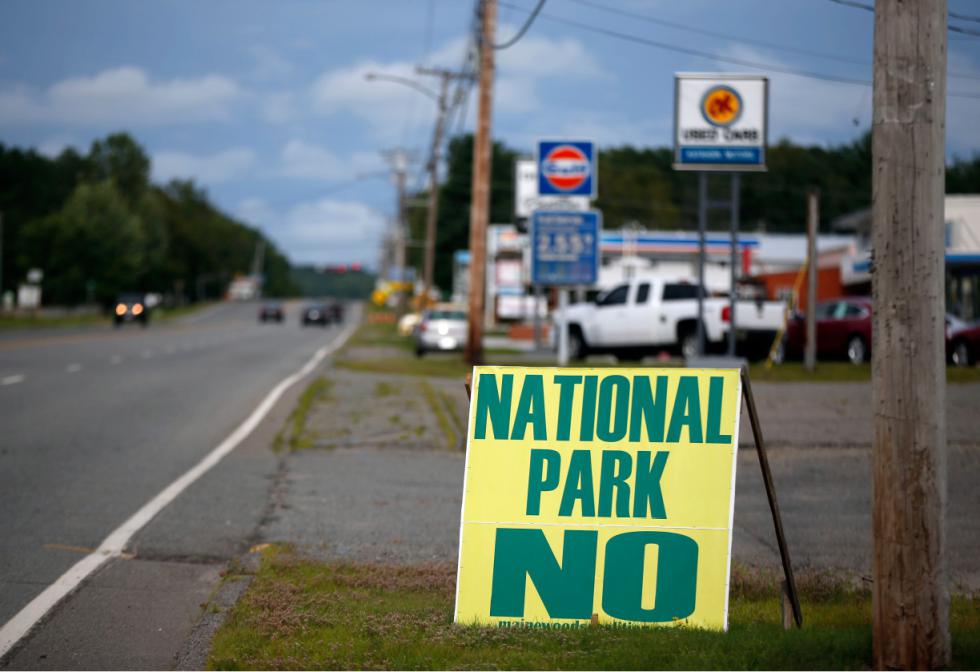
    Driving to the Monument, you do see a significant amount of opposition to it. “National Park NO!” signs line the roads, including those posted by private road owners. Maine’s previous governor went so far as to disallow road signs advertising the National Monument.

    Sign on road to Millinocket. (AP Photo/Robert F. Bukaty)

    Opposition has seemingly languished in recent years. Senator Angus King has been working towards increased funding year-to-year. I’ve often wondered, given how pivotal tourism is for coastal Maine, why rural locations are so opposed to an increase in visitation, however slight. If it weren’t for the generosity of Roxanne Quimby and her nonprofit founded for the purpose, the Katahdin Loop Road would likely not be graded, and what maintenance has taken place would not.

    It’s likely never going to be a federal funding priority, so I encourage visitors to donate to Friends of Katahdin Woods & Waters.

    There are some points of light, if you’ll intend the pun. The National Monument has been recognized as the first International Dark Sky Sanctuary on the east coast, and only the 12th time this designation has been given globally.

    Trip Video

    Further Reading

    Friends of Katahdin Woods and Waters

    National Park Service Website: Katahdin Woods and Waters National Monument

    If you want to paddle, here’s an old trip report from the East Branch of the Penobscot River that might inspire you.

  • Grafton Loop in Maine

    Grafton Loop in Maine

    COVID-19 has invariably trounced our best-laid outdoor plans for this summer, so I headed to Grafton Loop.

    For me, it drove a stake through the heart of plans to lead a Jewish themed thru-hike of the Northville-Placid Trail in the Adirondacks. It further dampened the goal of a traverse—because of transportation complications—of the 100 Mile Wilderness in Maine.

    I needed a loop hike, so that I could park my car and end where I began. The Pemi Loop in New Hampshire was out, in part because we have to abide by Maine quarantine regulations.

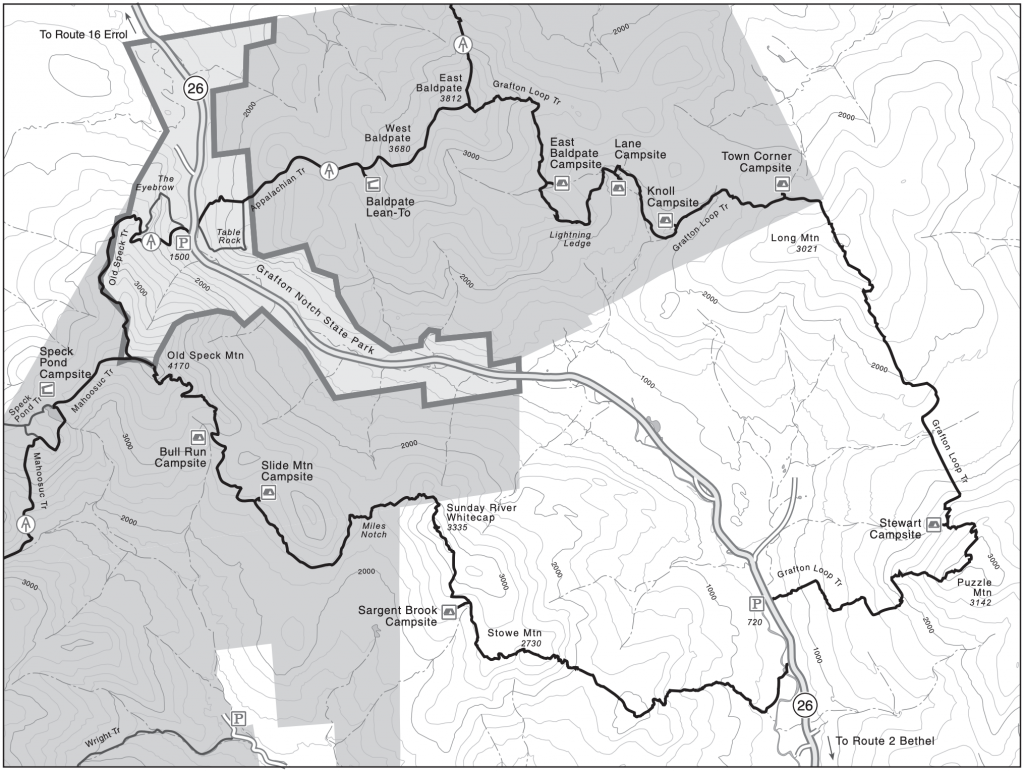
    The answer turned out to be a wonderful weekend choice: The Grafton Loop Trail in Maine is a 38.6± mile doozy of a trail in terms of elevation gain.

    Gear and Eating Details

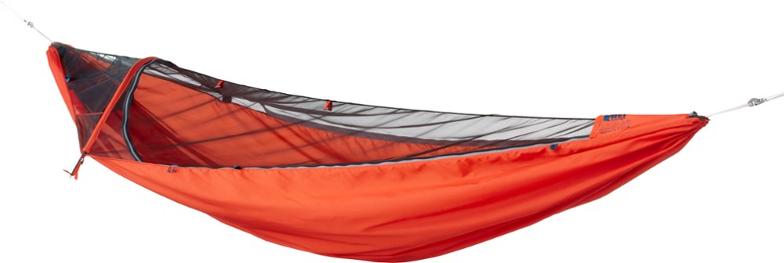
    On this trip, I opted to use the REI Flash Air hammock I had received. Unfortunately, REI is no longer selling this system. It has a spreader bar and takes a sleeping pad. As an old infantry veteran, there are times I like to take to ground or use a shelter. Maybe it’s not an intended feature, but I’ve found I can use the hammock as a bug bivvy in a pinch.

    Photo from REI

    As far as food, I had some kosher instant Spanish rice for dinners, tuna packets for lunch, and oatmeal for breakfast. I used my GSI drip filter for my morning coffee.

    I took an old, lightweight 40-degree synthetic sleeping bag. This purchase took place in Alaska 24 years ago and it has “just worked”. I can’t remember what brand it is. I’m a warm sleeper, so I get a lot of range out of it when my Klymit bag is too heavy.

    Unfortunately, the black flies at *every* campsite were insane. The zipper broke on my hammock on the first night. I had to retreat under my sleeping bag to avoid the nasties. Davening and cooking/eating were insanely difficult without being eaten alive.

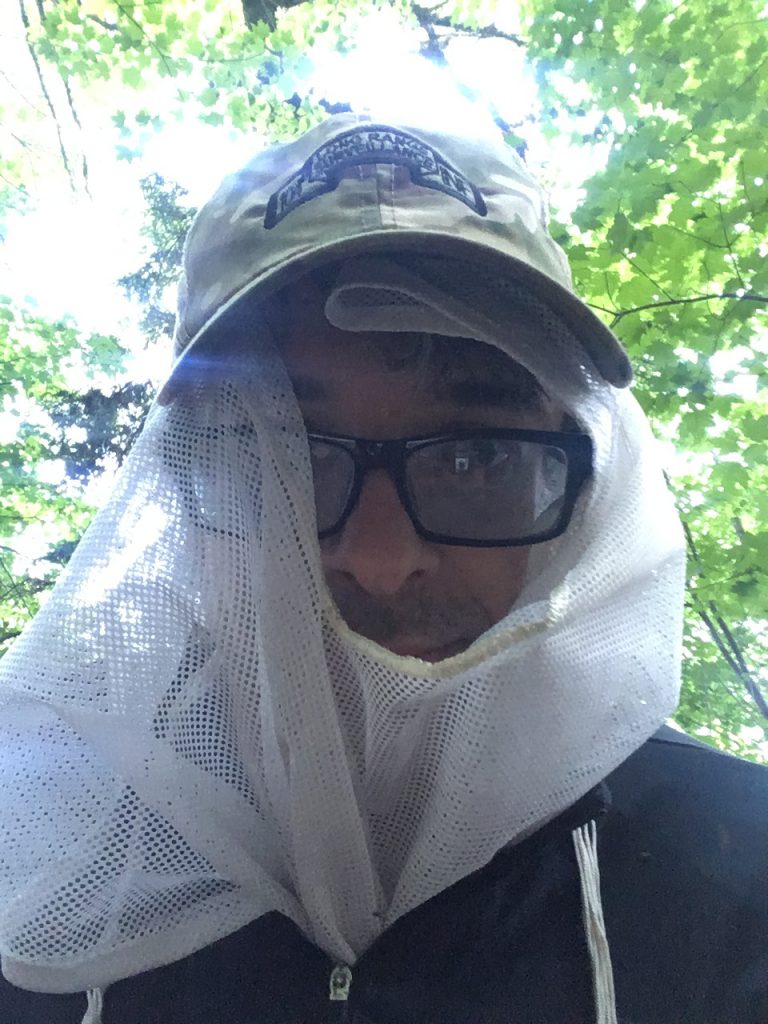
    Perhaps my mistake was trying to use a natural insect repellant. Flick the Tick, made in Maine, comes in either a bottled or stick form. I used the stick, and I never have regretted an outdoor decision more. While it works really well around our property, it did nothing to keep the hordes of black flies from ruining my beautiful flesh. I finally had to fashion a makeshift head-net out of my mesh arba kanfot.

    My tallis katan saved me.

    Grafton Loop Trip Experience

    In spite of the comedy of errors on my first night of hiking, it still ended up being a marvelous trip.

    The trail can be difficult to follow at times. If you go clockwise, you’ll find sometimes that the blue blazes along the trail are not easy to spot, especially at dawn or dusk.

    The elevation gains felt a little brutal. I left the military after 26 years just a few months ago. I did not expect to feel so out-of-shape. Maybe it was the temperature in the upper 80s, lower 90s. Even with copious amounts of water and timely snacks, I felt more fatigued than I usually do hiking.

    But the views at the top made it worth it, even with savage thunderstorms.

    Will I go back? I don’t know. It was a beautiful hike. Still, center of the state hiking is closer and yields many of the same sorts of views. It is a wonderful weekend loop hike. Right now, with COVID risks, you can’t argue with a decent loop hike.

    My next trip will probably be a Debsconeag paddle with my 5-year-old. She’s itching to get out there this summer.

    Getting to the Grafton Loop

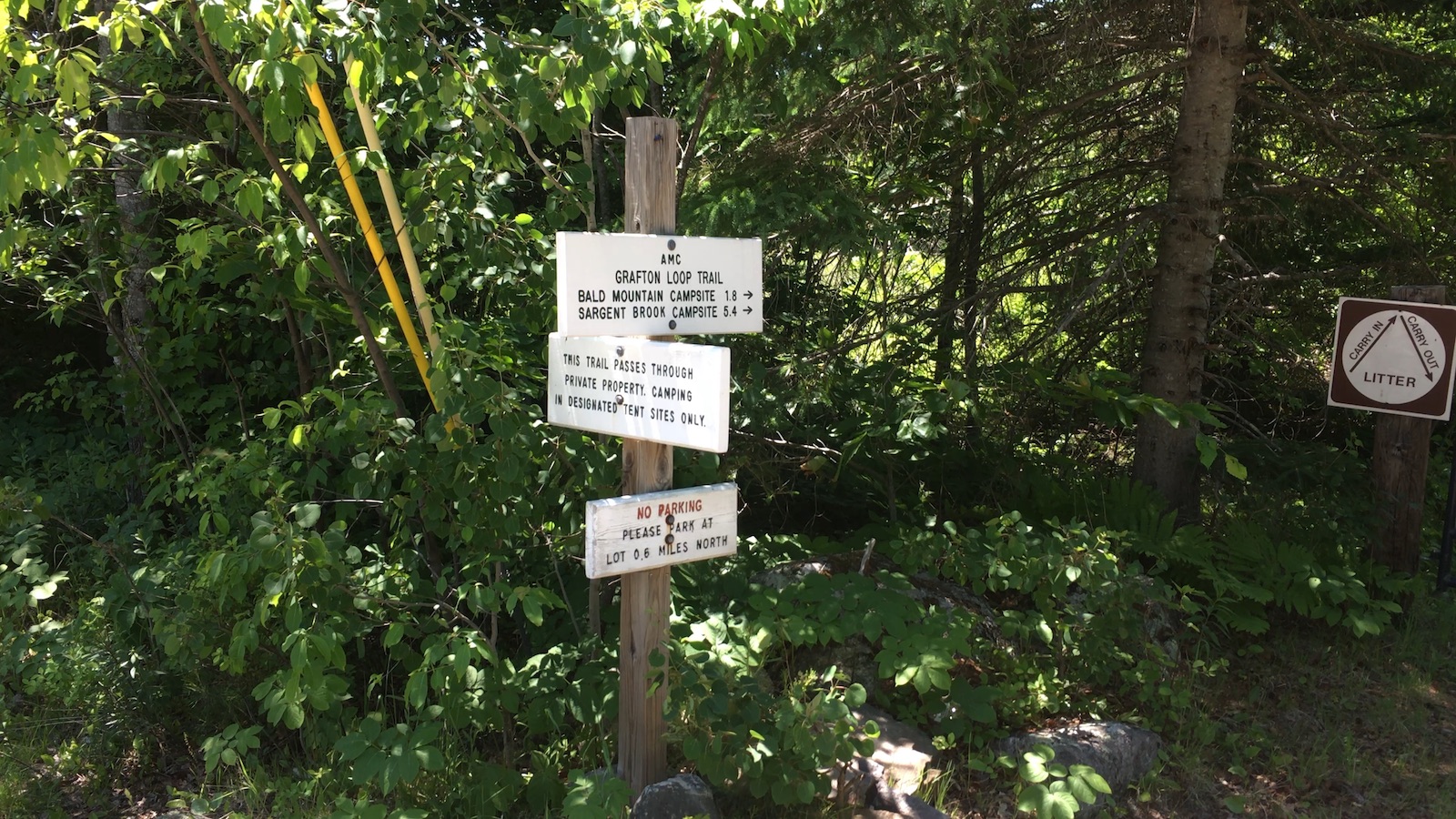
    Courtesy Appalachian Mountain Club

    From where I live in Maine, it’s a little over two hours to the southern trailhead (recommended for the loop). From Bangor, the most expedient route will take you from I-95 to US-2 via some Maine state roads, and you follow US 2 to the intersection with ME-26. Driving north around 4.7 miles, you’ll find the southern trailhead on the right side of the road.

    From points south, you can easily just drive ME-26 off of I-95 in the lower portion of Maine to hit the trailheads.

    Mind Private Land Ownership

    Much of the Grafton Loop crosses privately-owned land. When I hiked, I saw notices about timber harvesting.

    It’s very important to camp only at designated campsites and shelters because of this cooperation between public and private lands. Abusing the goodwill of landowners is a great way to lose access to things.

    Even on the super hot weekend in June I hiked the trail (90+ degree days), I found plentiful water sources, but stock up before the slogs up Sunday River, Old Speck, or Baldpate.

  • Bear Bags vs. Bear Canisters

    Bear Bags vs. Bear Canisters

    After hiking portions of the PCT in Yosemite, the John Muir Trail, the eastern High Peaks in the Adirondacks, and Denali National Park, the notion of carrying a bear canister on long distance hikes doesn’t bother me.

    In trail forums on websites and social media, the debate usually centers on weight. There’s an orthodoxy of armchair quarterback ultra-light hikers that dreads the weight, when thousands of hikers somehow live through schlepping these things every year.

    My concern is I believe to be the correct one from a Jewish law perspective. Tsa’ar ba’alei hayim, to prevent the suffering of animals, demands that Jewish wilderness enthusiasts primarily consider the well-being of the creatures who inhabit the places we’re visiting before we consider anything else.

    If you are thru-hiking the Appalachian Trail, there are few trails anywhere that are as well-provisioned for our ursine friends. As I’m considering a shift to Vargo’s ExoTI frame backpacks for my looming long-distance hikes, the concept of a Bear Keg taking up pack space isn’t as onerous.

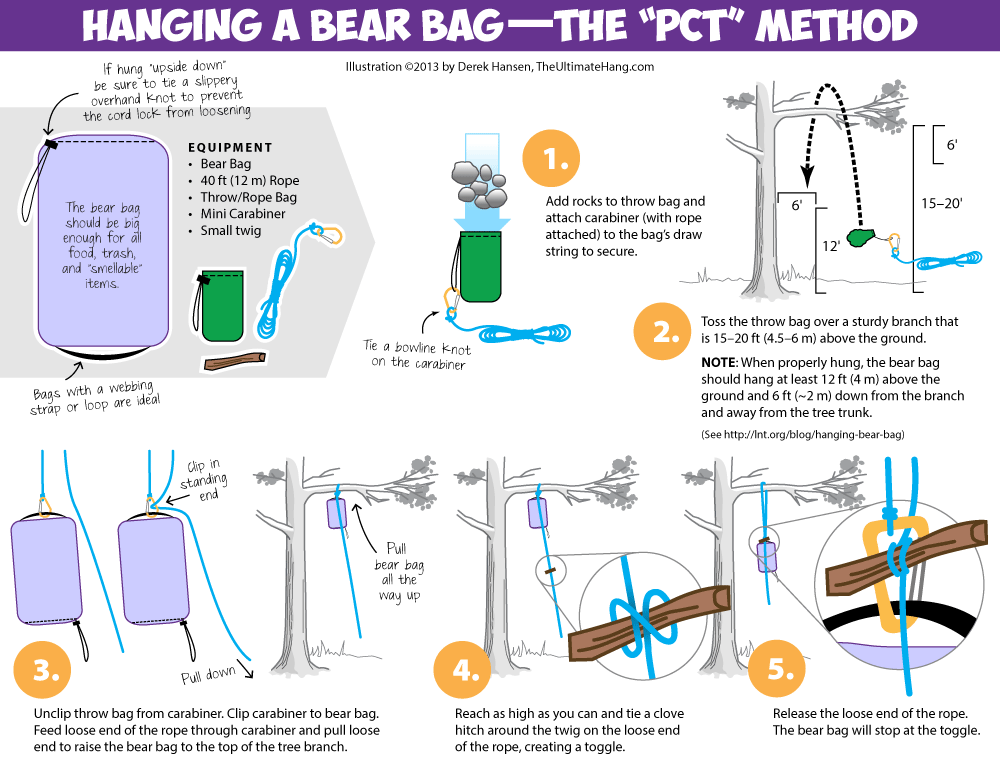
    Hanging a bear bag

    – Derek Hansen, TheUltimateHang.com

    When I have used a bear bag, I use the tried and true “Pacific Crest Trail” method. I’ve never had my bag compromised this way, though I have heard of people who did, either because they kept the bag too close to the limb, not far enough out on a limb, or a limb too close to the ground, etc.

    One of the concerns expressed to me by frum hikers is that hanging a bear bag and having access to food on Shabbos in the wilderness would present a problem.

    The melacha of koshair on Shabbos is specifically tying together two items through a firm knot. For that knot to be forbidden on Shabbos, it must be meant to be permanent. A clove hitch around a toggle is arguably not a permanent knot.

    And that’s the beauty of the PCT bear hang in particular for observant Jewish wilderness travelers; there’s no need to secure the free running end. This leaves you to ponder how you deal with appropriate distances for wilderness food storage from camp and your limited techum Shabbos!

    Kidding, you should be okay within a kilometer.

    Why you maybe shouldn’t bag

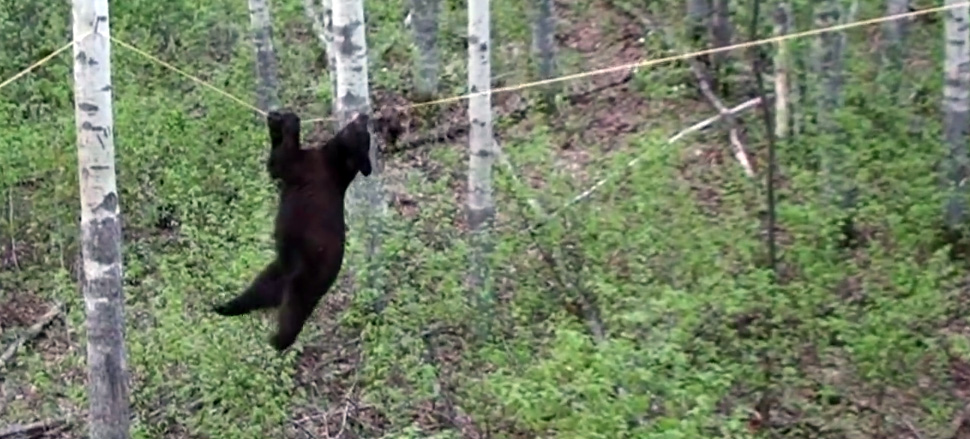
    Black bears are notoriously crafty. Your hanging picnic basket isn’t safe.

    Canisters are superior for bear safety

    “A fed bear is a dead bear.”

    This is what we must keep in mind when we make our decisions about wilderness bear country excursions. There are a variety of wilderness skills I’ve seen suffer from being in short supply. Map and compass skills are few and far between. Campsite selection is a recurring problem.

    But aside from violating the Leave No Trace ethic and taking up the time of search and rescue operators, poor bear hanging skills can literally cause the death of bears in their own habitat.

    This is unacceptable whatever your station in life. Our excursions are plenary, voluntary activities. You can stick to day hikes on safe trails if wilderness skills. A bear can only live in its place. It can’t go home to a house in the suburbs.

    So if you can’t practice a bear hang, or more importantly, you won’t practice a bear hang, please, please, please, invest in a bear-proof canister. The same goes, with less shame from myself and other wilderness ethicists, if you are hiking in places where bears are present but hanging opportunities are few and far between.

    On my first foray in Denali National Park in the 1990s, in addition to their backcountry quota system, they had the onerous requirement that you rent one of their bear canisters. As an East Coast kid, this was new and novel to me, but based off grizzly encounters I had in the field in Alaska as an Army paratrooper, I realized there was sound reason for these practices.

    Sure, it was heavy and ungainly, but it was, honestly, far less hassle than a bear bag. I’ve had bears bat them about like little soccer balls, but the food remained secure, and the bears presumably remain alive.

    And bonus – bear canisters are Shabbos-friendly.

    Do your research

    I ultimately settled on Counter Assault’s Bear Keg product, after losing a black rental unit in the Adirondack High Peaks. Bear Kegs run a little bit heavy, but their bright yellow with a reflective stripe around the center make them far easier to spot if a bruin commits to some mayhem.

    Famously, an Adirondack black bear purloined food from the Bear Vault product about ten years ago, and it’s my understanding that they are still not permitted in the backcountry there as a result.

    In any case, you’ll want to check the requirements of the managing agencies where you want to travel along with your own brand research.

  • A Parsha Insight, and COVID-19 Hiking

    A Parsha Insight, and COVID-19 Hiking

    Many a drash on the Torah this weekend will deal with the little alef in “Vayikra.” We’ll hear the Ba’al HaTurim’s take on it, which tackles Moshe Rabbeinu’s humility in “the Lord called to Moses” vs, “the Lord happened to talk to Moses.”

    I like Rabbi Lord Jonathan Sacks’ take on this a little better. Alef isn’t only the last letter in “vayikra,” but is the first letter of the alef-bet, and also the first letter of the 10 Commandments. “Anochi” – I am the Lord your God. Rabbi Sacks posits that the alef is written puny to emphasize that God’s presence isn’t always grand and obvious, but sometimes just the small moments.

    Obviously, since this is a website with a Torah-centric outdoor mission, we’re all about finding the Divine in small moments.

    What you shouldn’t do right now

    The Appalachian Trail Conservancy is urging hikers not to undertake thru hikes or section hikes. Similar constraints are recommended for the Continental Divide Trail and the Pacific Crest Trail.

    The reality is, none of these trails can be undertaken without risky travel to and fro the trail. You cannot avoid exposure and violations of social distancing in trail shelters. You cannot avoid exposure during resupply.

    The trails will still be there.

    You should leash your dog while hiking. While dogs cannot, so far as we know, be infected and spread the infection, they can be contact conduits, given how long the COVID-19 virus is known to live on surfaces.

    This is not the only problem with unleashed pooches. If your dog does not respond well to vocal commands, and is sniffing around another hiker, you may have to violate safe distance in order to retrieve your dog.

    Put a leash on your dog, or stay home.

    Consider avoiding crowded trails. If you see a parking lot full of cars, consider how well you might maintain social distancing on narrow footpaths. If you have to step off-trail to avoid contact, consider the ecological damage you might do, and how this violated the Leave No Trace ethic.

    If your hike involves a long drive, think about fuel purchases and how you’ll handle those.

    What you should do right now

    Go for a hike with all the caveats in mind. Since our synagogue has shut down, I’ve taken my daughter, Nezzie, for a hike every weekend since social distancing was recommended.

    My daughter, Nezzie, is content just tossing rocks in the stream on our property.

    This is a good time to try that obscure, unpopular trail.

    It’s a good time to try a paddling adventure.

    It’s a good time to find the Divine in those small, everyday experiences with your kids, with your spouse, or even by yourself.

  • 2020 Allergy Season:  What Backpackers Should Know

    2020 Allergy Season: What Backpackers Should Know

    Not to advance stereotypes about Jewish health neurosis, but bubbie wants you to take care of yourself out there, you know?

    According to AccuWeather we’re on track for a pretty severe allergy season.

    We talked to an immunologist friend and sought some advice that we can share about the Pollen Apocalypse and how you can still enjoy time outdoors.

    Drugs

    Now that I’m out of the military and mandatory drug testing, I like saying, “drugs.” But for me, and especially my youngest daughter, I couldn’t survive without Claritin or other antihistamines during allergy season.

    Go Up!

    In Maine, we have a good amount of “above treeline” hiking, but we’re also close to it in New Hampshire. Pollen is heavy in the air, and above tree line, most of it will end up going down the slopes, leaving the exposed ridgelines relatively pollen free.

    Stay Inside, or Hike During/After Rain

    This has the biggest “boo, hiss” factor of all the advice. Even inside pollen season, there are still some days that are better than others. Pay attention to your local weather forecasts, air quality action days, and try to time your outing to when it’s most conducive to healthy respiration.

    The other option is to look for rainy days. This is a downer or a deal-breaker for many people, but rain will wet pollen down or wash it off of trees.

    Clean Yourself

    During allergy season last year, I started getting a jump start on rebuilding our woodpile for the coming winter. I ended up going to bed every night with a massive headache and clogged sinuses.

    I’m a “morning shower” guy, so I was going to bed with a lot of pollen in my hair (even with my yarmulke), and subsequently was rolling around in it. Now, during pollen season, I shower after working outside.

    The same applies to camping. It’s so easy to bring pollen with you into your tent, which as far as enclosed spaces go, can be like an echo chamber for allergens.

    Camping Choices

    During high-pollen times, camping downwind of forests or fields of wildflowers can be a great choice. But if you live in an area with dramatic windshifts, this isn’t always all that useful.

    Camping near a river, lake, or pond can be helpful, as they attract and hold pollen, but you must be careful not to run afoul of the wilderness ethic and responsible practices.

    Don’t Underestimate Allergies and their Ruinous Impact

    Aside from the feeling that it never stopped raining, the other factor that almost drove me off the Appalachian Trail during my first thru-hike were the high-pollen count days.

    I wasn’t subject to frequent sneezing, but my eyes felt like they were on fire, forcing me to abandon my carefully-tended contact lenses (which was a mistake story for another day) and wear my super-ugly glasses for months. I had non-stop headaches, and because I packed all wrong to begin with, and I was dirt-poor, there was no medicinal relief. In what would become the story of the majority of my adult life, I just soldiered through.

    Sometimes we take our health for granted, until we’re reduced to our rawest forms in the wilderness. It’s then you realize that the medicine cabinet and air filters don’t fit in your pack. It’s good to consider allergies in any of your seasonal hiking choices.

  • Event:  Northville-Placid Trail Thru Hike

    Event: Northville-Placid Trail Thru Hike

    June 17-25, 2020

    Kosher Backpacker’s Brian Kresge is leading a shomer mitzvot thru hike in the Adirondacks, with a zero day for Shabbos.

    Participants must be fit and capable as the hike is remote and trail conditions can be difficult.

    We will have a kosher parve (pescetarian or vegetarian) resupply available at a modest cost, or you can roll your own resupply. Daily prayer and daf yomi study (if you are undertaking it). Learn how to build an eruv with hiking poles and arrange a transient camp for Shabbos.

    About the Northville-Placid Trail

    138 miles through the state constitutionally protected Adirondack Park in New York. It was developed by the Adirondack Mountain Club in the 1920s, and is currently maintained by the NYS Department of Environmental Conservation.

    The trail crosses through several wilderness areas, including Shaker Mountain Wild Forest, Silver Lake Wilderness Area, Jessup River Wild Forest, and the High Peaks Wilderness Area.

    It’s not a hike with a terrific amount of elevation change, but because it is so lightly used, there can be blowdowns and obstacles along the way. It is also a very remote hike, one of the most remote in the northeast.

    Trip Itinerary

    TBD closer to trip, based on group size and resupply needs.

    Transportation

    You will need to provide your own transportation to the trailhead. We will have transportation available at the end of the trail to return you to your car at the Northville Trailhead.

    Resupply

    You can carry your own food for 9 days, schedule your own resupply, or work with us to resupply at the midway point with kosher vegetarian / pescetarian options.

    Event Link is here: https://www.thekosherbackpacker.com/event/northville-placid-trail-thru-hike/

  • A Daf Yomi Wilderness Experience

    A Daf Yomi Wilderness Experience

    In 2005, I was at the Jacob Javits Center to mark the end of my experience with daf yomi at the 11th Siyum HaShas.

    It was one hell of an undertaking. In many ways, my stubborn determination to see it through to the end was a guidepost in my own tumultuous life. It carried through my active duty overseas service, my first marriage, college, the birth of my first two children, three cross-continental moves, divorce, and grad school. A few months after finishing it, I met my wife and soulmate, Leah.

    Daf (page) of Talmud / photo credit Shulamit Seidler-Feller

    As a Jew with a non-Jewish upbringing, I think completing daf yomi brought me a confidence as a Jew that I didn’t have before. The program, designed to make Talmud approachable to Jewish laypeople, for me, achieved its goal.

    As the new cycle starts, there are many of my friends, particularly Reform and some Conservative Jews, who are committing to study. Most of them will not complete it. Many will find it frustrating, perhaps far too challenging of their take on Judaism. Others will be surprised by how boring it can be. This is all fine. Whether we complete it or not, we will learn something we didn’t know before. The most important thing is to grab some small piece of a tradition that belongs to all of us, even if you’ll never practically apply anything you learn.

    As someone with a weird ability to retain anything I’ve ever read, daf yomi was pivotal in my ability to write The Kosher Backpacker. If I didn’t remember the details, I remembered the basics enough to know where to jump off for research, particularly in later works like Shulchan Aruch.

    Of course, being a wilderness blog, this isn’t about daf yomi specifically, but combining my commitment with a 3 week thru-hike of the John Muir Trail.

    Looking back, I can marry specific tractates to life events. The seemingly unending Bava Batra when my oldest child was born. Erchin with my second child.

    For my predictably north to south hike of the JMT in 2001, I started right towards the end of Kiddushin, and ended the hike on Bava Kamma.

    Yosemite Valley from Wawona Tunnel view, vista point..JPG
    By Mark J. Miller – Own work, CC BY-SA 3.0, https://commons.wikimedia.org/w/index.php?curid=24484986

    At the time, the undertaking involved printing these pages and supportive material at home on a horribly temperamental inkjet printer and trying to keep them safe inside a huge freezer bag, along with my siddur.

    Precipitation wasn’t much of a problem, not as much as it was on weekend trips on other trails, particularly in Alaska, but sweat certainly was. Climbing out of Yosemite Valley, for instance, was problematic.

    There were a couple of days that I almost forgot to read, and then I’d remember right before sleep almost overtook me in my tent. I’d fumble quickly for my flashlight and hastily read, perhaps not absorbing it as much as I should have.

    For the longest time, my memories of that hike have been linked mostly to the scenery and the others I met. As I recall, I had a “camp stove” discussion one night about yichud with a trio of UCLA students. They were curious about what I was reading (one of the men was Jewish), and it prompted an interesting and long philosophical discussion about men and women being secluded together, and postulating about the implications for wilderness travel. Remember, at the time, there was no such thing as a smartphone, so it was just a handful of stinky bums, sitting by a High Sierra lake, opining about concepts on a crumpled piece of paper I carried in my bag.

    When I was standing atop Mount Whitney at the end of my hike, the Talmud was far from my mind, but not for long. I realized I had a gap in my printouts for the trip home!

    Mount Whitney 2003-03-25.jpg
    By Geographer (talk · contribs) – Transferred from en.wikipedia to Commons by Zeimusu., CC BY 1.0, https://commons.wikimedia.org/w/index.php?curid=204938

    Now, of course, I am able couple the natural beauty of my traverse of Ansel Adams country with my traverse of a significant part of our tradition.

    I wish great success to everyone who undertakes daf yomi for the years to come. I hope you can connect your daf yomi learning to lived experience as I have been able to.

    How do I start daf yomi?

    In recent years, I started acquiring the beautiful ArtScroll Schottenstein Edition Talmud Bavli. That’s an expensive undertaking, even if you buy a tractate at a time as you approach each, and it can take up some serious book shelf real estate. Sefaria.org has a great number of resources, as does the Orthodox Union, including mobile app resources.

    Future editions of the Kosher Backpacker trail guide apps will also have the daf yomi calendar built in.

    Hikes to pass the Talmud By…

    Given the technology of today, you don’t have to schlep a mess of printouts to the woods, but you’ll still want great trails to maximize your daf yomi and wilderness experience.

    Benton MacKaye Trail


    Named after the Massachusetts forester who proposed the Appalachian Trail, this 300 mile ramble in the southeastern United States doesn’t carry the traffic of the AT, but still maintains the spirit of the region.
    More information here.

    The Long Trail
    Vermont’s premiere hiking trail runs the length of the state. It’s the oldest long distance trail in the country. With the many ups and downs, it’s a good place to think about your place in the world. Just be careful not to end up too tired to read your pages.
    More information here.

    The Israel National Trail
    What better place to study Talmud Bavli than the Jewish State? Give your daf yomi a resonance that no other place on earth can provide.
    More information here.

  • Cold Weather Backpacking

    Cold Weather Backpacking

    And with snow accumulating to around an inch, it was suddenly winter in Maine.

    I watched with envy this year as people concluded their Appalachian Trail thru-hikes, some as early as August, some as late as October. It strikes me just how quickly summer went this weekend. I had two major hikes over the summer myself – a long weekend trip out Gulf Hagas, and a long weekend trip to the Bigelows.

    Both trips were along the Appalachian Trail.

    I also field tested gear on our voluminous acreage. The lovely thing about our woodland home, which we have named Eitz Kar, is that we have plenty of wilderness right outside our back door. It’s also easier to camp with my pre-schooler if we don’t have to drive several hours only to turn around.

    There are many good books about winter backpacking, but I’d like to highlight some important notes.

    Winter Gear is Heavy

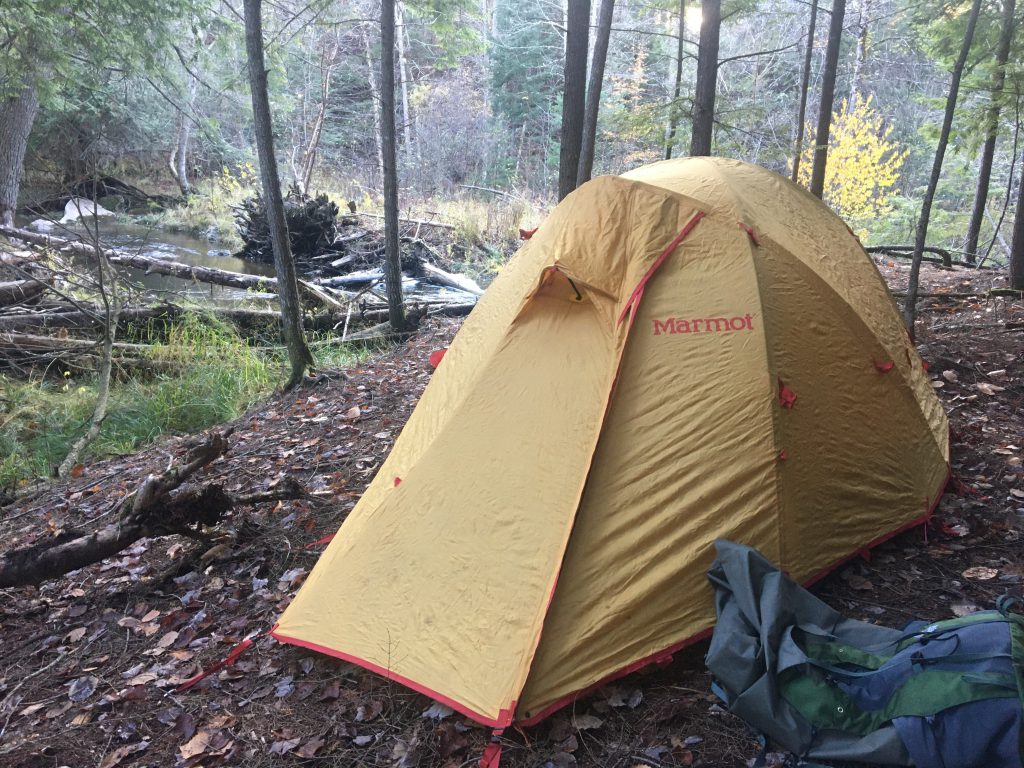
    At 10 lbs, my venerable Marmot Sanctum, which has been at altitude in the Chugach, Alaska, and Brooks Ranges, is a bear to carry these days.

    If you’re just getting into cold weather camping, the first thing to know is that it’s heavy. There’s not really a margin for ultralight here. And take this from me, a former Arctic Paratrooper, you don’t want to be calculating your base weight in the winter months, especially if you live in the Northeast or travel to the mountainous regions out west. That cuben fiber tarp you evangelize us about for your summer AT thru-hike doesn’t have a place in the winter.

    It doesn’t mean you have to go overboard with super heavy stuff. There are tarp tents perfectly suitable for cold-weather season use.

    I haven’t been able to empirically qualify this with stats yet, but I do wonder how many earnest AT thru-hikers come off the trail with a February or March start because the weather is too much for them. Given the number of folks who toss in the towel, I’d wager it’s a good bit. Even with bounce boxes and changing out sleeping bags, it’s hard to get out of the bag on a cold weather day and get moving.

    Trust me, after years of field training exercises in proximity to or north of the Arctic Circle, I know.

    Winter is a Mind-Killer

    Last winter, Amelia and I scaled Bald Rock Mountain in Camden Hills State Park so we could take in a gorgeous, albeit freezing, Penobscot Bay sunrise.

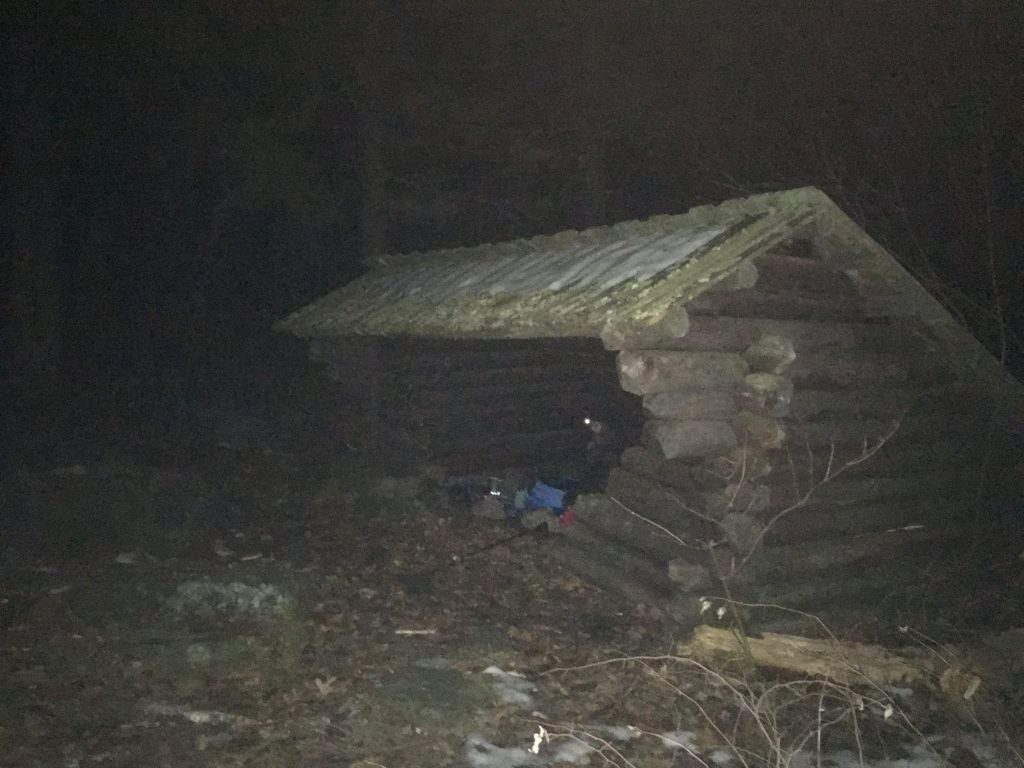
    One of the shelters atop Bald Rock Mountain

    It was not disappointing. We spent a chilly night in the Adirondack shelters atop the peak, and woke up to warm coffee and tea as we watched the sun crest the eastern horizon.

    It was spectacular, but our feet and fingers were numb by the time we made it back to the car. We weren’t underprepared, but it is difficult to find the motivation to function in the morning hours.

    In bear country, it may not be an option, but having your stove prepped so you can slightly pop out of your sleeping bag in the morning and get the water boiling is a good way to get started. This is better suited for the parts of the season where bears are hibernating. End of winter, early spring hikes when it is still cold, especially on the AT, may not be an appropriate time of year to do this, as the bears may be stirring.

    How to Start a Hike

    I wrestle with my daughter on this, too. After 25 years of road marching in the Army, I can tell you, always start the hike slightly chilled. You will heat up as you go along. My rule is that if my teeth are chattering at the start of the hike, I’m doing the right thing.

    I’m not going to bore you with a redundant lecture about no cotton, synthetic wicking layers, or layering in general. If you’re a hiker that reads this sort of article, you’ve more than likely already digested four of those.

    If there’s snow on the ground, or even if it’s cold enough that the ground will be hard, start at a slower pace than you would over the summer or spring. You’re going to burn calories at a faster rate, because you’re probably carrying more and heavier gear. Where you might want to do a higher mileage day in another season, this is the time to take it slower (exception being ski touring).

    Bring More Fuel, More Food, More Water

    …and don’t ever just eat snow. You expend more water melting it in your mouth than you do bringing it in.

    As we mentioned, cold weather hiking is harder work. Consider a stove with fuel that is performant in cold weather. Consider that you may need to stop and replenish water by melting it, if sources are frozen over.

    You need to take in more calories. Read the damn Nutrition Facts. Many popular hiking foods provide more sodium than they do carbohydrates. Don’t incur a cold weather injury because you don’t bring enough of the right kinds of food.

    Little Tips I Wish I Learned Before I Sustained Frostbite

    You can make a vapor barrier for your boots out of bread bags. This ghetto fabulous trip was one that I failed to internalize when my parents would do this for me growing up in Pennsylvania.

    10 hour handwarmers are great, and relatively lightweight means to keep your fingers and toes from losing warmth. As much as I love winter, this has always been my struggle.

    Army surplus climbing skins will work with almost every model of ski.

    You don’t have to spend $40 on replacement MSR Snowshoe straps if you have parachute cord and an imagination.

    A children’s sled can easily be converted into a halfway decent pulk for winter camping. I’ll be doing a video about this in Katahdin Woods and Waters this winter.

    Winter Wonderland

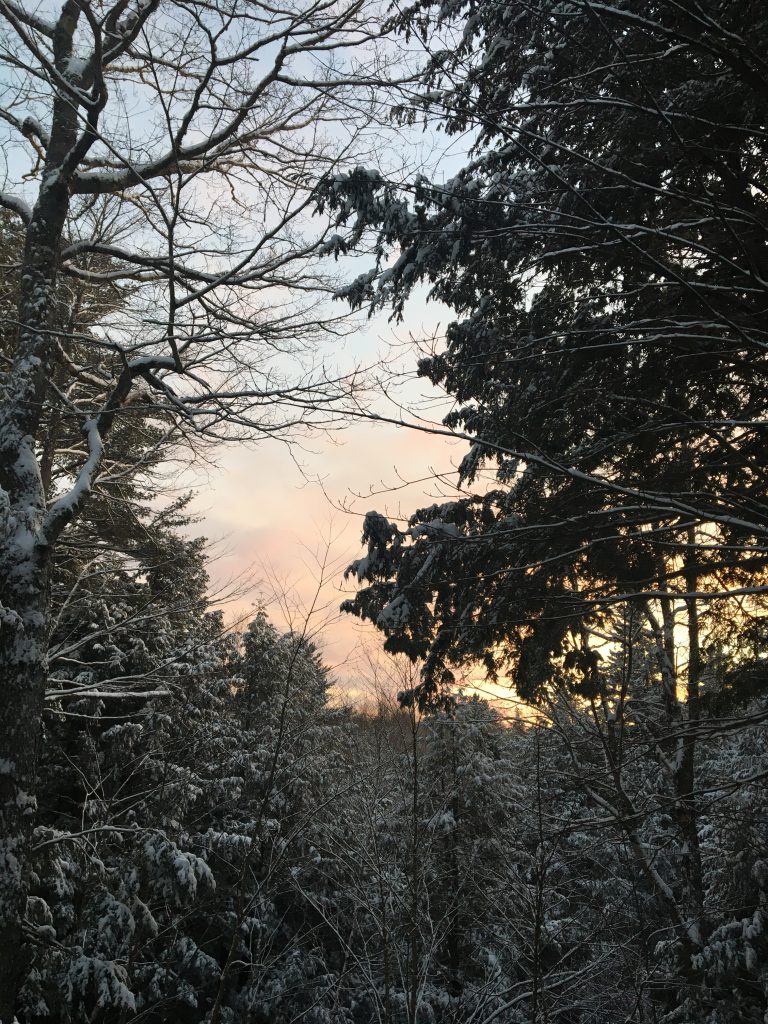
    Winter right out my back door.

    I love winter camping more than summer camping. I love reading Jack London short stories, particularly “The White Silence”, by a fire in the Maine woods.

    There’s a crushing sense of isolation and self-sufficiency with a tremendous amount of romance buried therein. When you tap into that, you discover so much about yourself and your own capabilities.

  • Sukkot 5780

    Sukkot 5780

    An Excellent Holiday Entrypoint for Wilderness Backpacking, and to Learn about the Holiday

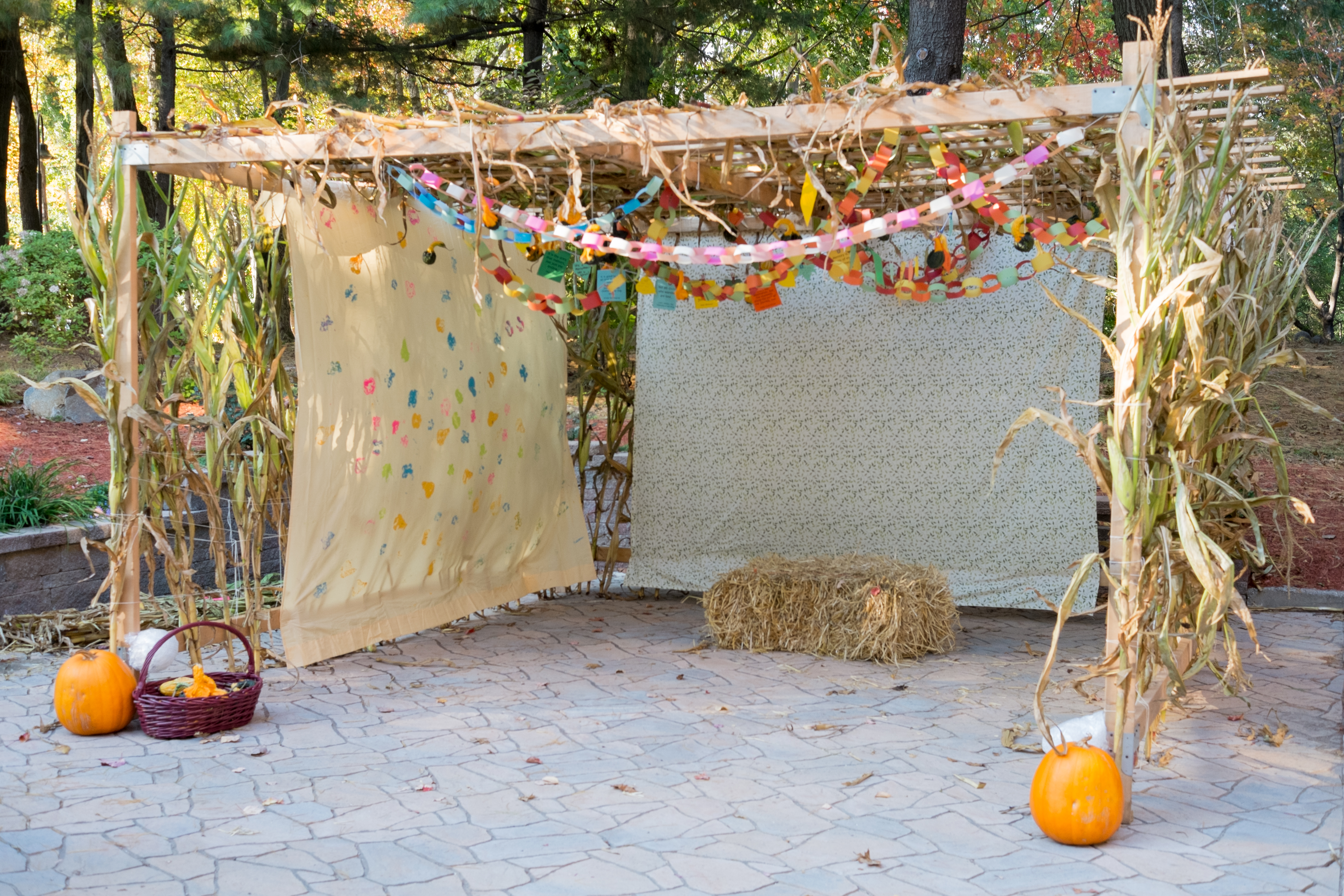
    You shall dwell in booths seven days; all citizens of Israel shall dwell in booths; so that your generations may know that I made the children of Israel to dwell in booths, when I brought them out of the land of Egypt.

    Leviticus 23:42-43

    I was backpacking in upstate New York during Sukkot one year, somewhere in the High Peaks, when I was hit with a hail storm. I was at least several miles from any of the shelters, so I hastily put my poncho tarp up using my hiking poles and some bungee cords, and listened as the chunks of ice bounced off of the taut sheet of nylon.

    There’s a chronology to the treatment of Sukkot in Torah, the Talmud, the Geonim and Rishonim, and Acharonim through to today, which echoes the approach to all of Jewish life and wilderness experiences.

    We start with just doing it. The concept of a pilgrimage festival and sleeping in a sukkah celebrates both the harvest and as a reminder of where we come from.

    It’s not indistinct from the “call of the outdoors.” We get outside because we want to remember, if that’s the right word, something primal.

    Then, in the Talmud, we get the treatment of how to build a sukkah, and what makes a sukkah “correct” under Jewish law, how we sleep in it, how we take our meals in it, and so forth.

    This is where our relationship to the outdoors matures. Maybe we’ve been carrying too-heavy tents and sleeping bags, cooking our food over fires instead of stoves. Like learning to build a proper sukkah, we’re at this point transitioning to lighter gear and less impactful outdoor practices.

    Finally, we’re left with “what does this mean?” What are the esoteric, moral, and spiritual dimensions of Sukkot? Why do we welcome the ushpizin?

    Will there be land for me to hike on in a decade or more? What can I do to preserve these treasures I backpack through? Why do I keep coming back to the woods?

    Sukkot is a holiday that captures gratitude, providence, the payoff of hard labor, and finally, the Jew’s visceral relationship to his or her history. An outdoor Jew then—especially during Sukkot—is sharing a common space with the ancestor who slept beneath the stars for 40 years in the wilderness.