Category: News

  • Pesach on the Trail

    Pesach on the Trail

    The fire burned down to a bed of coals by the time they reached Maggid, recounting the story.

    The Appalachian Trail stretched nort hand south in a narrow corridor of shadow and pine, a ribbon of dirt that held what little warmth collected during the day, even as the April night cooled around them.  Somewhere below the ridge, water moved steady and unseen.  Above, the sky had opened between naked branches, a scatter of stars caght in black limbs.

    Eli adjusted his headlamp, then clicked it off.

    “It’s too bright,” he said.

    Nearby, Jonah was wrapped in his sleeping bag like a cocoon, only his nose and glasses visible.  Gripping his Haggadah from within his down casing, he looked like a weird amusement park mascot.

    Eli got to “ha lachma anya…” and hesitated.

    The words stayed in the cold air, colliding with the smell of woodsmoke and damp earth.

    “This is the bread of affliction,” he finished softly, putting back down the matzah, which lived in a plastic freezer bag.  It had broken into uneven shards during the hike.  “…which our ancestors ate in the land of Egypt.”

    Miriam laughed.  “Also, it’s the bread we packed badly, and this is what survived.”


    They did not plan it this way.

    The original idea was simple: finish the stretch from Springer Mountain to Hot Springs by early April, then catch a bus to Atlanta in time for Passover.  Weather, blisters, and a stubborn insistence on “just one more ridge” stretched their timeline until the calendar caught up with them somewhere in the Smokies.

    So, they stayed and resolved to do a seder on the trail.  A friend met them around Fontana Dam and delivered a 5-lb box of matzah, which the travelers distributed among them.  It would carry them, along with some tuna, through both the Yom Tov and chol chomoed days of Pesach.

    “Freedom is wherever you are,” Eli declared loftily that afternoon, unpacking supplies at the shelter.  “Or at least whevever you decide to stop walking.”

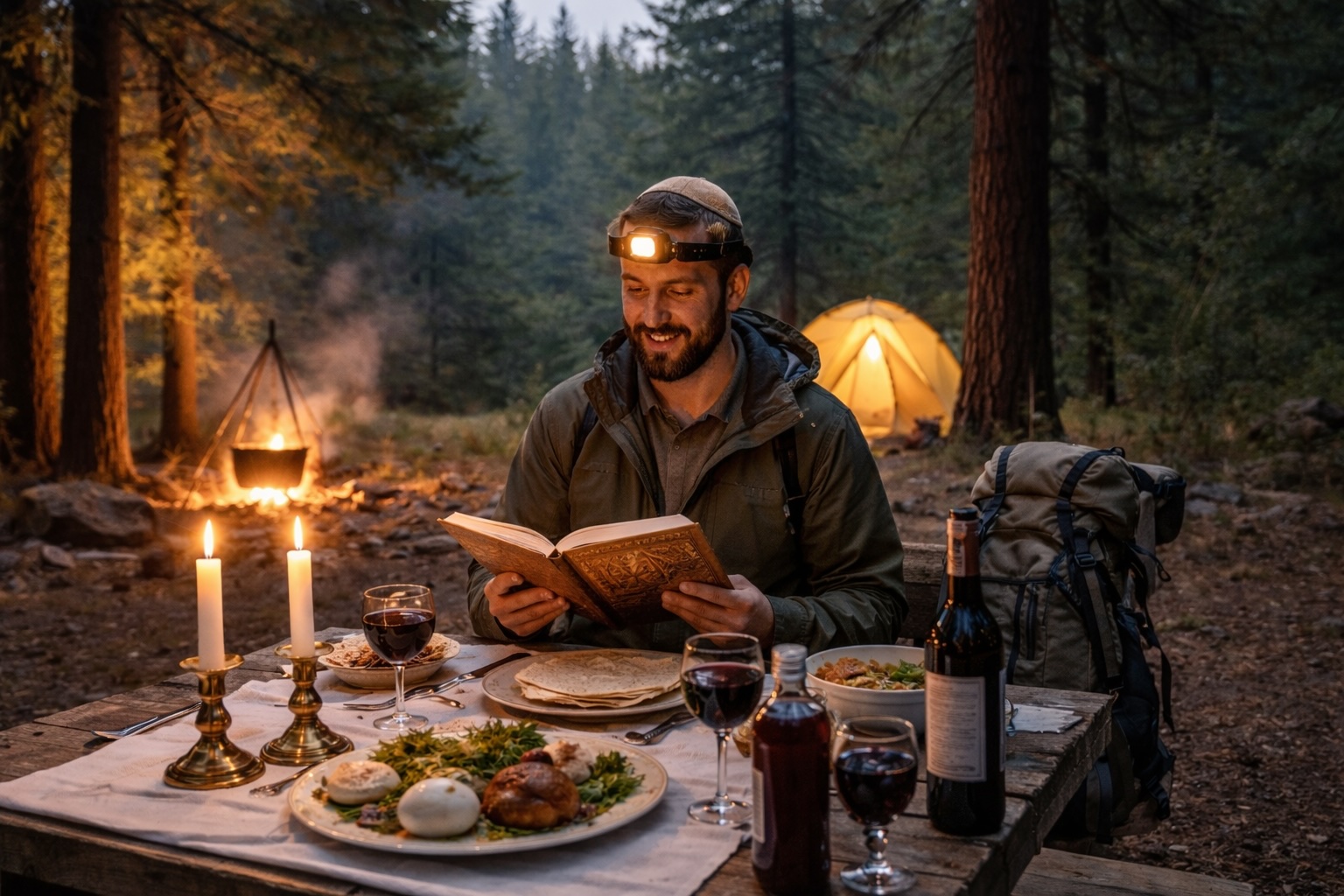
    They had improvised everything.  The seder plate was an old mess kit lid.  Bitter herbs were dandelion greens Miriam insisted were “definitely edible.”  The charoset was a mixture of apples given by a “trail angel” at the last major road crossing, and some nuts carefully picked out of trail mix, with a splash of Manischewitz for effect.

    They had a chicken bone with some gore on it for the shankbone.  The egg…the egg had been the hardest.  Jonah carried it for two days, nested in a sock, protecting it like contraband.  When he finally pulled it out, it was miraculously unbroken.  There had been a moment of genuine awe.


    Now, deep into the telling, their voices rose and fell with the rhythm of the text.

    “We were slaves to Pharoah in Egypt…”

    “Now we’re slaves to this trail,” Jonah muttered.  He was the least enamored of their thru-hike, coming along mostly for fear of missing out.

    “No,” Eli corrected.  “We’re choosing it, and that’s the whole point.”

    Miriam leaned back on her hands, looking past them into the trees.

    “My grandmother at our seders used to say every generation has its own Egypt,” she said.  “Not always a place.”

    They thought for a moment about some of the hostility they had met from other hikers on the trail.  A kid on Blood Mountain sporting a kaffiyeh and a lot of opinions.  The trio didn’t have an answer for him, but he harassed them for a solid day until severe chafing took him off the trail.  They weren’t there to talk about Israel or Gaza, though they had all done Birthright together.  They were there to hike.  Not that they minded when they heard he came off the trail.

    Jonah gestured all around, possibly to the dark woods, their worn packs, the endless miles behind and ahead.  “All of this is definitely suffering.”

    Miriam was quiet for a moment, and said, “I think it might actually be the leaving, which was actually headed towards something else.”

    None of them were particularly religious, but as Jews are wont to do, they still were finding meaning in both Passover and their thru-hike.

    When they reached the Four Questions, they again paused.

    “None of us are kids, really,” Jonah said.  “Who asks?”

    Miriam and Eli put their fingers on their noses and declared, in unision, “Not it!”

    Jonah sighed, straightened slightly in his sleeping bag, and said, “why is this night different from all other nights?”

    They let the question hang for a moment.  The forest definitely wasn’t going to answer.

    The night was different than all other nights, and all other Passovers.  It wasn’t the improvised ritual objects.  It wasn’t that they lit the Yom Tov candles in a windproof candle lantern that they planned on using for the next two stationary days on the trail.  No, they weren’t religious, but there was something they wanted to get right.  They were in the middle of a long journey largely defined by continuous movement north, always north.

    Yet here they were, taking a moment to choose the freedom of stillness and a memory of their people.


    Later, they sang.  At first they were quiet, possibly a little intimidated by boisterous choral work in the middle of nowhere.  As “Dayenu” echoed through the trees, it was somehow softened by pine needles and moss.

    “It would have been enough,” Eli said, translating the obvious.

    Miriam smiled.  “Would it, though?  I could do with something a little better than matzah for the next eight days.”

    “Probably thats a ‘no’,” Joshua chimed in helpfully.

    Then they sang it one more time.


    By the time they said, “next year, in Jerusalem,” the fire was nearly gone.

    They poured themselves one more mug of the Manischewitz.

    “To freedom,” Eli said.

    “To getting to Maine before I lose interest,” Jonah added.

    Miriam lifted her cup last.

    “To knowing when to stop walking,” she said.

    Somewhere, in the dark, an owl hooted.

    The shelter was only a quarter of a mile from the Appalachian Trail, which waited.  It was indifferent and patient, stretching onward from Georgia to Maine.

    For that night, though, they stepped out of it.  A thru-hike is often a race filled with variables and questions.

    Are the contents of my pack necessary to take me to Katahdin?  Do I have the right shoes?  How many miles do I need to do per day to get to Maine by September?

    For the early weeks of a thru-hike, the conversations are in orbit around gear and plans and the hike, insufferably banal conversation that loses track of the beauty of place and time.  The point was the journey itself, not the destination as a goal, and stepping out of it for a night was useful.

    They made a small circle of light in the vastness of the woods.  They remembered that very little in the Exodus story talked about the distance the Hebrews put between themselves and Egypt, just the leaving itself.  The meaning was in the motion, and now, the meaning was in the pause for the space of memory.

    When they finally crawled into tents or the shelter, the words lingered as something that would carry forward beyond the trail.

    Next year…

    Maybe not in Jerusalem, or maybe so, but definitely further along the path, closer to whatever freedom might be.
  • Purim on the Trail: Hidden Miracles in the Backcountry

    Purim on the Trail: Hidden Miracles in the Backcountry

    If you’ve ever spent a night in the backcountry, you already understand Purim in a way most will not.
    It’s not the costume parade version, not the getting sloshed, and not the children’s sugar rush.
    It’s the deeper meaning beyond graggers and the mitzvot and megillah. Those are so important, but we’re an outdoor effort, so we’re going to make it about that.
    Megillat Ester reads like a palace drama set in Shushan. It’s full of royal decrees, political intrigue, banquests, betrayal, and ultimately, vindication. It’s urban and imperial.
    And yet, I would assert it is still a wilderness text.

    When You’re Far from Power

    Backcountry hiking begins with the decision to leave infrastructure behind for a time.
    You won’t have a cell signal or data service. There are no quick exits, and definitely not even a guarantee that the weather will hold and you will be safe.
    I think that is the position of the Jews we find in the Megillah, which consequentially, is perhaps the first book where they are specifically referred to as Jews. They are scattered across 127 provinces of the Persian Empire. They are far from their sovereign, exiled from their Temple, far from any control over their lives. They are living under someone else’s system, dependent on forces they cannot control.
    Anyone who has watched a weather front roll in faster than expected knows this feeling. No matter how carefully you plan, no matter how well prepared you may be, ultimately, you are small under the sky.
    Purim begins with precisely that same sense of scale.  Jews don’t even factor in to the start of the story until Mordecai refuses to bow to an officer of the court.

    The God Who isn’t Named

    If you have a “things rabbis will say about Purim drinking game,” invariably, it will be pointed out that God doesn’t appear in Esther’s story anywhere.
    I think we constantly point this out because there’s a degree of theological discomfort in that. Last year, Nezzie and I pitched on a ridge in the Maine mountains after running out of daylight, it’s actually a familiar feeling.
    In the backcountry, God isn’t any more obvious. There is wind, rocks, hunger, fatigue, beauty, risk, and so many other things. You don’t see providence the way you see a blue or white blaze on a tree. You infer it. You see patterns. You look back and realize a narrow escape down a ridge from a lightning store may have been the hidden hand of something, well, bigger.
    I think Purim trains us in that kind of noticing.
    God is concealed in coincidence, the right people in the right place at the right time. Circumstances turn favorable. The king’s insomnia, a conversation overhead, Esther’s improbable escalation to a place of prominence with the king…it’s all there.
    Concealment isn’t the same as absence, we learn. There’s a reason why we find God in the wilderness so often, because the subtleties of Creation stack up.

    Esther at the Trailhead

    There is a moment in the Megillah when Esther stands at a threshold. She has to decide whether to approach Ahashverosh without being directed to, which is a potentially capital offense.
    It’s kind of a trailhead moment.
    I don’t feel this on a weekend hike, but I do feel it on undertakings like a thru-hike of the John Muir Trail or the Appalachian Trail.
    Am I really doing this? you ask yourself as you sling your pack on your shoulders and leave the gravel parking lot behind you.
    Esther’s decision is not triumph, but rather, “if I die, I die.”
    That’s the language of risk!
    Most backcountry travellers understand this innately. Risk mitigation, training, preparation do not eliminate uncertainty. I don’t think hiking is courageous, not in any useful sense, but you move forward with a certain degree of surrender.

    Costumes and Camouflage

    I’m not one for the clamor of Purim. I also don’t like synthetic Halloween costumes recycled for this holiday. My daughter, Nezzie, makes her own costumes, which I love, avoiding the intrusion of the consumer mindset into the holiday.
    The deeper theme, of course, is concealment.
    In the wilderness, concealment is about survival. In Maine, snowshoe hares change color with each season. Seeds lie dormant underground for months before breaking open. The forest in the winter can look dead (unless you live in Maine with its surplus of pines), but it’s still teeming with life.
    Esther conceals her identity while Mordecai urges tactics and strategy from background. Even the divine presence is camouflaged in the folds of ordinary events.
    The backcountry teaches me the same lesson: what looks empty is often full. The white silence is still very much alive. There’s a whole ecology in play that isn’t immediately obvious.

    Joy After Survival

    When the danger is over in the Megillah, the response isn’t quiet relief, although I’m sure there was some. Our response is festive and celebratory, a time to exercise generosity and public joy.
    You can find the same joy, I think, standing atop Mount Katahdin at the end of the Appalachian Trail. Breaking through the treeline and to an open summit, there’s an earned sense of excitement and jubilation you don’t find at the foot of the mountain.
    You’ve got sore muscles, windburn, sunburn, but you’re going to have the best memories of it. The experience of the Jews in Persia, I imagine, was like that. We were vulnerable. There was a real threat to our survival, and just as today, the persistent realization that the outcome could always go differently, in no small part because we know it has.
    I don’t think the Megillah’s “light and darkness and joy and honor” is naive optimism, just post-storm rays of light peaking through.
    I do think the optimism is trite, to a certain degree. We do the “they tried to kill us, we survived, let’s eat” thing, but the subtext is that our celebrations are a therapuetic salve to our national soul. Sometimes, they really did kill us, and there was no hanging of Haman and his sons at the end. Either the killing stopped or they ran out of Jews to kill. The celebrations are our way through.
    And for me, that’s the same story. I get back to the trailhead on a Sunday. The next day, I’m back in “real life,” where I lose that connection I find in the wilderness. Reality sets in at the end of Purim.

    Reading the Megillah Under Open Sky

    What if we read the story outside this year?
    I mean, here in Maine, we still have a couple of feet of snow that hasn’t melted yet. It’s end of February, beginning of March. We still have more than a month of winter conditions.
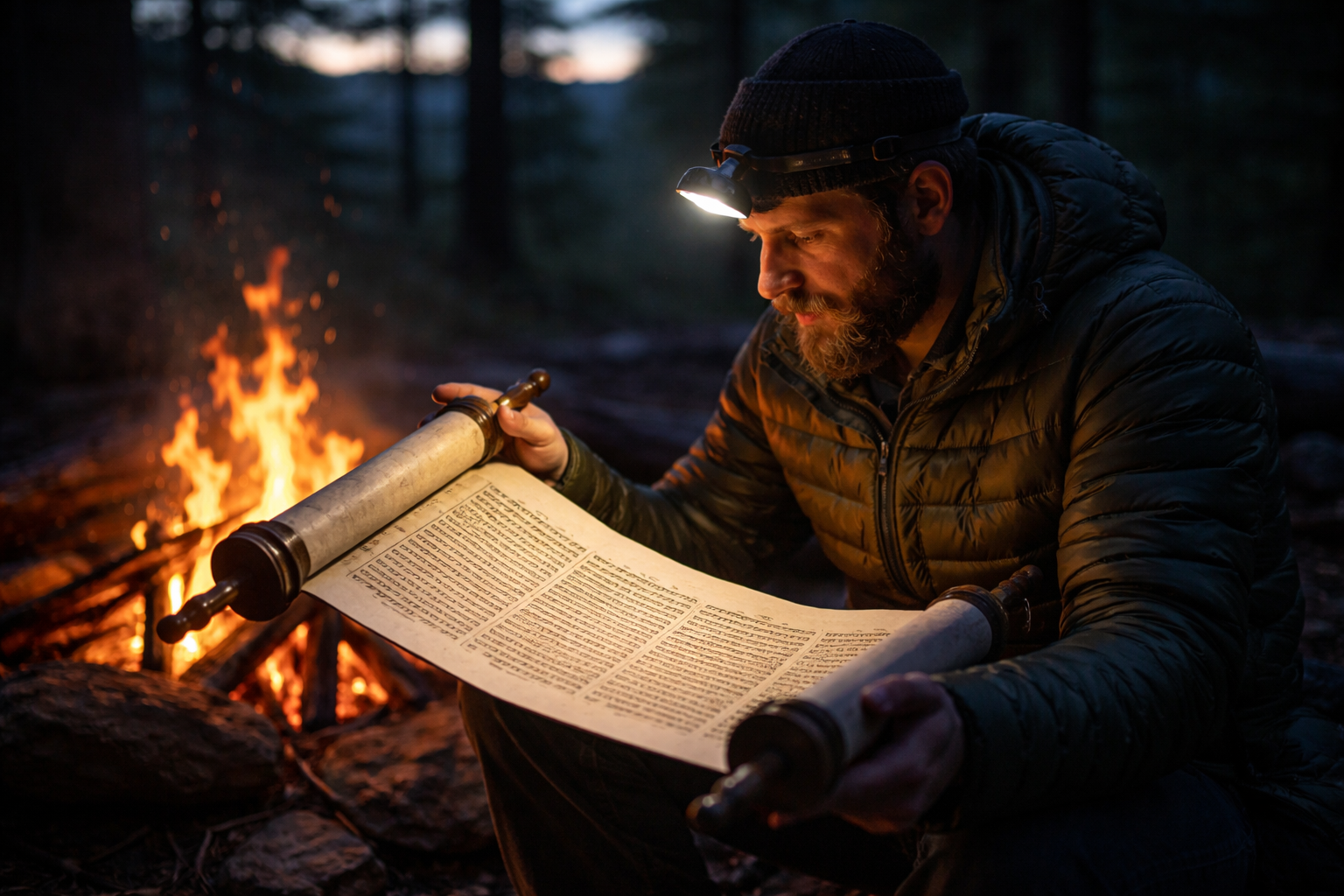
    But imagine reading the Megillah by a headlamp. Hearing Haman’s name swallowed by wind instead of graggers and sactuary acoustics. Passing mishloach manot from pack to pack. On the Appalachian Trial or Pacific Crest Trail, which sees hikers embarking about now, giving gifts to those in need as a “trail angel.”
    Purim teaches about survival when we don’t control our circumstances, and the outdoors is always a master class in that truth.

    The Hidden Trail

    There’s a final wilderness connection that feels very Purim-like.
    Years and years ago, we did a two week ramble across the breadth of Wrangel-St. Elias National Park in Alaska. There was no trail to follow, just a nebulous route with a compass and a map. You had to look for terrain features, find identifiable points in the distance as a reference, and use a compass and maintain a pace count.
    The divine in the Megillah works much like that.
    Purim isn’t about obvious miracles. It’s about assuring us that even in exile, and especially in times of political chaos, when God’s name is nowhere on the page, there is still a story unfolding around us.
    On a long hike, where you’re following the gravel braids in a river, you only recognize the miracle after you’re at journey’s end.
    For me, that’s why Purim belongs outdoors.
    (In fairness, I think every Jewish holiday belongs outdoors)

  • When Wilderness Turns Deadly

    When Wilderness Turns Deadly

    This year, at the Maine Conference for Small Town Jewish Life, I’m teaching a course on basic orienteering.  If you follow this site, you know that I’m a big advocate for the Jewish outdoors.  The cheeky title of my class belies a commitment to making wilderness adventure safer for those who undertake it.

    If it weren’t for the twenty years I was an infantryman, a significant chunk of that spent as a “light fighter,” in either parachute or “air assault” units, I would not be as well-prepared for the wilderness as I am.  Our bread and butter, so to speak, as light infantrymen, was significant land navigation skills.  Additionally, with mountaineering courses and great experiences in Alaska when I was stationed there, the only place I’m sure I’m capable of being lost is at sea.

    Here in Maine in recent years, we’ve seen some tragic stories of wilderness loss.  Geraldine Largay died in Maine on her Appalachian Trail thru hike.  Known by the trail name Inchworm, she successfully made it from Harpers Ferry to Maine in April of 2013.  She was doing a semi-supported hike with the aid of her husband.  In late July of that year, she disappeared from the trail.

    People kindly describe her as an experienced hiker.  As a former nurse, she was definitely equipped to survive.  I’d argue, however, that the definition of “experienced hiker” includes enough basic orienteering to get yourself out of a jam.  She journaled for 26 days after she became lost.  She died just two miles from the Appalachian Trail.  If she had known which direction to go, and how to find that direction, she could have easily found herself back on trail.

    In this age of cell phones, we ought not confuse walking trails that are carefuly curated by trail teams with viable experience.  The Appalachian Trail has become a sort of hermetically-sealed, illusion of a wilderness experience…until you get to Maine.  Maine is still a place where you can get lost and, as evidenced by the two year gap between Largay’s disappearance and discovery, not be found.

    A New Tragedy

    Tim and Esther Keiderling
    Tim Keiderling and his daughter, Esther Keiderling. Photo Credit: Baxter State Park

    It’s too early to tell for sure what went wrong for Tim and Esther Keiderling, a father and daughter pair who set out to climb Mount Katahdin on Sunday, June 1st, and disappeared.  Both of their bodies have since been found.  Again, we’ve seen them described as “experienced hikers” who have hiked other mountains in the Adirondacks and the Alps.

    But again, I suspect “experienced hikers” means they hiked a number of well-marked trails, which does not connote any particular outdoor savvy.  Baxter State Park can be very unforgiving of navigation error, and with the combination of inclement weather, things can go pear-shaped very quickly.

    Remember The Rules

    Avoid going hiking alone (says a guy that never takes this advice).

    Bring everything that you need to survive.

    If your experience doesn’t match the conditions, stay home.

    Have recent first aid and CPR courses.

    Know how to use a map and compass.

    DON’T GO EXPECTING SOMEONE TO SAVE YOU IF YOU GET IN A JAM.  A cellphone feels like a lifeline in civilized country, but in the wilderness, it’s hit or miss.  If you want to use technology, there are GPS devices and rescue beacons that can help you, but even with those, have a plan.  Have emergency whistles and some sort of visual signaling device, like a mirror or a piece of highly visible fabric that can possibly even be seen through a forest canopy.

    Conclusion

    I’m not here to bash the dead.  Wilderness travel comes with risk.  I took an accidental dip in a river on a backcountry excursion in Alaska that almost killed me with hypothermia.  I’ve had falls.  I’ve never gotten lost, but I’ve lost the trail and had to find it again.  One time, I lost the trail so thoroughly that I shot a compass azimuth towards where I knew there was a road.  But the point is, I have the experience and training to get myself out of jams.

    Take care of yourselves, and be safe out there.

  • Backpacking with Autistic Children

    Backpacking with Autistic Children

    Backpacking is a really exciting experience for a lot of kids.  For children with Autism Spectrum Disorder (ASD), it can be fraught with anxiety, as it involves multiple changes in routine, unfamiliar environment, and a significant amount of sensory overload.

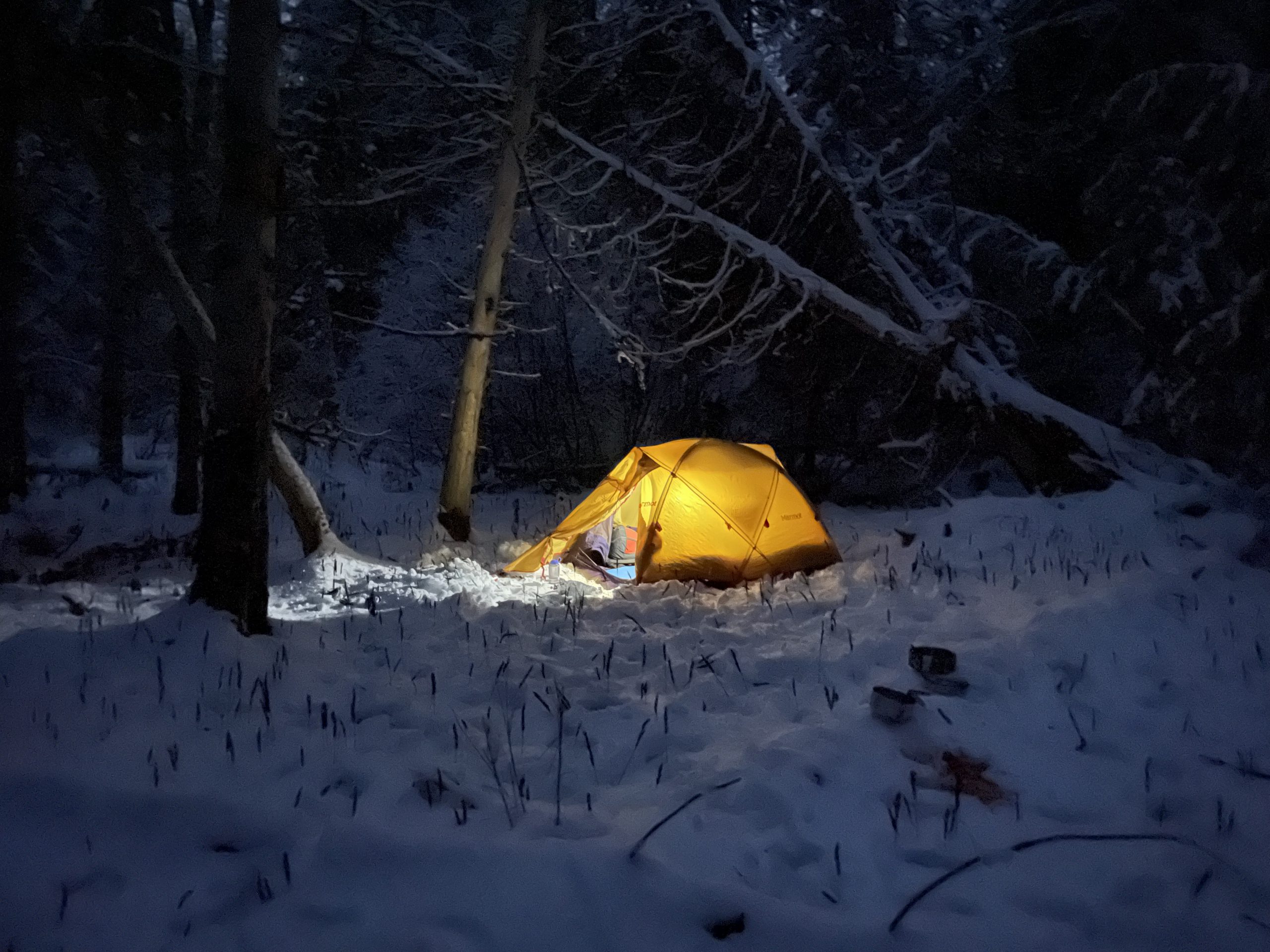
    When my daughter, who hadn’t yet been diagnosed with ASD, joined me on a hike to Maine’s Cutler Coast, she found camping at a spot overlooking the ocean to be awful, as scenic as it was.  As it turned out, the constant noise of the surf was simply too much for her.  Creekside or noisy riverside campsites similarly work on her nerves.  The tranquil waters along the East Branch Penobscot River, on the other hand, do not pose a problem.  The silence of winter camping is especially attractive to her.

    We’ll delve into the ways we can make a backpacking trip successful for your ASD child.  Your mileage may vary, of course, but we’ll start with what tips we anecdotally know work.

    Before the Trip

    First, let’s say this: I am accustomed to seat-of-your pants, throw a bag in the back of the car and go style trips.

    This does not work with my child.  She requires at least a week’s lead time.  My older, adult child was flexible, able to pop in the car and head from our home in Pennsylvania to a nearby Appalachian Trail entry point, to Shenandoah National Park, Assateague, or even the Adirondacks with little notice.  We did it all, and I was spoiled by her agility.

    On the other hand, the more meticulous planning I have to put in for my youngest child often yields a less tumultuous trip.  A late May excursion in the High Peaks that we were ill-prepared for was just another thing for my older kid.  We adapted and overcame.  My younger child found getting her feet wet on a beaver dam traversal along the International Appalachian Trail in Maine to be completely debilitating, even though she crossed a wide river just a half hour prior.

    Informed by these experiences, this is what works for us.

    Create a Narrative

    In the days and weeks leading to your excursion, create a narrative—with pictures or with words—that captures the start-to-finish elements of your backpacking trip.  Where you park, what time you’ll arrive, how far you’ll hike to camp, what the campsite will be like.  Make note of the sensory experiences they’ll find, like a noisy river, windy conditions at the top of a mountain, muddy water seeping into their shoes.  What will we do in the event of a downpour?  Or a thunderstorm?  Go over this narrative with them often before your trip starts.

    Predictability for a child with autism is imperative.  We go through this day to day just in school.  It doesn’t end just because we deem an activity to be recreational.

    Put it on the Calendar

    We don’t actually have a calendar in our household, but daily reminders, in conjunction with going over your narrative, present your backpacking trip in a concrete way.  We do have a chalkboard in our living room which my wife assiduously puts the daily school “special” (like music, art, gym, etc.) which helps our kid visualize the looming change in routine.

    Do Not Wash Comfort Items

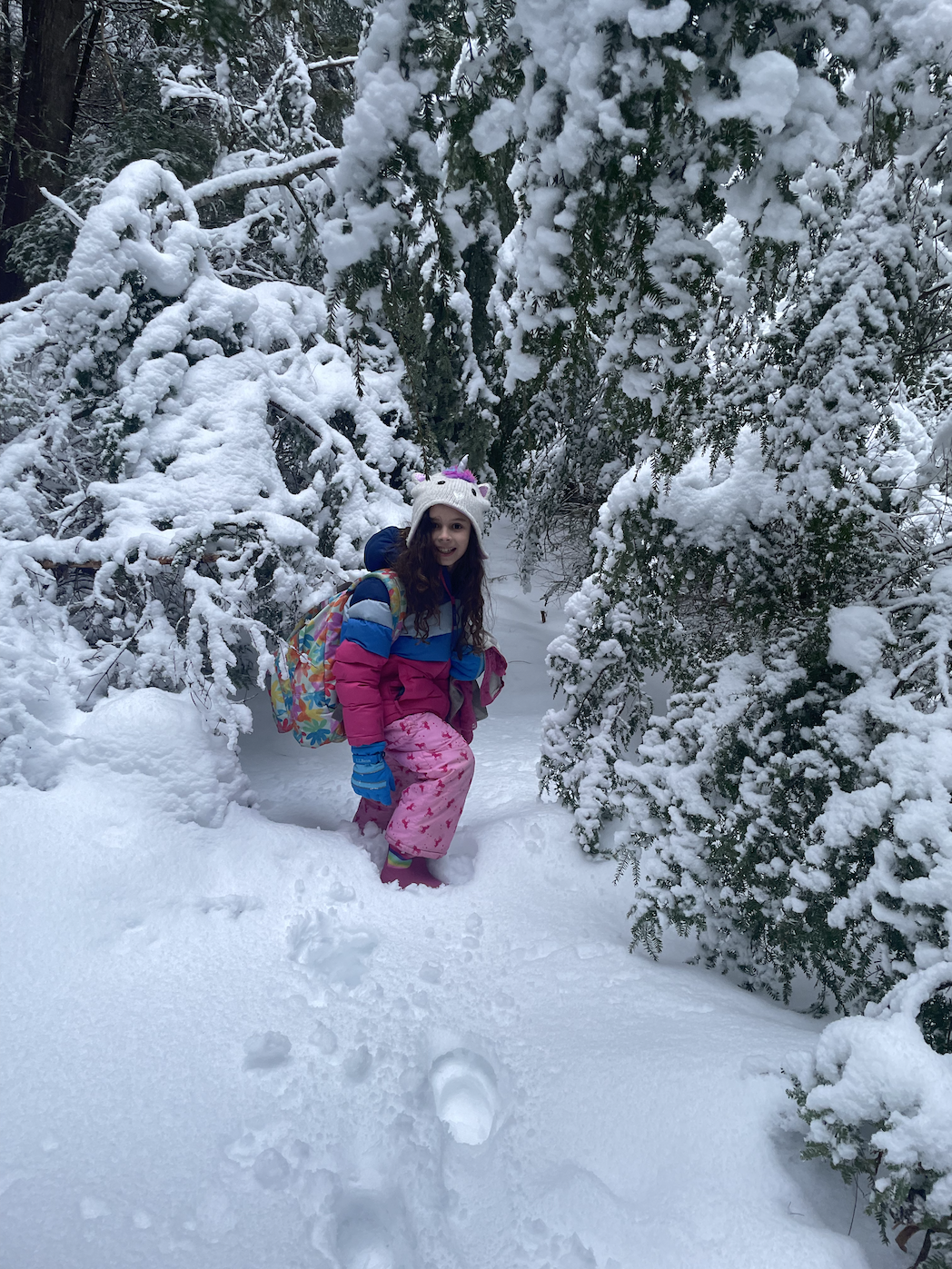
    In our household, it’s “Pink Blankie.”   If you note the picture from our most recent winter excursion, Pink Blankie™ is clutched even during the hike through oodles of snow.

    This little thing is often of such comfort to our precious little girl.  There are times when it smells absolutely terrible, but knowing what it does for her makes it easy for us to fight for the watery eyes it induces.

    Extensively Plan Meals and Snacks Ahead of Time

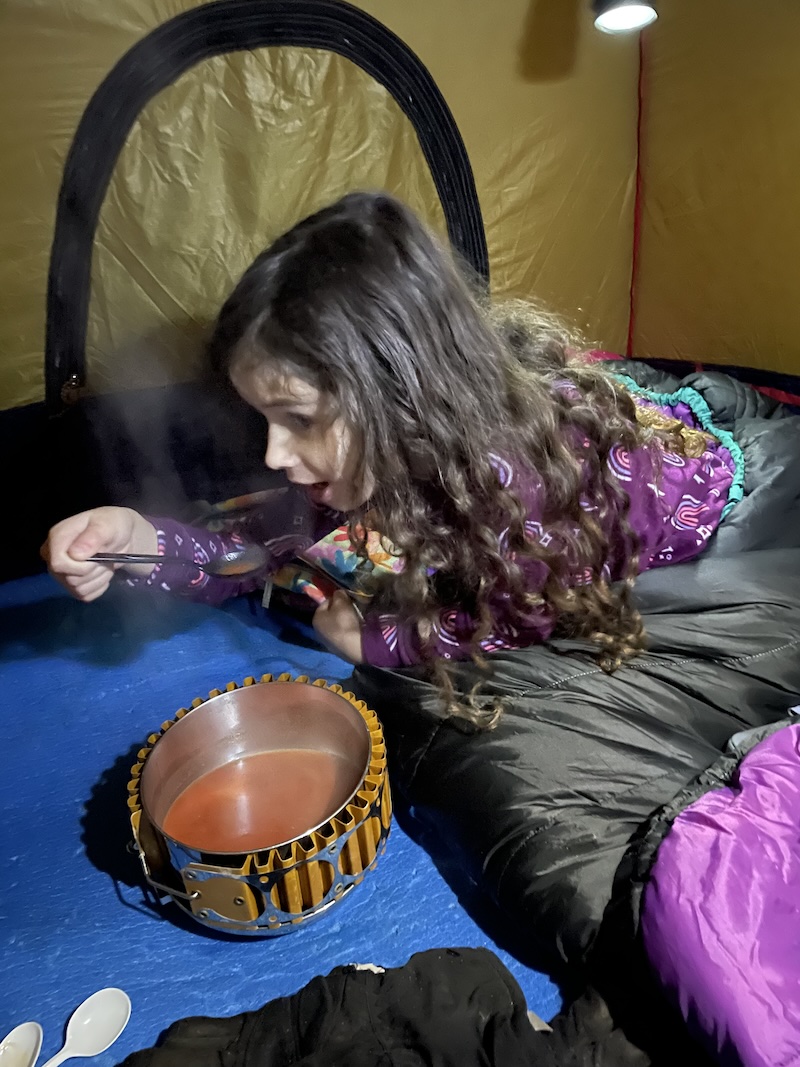
    In an age when people really emphasize ultra-light backpacking, when I go with my daughter, my pack is assured to be heavy.  The largest reason for this is that her favorite camping meal is condensed tomato soup from a can.  It is the only thing I can be certain she will eat.  Some children (not mine) like things like gummies because they like oral stimulation.  She’ll nosh on Goldfish.  Yes, I know they are not hechshered, but the whales are not something she’ll eat.

    My daughter eating tomato soup

    On the Trip

    Let a Weary Kid Take Breaks at a Predictable Interval

    It’s so important for your child to know when a rest break, especially one involving a pre-determined snack, is going to take place.  Let them know it’s coming at time.  “We’ve been walking for twenty minutes since our last break, we will break again in ten minutes,” with a similar warning again in five minutes.

    The break can be timed, too.  It’s important to set expectations at all points.

    Audio/Video Device with Noise Cancelling Headphones

    Some children without autism struggle with sleeping in the woods.  My child does best with her iPad, which yes, we schlepped, and a few familiar films downloaded to Disney+ or Netflix for watching.  This lets them block out the crickets, the beaver activity, the hail against your rainfly, or rumbling thunder.

    Recount Exciting Parts of Your Adventure and their Bravery

    One of the things I do in the age of these electronic devices that are so ubiquitous is give my child the space and time to recount their key achievements on the trail.  On a trip this past summer to Katahdin Woods and Waters, our hike began with a crossing of Wassataquoik Stream.  This is a day ending in “Y” for most backpackers, but for my wee child, it was The Most Exciting Thing Ever.  So I recorded her reaction to her achievement after we made it across.  This will always be one of my cherished memories, too.

    Don’t Refuse to Bail

    The most important thing is your own flexibility with regards to your plans.  It’s very easy for any child’s willingness to go on these excursions to take a beating if things go sideways.  It’s that much more debilitating for children who have no out from sensory overload and other experiences.  For my daughter, one trip where her feet were wet for a little longer than she expected threw a wrench in her ability to enjoy herself.  I committed to turning around after only one night on a multi-day excursion.

    Your child’s well-being comes before your trip, and the reality is, children (and adults) with autism deserve just as much as anyone else to be able to enjoy our wilderness.  With a little bit of consideration, you can enrich your children’s lives with the great outdoors.

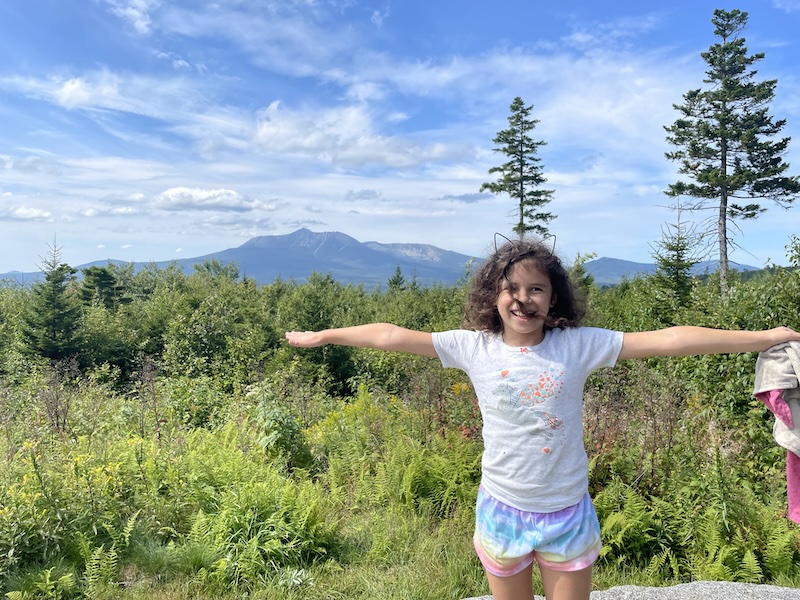
    My daughter in front of Mount Katahdin.

  • New Permit Requirements on AT in Shenandoah

    New Permit Requirements on AT in Shenandoah

    Starting this month, you will now be required to buy a permit at Recreation.gov in order to complete the Shenandoah National Park portion of the Appalachian Trail.  The previous system, where you could obtain a paper permit either at the website or at locations within the park, no longer exists.

    For more information about Shenandoah’s backpacking regulations, you may visit here: https://www.nps.gov/shen/planyourvisit/backcountry-regulations.htm

    For now, the purchase of permits may be made here: https://www.recreation.gov/permits/4675336

    This also adds a cost to this permit:

    $15 park entrance fee – if you have a military, veteran, or Golden Eagle pass
    $9 recreation fee
    $6 backcountry camping fee

  • Tucktec Kayaks: A Wet, Freezing Review

    Tucktec Kayaks: A Wet, Freezing Review

    Autumn in Maine

    Hot apple cider.

    Pumpkins and the array of reds, oranges, and yellows that dot the Maine landscape.

    I fell in love with autumn in grade school at Lafayette Elementary in Lancaster, Pennsylvania. Our art teacher, Mrs. Mushlitz, had us paint fall landscapes with sponges. I couldn’t get enough of it then, and I cannot now.

    Last year, just prior to the High Holy Days, I went for a hike in the Bigelow Range of Maine. The leaves that time only just began to turn, though the biting chill awaited in the morning.

    This year, I opted for a 28-mile canoe/kayak trail in the shadow of Katahdin in the Debsconeag Wilderness. The trail, for me, started on the Debsconeag Deadwater portion of the West Branch Penobscot River. It flowed south towards Ambajejus Lake, across Pemadumcook Lake, and with a couple of portages, a series of backcountry lakes.

    This turned out to be more than I bargained for.

    The Vessel

    In 2019, I bought a Jeep Wrangler JLU with a soft top, and suddenly my trustworthy canoe was too heavy for my roof-top. I love lake and river paddling almost as much as I love backpacking, and I wasn’t ready to give it up. I started researching folding boats, but many of them were at obnoxious price points, and the reviews were mixed.

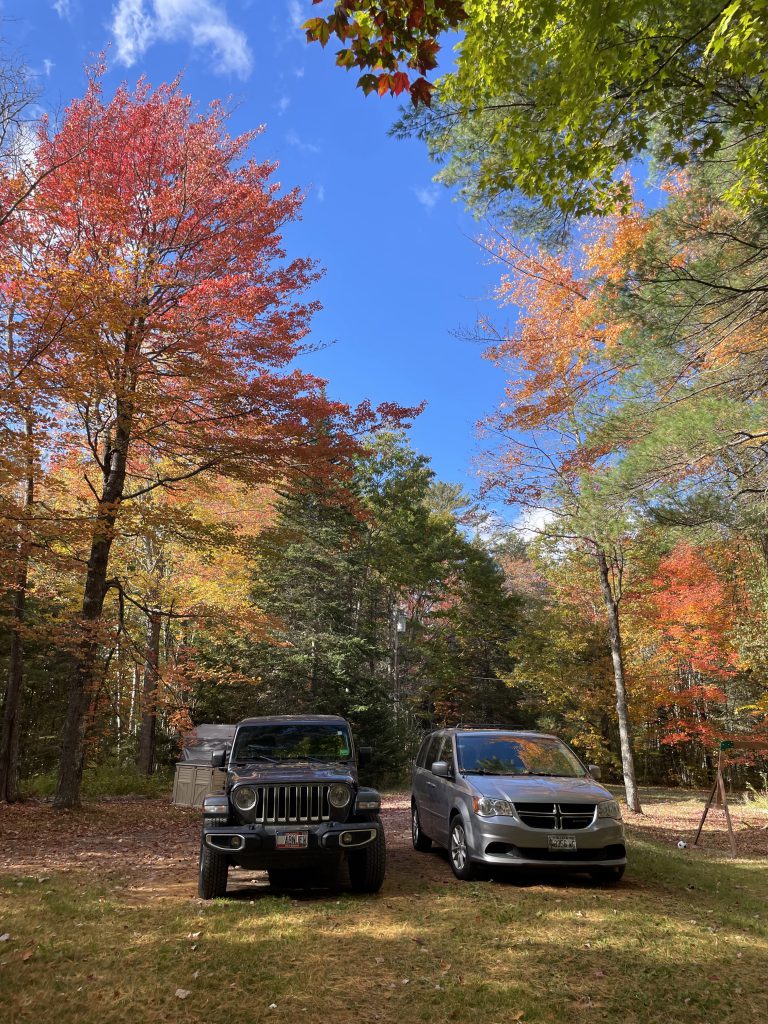
    The Jeep is soft on the top, and I don’t like taking our Caravan on rugged roads. Also, the fall colors on our acreage are da bomb.

    Then I stumbled on a Kickstarter campaign for these novel boats, and I’ve never looked back.

    I’ve had our Tucktec kayaks, one tan, one pink, since last year. I’ve put them through the paces with flatwater paddling all around Maine. I used it, after dropping my middle daughter off for her last Habonim Dror trip, at Nockamixon State Park in Pennsylvania. I took it out on the Intracoastal Waterway in North Myrtle Beach, not far from where they are manufactured.

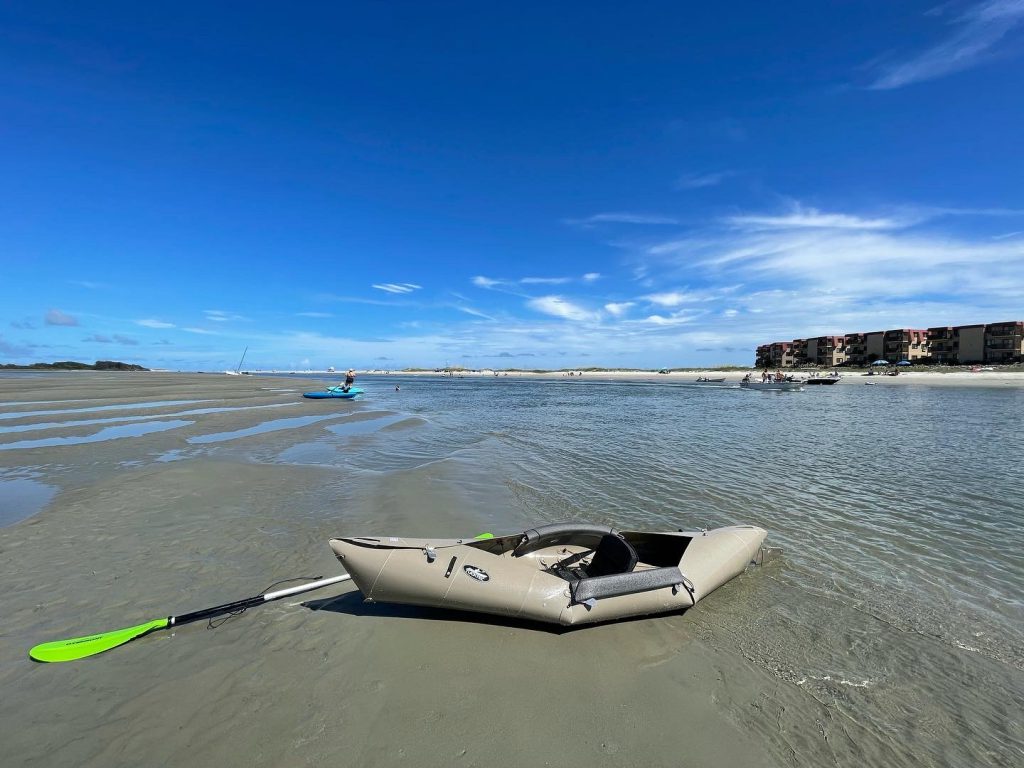
    Parked on a sand bar in North Myrtle Beach.

    I’ve had it on the Allagash, and any number of lakes in Maine. Both of them have performed admirably.

    In one instance, the careless wake of a boater on the Intracoastal knocked me out of the kayak and into the water.

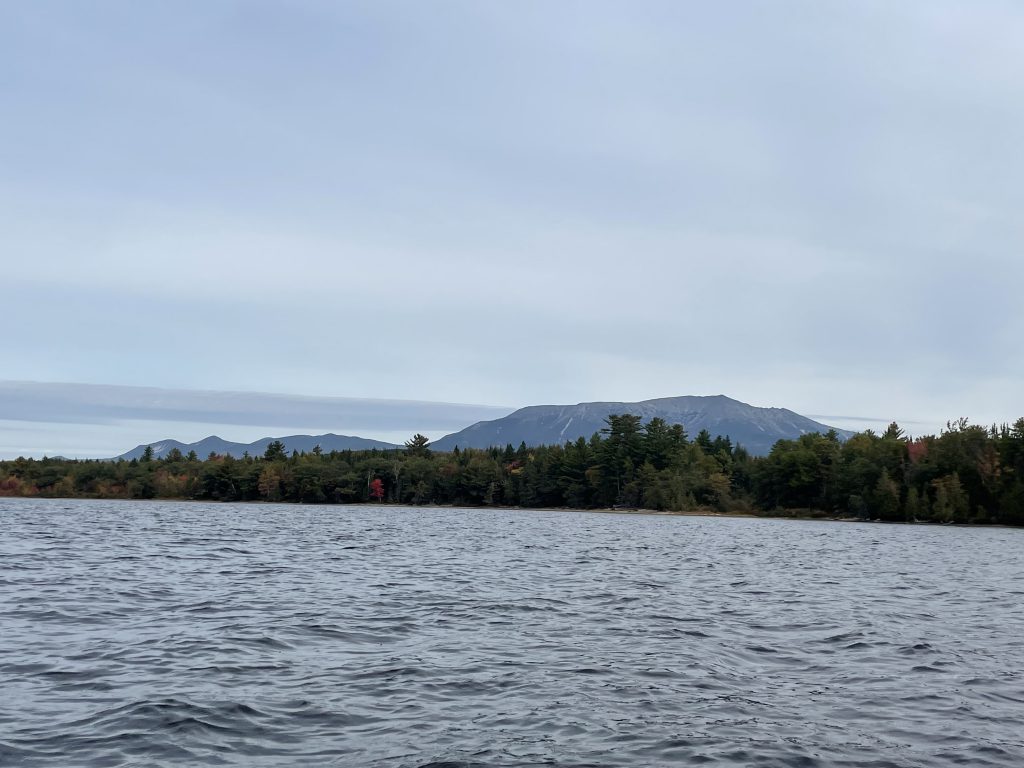
    Katahdin over Debsconeag Deadwater
    Katahdin over Debsconeag Deadwater

    My trip started off wonderfully. Katahdin loomed over me in background. The water was calm. The sun came out after a little while, and paddling was gorgeous.

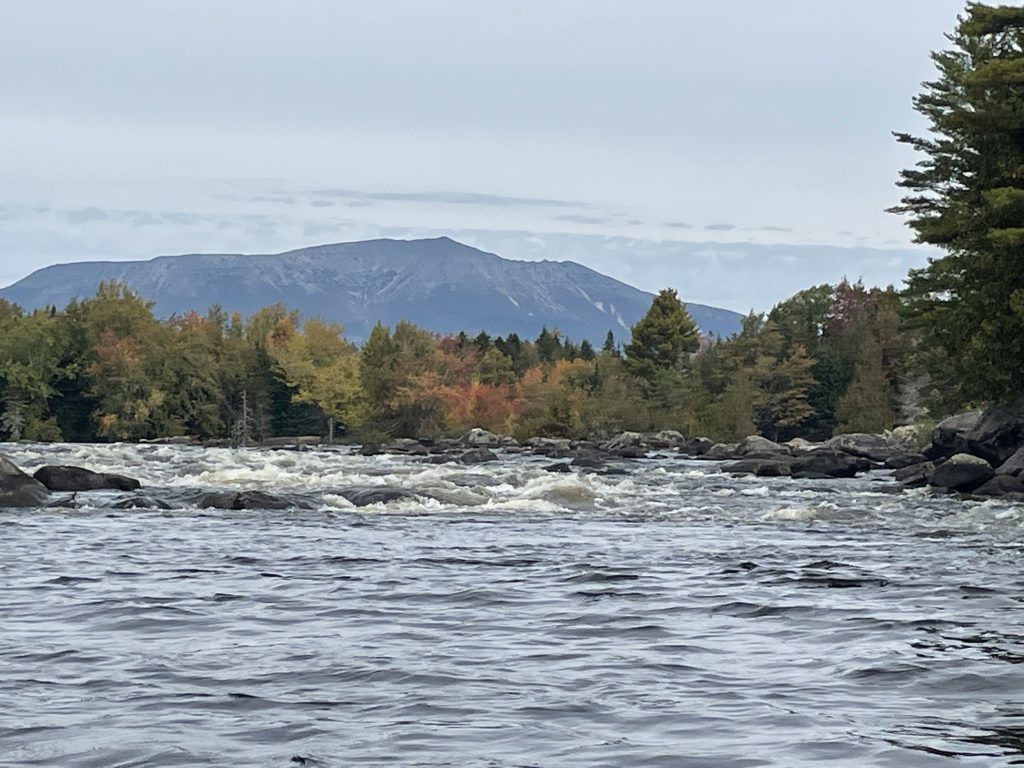
    The problem arrived on the lower portion of Passamagamet Falls. I took out and portaged the first section, but could find no marked or unmarked portion. They didn’t look that bad at the onset, but I quickly realized even mild rapids are not good in these foldable rigs.

    The chop submerged the bow of my kayak several times. Finally, I banked on a rock, and as I wiggled myself off, the bow completely submerged, and the front of the kayak folded, taking me and the kayak under. Only my dry bag, wedged in the back of the kayak, kept it all buoyant, and it’s a good thing it did.

    The upper Passamagamet Falls I portaged. The lower weren’t much better than this!

    A Note on Recovery in a Tucktec

    Where I went under, recovery was all but impossible. For one, at the very least, you need to be able to touch bottom. I am 5’9″, and this spot of the river was too deep. My PFD kept me afloat (and alive), but the river was freezing and f–king around with the kayak in the water was just going to prolong the possibility of hypothermia. I kicked it to shore, again, able to keep it afloat with its aft sticking out of the water.

    An enterprising fellow demonstrated the possibilities in a great YouTube video a few years ago:

    After drying off, I continued on, but the wind picked up to around 10 mph on Ambajejus Lake. As I rounded the last little peninsula on Ambajejus into Pemadumcook, the wind-driven swells were again submerging the front of my kayak.

    I made the choice at that point to hug the shore, paddle back up Ambajesus and take out at a bridge I went under earlier in the trip. Along the way, a husband and wife on their fishing boat sent me over the side again when they didn’t slow passing me.

    From there, it was an 8 mile walk back to my Jeep. I was passed by a bunch of logging trucks as the sun set, and I walked the final 4 miles in the dark, back the horrid road back to “Omaha Beach”, a campground and carry-style put-in on the Deadwater.

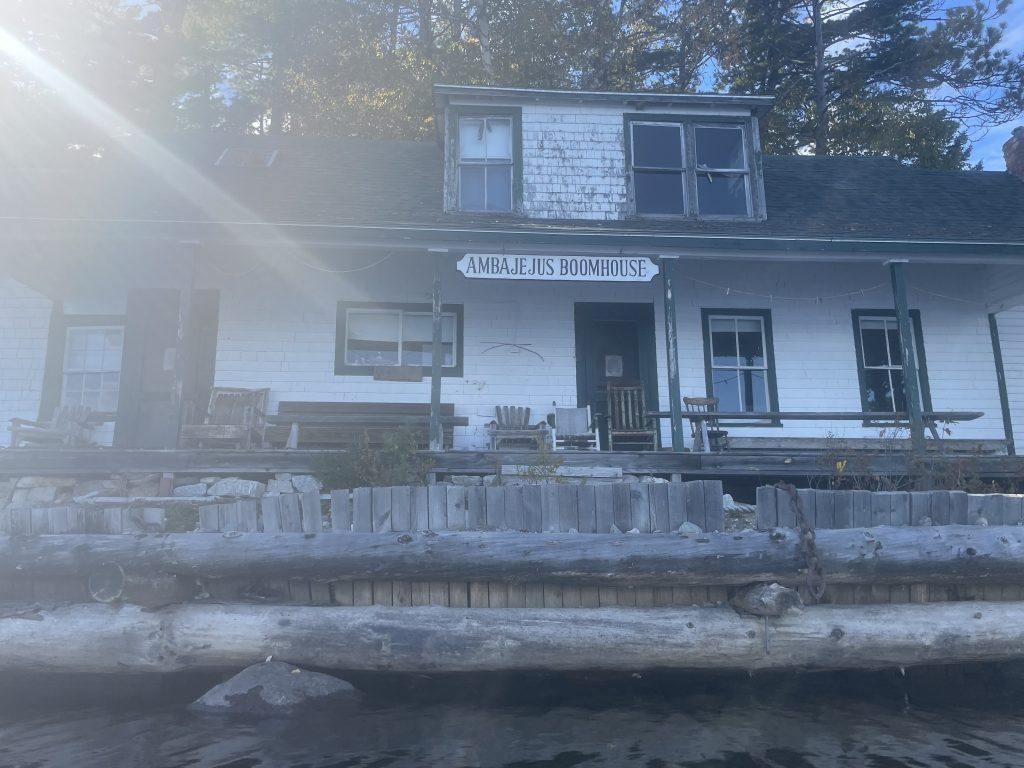
    The Ambajejus Boomhouse is one of many historical remnants from the logging era you can see on this trip.

    The Verdict

    This trip would have been fine had I portaged the lower falls. It is almost all flatwater otherwise. I am not disappointed in Tucktec in the least. They are quite clear about the idea conditions for a foldable kayak.

    They are durable. The plastic is hard and resilient, and if banking on the rock in the Penobscot put me under, the kayak was fine after I recovered.

    They are meant for close-to-shore paddling with flat, calm conditions. They are not a good fit for wind-swept lakes, rushing rivers, or the ocean, all of which are tempting, especially here in Maine.

    I will continue to use them and just exercise more caution, with more preparation for harsh conditions.

    Oddly enough, the “rock star” of my adventure was my iPhone 12 Mini. I forgot to bring its little waterproof pouch, so it went under with me. The waterproofing on these models is no joke. While the TrueDepth camera no longer works, everything else does.

    I filmed the entire experience with my GoPro, and I made a movie to highlight the experience, which you may view below.

  • Elul’s End

    Elul’s End

    A Synagogue President Reflects on the Appalachian Trail

    The sun finally set on The Horns Pond in the Bigelow Range. I returned to my campsite, with my hammock strung between two sturdy trees, and retrieved a small sandwich bag. Inside was a small portion of a havdalah candle, a couple of cinnamon sticks, and a small bottle with the requisite amount of Manishchewitz.

    In November, I’ll likely be entering my third year as president of Maine’s oldest continuously operating congregation. We’re one of only two synagogues in the state affiliated with the United Synagogue of Conservative Judaism.

    These last two years have been hard work. Our previous president left me with an unfulfilled strategic plan and a looming renovation to our social hall. We discovered a possible budget shortfall, and then the pandemic hit. To top it off, in spite of an extensive leadership resume—26 years in the military, an MBA and business leadership background, not to mention several years as Vice President and board member of a larger synagogue in Pennsylvania—there’s a difficulty admitting that I was well-suited for the role. We’ve had imbroglios over gifts, dramatic resignations from the board, deaths we couldn’t properly honor, and of course, everything in orbit around COVID-19. And while at times I feel like a Welsh sin-eater and not so much a functional leader, I do enjoy the role, because I care so much about my community.

    Throughout Elul this year, I davened the requisite liturgy. I did selichot. I blew my shofar. It’s a far cry from when I was a ba’al t’shuvah waving a chicken around my head. Back then, I was just trying to find Jewish authenticity. Today, I’m trying to find true communion with the Divine, and it is elusive. My “Jewish headspace” has been fully consumed by my role.

    I search for that communion in a place where I always find it: on the Appalachian Trail.


    I’m a year out from having left the military, and I’m acutely aware that I’m out of shape. The climb up the Bigelows on the Appalachian Trail off of the Maine Route 16 Trailhead is, for me, brutal. It’s not the hardest hike I’ve ever done, but right now, as I feel the loss of 26 years of muscle tone, it’s not the easiest, either.

    Davening in the Bigelows

    Through the trees, as I hike, I catch glimpses of Sugarloaf, and on the north side of the range, Flagstaff Lake.

    I davened shacharit at my campsite in the morning, and davened mincha atop a smaller peak overlooking The Horns, all the while being buffeted by the winds. It’s the first time in a while that I’ve truly felt in touch with the Divine.

    It hasn’t happened for me this year in shul.

    Are you vaccinated? Where is your mask? How many people can we safely accommodate in the sanctuary? What about breakthrough cases?

    I am occasionally asked by our gabbaim to conduct the Torah service or Musaf, since I’m familiar with the liturgy. That’s a moment when I sort of feel close to the Divine. I’m merely competent. My Hebrew is functional, but I get performance anxiety, and I’m certainly not the practiced service leader our rabbi is.

    On top of a high Maine peak, however, it’s just my voice against the wind, and the wind wins. I ask for healing for my friends and loved ones who are ill. I ask for all the things we ask for in Shemoneh Esrei, and I mostly mean it. I think God hears. I hope God hears. I can’t hear myself.

    Sometimes I envy people who say they hear the voice of God. Most of the time, I’m suspicious of their mental health or their honesty. On this day, face into the wind, looking across the breadth of Maine’s mountains, I’m wishing I could hear even a whisper in return.

    The beauty and serenity does make me feel in communion with a Creator, albeit in a unidirectional, appreciative sense. Our illogical value we place on the aesthetic is one of the characteristics that is to me evidence of our intelligent design. We are not taught that a view is “breathtaking.” We innately know that when we look up on an incredible vista, that it is “good.” I cannot understand the evolutionary advantage in such an adaptation, not when we are so ill-informed by such an instinct that we still poison our living world.

    I stand on the precipice overlooking the valley below. I manage to put out of my brain all of the sour thoughts about the past two years, and just think about the exertion that brought me there. The simplicity of the effort and its reward.

    Surely, there’s a metaphor in there.


    John Prine’s last album, The Tree of Forgiveness, is my new Elul staple since his passing in 2020. The album itself starts with a wrenching song, “Summer’s End.”

    “Well you never know how far from home you’re feeling
    Until you watch the shadows cross the ceiling
    Well I don’t know but I can see it snowing
    In the car the windows are wide open.

    Come on home.
    Come on home.
    No you don’t have to be alone
    Just come on home.

    The moon and stars hang out in bars just talking
    I still love that picture of us walking
    Just like that ol’ house we thought was haunted
    Summer’s end came faster than we wanted.

    Come on home.
    Come on home.
    No you don’t have to be alone.
    Just come on home.”

    Elul’s end collided with summer’s end this year.

    Coming down the Fire Warden’s Trail from Bigelow Mountain, this song was stuck in my head. It wasn’t just that I was returning to my wife, Leah, and our girls. I came off that mountain this Labor Day weekend, which meant that tonight, at erev Rosh Hashanah, I’d be standing at the door to our shul with our list of vaccinated attendees, and demanding proof of vaccination for the rest.

    I’ll be doing last minute work with our audio and live-streaming service. The lighting will be just so. I’ll receive the litany of complaints from congregants about this or that, who are less concerned with solutions to problems than just the sense that they are heard.

    These people, like me, have probably felt just as or more isolated across the last two years. This year, we at least have the opportunity to be together.

    No, you don’t have to be alone.

    Some of us will just enjoy the pageantry of the the liturgical experience. Others may well try and get right with God and each other. We’ll come on home, and begin the cycle anew for the following year. Some of the faces we see tonight and tomorrow won’t be with us for the next go round.

    Next year, I wonder if I’ll again be standing on a mountain peak, trying again to hear God, to touch the infinite unknowable.

    As I head to my campsite at Avery Col, I realize it’s been 15 years since I’ve thru-hiked a major trail. Hiking this late in the season in Maine on the Appalachian Trail, I encountered thru-hikers (and their pungent stench) making their mad dash to Katahdin before the first snow arrives. As I spoke with other hikers this weekend, where our only commonality was nature, I realized how much more important the deeper connections we have to our other humans are. If I can build a temporary relationship with a stranger in the woods merely because we both travel by foot, how much more can I build with someone who generally believes what I believe?

    I know I need my congregation, and my congregation needs me to continue to try and be the best and most responsible leader I can be.


    As I load my pack into the back of my Jeep, I’m still left with questions about my relationship to God. Though the Appalachian Trail will always be the holiest place I can find to try and reach the Unknowable, I still feel like I’m missing something.

    When the desperate final prayers of neilah end and the ark closes on Yom Kippur, all the questions of the holiday will still linger for me.

    Who are we to God? Who am I to God? Does God hear this? Did I do all right? Am I in the book? Will my kids be alright?

    And I won’t know.

    That’s how things are always between God and me.

    Unresolved.

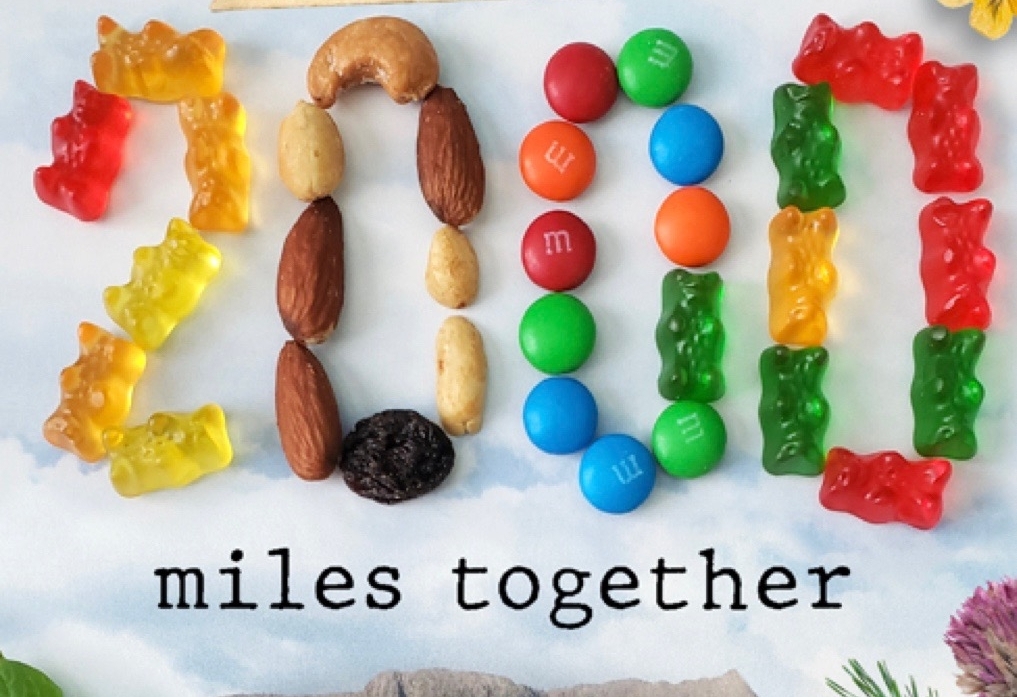
  • Thoughts on “2,000 Miles Together”

    Thoughts on “2,000 Miles Together”

    In 2018, the Crawford Family, consisting of two parents and six children, hit my “Appalachian Trail / lives in Maine” radar, over a debate as to whether they should be allowed to summit Katahdin with their two-year-old son, Rainier.

    There were many thoughts on this, separated into a variety of camps.  The Baxter elite, often already resentful of the thru-hiker set, of course said no.  Another group believed “the rules are the rules.”  The libertarians among us said, “who is anyone to tell anyone else what they can’t do with their kids?”

    If you don’t know that outcome, I’ll leave it to you to find out in this book.

    As critical as I am of the book, I am not critical of the Crawfords as parents.  I stand in stark admiration of them for undertaking this with their children.  I don’t know if I’d call them role models, but as is often pointed out, and will continue to be pointed out, getting kids off of the couch and into the wild is widely celebrated.

    If the Crawfords are guilty of anything, it’s that they chose to make their family hike a social media spectacle, with vlogs, drones in all the wrong places, concerning themselves with trolls, etc. You could follow their attempt on YouTube, under “Fighting for Together.”

    As both a thru-hiker and a parent of (fewer) children within similar age ranges, I could admire the family undertaking. Perhaps I could even envy it. My wife, Leah, is not even remotely outdoorsy. She’s of the packaged vacation, Disney World, cruise, time-share variety. My oldest, who is now a college student, has likely never slept in a tent. My 16-year-old took one overnight trip with me in Camden River Hills State Park one cold December, and that was her last trip with me. My youngest, who is five and a half, is ready for these adventures, but I will be competing against focus-grouped and colorful animated brand marketing as she ages.

    Any parent who wants to push back against “screen time” and childhood obesity should admire the Crawfords. At the same time, the social media focus in turning their “adventure” into a commoditized affair partly undermines the message of unity and turns it into “look at our family unity.”

    This does not mean they deserve scorn, or having child protection bureaucrats descend on them in the Smokys.

    If you read their new book, 2,000 Miles Together: The Story of the Largest Family to Hike the Appalachian Trail, you understand that just because an undertaking is novel and admirable, doesn’t mean that it’s particularly enriching.

    No Insights or Deeper Meaning

    The thru-hiking world is littered with poorly-constructed documentary videos. To his credit, Ben Crawford and his children put together competent videos, and similarly, this book is competently written.

    The continued emphasis on “the largest family to hike the Appalachian Trail” almost highlights that this is the only real achievement of the hike. Perhaps the Crawford family internalized deeper meanings of the hike and family that they didn’t expose in video or in this book, but you won’t find them.

    In many cases, it’s Jon and Kate Plus Eight meets the Appalachian Trail. Another generic white, Christian (non-denominational) family manages to successfully market being a generic white, Christian (non-denominational) family.

    I don’t think it’s a harsh judgment of Ben or Kami Crawford to say this, either. We don’t go into the reality show approach to these events with high expectations. It’s the bland inspirational pabulum that gets stenciled on dining room walls (“Live, laugh, love!”) or superimposed on stirring photographs.

    Self-Absorption and the Need for Validation Permeates

    I don’t want to call this book self-aware, as it would imply a sense of objective introspection that’s just not there.

    Crawford spend considerable parts of the narrative attending to what the outside eye, be it commenters on YouTube, Vegas-oddsmakers, and strangers along the way must think about the Crawfords.

    No doubt, they were wondering the same thing about our family. We’d even heard there was a line drawn in Vegas and people had placed some very low odds to bet on our failure.

    The repetitive citations of YouTube commenters in almost every chapter and their thoughts on the Crawford hikes can only be described as aggravating. It serves two purposes, to either validate their undertaking, or to augment the sense of “us against everyone” that seems vitally important to Ben Crawford for one reason or another.

    It’s hard to accept that Ben Crawford doesn’t, in fact, thrive on Internet critiques when he devotes so much literary real estate to it.

    Even the descriptions of the personalities they meet along the way circle back to commentary on The Family and their hike. Arnie-1-mile, “The Degenerates”, and others all receive dutiful biographical treatments, but they are only accorded narrative significance if they relate positively to the family undertaking.

    “I am so blown away by what you guys are doing…”

    “We’ve been watching your family for a while…not many adults could do what I’ve seen you guys do.”

    “God bless you guys…you’re living life your own way. That’s so important.”

    Scant Descriptions of the Landscape

    In many ways, the only way you know, throughout the narrative, that the Crawfords are on the Appalachian Trail is that it’s ostensibly the subject of their hike.

    There are few descriptions of the natural environment they are traversing. Names of landmarks and towns are listed, but if there’s a moment where the Crawfords are humbled by the mythical beauty of the trail, it’s in short supply.

    We get mileages. We get the day-to-day. We get when Kami is on her period or how they have sex.

    We get vast descriptions of the challenges of motivating children, which is understandable.

    Everything is Overcoming Adversity if you Frame it as Such

    Really, what this book boils down to is a recounting of how The Crawford Family overcame adversity. The 2200 mile hike is not enough. It’s Internet haters, it’s kids that grumble about getting up. It’s the logistics.

    What it is…is banal.

    I’m not sneering at this book, really, I’m not. I’m not sneering at the achievement of moving 6 kids and 2 adults from Georgia to Maine on foot. Having done this hike by myself, it’s challenging enough without having to fold parenting into the mix.

    It exists on a continuum endemic of this day and age, where achievement is deeply connected to exhibition. With the attention paid to online voices, with the emphasis on how others they meet relate back to them, it becomes very clear that at least for Ben Crawford, this was the takeaway. I don’t know if it’s true of his whole family, but it comes through in the videos and this book that Ben Crawford absolutely thrives on an enhanced and artificial sense of obstacles.

    There’s no attempt to really engage the reader and say, “this is something you can do with your family.” It is, from start to finish, an exercise in navel gazing.

    And to that end, I say, “Hike Your Own Hike.” The beauty of the Trail is that it bears the weight of the superficial as much as it does those in search of a deeper, and less effusive connection with the Earth and other humans.

    TLDR: If you are looking for deeper insights into parenting, the Appalachian Trail, or anything else, really, “2,000 Miles Together” is not your book. If you’re looking for a travelogue through Appalachia, this book will be deeply unsatisfying. If you’re looking for what an Internet-aware, meta-narrative about a family that sought an achievement, this book adequately captures what their video logs already exposed.

  • 2020 Allergy Season:  What Backpackers Should Know

    2020 Allergy Season: What Backpackers Should Know

    Not to advance stereotypes about Jewish health neurosis, but bubbie wants you to take care of yourself out there, you know?

    According to AccuWeather we’re on track for a pretty severe allergy season.

    We talked to an immunologist friend and sought some advice that we can share about the Pollen Apocalypse and how you can still enjoy time outdoors.

    Drugs

    Now that I’m out of the military and mandatory drug testing, I like saying, “drugs.” But for me, and especially my youngest daughter, I couldn’t survive without Claritin or other antihistamines during allergy season.

    Go Up!

    In Maine, we have a good amount of “above treeline” hiking, but we’re also close to it in New Hampshire. Pollen is heavy in the air, and above tree line, most of it will end up going down the slopes, leaving the exposed ridgelines relatively pollen free.

    Stay Inside, or Hike During/After Rain

    This has the biggest “boo, hiss” factor of all the advice. Even inside pollen season, there are still some days that are better than others. Pay attention to your local weather forecasts, air quality action days, and try to time your outing to when it’s most conducive to healthy respiration.

    The other option is to look for rainy days. This is a downer or a deal-breaker for many people, but rain will wet pollen down or wash it off of trees.

    Clean Yourself

    During allergy season last year, I started getting a jump start on rebuilding our woodpile for the coming winter. I ended up going to bed every night with a massive headache and clogged sinuses.

    I’m a “morning shower” guy, so I was going to bed with a lot of pollen in my hair (even with my yarmulke), and subsequently was rolling around in it. Now, during pollen season, I shower after working outside.

    The same applies to camping. It’s so easy to bring pollen with you into your tent, which as far as enclosed spaces go, can be like an echo chamber for allergens.

    Camping Choices

    During high-pollen times, camping downwind of forests or fields of wildflowers can be a great choice. But if you live in an area with dramatic windshifts, this isn’t always all that useful.

    Camping near a river, lake, or pond can be helpful, as they attract and hold pollen, but you must be careful not to run afoul of the wilderness ethic and responsible practices.

    Don’t Underestimate Allergies and their Ruinous Impact

    Aside from the feeling that it never stopped raining, the other factor that almost drove me off the Appalachian Trail during my first thru-hike were the high-pollen count days.

    I wasn’t subject to frequent sneezing, but my eyes felt like they were on fire, forcing me to abandon my carefully-tended contact lenses (which was a mistake story for another day) and wear my super-ugly glasses for months. I had non-stop headaches, and because I packed all wrong to begin with, and I was dirt-poor, there was no medicinal relief. In what would become the story of the majority of my adult life, I just soldiered through.

    Sometimes we take our health for granted, until we’re reduced to our rawest forms in the wilderness. It’s then you realize that the medicine cabinet and air filters don’t fit in your pack. It’s good to consider allergies in any of your seasonal hiking choices.

  • Event:  Northville-Placid Trail Thru Hike

    Event: Northville-Placid Trail Thru Hike

    June 17-25, 2020

    Kosher Backpacker’s Brian Kresge is leading a shomer mitzvot thru hike in the Adirondacks, with a zero day for Shabbos.

    Participants must be fit and capable as the hike is remote and trail conditions can be difficult.

    We will have a kosher parve (pescetarian or vegetarian) resupply available at a modest cost, or you can roll your own resupply. Daily prayer and daf yomi study (if you are undertaking it). Learn how to build an eruv with hiking poles and arrange a transient camp for Shabbos.

    About the Northville-Placid Trail

    138 miles through the state constitutionally protected Adirondack Park in New York. It was developed by the Adirondack Mountain Club in the 1920s, and is currently maintained by the NYS Department of Environmental Conservation.

    The trail crosses through several wilderness areas, including Shaker Mountain Wild Forest, Silver Lake Wilderness Area, Jessup River Wild Forest, and the High Peaks Wilderness Area.

    It’s not a hike with a terrific amount of elevation change, but because it is so lightly used, there can be blowdowns and obstacles along the way. It is also a very remote hike, one of the most remote in the northeast.

    Trip Itinerary

    TBD closer to trip, based on group size and resupply needs.

    Transportation

    You will need to provide your own transportation to the trailhead. We will have transportation available at the end of the trail to return you to your car at the Northville Trailhead.

    Resupply

    You can carry your own food for 9 days, schedule your own resupply, or work with us to resupply at the midway point with kosher vegetarian / pescetarian options.

    Event Link is here: https://www.thekosherbackpacker.com/event/northville-placid-trail-thru-hike/