5779 saw the publication of our book, The Kosher Backpacker, the launch of our Appalachian Trail app, and this website. It was a big year of developing specifically Jewish content for the outdoors.
So what is 5780 going to be like?
Organized Jewish Outdoor Excursions
This year, we’re going to work more aggressively for organized outdoor activities. Backpacking trips, canoe trips, and more. We’re going to have workshops on kosher one-burner cuisine, how to properly keep and remember Shabbos in the woods, and minor holiday observances outdoors.
We’re going to work with the Maine Israelite Outdoor Society, a new local organization headquartered in the Jewish community of Bangor, Maine, for trips in New England. We’re also going to see if we can find partners elsewhere, to start refining a national, and hopefully someday, worldwide program offering.
Environmental Stewardship
There are so many challenges facing our world from climate change. Though unabashedly apolitical, The Kosher Backpacker recognizes that climate science is real, and there are meaningful ways that we can participate in environmental advocacy and action.
We’ll look to partner with the AMC and other groups this year for Shabbos-respecting trail crew volunteer work, and participation with the Sierra Club in some of their activities. In Maine, we’ll work on joining the Maine Chapter of the Sierra Club on regional clean-ups.
New Content, New Apps
We’re working on a Pacific Crest Trail app for release prior to this year’s hiking season. Like all of our apps, it will not be a replacement for some of the better guide apps, but we do want to ensure that we offer features specific to Jewish hikers, regardless of their style of observance.
We’ll be working on more gear reviews, more recipes, and more trail listings with the shomer mitzvot traveler in mind.
5780 Will Be Exciting…With Your Help
The Kosher Backpacker welcomes writers from all walks of Jewish life. This site isn’t being about a better Jew, or pushing traditional observance on people. This site is about relating Jewishly to the outdoors, and there are a million different ways to do that. We do settle on the “frummest common denominator,” but when we write advisory or instructional content, but you are under no obligation to pay any mind to that if you write for us.
We can’t really pay you yet, as we ourselves are committing to this as a labor of love, but we will be grateful for your contributions.
In the meantime, we wish for you a great new year, easy fasts on Yom Kippur, and excellent wilderness experiences in 5780.
EDITOR’S NOTE: This article was started well before the tragic drowning and ensuing images of the father and daughter who perished crossing the Rio Grande. We will translate this article into Spanish as well, as information herein can be used to help safely cross rivers. We do not intend any insensitivity to the humanitarian crisis at our southern border, and as Jews, our concerns lie with treating the stranger in our land with dignity and decency.
After a recent long hike in Maine’s 100 Mile Wilderness, I was confronted with my first serious set of river and stream crossings in many years. Indeed, not since crossing the glacier-fed, braided rivers of Alaska’s hinterlands have I been so challenged by moving water.
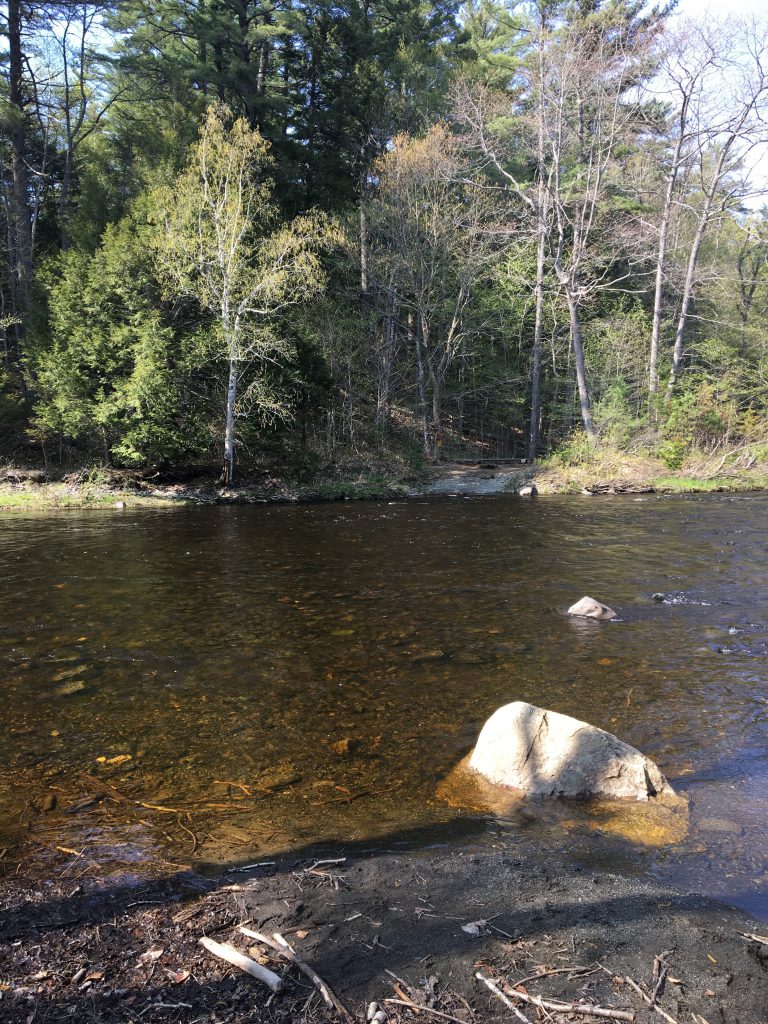
We had a late-lingering winter in Maine this year, coupled with a relatively wet spring, and so water levels as I crossed the Pleasant River into the Gulf Hagas area a few weeks ago were almost thigh-high.
On a stream crossing approaching the Carl A. Newhall Lean-To, I slipped on a rock and took a mighty, soggy dunk, which as we know in 50 degree weather, can bring hypothermia and death to the untrained traveller.
I am not, however, an untrained traveller. I went to two mountaineering courses while stationed in Alaska, and would be classified as an “assault climber.” Further, I have many experiences in deep wilderness and mountainous terrain with river crossings. It’s just a decade or two stale, I write with a chuckle.
Crossing Site Selection
On East Coast trails (ahem, Maine), site selection isn’t particularly necessary, as trails will generally take you to the spot determined by trail planners to be the best crossing. It doesn’t hurt to look, of course, as conditions can change, depending on nature and frequency of trail maintenance.
A dry crossing is always the best. In western or northern areas, the closer you are to the end of winter, the more likely you can find icy or snow-covered crossings. Fallen trees or log jams can also be used for a dry crossing.
If that’s not possible, it’s decision time. First, time of day should be considered. Early morning can be the best for a variety of reasons, except for after heavy rains. Water levels are usually lower, and you have the rest of the day for things to dry after the crossing.
As far as where to cross, the widest point is usually the most shallow point of a river or stream. You should avoid bends, as the water is usually deep and will have a strong current on the outside of the bend.
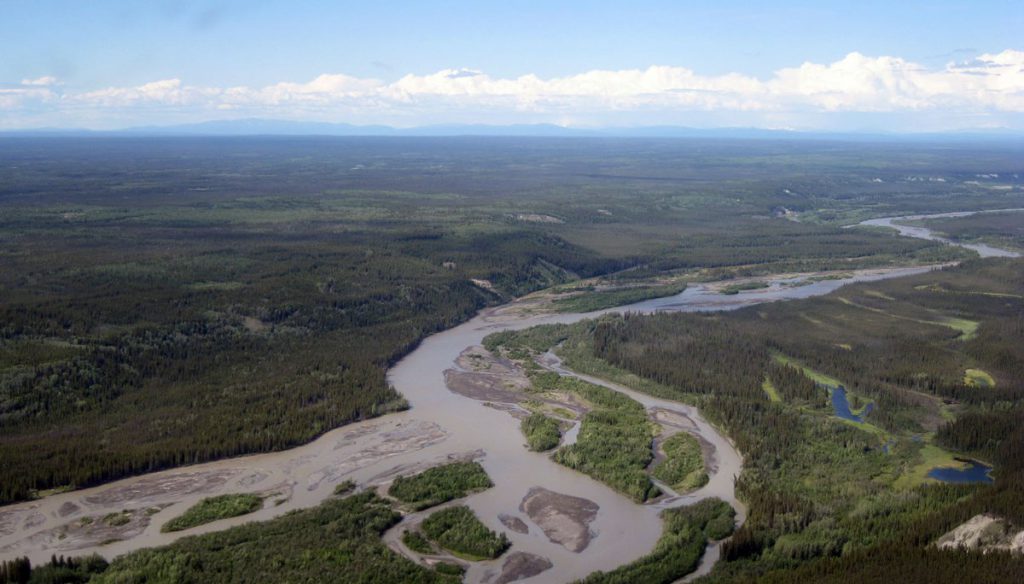
Mountain rivers, especially ones fed by glaciers, will often be braided with numerous channels. These are often an ideal spot to cross rivers. When I did a multi-week backcountry excursion in Wrangell-St.Elias National Park, this was de rigueur. When we took an excursion up the Savage River in Denali National Park, we mostly walked the gravel bars of the river for ease of walking.
The beautiful Copper River in Alaska.
When you do select a site, look for one where you can easily get in or out of the river. Low banks that one can walk into and out of are preferred to a climb in and out of the water.
Preparing Gear and Clothing for Crossings
Waterproof all the things! In this day and age, hikers are carrying far more electronics than ever, and those must be waterproofed. Generally, I keep my entire backpack inventory inside a waterproof, sealed bag inside my backpack.
A lot of people cover these things, but I’ve learned some additional things from military water crossings. If you are wearing pants with cargo pockets, button those or zipper those up. Pockets fill up with water and can weigh you down, and in swift currents, and minimizing that can make an astounding difference.
DON’T WEAR FLIP-FLOPS or OTHER SLIP ON SANDALS. This goes for “crocs,” too. In mild crossings, they may be fine, but in strong currents, they can be sucked right off of your feet, leaving you to walk barefoot on possibly sharp shoes.
I don’t take chances. I take my socks off and inner soles out of my boots, and wear the boots for the crossing. I get the greatest purchase on slippery rocks this way, and I don’t have to worry about a bleeding wound or just stubbing my toe.
Unbuckle the waist and chest straps on your backpack. If you go under, you’re going to want to shed that quickly, lest it drag you down and drown you.
Crossing By Yourself
As an avid solo-hiker, this has been the bulk of my experience.
You should face upstream, slightly sideways. Lean a little bit into the current, which will help you maintain balance. Sometimes, depending on the strength of the current, you may even want to turn sideways, because you’ll be pushed less.
Shuffle your feet along the bottom. Put your downstream foot in the lead. If the water is really cold and the current strong, you may have a temptation to rush, but you’ll want to be slow and deliberate. In Maine, I’ve discovered, the rocks beneath you are often slimy, and it’s very easy to lose balance and fall. With your lead foot, you should also be probing for bigger rocks, holes, downed branches, etc. If you find one, you should try and move around it on the upstream side, as especially in the case of rocks, the turbulence won’t be as significant as it will be on the downstream side.
When possible, you should cross at a downstream angle. Otherwise, you end up fighting the current more than you need to.
This is a strong argument for trekking poles. In recent years, since moving to hammock camping, I’m less inclined to carry trekking poles, but for water crossings, they are very helpful. Put your pole (or a downed branch, never cut a live one) on the upstream side of you, and leaned upon for support. Move the staff first, then slowly shuffle your feet towards it.
Crossing with Others
Fording one of my old favorites, the Eagle River on the Crow Pass trail in Alaska.
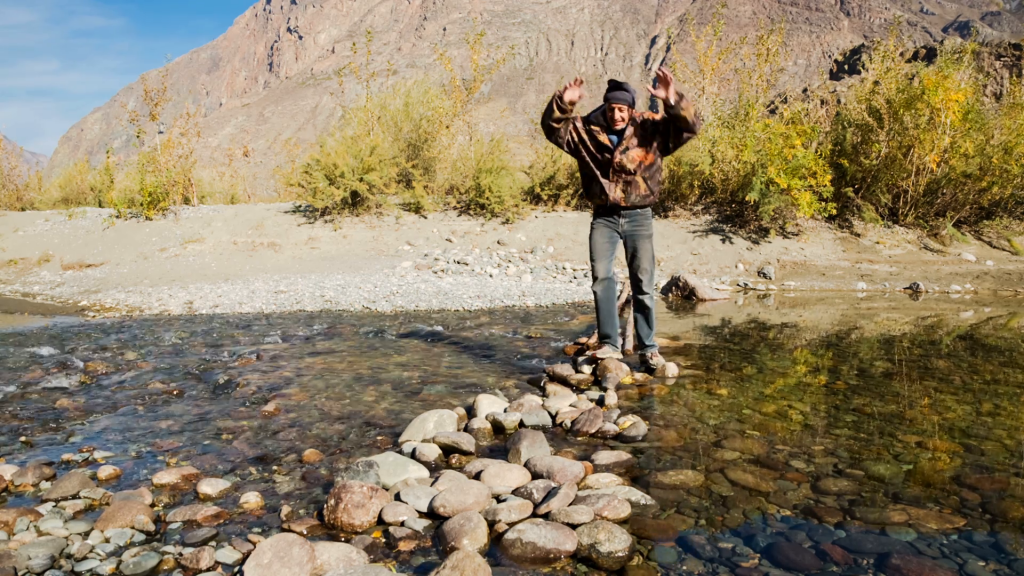
Sometimes, a swift river calls for friends. When the river is thigh deep or higher, or the current is heavy, linking arms and taking a go is the best way short of finding another route or crossing.
The largest person should be positioned on the upstream end of the line, with arms interconnected. The group should then cross parallel to the direction of the current, but still at a slight downstream angle. The individual movements are similar to the individual crossing techniques.
It is advisable to put your poles away, unless you are on the ends of the line.
Crossing with Ropes
I would note that it is possible to set up a crossing for others with a rope or ropes, but I strongly discourage it. For backcountry or even major trail travel, if the current is so swift, and there is no permanent fixture, either bridge or wires, it is simply too hazardous a location for crossing.
Swimming Across
Don’t, especially solo. You can certainly float your pack and doggie paddle across, but it’s a terrible idea if you aren’t in a group. Depending on the season or the temperatures, hypothermia becomes a very real concern. I always keep a dry set of things (or at least not too damp) to change into after crossings. I took a dunk on my last trip in the 100 Mile Wilderness in a deluge-swollen creak, and if I hadn’t immediately changed out of soaked clothing, I could have lost too much heat to safely continue.
If you are a solo hiker, please do know everything you can about self-rescue, and how to warm yourself up in case things go sideways.
Shavuot, as we mentioned in a previous post, celebrates the end of the counting of the Omer period (which coincided with the grain harvest in antiquity), and marks the Jewish people receiving the Torah at Mount Sinai.
The holiday has a number of names in addition to Shavuot, which means “Festival of Weeks.” It’s also known as the Festival of the Harvest (chag hakatzir), Festival of Reaping and the Day of First Fruits. Hellenized Jews, and later Christians, refer to it as Pentecost.
The choice first fruits of your soil you shall bring to the house of the LORD your God.
Exodus 23:19
These first fruits, the bikkurim, were the underpinning of the holiday in antiquity. Today, many shuls have the tradition of decorating with greenery to celebrate it.
As wilderness enthusiasts, it may be helpful for us to relate this holiday and Sukkot to the concepts of stewardship and go beyond beautiful, but relatively closed community-focused minhag. This holiday in particular gives us both a physical and esoteric charge: responsibilities to the land, and responsibilities to the soul and the Divine with the giving of Torah.
The Religious Action Center of Reform Judaism asks, regarding Shavuot and the Environment:
How can we ensure we live in an ecologically responsible manner?
How can we transform our individual practices into advocacy that includes the broader community?
After moving to our 12-acre wooded plot near the Maine Coast three years ago, Leah and I planted a pear tree, a plum tree, and two apple trees. When we planted them, my first thought was imagining the very first pear, and being able to take it to a Temple in Jerusalem as our ancestors did.
The connection to the environment is strong. And we remember, that Hashem instructed Adam to be a steward of the earth, one of the earliest commandments given in the Torah.
Eco-Kashrut
Jews from all walks of life are starting to consider not just the base kosher standards in their approach to kashrut, but the ethical implications of their food. Where it or its ingredients are sourced, are the cultivators/workers fairly compensated, are animals in question treated in accordance with our laws concerning tza’ar ba’alei chayim?
If you think it’s untoward to float a term first created by Rabbi Shachter-Shalomi, of the Jewish Renewal Movement, think again. It’s very clear we have a mandate to think beyond just the material anxieties of kashrut. If you can take time to worry about toeveling your dishware, you can think about this.
On Shavuot, we traditionally eat dairy foods, because our ancestors learned, at Sinai, how to keep kosher. They couldn’t immediately switch to schechita, so they opted for dairy meals.
What is the point of kosher? People debate. Some believe it to be healthier. Some believe it reflects the reality of desert cooking in antiquity. Many of the commandments underpinning kashrut are called chukim, mitzvot for which there are no obvious reasons.
So we all generally agree, amongst Jews who keep kosher, that we do it to sanctify eating, to do it in such a way that takes as mundane a thing as eating, and use it to consider our relationship to the Divine.
So for someone that cares about the environment, what better way to exemplify this sanctification through kashrut than to consider the holistic implications of our food?
For my wife and I, that has meant looking to do our own evaluations of produce and farm-to-table dairy products. Believe it or not, in the history of the Jews, organized certification is a relatively recent development. Jews used to be responsible for ensuring their own evaluation of kashrut. With the increased amount of transparency in sourcing, now is as good a time as any to return to that, and wait for our certifying authorities to catch up with us.
Look for Fair Trade Labels in addition to your preferred hechsher. Thus far, eco-kosher certifications have emerged mostly from Renewal sources, so you’ll have to check with your rabbi about their validity. If you are curious, I know of two: Eco-Kosher, which as a trained mashgiach myself, puts a decent amount of time into both traditional standards and the ecological considerations; and the Shtiebel Eco-Kosher Certification. They’re both fairly mature, but whether or not they truly meet Jewish standards is a subject for debate.
In Our Homes and Gardens
We’re finally coming off of a relatively mild black fly season. My wife and I considered having our property sprayed to help with insect abatement, but then we realized how reckless it would be to do so.
First, we live on a vibrant tributary to the Penobscot River.
Second, we have children.
Third, we have so much fauna on our property, to include bears, turkeys, deer, fisher cats, racoons, porcupines, and the occasional moose.
At our homes and our institutions where we have gardens, we need to consider environmentally friendly ways to cultivate our land. You don’t need harmful chemicals to have a vibrant garden or beautiful lawn. My wife and I have a mostly native plant garden that is incredibly hospitable to honeybees, and yet is very beautiful to look upon.
We just need to start composting and doing more to avoid recyclable waste.
Also, consider, if your synagogue has the land, hosting a community garden.
Make the Commitment
We don’t need the holiday of Shavuot to do any of this. We can make the focus traditional and just embrace these things in our daily lives. But it’s a good frame to have the discussions with our communities.
We’ve been at war for 18 years. I’ve been in the military, between the active duty Army as a paratrooper and the National Guard as a paratrooper, Stryker infantryman, and transportation manager, for 25 years this July. Like any service member with any period of service, there are names we read on Memorial Day that are familiar. It’s a hard weekend, replete with survivor guilt for both combat deaths and suicides.
On Shabbos, I read the names of Jewish members of the American armed forces who have perished since 9/11. It’s a list that continues to grow, and because of “Jewish geography”, more than a few names on that list are people we knew and loved.
My tradition on Memorial Day weekend in recent years has been to eschew crowds, parades, pomp and circumstance, and indulge a period of quiet reflection in the woods. I’ve written on the blog my wife and I maintain about living a Jewishly observant lifestyle in the Maine woods about Judaism having a salve for moral injury, and for me, hitbodedut is a crucial component of that.
Hitbodedut
Rabbi Nachman of Breslov envisioned hitbodedut (“self-seclusion”) as a self-directed means to build a stronger relationship to Hashem. This works for me. On long slogs in the wilderness, I find it easier to talk to the Divine. It’s a little awkward when you walk past a party of other hikers who heard you coming, and then are curious about who you were talking to.
But I have questions.
In October, one of the former members of my old National Guard unit shot himself. He was living with his parents. He came downstairs one morning to where his mother was eating breakfast, told her, “I am in so much pain,” and pulled the trigger.
This hit his friends that knew him more than anyone, I imagine. He’s not the first suicide from my old unit, either, and at this point, we’ve lost more friends to suicide than combat operations.
I needed some time to talk to the Divine, to ask those questions we always ask when we feel like the world is allowed to careen towards oblivion. Why? And for once, I feel like I can tell Hashem that I feel like I’ve been doing my part…so why does the Divine feel like an absentee landlord?
Crossings
The ford of the Pleasant River on the AT in Maine
Enter the heavy and obvious metaphor. My trip started and ended with the ford of the Pleasant River along the Appalachian Trail. It was bad when I entered the wilderness from the Gulf Hagas parking lot. I lost my water shoes, ended up barefooting more than half of the ford, stumbling across slimy rocks that cut into the bottom of my feet.
When I returned the same way at the end of my trip, the river had swollen even more due to overnight thunderstorms. A couple of fishermen watched incredulously as I crossed the thigh-high water. It was a bad decision on my part, but returning to my car after the miles I put in in the previous days meant either the ford or adding 5-9 miles to my last day. I was exhausted at the end, and made the choice just to risk it. After all, I had made wilder and more dangerous crossing in Alaska’s backcountry, no? What was a rain-laden river compared to a rain-, snowmelt-, and glacial melt-fed river in Alaska?
Well, that was 20 years ago, and I’m not in the same shape, no matter how rugged I believe myself to be. But the crossing – I felt like I was entering something and departing something special. And most would I agree that I was – Gulf Hagas is one of the natural wonders if Maine, and in a world where we’re accustomed to high degree of accessibility, the sense that one has to “earn” those views added a sense of almost holiness to the experience.
The Fall
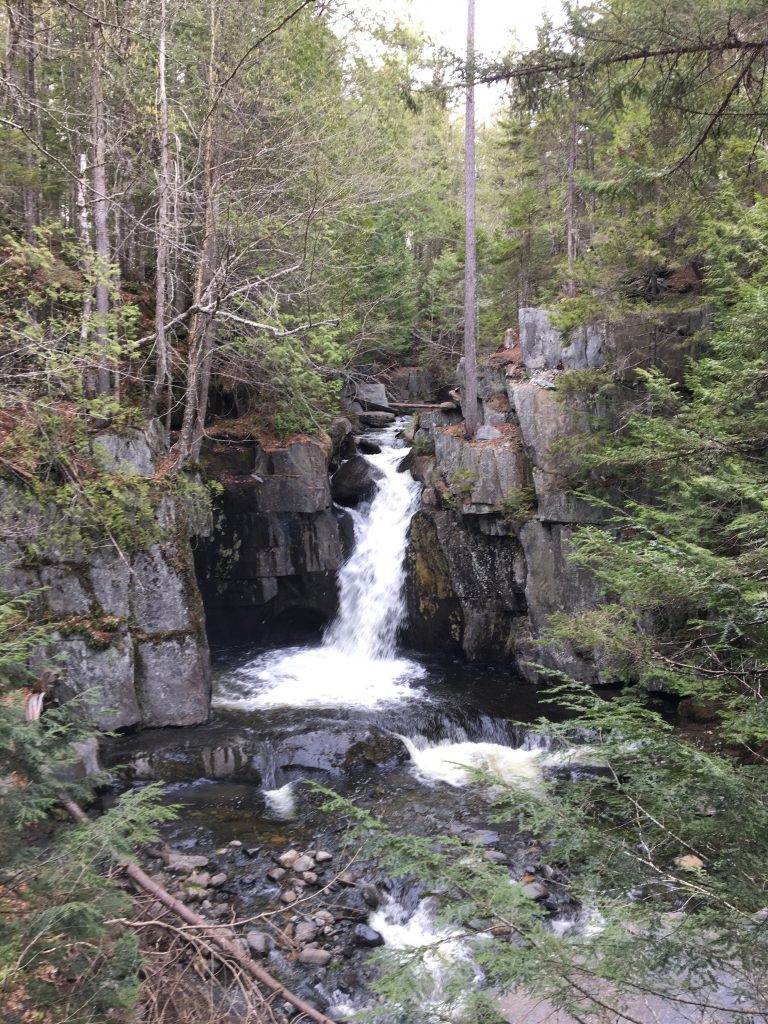
Gulf Hagas is, of course, spectacular. As I stood before each cataract, like Screw Auger falls, I’m reminded that the world that I believe was set in motion by a benevolent Creator is itself transcendent. We spend so much time inhabiting these moments in time, and I can only wonder if we got more veterans with the same blight on their souls in front of natural wonders, if they could gain some helpful sense of perspective?
But then, I think that trivializes how people relate to their every day. For the veteran, or anyone, struggling with addiction and mental issues beyond their immediate control, perspective doesn’t alter brain chemistry the way we’re finding that trauma does. It may well be a component in healing, but only magical thinking affords us the concept of a single, cathartic experience, or set of experiences, that bring people closer to healing, or at least, the elusive Golden Mean.
A gorgeous backcountry waterfall isn’t going to end the ongoing intrusive thoughts we live with. It’s not going to undistort the way a veteran suffering from PTSD sees themselves.
It’s such a nebulous thing, what causes this trauma for veterans. Perhaps it’s an easy answer – a firefight, a battle, an IED that blew up a comrade. Perhaps it’s the sustained tension of day after day of long patrols, and the repeated delve into that anxiety.
Really, can anything offset the loss? The loss of friends, the loss of sense of self, the loss of any semblance that one is safe and secure…these things are haunting.
Journey’s End
As I approached the Carl Newhall shelter after hiking the Gulf Hagas trails followed by 3.5 miles on the AT heading north, most of what I felt was fatigue. My brain stopped lingering on names like James C. Wilson, Chad Edmundson, Stuart Wolfer, Daniel Agami, Blake Miller, Eddie Zorak, and focused on putting one foot in front of the other.
A small pond along the trail echoed with the chirping of spring peepers and birds as evening fell. The air was pregnant with a looming storm.
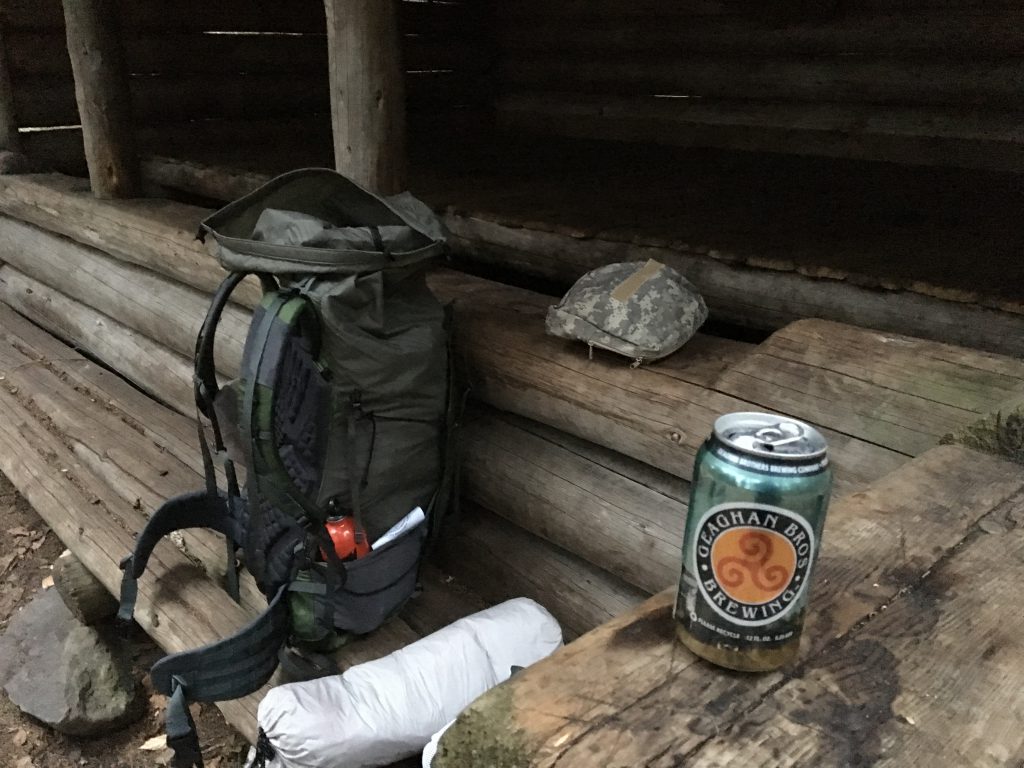
One stream remained between myself and the shelter, and a well-earned Bangor-brewed beer (a favorite of my rabbi’s), and some Tasty Bites Vindaloo.
I start unpacking at the shelter.
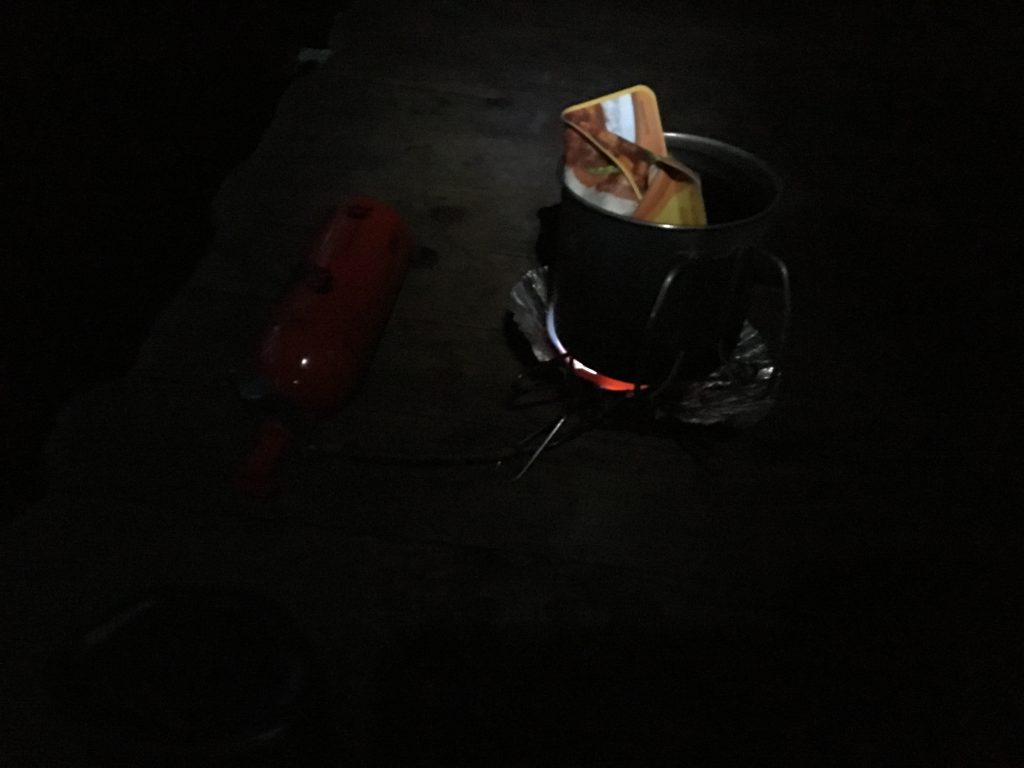
The rain didn’t start right away. I changed out of sweat dampened clothing into the dry things I kept in my bag. The temperature began to drop into the mid 40s, so I put on my down jacket. I finished my beer and started boiling the water for my vindaloo, as well as some hot cider.
Not from the Battle of Winterfell, my 20+ year old WhisperLite heats my vindaloo.
The darkness came on quickly. The vindaloo caused heartburn as I settled into my sleeping bag. The pain in my stomach made it harder to sleep than the percussion of the rain on the shelter’s tin roof.
When the heartburn finally subsided and I did fall asleep, I realized that my own soul was once again at peace, at least in that moment. Still, something gnawed at me.
In a year’s time, Memorial Day will come around. New names will be on our lists that we read. More veterans will have taken their own lives. The war will likely still rage on at the fringes of American awareness, and little will change.
That’s how life is between Memorial Days, even punctuated by soul-inspiring dips into the raw parts of Creation. It’s just like humankind’s perpetual relationship to our Creator.
We touch on hitbotedut in our book, with the semi-famous lines of Rabbi Nachman of Breslov, and the fantastic communion with the Divine that’s available in the wilderness.
But what about mourning? In Judaism, our mourning practices are synagogue-centric. We convene minyan, we say Mourner’s Kaddish, we observe Yikzor. As I write this, it’s Yom HaShoah. I searched for stories of Holocaust survivors who found solace and healing in the wilderness, but I did not come across such stories.
And perhaps that’s for the best. Survivor stories aren’t trite tales we can tug on for a delve into justifications for getting outside.
Spring hiking season has begun where we live in Maine. I daven with a window open after a downpour, the smell of petrichor and pine filling my nostrils. For Leah and I, our parents are all still alive, and B”H, will be for some time to come. We miss our grandparents and other loved ones we lost, but there’s few components of our daily davening that involve anything beyond being there for others who are mourning or are memorializing someone.
We’re counting the Omer, on day 13. It’s a period of quasi-mourning, but a hike in the wilderness isn’t one of the activities we generally refrain from during Sefirat HaOmer. It’s not for nothing that from the Exodus from Egypt and beyond the time at the end of the Omer, when we celebrate Shavuos and the receiving of the Torah, these epoch experiences themselves took place in the wilderness.
It is also very common to describe grief as a wilderness, playing on the themes of isolation and exposure.
One of the frequent themes in grief is finding a way back to gratitude after loss. I would argue that wilderness often offers opportunities for that, if you ascribe metaphysical value to a sunrise, a sunset, an ocean wave, a mountain vista, or a line of trees.
We’ve collected some Jewish reading on wilderness that may be appropriate for the day:
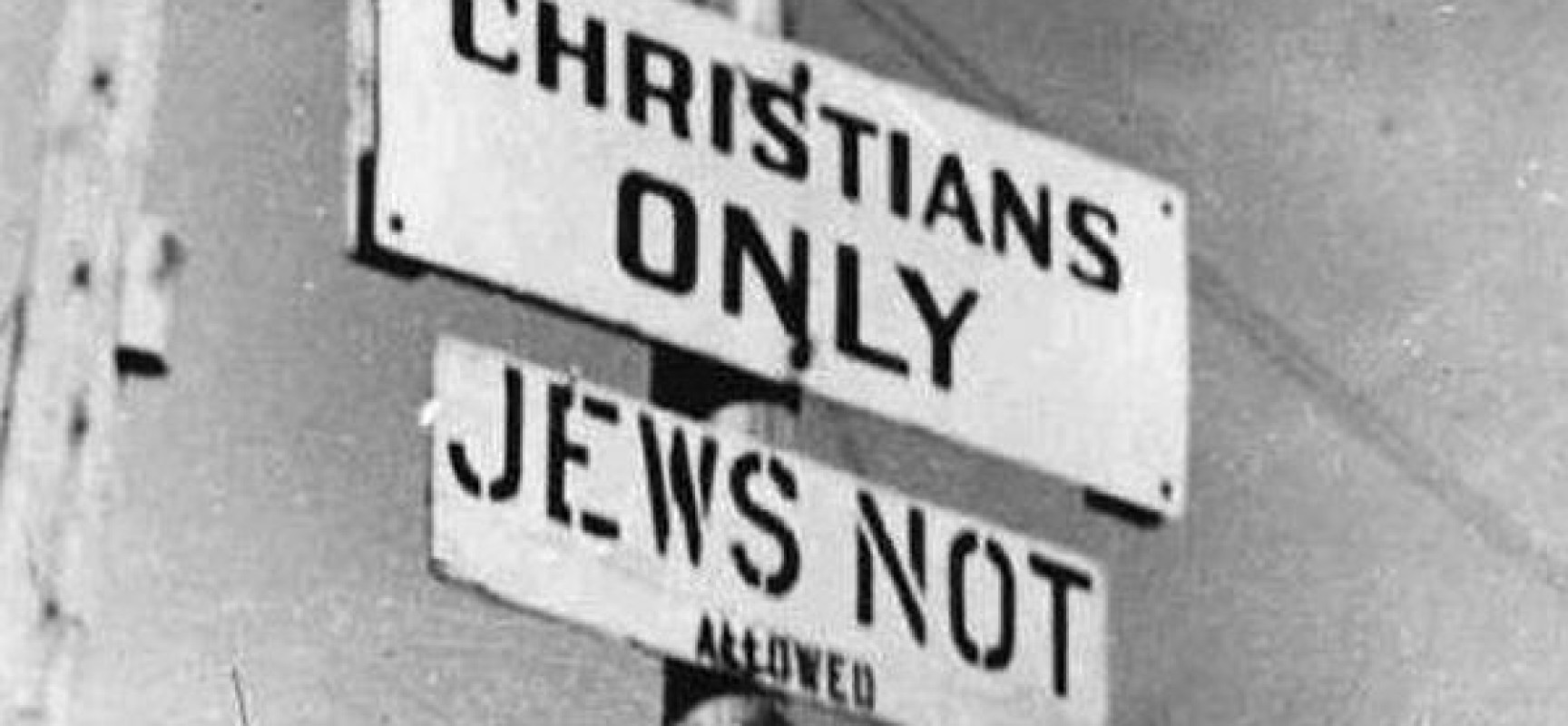
Just as an FYI, there’s no context that makes what happens in this video “okay.” The mayor of Damascus, in the wake of the incident, tried to make hey of the fact that the thru-hiker recording the video was trying to buy weed, but there’s never an instance where the response to that needs to include antisemitism. The people in this video were charged and convicted of crimes, and this store is no longer in business.
I’ve been hiking, thru, section, and weekend, for most of my life, and I’ve never encountered antisemitism on the trail. All I have encountered is comity and curiosity.
But what do you do when you do encounter it? If you’re a thru-hiker, this could be unnerving, possibly hike-ending. There’s a good chance you’re isolated from law enforcement, friends, family, or any kind of Jewish community.
We’ll share some advice here, much of which is based off of my experience both as a thru-hiker and as an observant Jewish soldier who has deployed abroad.
Be Informed
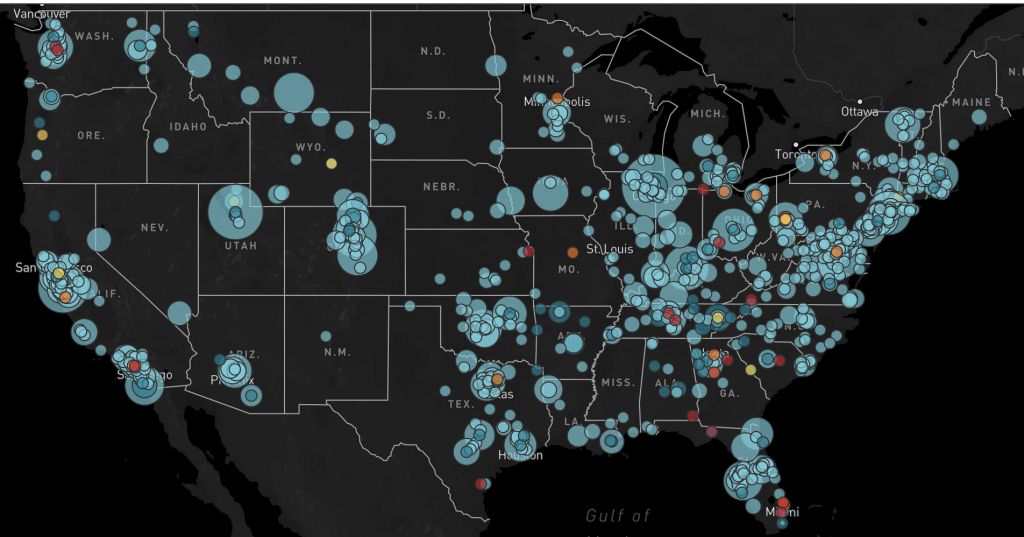
The first step is to understand the social climate where you are hiking. If you expect to interact with a local community at a hotel before or after a hike, it’s a little more important than if you’re just heading to a wilderness area. A great resource for the presence of hate groups and incidents is the Anti-Defamation League’s website, and depending on how you feel about them, the Southern Poverty Law Center.
The ADL maintains a filterable “hate map” on their website.
With the many trails available in the United States, it’s highly possible to avoid problems altogether.
If you’re traveling internationally, the State Department is a good resource to check against.
Sometimes, just putting the keywords “antisemitism” and the name of your destination yields informative results. Sometimes, the information may be dated, and an incident, such as this one that reportedly occurred in Patagonia, may not have a recent corollary. Still, forewarned is forearmed.
Minimize Your Jewish Footprint
One of the recommendations made to me for Middle Eastern deployments, or even Eastern European deployments, was to take steps to be less obviously Jewish. For me, the argument was not to wear my yarmulke out and about. When wearing civilian clothes, I was urged not to let my tzitzit out.
What I have found is that outside of major Jewish populations, very few people are familiar with tzitzit enough for that to pose a hazard. When hiking, I often wear other hats besides my yarmulke, but there are times when I just don’t feel like wearing a hat besides my kippah.
I already don’t make a big deal out of my diet as it is. I don’t go into stores lamenting that I cannot find a hechshered product.
Because I often park my car at trailheads, I’m careful not to invite targeted vandalism by not putting bumper stickers or window decals of Jewish interest on my car.
There are times it’s unavoidable that I have to make the explanation or be unavoidably Jewish, such as when I’m setting up a portable eruv for a Shabbos camp. It’s confusing to people (and sometimes park rangers) when they encounter your strings, or the otherwise odd way you may set up camp to prepare for Shabbos. Some of this can be avoided with stealth camping or being familiar with regulations of the place you are camping.
What do I do when it happens?
First and foremost, if you are in a situation where it’s fight or flight, do one or the other and commit to it. It’s helpful when you travel to know who constitutes law and order in your location. If you’re in Yellowstone National Park, that answer will differ sharply from Damascus, Virginia.
If you are in a situation where you have to fight, fight as if your life depends on it. Bite, pull, strike, kick, stab, whatever you have to do. If you’re in a place where you are allowed to and you do carry a firearm, be sure you know what stand your ground or similar laws apply to you before you even brandish.
If it’s mere harassment, the choice is yours as to whether you brush it off. You may consider recording the situation with your smartphone, if you think it will help identify someone who crosses a line in to criminal harassment or assault, or hopefully, act as a deterrent.
If you are on a long-distance hike, consider changing your plans, in case harassment or assault could possibly turn into something worse. Watch for if you are followed. Consider “yellow-blazing” to a distance beyond where it happened, or hole up in a hotel for a day or two until you think any possible threat has passed. Or consider quitting altogether. Especially for younger hikers without much experience in the world, antisemitism really can encroach on a sense of safety, realistic or not.
When you feel safe (or safer), and can do so, report the incident to the relevant local office of the ADL. You can do this by their website or by phone. You may also contact us at The Kosher Backpacker, and we will try and help you as much as we can.
The Reality
The good news is that for outdoors enthusiasts, antisemitism is a rare occurrence.
But we live in a world that with regards to Zionism and Jews, is becoming increasingly hostile, so it is important to mentally and emotionally prepare yourself for the possibility. Don’t worry about it happening to the point that it ruins your excursion, but do mull over what you will do if it happens.
The 2019 Appalachian Trail thru-hiking season has begun, and at The Kosher Backpacker, we want to profile long distance hikers of interest.
There’s nothing more near and dear to my heart than the role of national treasures like our National Trails play in emotional, physical, and spiritual healing for our veterans.
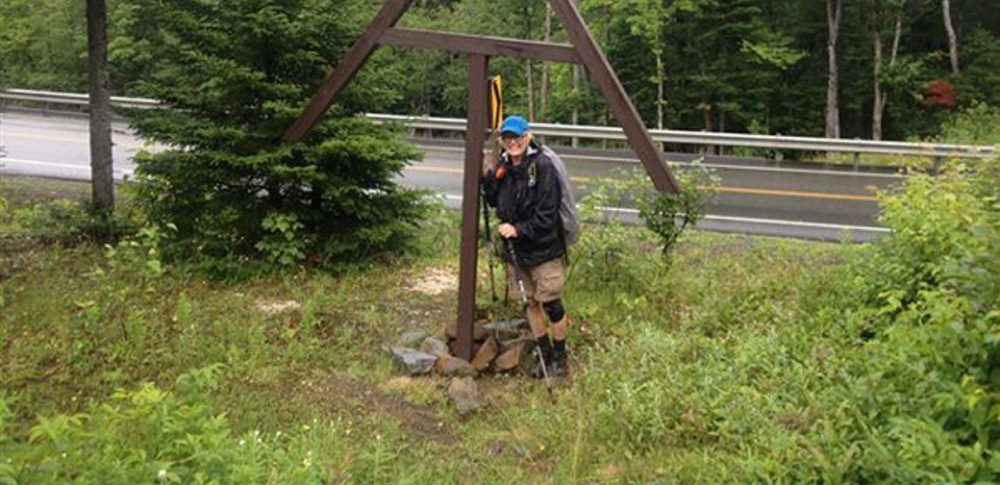
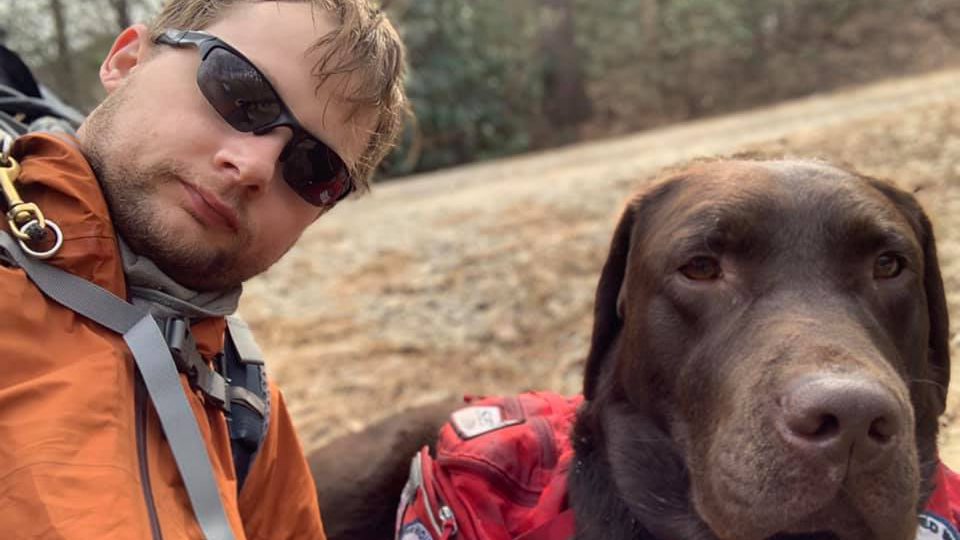
So meet Michael Thorpe, AKA Hugs, and Fecteau, his pooch.
Michael is a 12-year veteran of the Marine Corps and the Army. He deployed three times to Iraq (Fallujah and Al-Asad) and Afghanistan (near Ghazni and Paktika Province). He was first diagnosed with PTSD in 2007 on his second deployment. He didn’t do much with that diagnosis, thinking of it as “normal,” finally seeking treatment after a motorcycle accident in 2015. He was medically discharged from the military in 2016, and continued treatment.
In his own words:
Life with PTSD is not easy. In fact, it’s an everyday struggle. I am hiking this year to raise awareness for people who struggle with PTSD. To show that you can have a quality life. Some people who struggle with PTSD tend to feel trapped inside the walls of their home, doctors offices, treatment centers and anything that keeps them from really enjoying their life. I want that to change. I want them to know that you CAN live a life without fear. I want to be open about my PTSD and be an ear for those struggling. I want to share my struggles in hopes of helping others. I also want to share the things that have made impacts on my life and the biggest one to date is Fecteau. I see multiple doctors on a weekly basis to treat my PTSD so, for me, hiking is a great vacation. In 2017, when I was on the trail last, I dealt with some issues that come with PTSD. My anxiety and nightmares kept me from sleeping in the beginning, but as I went along the trail, it mostly subsided. So now, I hike. I hike because it is my escape. Nature is my freedom from it all.
Hugs and Fecteau are hiking to raise money for Paws Assisting Wounded Warriors (PAWWS). This organization’s purpose is to aid military veterans afflicted with PTSD or TBI (traumatic brain injury) by pairing them with service dogs. These dogs help a veteran regain their place in civilian society and cope with their triggers or lingering issues, in order to help them achieve more independence. Dogs are given to veterans free, covering also their food, veterinary care, and equipment.
At the time I write this, they’ve been on the trail for roughly 20 days, reaching Fontana Dam.
Please, consider donating to this program in the name of Hugs and Fecteau.

 So meet Michael Thorpe, AKA Hugs, and Fecteau, his pooch.