Category: Travel

  • Backpacking with Autistic Children

    Backpacking with Autistic Children

    Backpacking is a really exciting experience for a lot of kids.  For children with Autism Spectrum Disorder (ASD), it can be fraught with anxiety, as it involves multiple changes in routine, unfamiliar environment, and a significant amount of sensory overload.

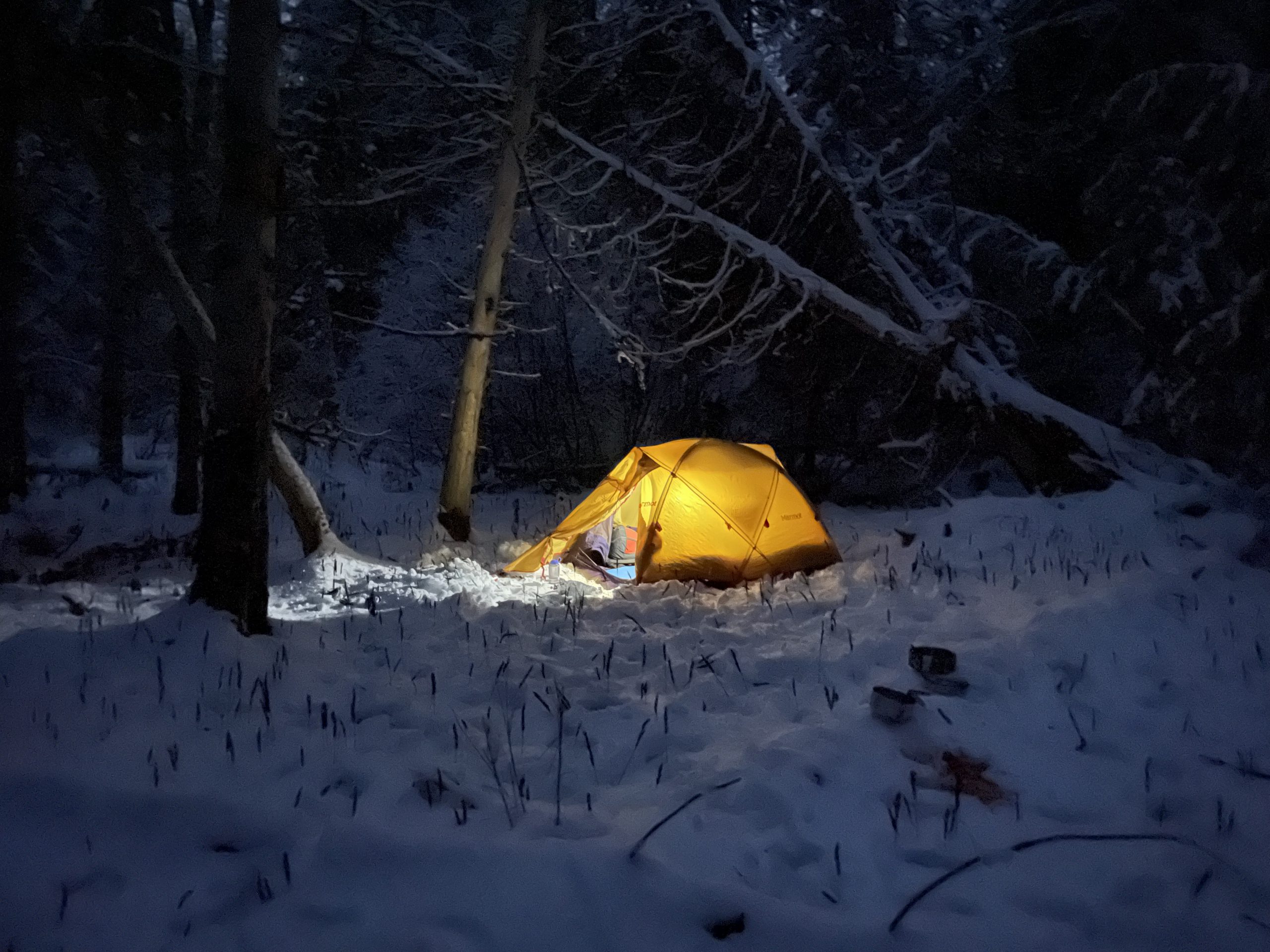
    When my daughter, who hadn’t yet been diagnosed with ASD, joined me on a hike to Maine’s Cutler Coast, she found camping at a spot overlooking the ocean to be awful, as scenic as it was.  As it turned out, the constant noise of the surf was simply too much for her.  Creekside or noisy riverside campsites similarly work on her nerves.  The tranquil waters along the East Branch Penobscot River, on the other hand, do not pose a problem.  The silence of winter camping is especially attractive to her.

    We’ll delve into the ways we can make a backpacking trip successful for your ASD child.  Your mileage may vary, of course, but we’ll start with what tips we anecdotally know work.

    Before the Trip

    First, let’s say this: I am accustomed to seat-of-your pants, throw a bag in the back of the car and go style trips.

    This does not work with my child.  She requires at least a week’s lead time.  My older, adult child was flexible, able to pop in the car and head from our home in Pennsylvania to a nearby Appalachian Trail entry point, to Shenandoah National Park, Assateague, or even the Adirondacks with little notice.  We did it all, and I was spoiled by her agility.

    On the other hand, the more meticulous planning I have to put in for my youngest child often yields a less tumultuous trip.  A late May excursion in the High Peaks that we were ill-prepared for was just another thing for my older kid.  We adapted and overcame.  My younger child found getting her feet wet on a beaver dam traversal along the International Appalachian Trail in Maine to be completely debilitating, even though she crossed a wide river just a half hour prior.

    Informed by these experiences, this is what works for us.

    Create a Narrative

    In the days and weeks leading to your excursion, create a narrative—with pictures or with words—that captures the start-to-finish elements of your backpacking trip.  Where you park, what time you’ll arrive, how far you’ll hike to camp, what the campsite will be like.  Make note of the sensory experiences they’ll find, like a noisy river, windy conditions at the top of a mountain, muddy water seeping into their shoes.  What will we do in the event of a downpour?  Or a thunderstorm?  Go over this narrative with them often before your trip starts.

    Predictability for a child with autism is imperative.  We go through this day to day just in school.  It doesn’t end just because we deem an activity to be recreational.

    Put it on the Calendar

    We don’t actually have a calendar in our household, but daily reminders, in conjunction with going over your narrative, present your backpacking trip in a concrete way.  We do have a chalkboard in our living room which my wife assiduously puts the daily school “special” (like music, art, gym, etc.) which helps our kid visualize the looming change in routine.

    Do Not Wash Comfort Items

    In our household, it’s “Pink Blankie.”   If you note the picture from our most recent winter excursion, Pink Blankie™ is clutched even during the hike through oodles of snow.
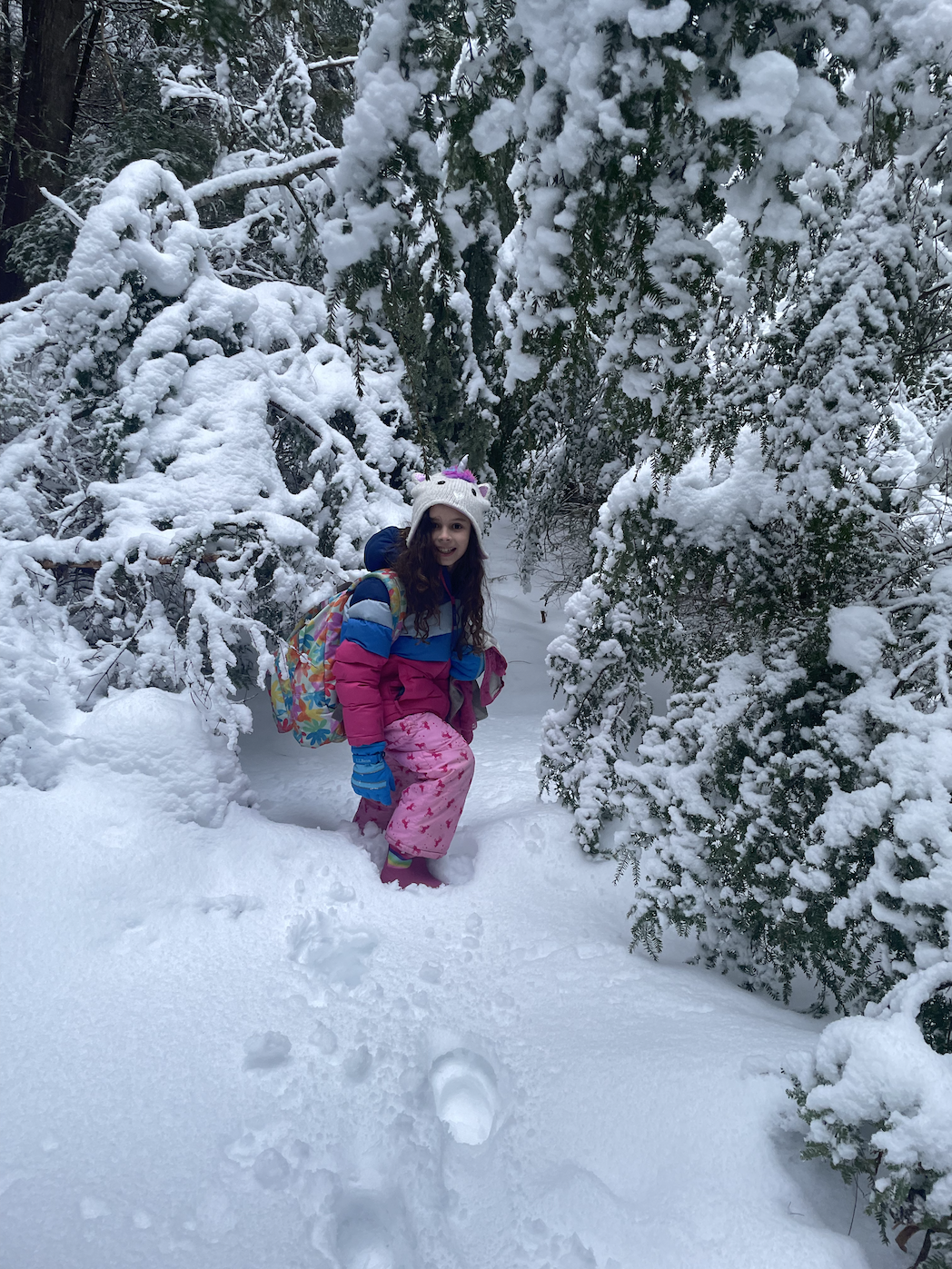
    This little thing is often of such comfort to our precious little girl.  There are times when it smells absolutely terrible, but knowing what it does for her makes it easy for us to fight for the watery eyes it induces.

    Extensively Plan Meals and Snacks Ahead of Time

    In an age when people really emphasize ultra-light backpacking, when I go with my daughter, my pack is assured to be heavy.  The largest reason for this is that her favorite camping meal is condensed tomato soup from a can.  It is the only thing I can be certain she will eat.  Some children (not mine) like things like gummies because they like oral stimulation.  She’ll nosh on Goldfish.  Yes, I know they are not hechshered, but the whales are not something she’ll eat.
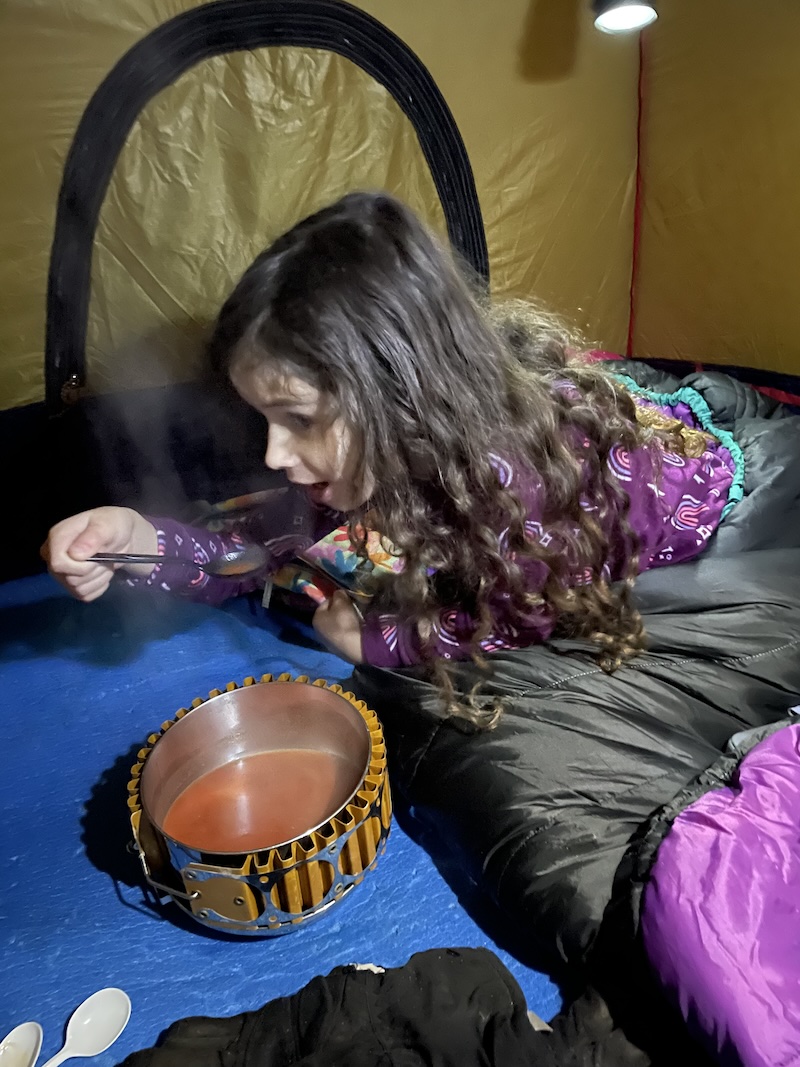
    My daughter eating tomato soup

    On the Trip

    Let a Weary Kid Take Breaks at a Predictable Interval

    It’s so important for your child to know when a rest break, especially one involving a pre-determined snack, is going to take place.  Let them know it’s coming at time.  “We’ve been walking for twenty minutes since our last break, we will break again in ten minutes,” with a similar warning again in five minutes.

    The break can be timed, too.  It’s important to set expectations at all points.

    Audio/Video Device with Noise Cancelling Headphones

    Some children without autism struggle with sleeping in the woods.  My child does best with her iPad, which yes, we schlepped, and a few familiar films downloaded to Disney+ or Netflix for watching.  This lets them block out the crickets, the beaver activity, the hail against your rainfly, or rumbling thunder.

    Recount Exciting Parts of Your Adventure and their Bravery

    One of the things I do in the age of these electronic devices that are so ubiquitous is give my child the space and time to recount their key achievements on the trail.  On a trip this past summer to Katahdin Woods and Waters, our hike began with a crossing of Wassataquoik Stream.  This is a day ending in “Y” for most backpackers, but for my wee child, it was The Most Exciting Thing Ever.  So I recorded her reaction to her achievement after we made it across.  This will always be one of my cherished memories, too.

    Don’t Refuse to Bail

    The most important thing is your own flexibility with regards to your plans.  It’s very easy for any child’s willingness to go on these excursions to take a beating if things go sideways.  It’s that much more debilitating for children who have no out from sensory overload and other experiences.  For my daughter, one trip where her feet were wet for a little longer than she expected threw a wrench in her ability to enjoy herself.  I committed to turning around after only one night on a multi-day excursion.

    Your child’s well-being comes before your trip, and the reality is, children (and adults) with autism deserve just as much as anyone else to be able to enjoy our wilderness.  With a little bit of consideration, you can enrich your children’s lives with the great outdoors.
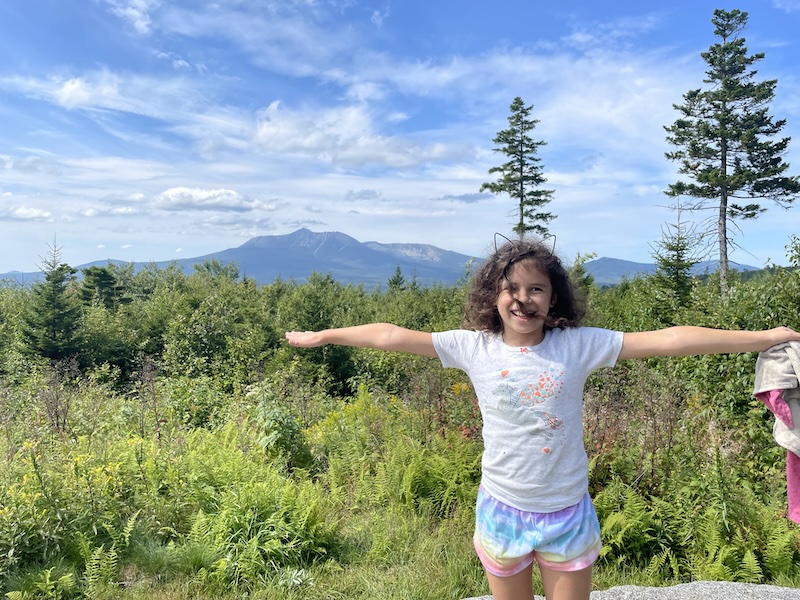
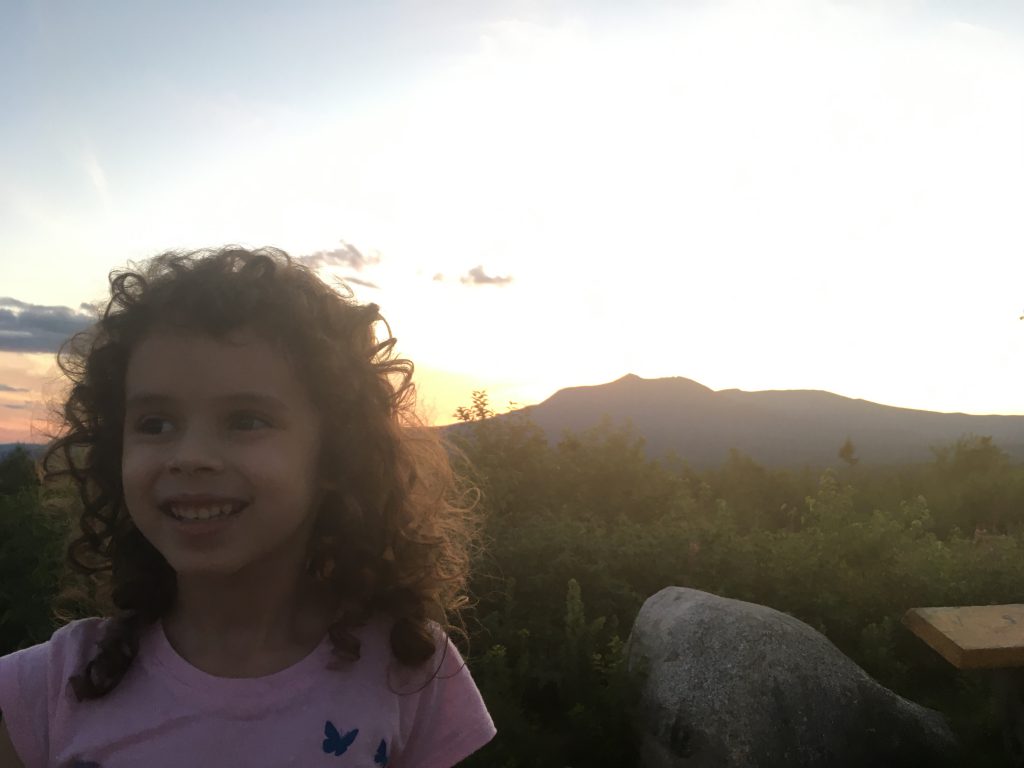
    My daughter in front of Mount Katahdin.

  • Destination: Katahdin Woods & Waters Monument

    Destination: Katahdin Woods & Waters Monument

    Over the course of August 2020, I visited Katahdin Woods and Waters National Monument twice. This marvelous and remote stretch of land is a solitude-lover’s paradise. Winding streams, green-tunnel woodland paths, navigable rivers, backcountry ponds, and modest mountains all await the explorer.

    Katahdin Woods and Waters is also staggeringly remote. You can tackle the Park Loop Road with a front-wheel drive vehicle, but I wouldn’t recommend it. The road is dirt and gravel, and some trailheads, such as the one I will be writing about at Wassataquoik Stream, may not be passable in anything but a high-clearance four wheel-drive vehicle. Babyheads and blowdowns. My Jeep Wrangler handles things fairly well, but when I came up here in a Toyota RAV4, I was worried I didn’t have the clearance for some spots.

    Obey the 15MPH speed limit and you’ll be fine.

    Katahdin Loop Road

    The first time you come to the National Monument, it is my recommendation you take a trip around the 17-mile Katahdin Loop Road. Access from Maine Route 11 in Stacyville is via Swift Brook Road.

    There are numerous scenic views, ample short hiking opportunities. The closer you drive to dawn and dusk, the higher the likelihood that you see moose, foxes, porcupines, and the occasional bear.

    A view of Katahdin from a Loop Road overlook.
    The author’s daughter, Nezzie, enjoys an overlook of Mt. Katahdin and Millinocket Lake from the Park Loop Road.

    As it relates to your car’s suspension, it’s not an altogether pleasant drive. You must watch out for the occasional logging truck, but as far as isolation goes, it’s much less of a hassle than adjacent Baxter State Park.

    My Latest Hike

    My daughter, Nezzie, and I attempted to hike a portion of the International Appalachian Trail in the National Monument towards the beginning of August. We practiced for this by camping out on a remote portion of our own acreage in Winterport, Maine. She enjoyed fording Wassataquoik Stream.

    After the ford, the IAT follows the bank of the stream for a little while, before it pivots across some old beaver dams. It then heads up towards Deasey Mountain. Our intention was to summit Deasey and then Lunksoos Mountain, and then stay the night at Lunksoos Shelter.

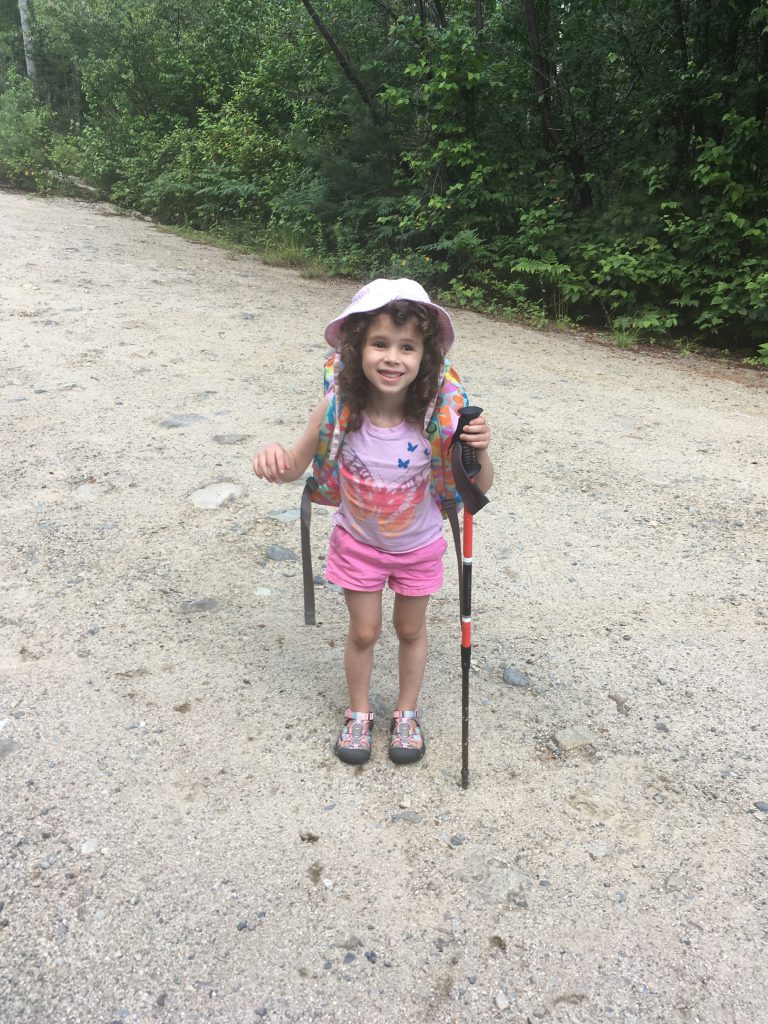
    The author's daughter is ready for a backpacking trip, or so she thought.
    Nezzie is all geared up and ready to hike.

    Nezzie, unfortunately, was apprehensive about spending a night in such a remote location. I wasn’t going to force her. My older daughter, Amelia, went on her first 10-mile backpacking trip at the same age along the Appalachian Trail in Pennsylvania, but in fairness, starting from Route 501 is a far less isolating experience. We returned and simply enjoyed some shorter hikes and the road until night began to fall.

    I, however, was determined to return and at least overnight in the National Monument backcountry. I again followed the International Appalachian Trail towards Deasey Mountain, only this time turning on to the Ed Werler Trail to head towards the Big Sebois campsite.

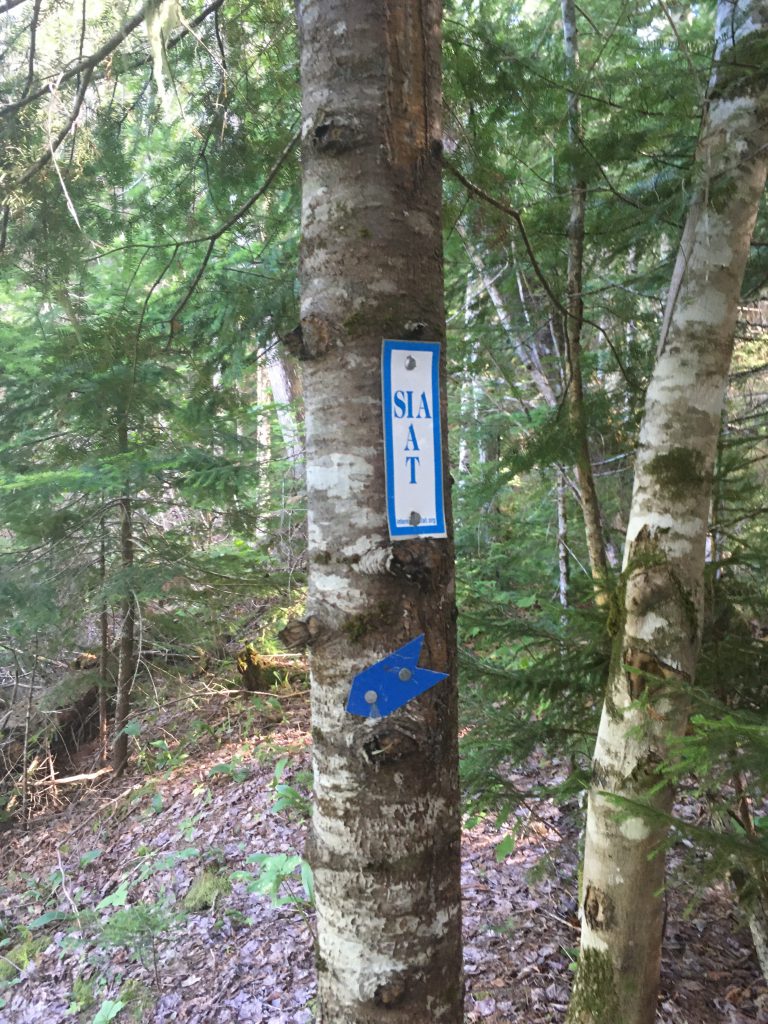
    An International Appalachian Trail Marking
    International Appalachian Trail Marker. The SIA stands for “Sentier International des Appalaches.” Since the trail travels through Quebec, even acronyms are mandated to be in French.

    The Ed Werler Trail

    The trail is named after the late, great Ed Werler, who for three years, from 1947 to 1950, was the fire watchman on Deasey Mountain. Ed passed away at the age of 102 in 2016. He and his wife, Mary Jane, lived in a small cabin, which you can still see in its deteriorated state along the trail to his old lookout booth on Deasey’s summit.

    Ed Werler wrote a great book about his time on Deasey and life as a Baxter State Park Ranger, titled “The Call of Katahdin”.

    The trail named in his honor, however, is a little less groovy. At just under a mile, it calls for better-than-average route-finding skills, and a patience for blowdowns. It’s a little bit of a relief when it intersects with the old East Branch Road. Still, if you attach the romance of a woodsman from another age coming up from the river to his mountaintop post, you can look past the challenge and enjoy the nostalgia for the age of wool, flannel, and cotton duck.

    From there, I proceeded generally south until the old road intersected with the trail to Big Sebois on the East Branch Penobscot.

    Serenity Now!

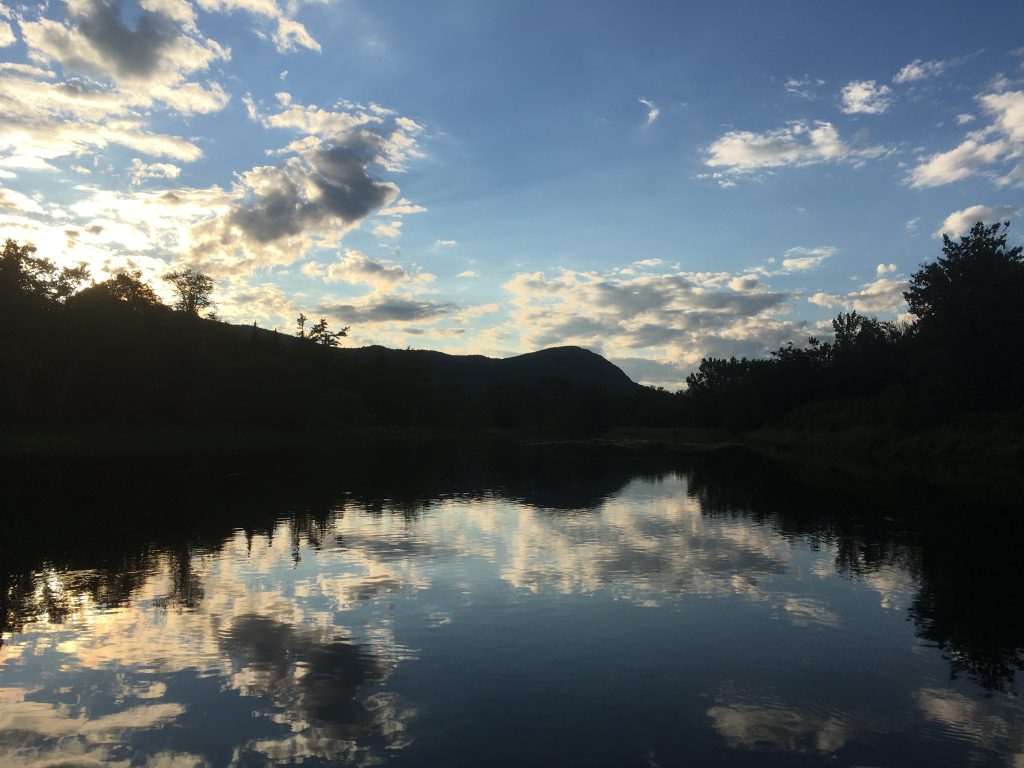
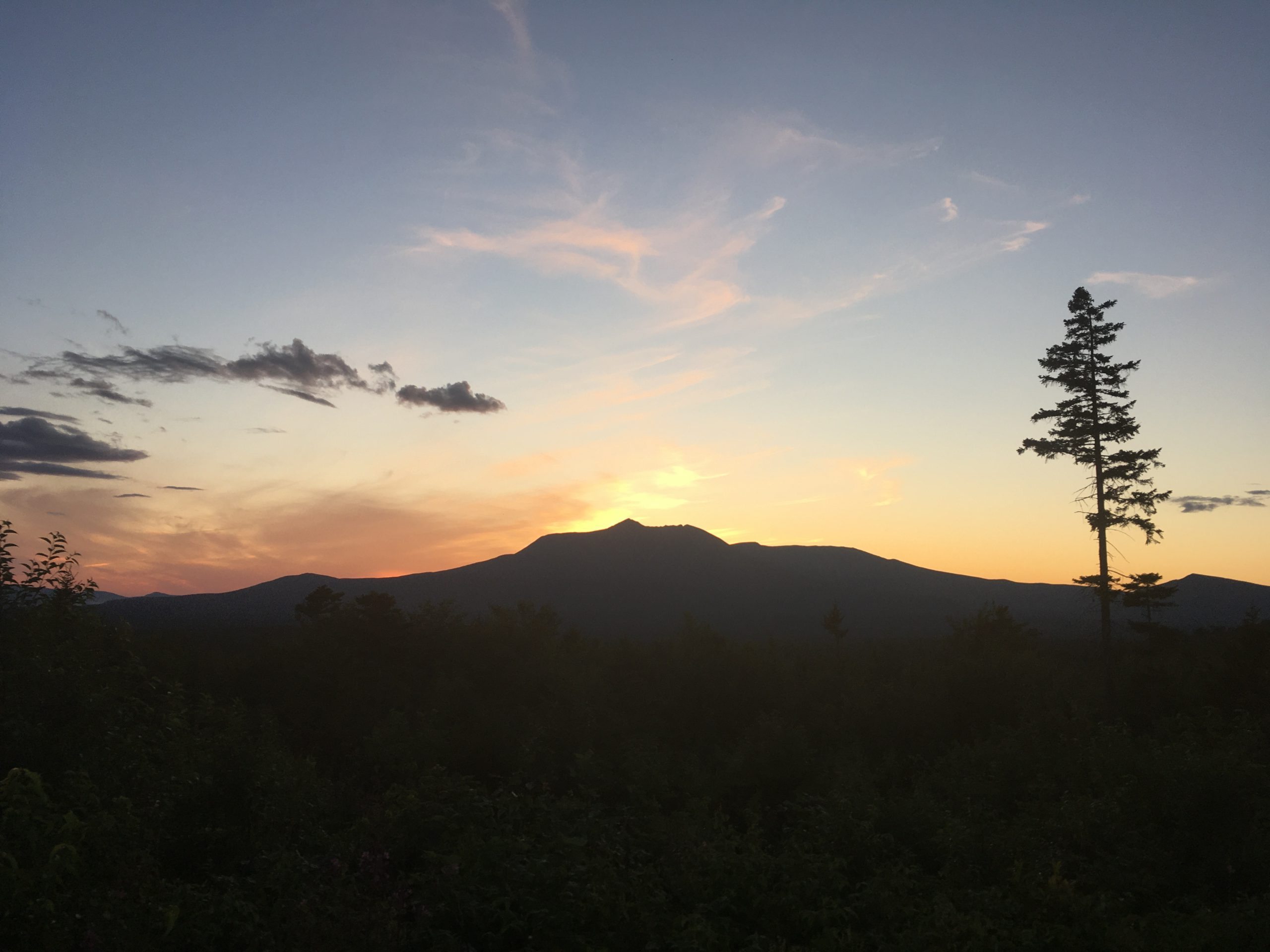
    The view from my campsite along the East Branch Penobscot as evening fell, with the silhouette of Lunksoos Mountain in background.

    The Big Sebois campsite is a lovely, well-maintained parcel overlooking a bend in the East Branch Penobscot River. It has a couple of picnic tables and some fire rings (permit required). It has level spaces for tenting, and ample trees for stringing up a hammock, as I did.

    I’ve stayed at this campsite before, though I paddled in during an extremely buggy July. Whereas on this trip I could comfortably recline in my hammock, my dog and I hastily retreated to the confines of our tent to escape the black flies. Choose your travel timing around black fly season wisely!

    Overnight, I heard a couple of crashes as neighboring beavers did their work. The placid waters occasionally were disturbed by the splash of a fish. What could have only been a moose noisily rambled through the water in the wee hours.

    The next day I walked out the way I came, reluctantly leaving this rare slice of tranquility behind.

    The Future of Katahdin Woods and Waters National Monument

    Many of us, since the current administration took office, have been worried about any executive order that would undo the National Monument designation. We’ve seen what happened to Bears Ears and other jewels.

    So far, it seems that the explicit rights of the Executive to designate a National Monument does not come with the implicit right to remove a designation.

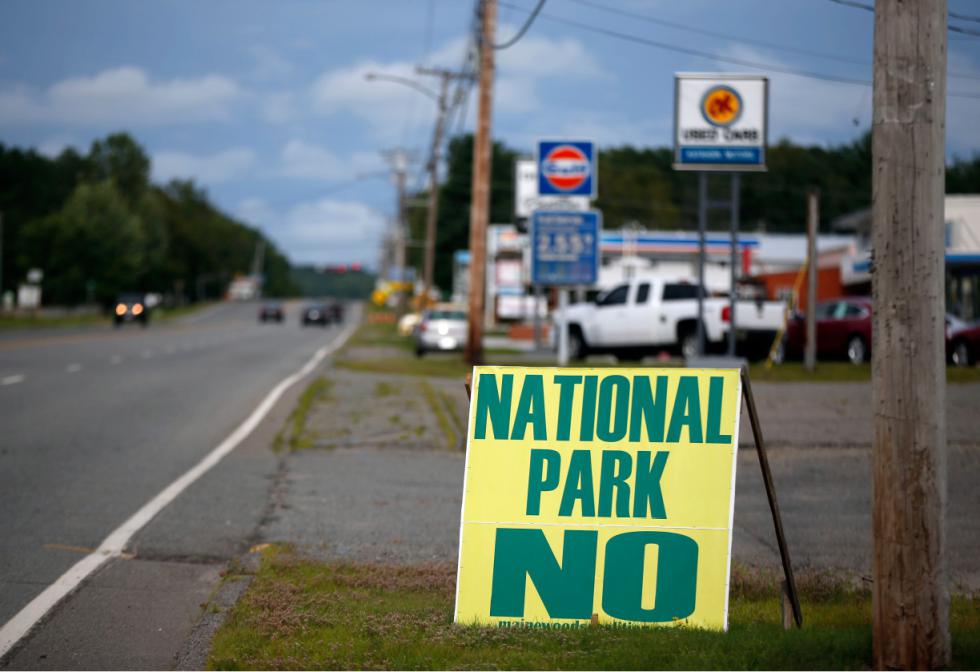
    Driving to the Monument, you do see a significant amount of opposition to it. “National Park NO!” signs line the roads, including those posted by private road owners. Maine’s previous governor went so far as to disallow road signs advertising the National Monument.

    Sign on road to Millinocket. (AP Photo/Robert F. Bukaty)

    Opposition has seemingly languished in recent years. Senator Angus King has been working towards increased funding year-to-year. I’ve often wondered, given how pivotal tourism is for coastal Maine, why rural locations are so opposed to an increase in visitation, however slight. If it weren’t for the generosity of Roxanne Quimby and her nonprofit founded for the purpose, the Katahdin Loop Road would likely not be graded, and what maintenance has taken place would not.

    It’s likely never going to be a federal funding priority, so I encourage visitors to donate to Friends of Katahdin Woods & Waters.

    There are some points of light, if you’ll intend the pun. The National Monument has been recognized as the first International Dark Sky Sanctuary on the east coast, and only the 12th time this designation has been given globally.

    Trip Video

    Further Reading

    Friends of Katahdin Woods and Waters

    National Park Service Website: Katahdin Woods and Waters National Monument

    If you want to paddle, here’s an old trip report from the East Branch of the Penobscot River that might inspire you.

  • 2020 Allergy Season:  What Backpackers Should Know

    2020 Allergy Season: What Backpackers Should Know

    Not to advance stereotypes about Jewish health neurosis, but bubbie wants you to take care of yourself out there, you know?

    According to AccuWeather we’re on track for a pretty severe allergy season.

    We talked to an immunologist friend and sought some advice that we can share about the Pollen Apocalypse and how you can still enjoy time outdoors.

    Drugs

    Now that I’m out of the military and mandatory drug testing, I like saying, “drugs.” But for me, and especially my youngest daughter, I couldn’t survive without Claritin or other antihistamines during allergy season.

    Go Up!

    In Maine, we have a good amount of “above treeline” hiking, but we’re also close to it in New Hampshire. Pollen is heavy in the air, and above tree line, most of it will end up going down the slopes, leaving the exposed ridgelines relatively pollen free.

    Stay Inside, or Hike During/After Rain

    This has the biggest “boo, hiss” factor of all the advice. Even inside pollen season, there are still some days that are better than others. Pay attention to your local weather forecasts, air quality action days, and try to time your outing to when it’s most conducive to healthy respiration.

    The other option is to look for rainy days. This is a downer or a deal-breaker for many people, but rain will wet pollen down or wash it off of trees.

    Clean Yourself

    During allergy season last year, I started getting a jump start on rebuilding our woodpile for the coming winter. I ended up going to bed every night with a massive headache and clogged sinuses.

    I’m a “morning shower” guy, so I was going to bed with a lot of pollen in my hair (even with my yarmulke), and subsequently was rolling around in it. Now, during pollen season, I shower after working outside.

    The same applies to camping. It’s so easy to bring pollen with you into your tent, which as far as enclosed spaces go, can be like an echo chamber for allergens.

    Camping Choices

    During high-pollen times, camping downwind of forests or fields of wildflowers can be a great choice. But if you live in an area with dramatic windshifts, this isn’t always all that useful.

    Camping near a river, lake, or pond can be helpful, as they attract and hold pollen, but you must be careful not to run afoul of the wilderness ethic and responsible practices.

    Don’t Underestimate Allergies and their Ruinous Impact

    Aside from the feeling that it never stopped raining, the other factor that almost drove me off the Appalachian Trail during my first thru-hike were the high-pollen count days.

    I wasn’t subject to frequent sneezing, but my eyes felt like they were on fire, forcing me to abandon my carefully-tended contact lenses (which was a mistake story for another day) and wear my super-ugly glasses for months. I had non-stop headaches, and because I packed all wrong to begin with, and I was dirt-poor, there was no medicinal relief. In what would become the story of the majority of my adult life, I just soldiered through.

    Sometimes we take our health for granted, until we’re reduced to our rawest forms in the wilderness. It’s then you realize that the medicine cabinet and air filters don’t fit in your pack. It’s good to consider allergies in any of your seasonal hiking choices.

  • L’Shana Tovah: 5779 In Review, 5780 Preview

    L’Shana Tovah: 5779 In Review, 5780 Preview

    5779 saw the publication of our book, The Kosher Backpacker, the launch of our Appalachian Trail app, and this website. It was a big year of developing specifically Jewish content for the outdoors.

    So what is 5780 going to be like?

    Organized Jewish Outdoor Excursions

    This year, we’re going to work more aggressively for organized outdoor activities. Backpacking trips, canoe trips, and more. We’re going to have workshops on kosher one-burner cuisine, how to properly keep and remember Shabbos in the woods, and minor holiday observances outdoors.

    We’re going to work with the Maine Israelite Outdoor Society, a new local organization headquartered in the Jewish community of Bangor, Maine, for trips in New England. We’re also going to see if we can find partners elsewhere, to start refining a national, and hopefully someday, worldwide program offering.

    Environmental Stewardship

    There are so many challenges facing our world from climate change. Though unabashedly apolitical, The Kosher Backpacker recognizes that climate science is real, and there are meaningful ways that we can participate in environmental advocacy and action.

    We’ll look to partner with the AMC and other groups this year for Shabbos-respecting trail crew volunteer work, and participation with the Sierra Club in some of their activities. In Maine, we’ll work on joining the Maine Chapter of the Sierra Club on regional clean-ups.

    New Content, New Apps

    We’re working on a Pacific Crest Trail app for release prior to this year’s hiking season. Like all of our apps, it will not be a replacement for some of the better guide apps, but we do want to ensure that we offer features specific to Jewish hikers, regardless of their style of observance.

    We’ll be working on more gear reviews, more recipes, and more trail listings with the shomer mitzvot traveler in mind.

    5780 Will Be Exciting…With Your Help

    The Kosher Backpacker welcomes writers from all walks of Jewish life. This site isn’t being about a better Jew, or pushing traditional observance on people. This site is about relating Jewishly to the outdoors, and there are a million different ways to do that. We do settle on the “frummest common denominator,” but when we write advisory or instructional content, but you are under no obligation to pay any mind to that if you write for us.

    We can’t really pay you yet, as we ourselves are committing to this as a labor of love, but we will be grateful for your contributions.

    In the meantime, we wish for you a great new year, easy fasts on Yom Kippur, and excellent wilderness experiences in 5780.

  • Our Guide to a Wilderness Passover

    Our Guide to a Wilderness Passover

    We cover some of this in our book, The Kosher Backpacker, but as Pesach starts Friday night, there may be Jewish thru-hikers out there, or people availing themselves of spring break from school and chol chomoyed days of the holiday…so here’s a guide to a WILDERNESS PASSOVER.

    In a way, it’s kind of fitting. The Almighty lead our beleaguered people out of Egypt and into the wilderness for 40 years before letting us into the land. It’s a good time to commune with nature, and remember that if you have enough food for the 100 Mile Wilderness, dayenu.

    So we’ll go in order of events with the assumption that you may be traveling before and during Pesach…

    Selling Your Chametz

    Most of us coordinate the sale of chametz through our local rabbi, or via an online service, such as what is offered by Chabad.

    There’s an important fact – if your trip is taking you out of your usual time zone, it doesn’t matter where your chametz is, the sale is based off of where the owner of the chametz is! If you’re from the East Coast and are backpacking the Pacific Crest Trail, your local rabbi will buy it back too early. If you’re from the West Coast and are backpacking the Appalachian Trail, your local rabbi will sell it too late!

    If you know where you will be for the duration of the holiday, services offered by Chabad online will time it based off of where you are and a Chabad rabbi in the appropriate location will sell it for you. I suggest a donation if you use their service, of course.

    Searching for Chametz

    If you’ll be returning to your home from your trip during Pesach, then you should clean your house of chametz, and do bedikat chametz the night before you depart. If it’s outside the conventional search time, you omit the blessing.

    If you are staying at a backpacking hostel or hotel, you are required to do the search with the blessing in the room that you are leasing. If it’s an unpaid place, i.e. a trail shelter, you can still do the search, but consult with your rabbi for an absolute answer.

    It’s a good time to clean out your backpack and your tent, anyway. I haven’t been on many East Coast trails where rodents haven’t been relentless little buggers. Pesach can help keep them at bay, at least until they get their hands on some matzah crumbs.

    A Wilderness Seder

    I would hope most Jews traveling find a seder to attend, however, if you cannot, years of experience in the United States Army have taught me that we have seven total mitzvot that we can fulfill on our own.

    The mitzvot d’oraita of Pesach are:

    • Recounting Exodus
    • eating matzah

    The mitzvot d’rabbanan are:

    • Eating bitter herbs (maror)
    • eating the Afikomen
    • saying Hallel
    • four cups of wine
    • drinking that wine while reclining and starting the eating with a dip

    In our home, we use the ArtScroll Mesorah Series The Family Haggadah, but on the occasions that I’ve travelled or deployed, I have a laminated-yet-weathered Maxwell House Haggadah I use. I’ve found it’s an excellent opportunity to share our faith with non-Jewish friends.

    Kosher for Pesach Food

    This requires the most preparation. You would think that matzah would be a good trail food, but remarkably, it’s not all that wonderful. However, it packs better than most people would think, and you can add an element of awesomesauce to the holiday with store-bought or homemade chocolate-covered matzah.

    One thing for Jews living outside of major Jewish communities – Pesach is the only time of year many of us can find kosher marshmallows. Leah and I stock up for this time of year in preparation not just for the 8 days of Passover, but for our Lag B’Omer bonfire.

    We have some recipe suggestions, including our Vegetarian Matzah Brei or our Salmon patties (ochlei kitniyot only). Matzah ball soup is surprisingly easy to make on a camp stove.

    If you are on a thru-hike, it is possible to place matzah and other OU-P or otherwise certified non-perishables in your “bounce box.”

    Final Recommendations

    I have an observant friend planning a trip to the Te Araoa Trail in New Zealand, but he is now postponing it because he would be leaving during the Omer, and crossing the International Date Line will hose his count. It’s an important consideration – Shavuos is determined by this count.

    If you would be obliged to say Yizkor for a departed loved one, make suitable arrangements to be in a synagogue on the last day of Pesach.

    Do you have any recommendations for Passover in the wilderness? Recipes? Tips? Stories? Share them in the comments below, or find us on Facebook.

  • Antisemitism on the Trail

    Antisemitism on the Trail

    WARNING: Some unsettling content ahead.

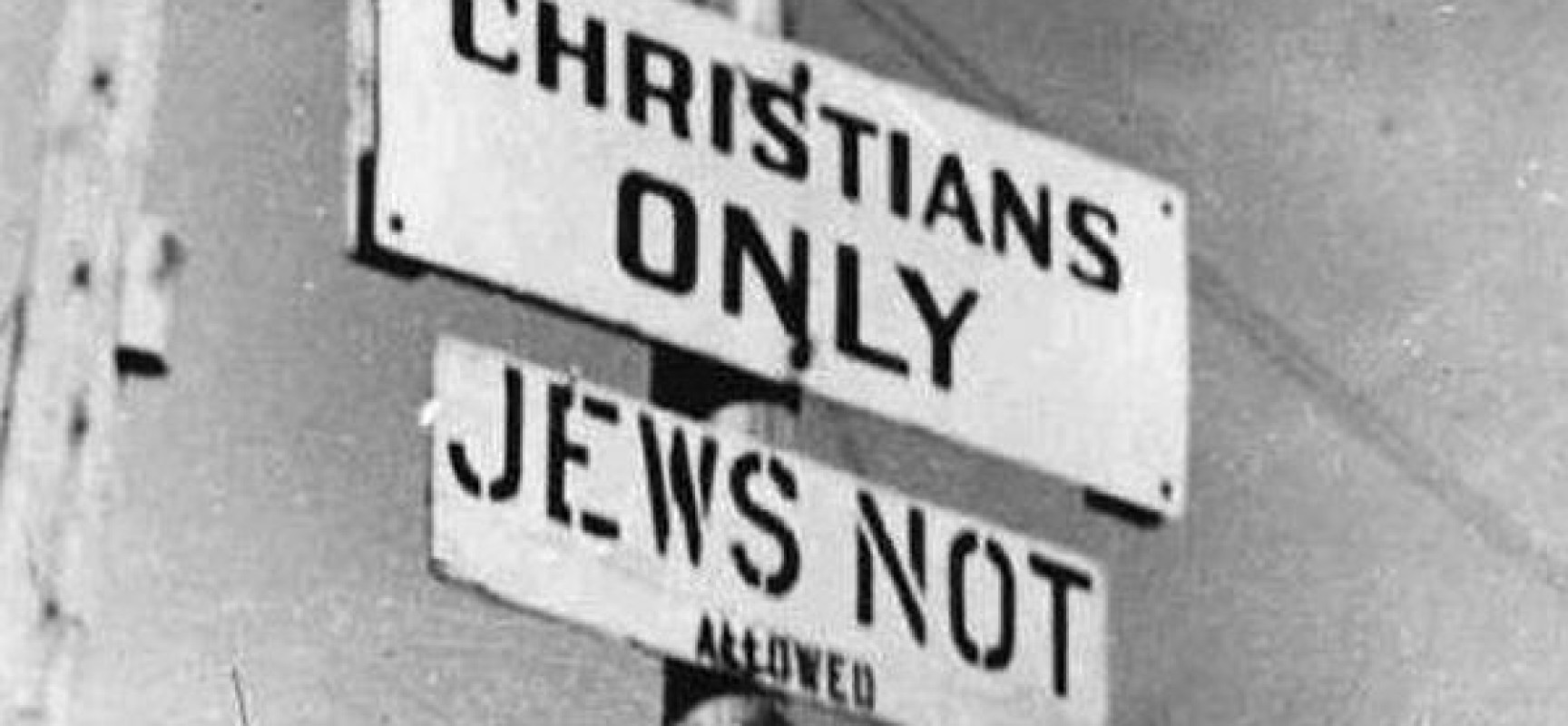
    Just as an FYI, there’s no context that makes what happens in this video “okay.”  The mayor of Damascus, in the wake of the incident, tried to make hey of the fact that the thru-hiker recording the video was trying to buy weed, but there’s never an instance where the response to that needs to include antisemitism.  The people in this video were charged and convicted of crimes, and this store is no longer in business.

    I’ve been hiking, thru, section, and weekend, for most of my life, and I’ve never encountered antisemitism on the trail.  All I have encountered is comity and curiosity.

    But what do you do when you do encounter it?  If you’re a thru-hiker, this could be unnerving, possibly hike-ending.  There’s a good chance you’re isolated from law enforcement, friends, family, or any kind of Jewish community.

    We’ll share some advice here, much of which is based off of my experience both as a thru-hiker and as an observant Jewish soldier who has deployed abroad.

    Be Informed

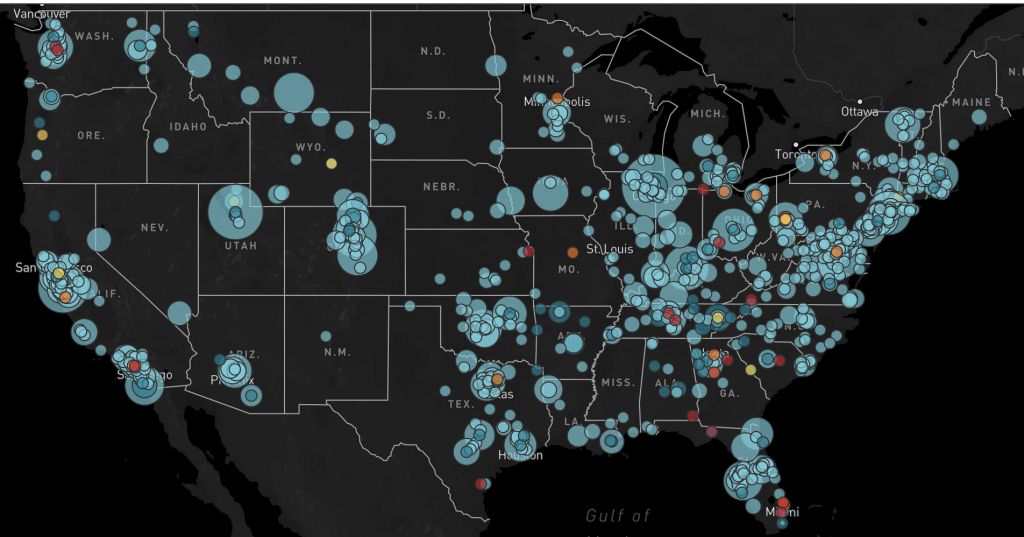
    The first step is to understand the social climate where you are hiking.  If you expect to interact with a local community at a hotel before or after a hike, it’s a little more important than if you’re just heading to a wilderness area.   A great resource for the presence of hate groups and incidents is the Anti-Defamation League’s website, and depending on how you feel about them, the Southern Poverty Law Center.

    The ADL maintains a filterable “hate map” on their website.

    With the many trails available in the United States, it’s highly possible to avoid problems altogether.

    If you’re traveling internationally, the State Department is a good resource to check against.

    Sometimes, just putting the keywords “antisemitism” and the name of your destination yields informative results. Sometimes, the information may be dated, and an incident, such as this one that reportedly occurred in Patagonia, may not have a recent corollary. Still, forewarned is forearmed.

    Minimize Your Jewish Footprint

    One of the recommendations made to me for Middle Eastern deployments, or even Eastern European deployments, was to take steps to be less obviously Jewish. For me, the argument was not to wear my yarmulke out and about. When wearing civilian clothes, I was urged not to let my tzitzit out.

    What I have found is that outside of major Jewish populations, very few people are familiar with tzitzit enough for that to pose a hazard. When hiking, I often wear other hats besides my yarmulke, but there are times when I just don’t feel like wearing a hat besides my kippah.

    I already don’t make a big deal out of my diet as it is. I don’t go into stores lamenting that I cannot find a hechshered product.

    Because I often park my car at trailheads, I’m careful not to invite targeted vandalism by not putting bumper stickers or window decals of Jewish interest on my car.

    There are times it’s unavoidable that I have to make the explanation or be unavoidably Jewish, such as when I’m setting up a portable eruv for a Shabbos camp. It’s confusing to people (and sometimes park rangers) when they encounter your strings, or the otherwise odd way you may set up camp to prepare for Shabbos. Some of this can be avoided with stealth camping or being familiar with regulations of the place you are camping.

    What do I do when it happens?

    First and foremost, if you are in a situation where it’s fight or flight, do one or the other and commit to it. It’s helpful when you travel to know who constitutes law and order in your location. If you’re in Yellowstone National Park, that answer will differ sharply from Damascus, Virginia.

    If you are in a situation where you have to fight, fight as if your life depends on it. Bite, pull, strike, kick, stab, whatever you have to do. If you’re in a place where you are allowed to and you do carry a firearm, be sure you know what stand your ground or similar laws apply to you before you even brandish.

    If it’s mere harassment, the choice is yours as to whether you brush it off. You may consider recording the situation with your smartphone, if you think it will help identify someone who crosses a line in to criminal harassment or assault, or hopefully, act as a deterrent.

    If you are on a long-distance hike, consider changing your plans, in case harassment or assault could possibly turn into something worse. Watch for if you are followed. Consider “yellow-blazing” to a distance beyond where it happened, or hole up in a hotel for a day or two until you think any possible threat has passed. Or consider quitting altogether. Especially for younger hikers without much experience in the world, antisemitism really can encroach on a sense of safety, realistic or not.

    When you feel safe (or safer), and can do so, report the incident to the relevant local office of the ADL. You can do this by their website or by phone. You may also contact us at The Kosher Backpacker, and we will try and help you as much as we can.

    The Reality

    The good news is that for outdoors enthusiasts, antisemitism is a rare occurrence.

    But we live in a world that with regards to Zionism and Jews, is becoming increasingly hostile, so it is important to mentally and emotionally prepare yourself for the possibility. Don’t worry about it happening to the point that it ruins your excursion, but do mull over what you will do if it happens.

  • Destination: Siem Reap

    Destination: Siem Reap

    Under 4 miles from the town of Siem Reap in Cambodia is one of the coolest UNESCO World Heritage sites in the world, Angkor Wat.

    Originally constructed as a temple to Vishnu in the 12th century by Suryavarman II of the Khmer Empire, Angkor Wat was converted into a Buddhist temple. Buddhist worship continues there now. It is arguably the most well-known symbol of the nation of Cambodia, a source of pride and a major tourist draw.

    Chabad Lubavitch in Phnom Penh photo courtesy Cambodia Chabad

    It is also swiftly becoming a Jewish tourist attraction, thanks to the efforts of the Chabad shaliach in Phnom Penh. There is no Chabad in Siem Reap, but they do hold Pesach seders there since 2015, and they try and hold Friday night Shabbos services in various cities throughout Cambodia, which sometimes includes Siem Reap. With proper arrangements, they can help provision the kosher travel prior to leaving Phnom Penh. You may find heschered items at local food markets. The Gershuni family can assist you.

    An important component of visiting Cambodia as a Jew is learning about the genocide under Pol Pot.  My mother worked in English as a Second Language classrooms when I was a child, so I grew up with many friends who fled the Khmer Rouge.  Learning about Cambodia’s dark times, where over 20% of their population was murdered, is very important, and you will hear first-hand survivor accounts from many Cambodians.

    Connected to the ugliness of war is the Cambodian Land Mine Museum.  Many of the guides in this museum are victims of lingering land mines.  Even if you make no plans to travel to Cambodia soon, consider a charitable donation, as it’s a worthy cause.

    Kampong Phluk

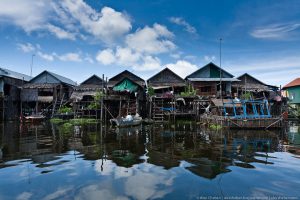
    Roughly 40 miles from Siem Reap is the floating village of Kampong Phluk.  This “village on stilts” is a rich cultural experience in Cambodia.  Plus, you can help Cambodia’s tuktuk (two-wheeled carriages pulled by motorbikes) by employing one for a cheap ride to this or numerous other lake villages near Siem Reap.

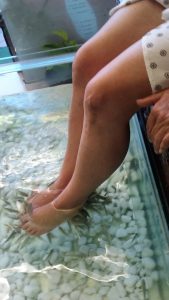
    It tickles.

    Siem Reap itself is a real gem.  Consider visiting the Old Market, the Phare Circus, Pub Street, or even get a “fish massage” (it tickles).

    For considerably more information, visit Mad Monkey Hostel’s Siem Reap guide for backpackers!