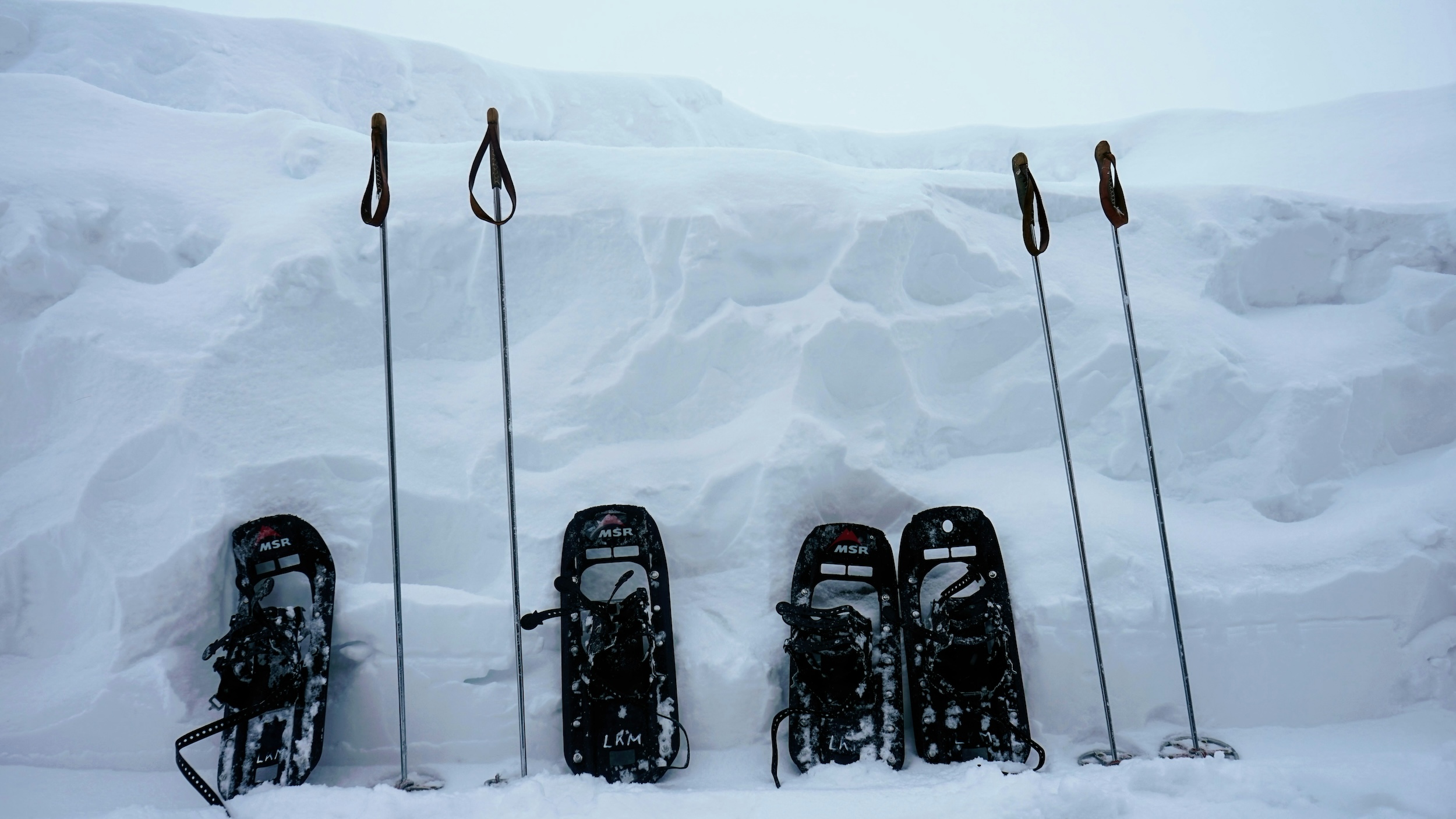
Subsequently, a key feature of living in Maine is a sturdy pair of snowshoes.
Ideally, snowshoes should allow you to travel the frost-laden world of Maine without undue turmoil. No post-holing, sinking up to your knees, and taking the Lord’s name in vain as you struggle to move several yards.
There are things you need to know before you buy snowshoes.
The weight of yourself and the things you plan on carrying
The kind of snow-covered terrain you will traverse
The nature of the snow you’re walking upon
For the years I was stationed as a paratrooper in Alaska, I jumped out of planes with the Army’s old magnesium tennis rackets strapped to my weapon case. Inelegant though binding and snowshoe may have been, they offered decent flotation for an infantryman burdened by a 50 lbs rucksack full of ammo and gear. They had little to no traction however, which is why when the Army moved to the injection-molded MSR snowshoe in recent years, I’ve been happy, as I’ve been using the same pair of MSR snowshoes since 1996.
For casual walks on hard-packed snow, like groomed trails, you can usually opt for lower-cost snowshoes with simple bindings and little in the way of traction.
Understanding bindings is important. There are basically two kinds of bindings, rotating or floating bindings, and fixed bindings. As you can see with our 2024 recommendation, the Crescent Moon Luna, that is a fixed binding. A rotating binding will pivot, and may or may not have a crampon attached to the toe. Most wooden snowshoes, too, have a pivot like this on the binding, for greater traction walking uphill, thus reducing fatigue.
Some models, particularly mountaineering focused snowshoes, will have an additional “heel lift” to reduce strain on your calves.
Additional Traction
As we mentioned, some snowshoes will have toe crampons, heel crampons, and traction bars running along the side. My MSR snowshoes have “breaking bars”, a feature that seems to exist only on injection-molded or plastic snowshoes, that help prevent sliding backwards on ascents.
There is a lot to be said for versatility. In addition to the two other models we recommend here this year, there’s one more model we recommend for maximum versatility. We encourage you to shop around, especially at L.L. Bean or REI.
For 2024: MSR Evo Trail
Great for Maine backcountry, albeit not robust mountaineering
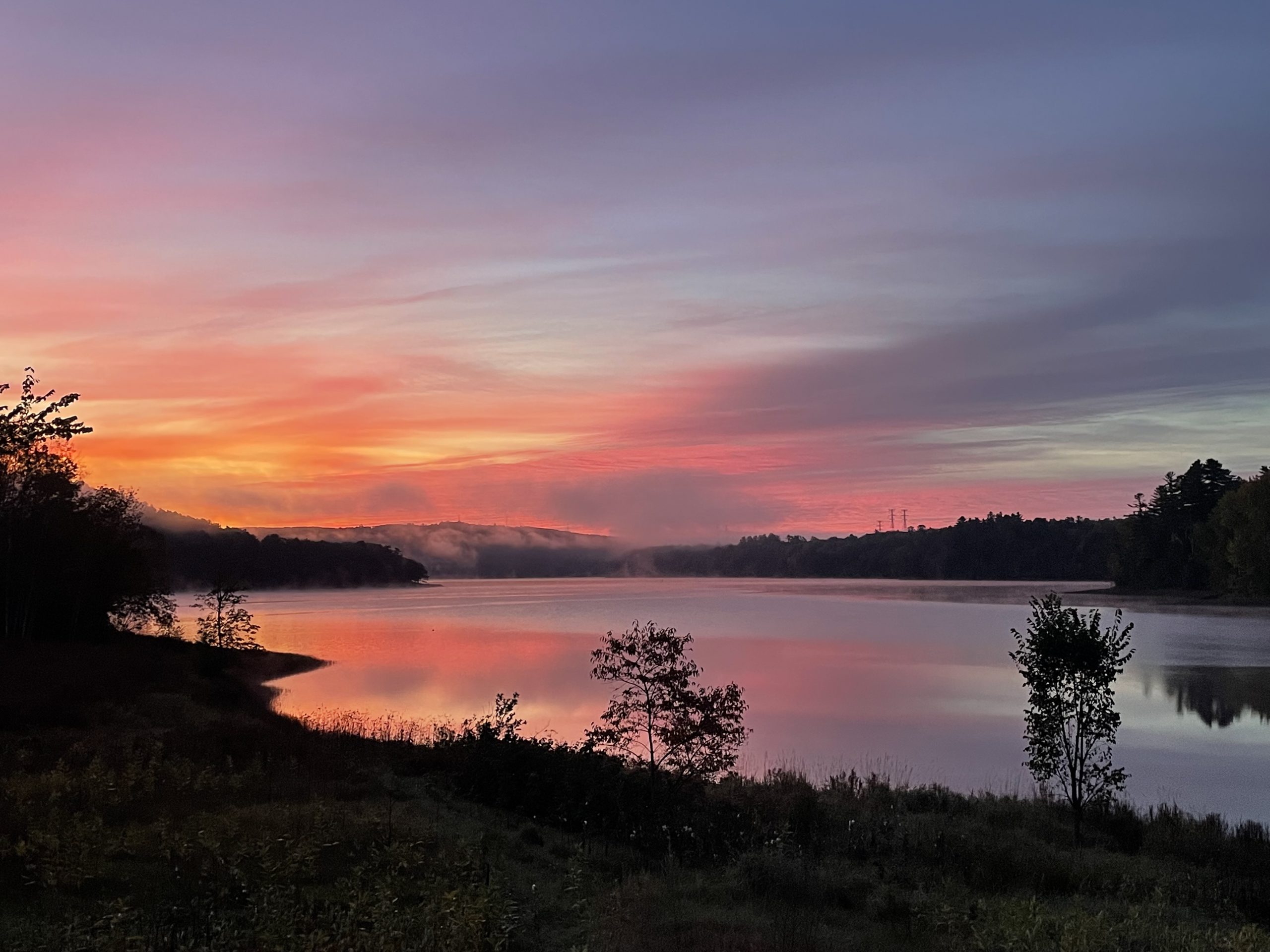
Pumpkins and the array of reds, oranges, and yellows that dot the Maine landscape.
I fell in love with autumn in grade school at Lafayette Elementary in Lancaster, Pennsylvania. Our art teacher, Mrs. Mushlitz, had us paint fall landscapes with sponges. I couldn’t get enough of it then, and I cannot now.
Last year, just prior to the High Holy Days, I went for a hike in the Bigelow Range of Maine. The leaves that time only just began to turn, though the biting chill awaited in the morning.
This year, I opted for a 28-mile canoe/kayak trail in the shadow of Katahdin in the Debsconeag Wilderness. The trail, for me, started on the Debsconeag Deadwater portion of the West Branch Penobscot River. It flowed south towards Ambajejus Lake, across Pemadumcook Lake, and with a couple of portages, a series of backcountry lakes.
This turned out to be more than I bargained for.
The Vessel
In 2019, I bought a Jeep Wrangler JLU with a soft top, and suddenly my trustworthy canoe was too heavy for my roof-top. I love lake and river paddling almost as much as I love backpacking, and I wasn’t ready to give it up. I started researching folding boats, but many of them were at obnoxious price points, and the reviews were mixed.
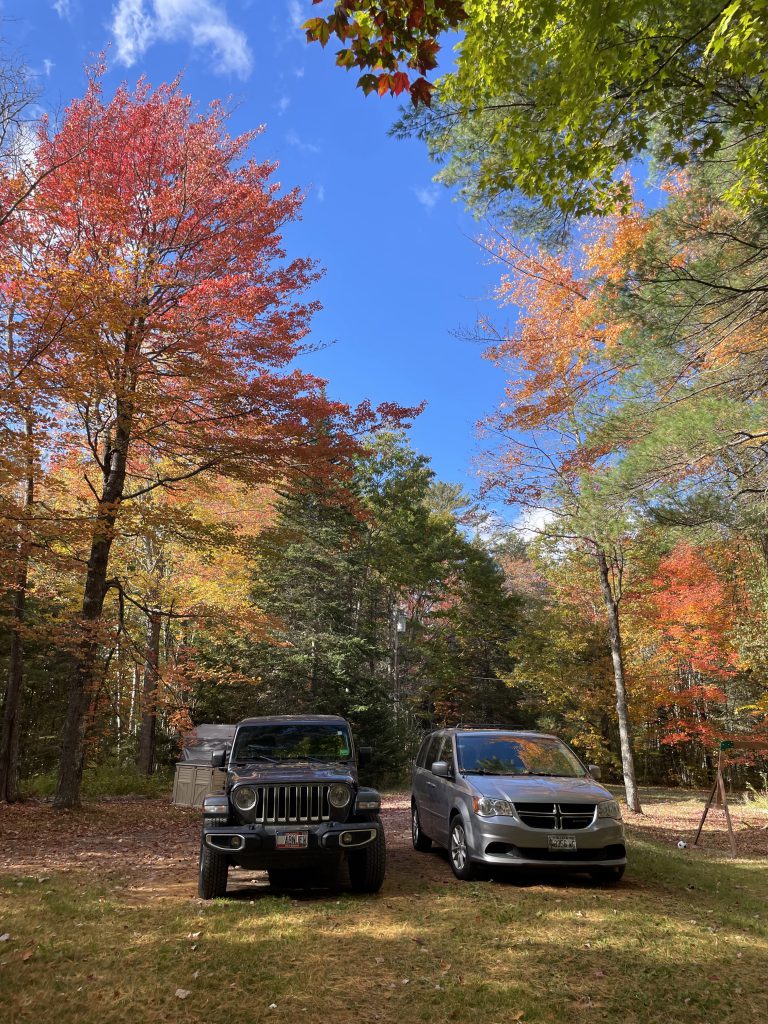
The Jeep is soft on the top, and I don’t like taking our Caravan on rugged roads. Also, the fall colors on our acreage are da bomb.
Then I stumbled on a Kickstarter campaign for these novel boats, and I’ve never looked back.
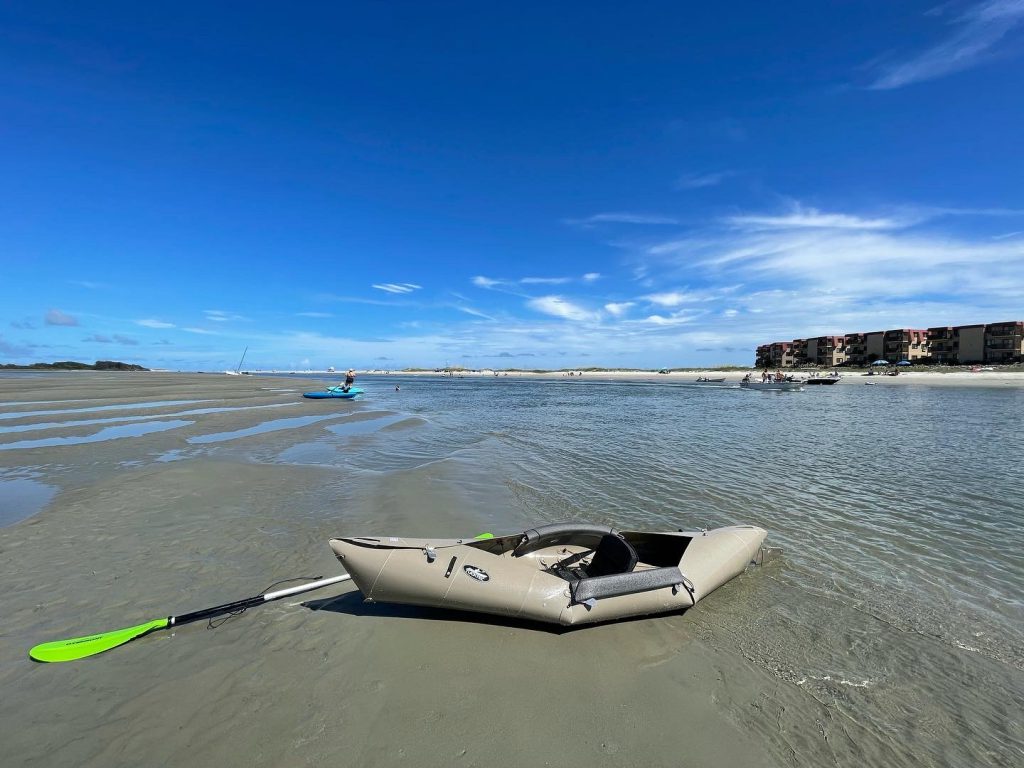
I’ve had our Tucktec kayaks, one tan, one pink, since last year. I’ve put them through the paces with flatwater paddling all around Maine. I used it, after dropping my middle daughter off for her last Habonim Dror trip, at Nockamixon State Park in Pennsylvania. I took it out on the Intracoastal Waterway in North Myrtle Beach, not far from where they are manufactured.
Parked on a sand bar in North Myrtle Beach.
I’ve had it on the Allagash, and any number of lakes in Maine. Both of them have performed admirably.
In one instance, the careless wake of a boater on the Intracoastal knocked me out of the kayak and into the water.
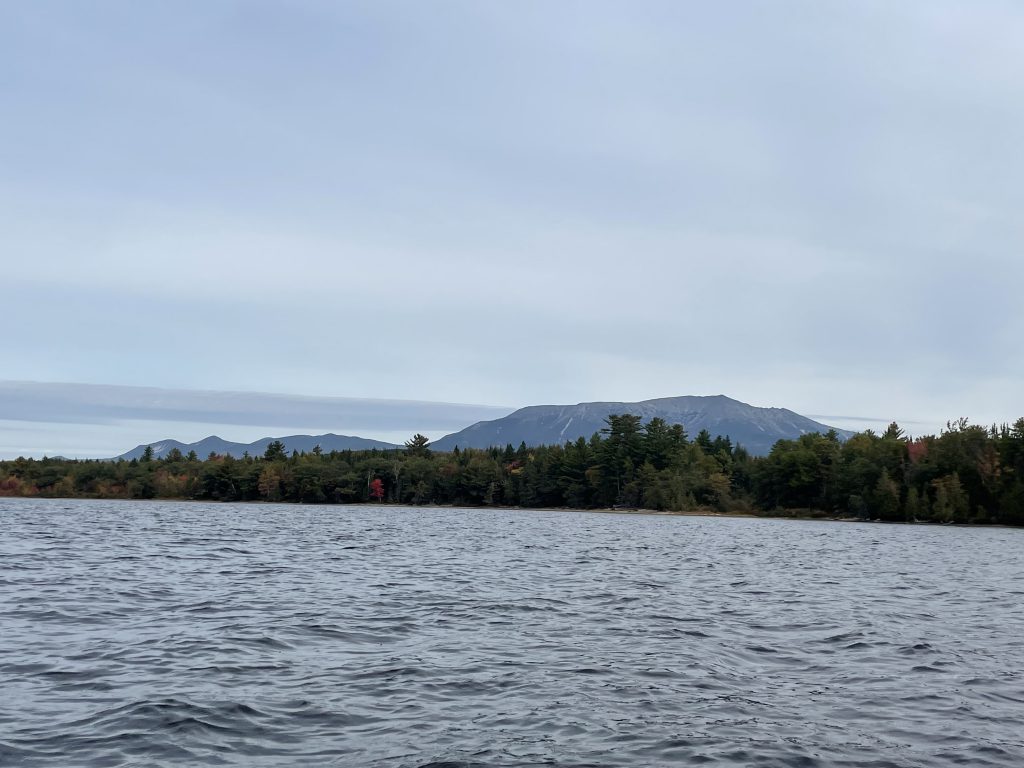
Katahdin over Debsconeag Deadwater
My trip started off wonderfully. Katahdin loomed over me in background. The water was calm. The sun came out after a little while, and paddling was gorgeous.
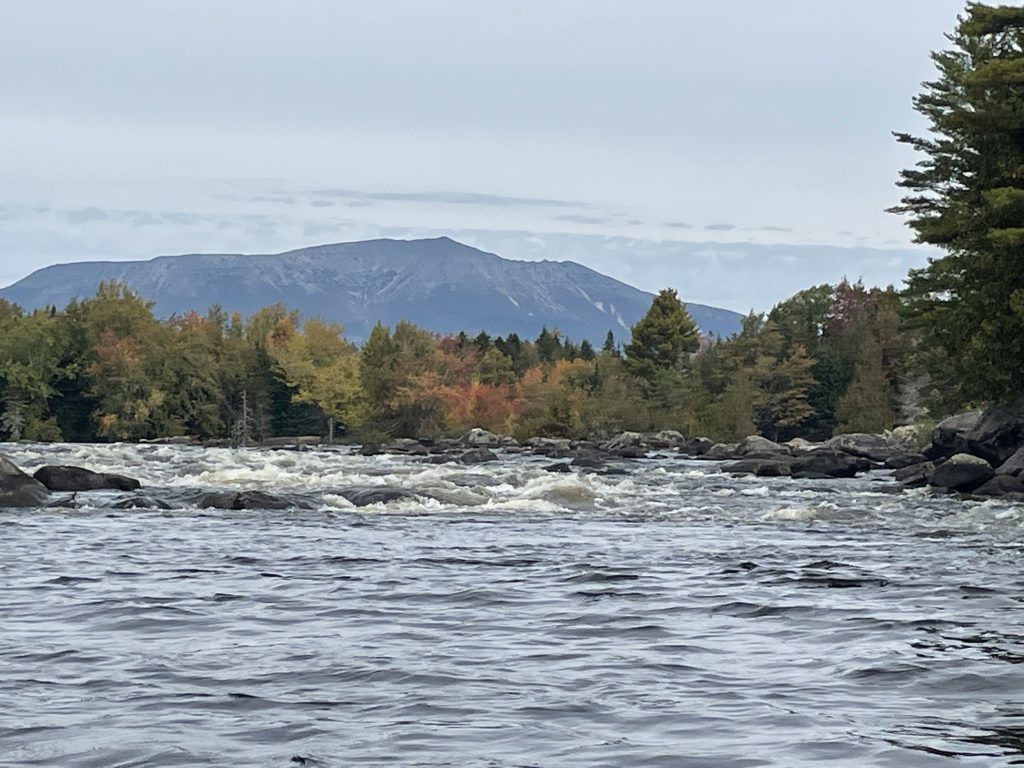
The problem arrived on the lower portion of Passamagamet Falls. I took out and portaged the first section, but could find no marked or unmarked portion. They didn’t look that bad at the onset, but I quickly realized even mild rapids are not good in these foldable rigs.
The chop submerged the bow of my kayak several times. Finally, I banked on a rock, and as I wiggled myself off, the bow completely submerged, and the front of the kayak folded, taking me and the kayak under. Only my dry bag, wedged in the back of the kayak, kept it all buoyant, and it’s a good thing it did.
The upper Passamagamet Falls I portaged. The lower weren’t much better than this!
A Note on Recovery in a Tucktec
Where I went under, recovery was all but impossible. For one, at the very least, you need to be able to touch bottom. I am 5’9″, and this spot of the river was too deep. My PFD kept me afloat (and alive), but the river was freezing and f–king around with the kayak in the water was just going to prolong the possibility of hypothermia. I kicked it to shore, again, able to keep it afloat with its aft sticking out of the water.
An enterprising fellow demonstrated the possibilities in a great YouTube video a few years ago:
After drying off, I continued on, but the wind picked up to around 10 mph on Ambajejus Lake. As I rounded the last little peninsula on Ambajejus into Pemadumcook, the wind-driven swells were again submerging the front of my kayak.
I made the choice at that point to hug the shore, paddle back up Ambajesus and take out at a bridge I went under earlier in the trip. Along the way, a husband and wife on their fishing boat sent me over the side again when they didn’t slow passing me.
From there, it was an 8 mile walk back to my Jeep. I was passed by a bunch of logging trucks as the sun set, and I walked the final 4 miles in the dark, back the horrid road back to “Omaha Beach”, a campground and carry-style put-in on the Deadwater.
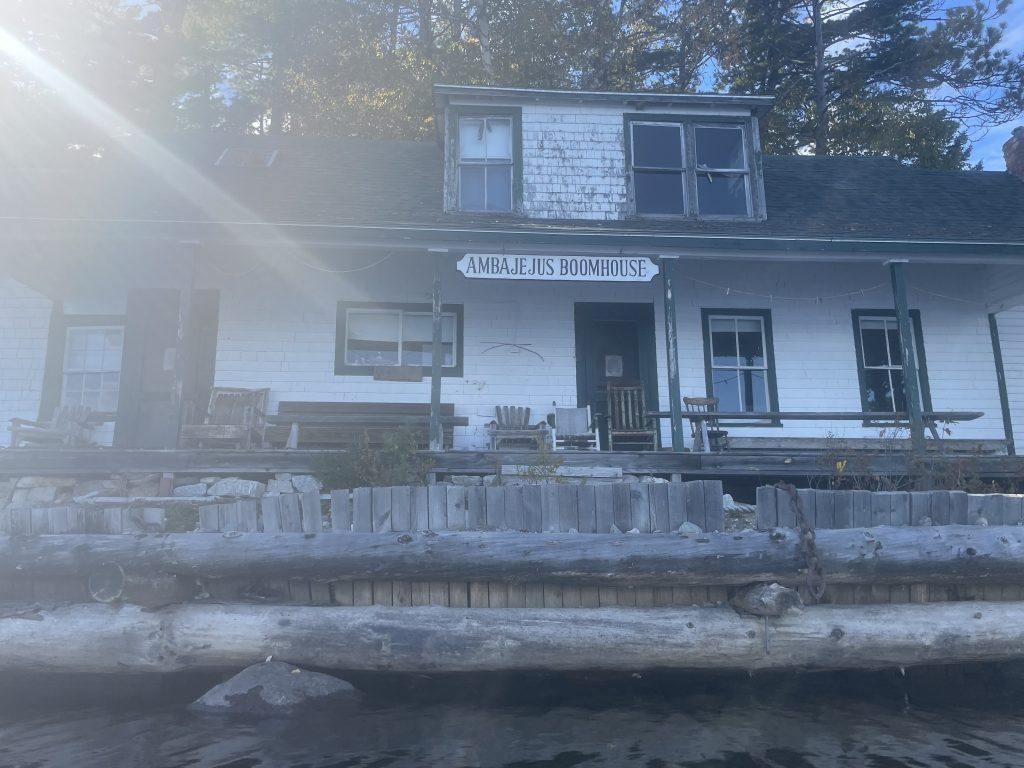
The Ambajejus Boomhouse is one of many historical remnants from the logging era you can see on this trip.
The Verdict
This trip would have been fine had I portaged the lower falls. It is almost all flatwater otherwise. I am not disappointed in Tucktec in the least. They are quite clear about the idea conditions for a foldable kayak.
They are durable. The plastic is hard and resilient, and if banking on the rock in the Penobscot put me under, the kayak was fine after I recovered.
They are meant for close-to-shore paddling with flat, calm conditions. They are not a good fit for wind-swept lakes, rushing rivers, or the ocean, all of which are tempting, especially here in Maine.
I will continue to use them and just exercise more caution, with more preparation for harsh conditions.
Oddly enough, the “rock star” of my adventure was my iPhone 12 Mini. I forgot to bring its little waterproof pouch, so it went under with me. The waterproofing on these models is no joke. While the TrueDepth camera no longer works, everything else does.
I filmed the entire experience with my GoPro, and I made a movie to highlight the experience, which you may view below.
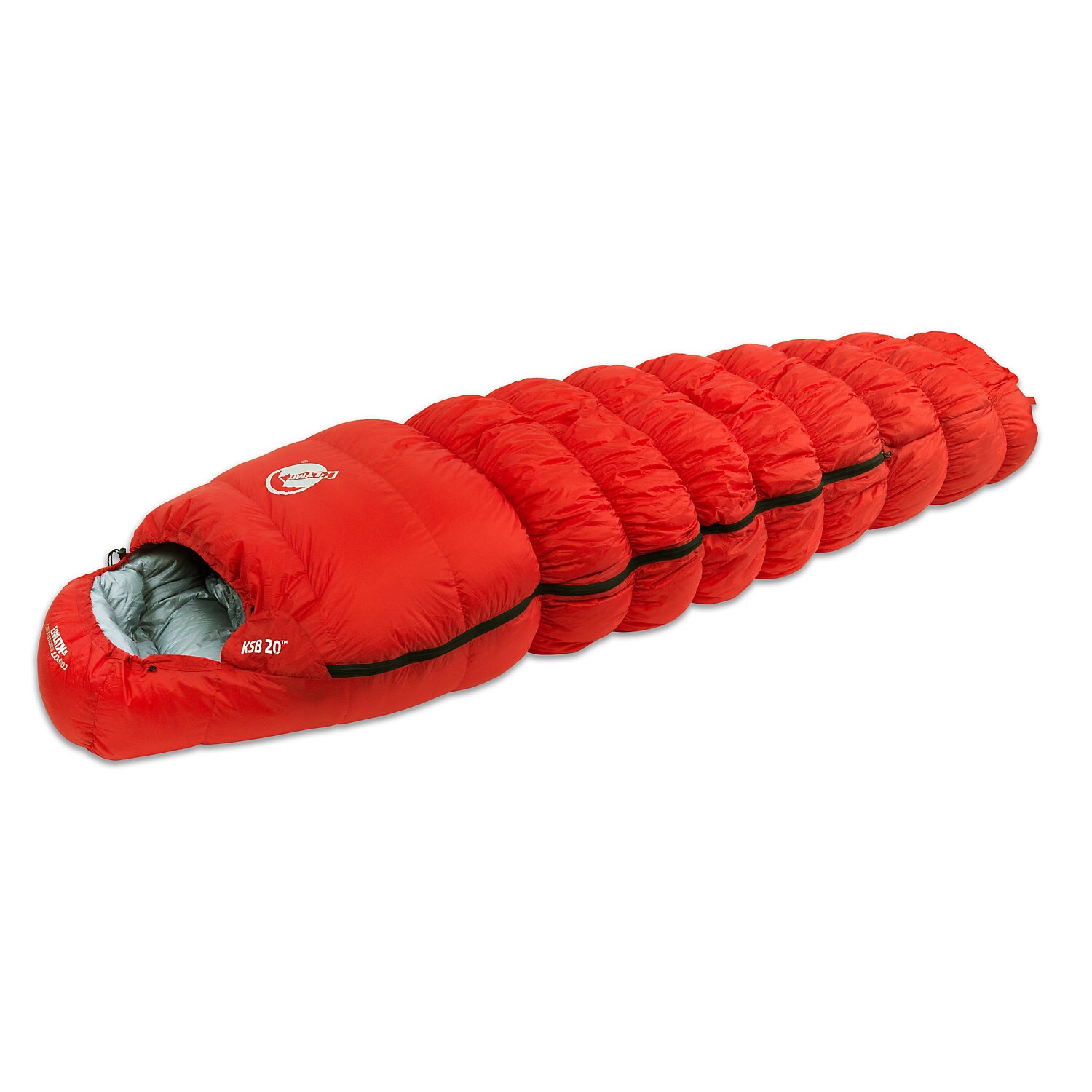
It occurred to me that everything warmth-related that I own is red.
My storied North Face Gore-Tex shell is red. My puffer jacket and parka are red. And now, the Klymit KSB 20 joins my array of scarlet warmth.
The only downside to this sleeping bag is its weight. At 2.75 pounds, it’s heavier than competitor offerings in roughly the same price range, like REI’s down bags.
On the other hand, it’s still incredibly light for the three season range it gives you. I even tried it in the teens in the Maine woods, and with thermal underwear, I still slept warm.
The elastic baffles that allow maximum movement without abandoning warmth were unlike anything I’ve ever experienced with a sleeping bag. The draft tubes and collar (with a handy phone/eyewear pocket) really retain warmth. If you wear the right things or use a liner, you can edge into four season use of this bag.
I bought this bag at 205 with tax and shipping. You should be able to find it at or below that cost.
For thru-hikers doing any last minute gear acquisition, this bag is a great last minute purchase that will serve you well in the range of conditions on the AT, PCT, and CDT.
I’ll update this review after I use it on the Northville-Placid Trail in June.