
Category: On The Water

Surface water sports; these sports are performed atop a body of water.

  • Tucktec Kayaks: A Wet, Freezing Review

    Tucktec Kayaks: A Wet, Freezing Review

    Autumn in Maine

    Hot apple cider.

    Pumpkins and the array of reds, oranges, and yellows that dot the Maine landscape.

    I fell in love with autumn in grade school at Lafayette Elementary in Lancaster, Pennsylvania. Our art teacher, Mrs. Mushlitz, had us paint fall landscapes with sponges. I couldn’t get enough of it then, and I cannot now.

    Last year, just prior to the High Holy Days, I went for a hike in the Bigelow Range of Maine. The leaves that time only just began to turn, though the biting chill awaited in the morning.

    This year, I opted for a 28-mile canoe/kayak trail in the shadow of Katahdin in the Debsconeag Wilderness. The trail, for me, started on the Debsconeag Deadwater portion of the West Branch Penobscot River. It flowed south towards Ambajejus Lake, across Pemadumcook Lake, and with a couple of portages, a series of backcountry lakes.
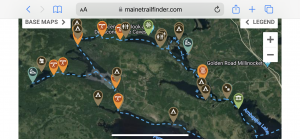
    This turned out to be more than I bargained for.

    The Vessel

    In 2019, I bought a Jeep Wrangler JLU with a soft top, and suddenly my trustworthy canoe was too heavy for my roof-top. I love lake and river paddling almost as much as I love backpacking, and I wasn’t ready to give it up. I started researching folding boats, but many of them were at obnoxious price points, and the reviews were mixed.
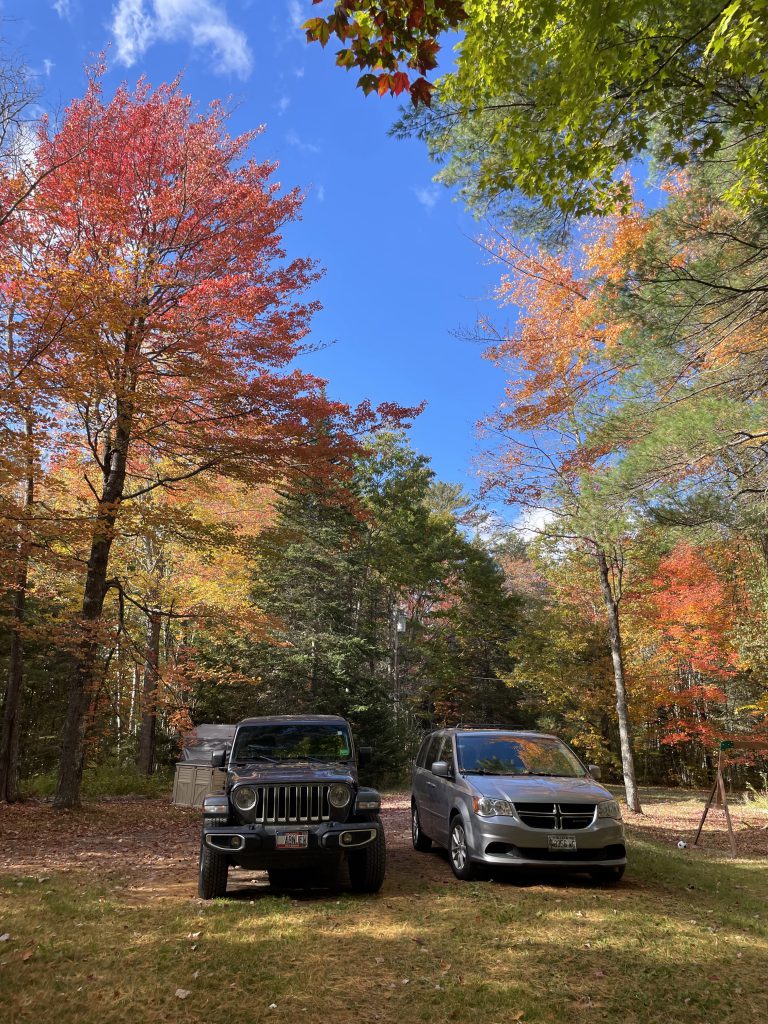
    The Jeep is soft on the top, and I don’t like taking our Caravan on rugged roads. Also, the fall colors on our acreage are da bomb.

    Then I stumbled on a Kickstarter campaign for these novel boats, and I’ve never looked back.

    I’ve had our Tucktec kayaks, one tan, one pink, since last year. I’ve put them through the paces with flatwater paddling all around Maine. I used it, after dropping my middle daughter off for her last Habonim Dror trip, at Nockamixon State Park in Pennsylvania. I took it out on the Intracoastal Waterway in North Myrtle Beach, not far from where they are manufactured.
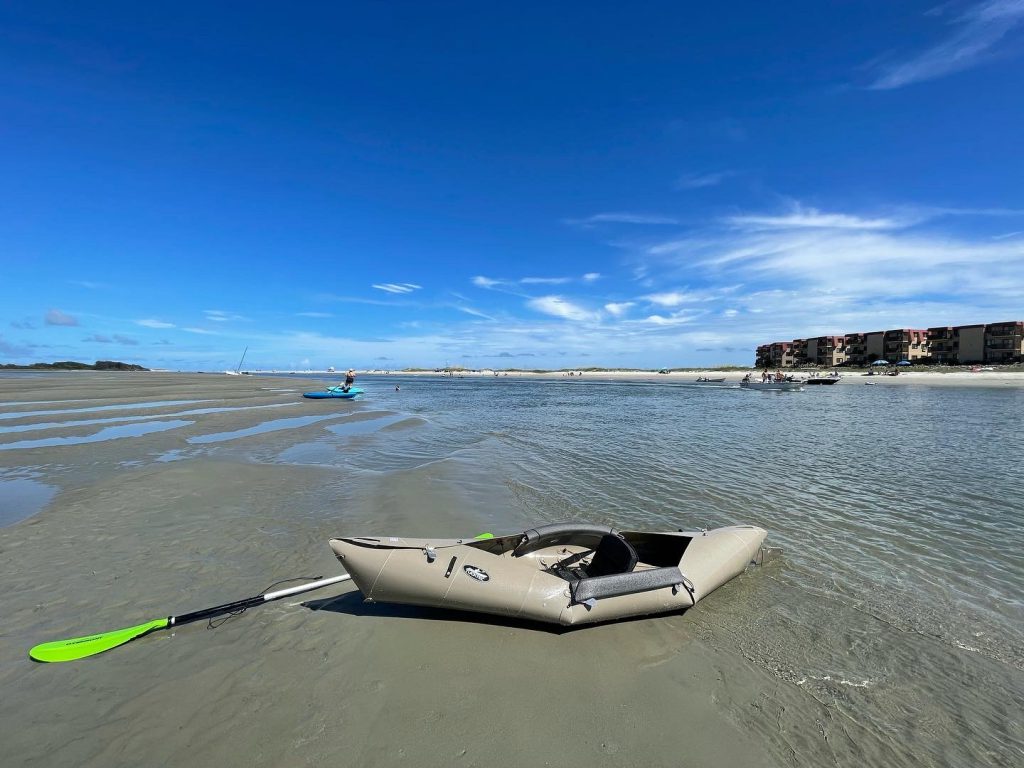
    Parked on a sand bar in North Myrtle Beach.

    I’ve had it on the Allagash, and any number of lakes in Maine. Both of them have performed admirably.

    In one instance, the careless wake of a boater on the Intracoastal knocked me out of the kayak and into the water.
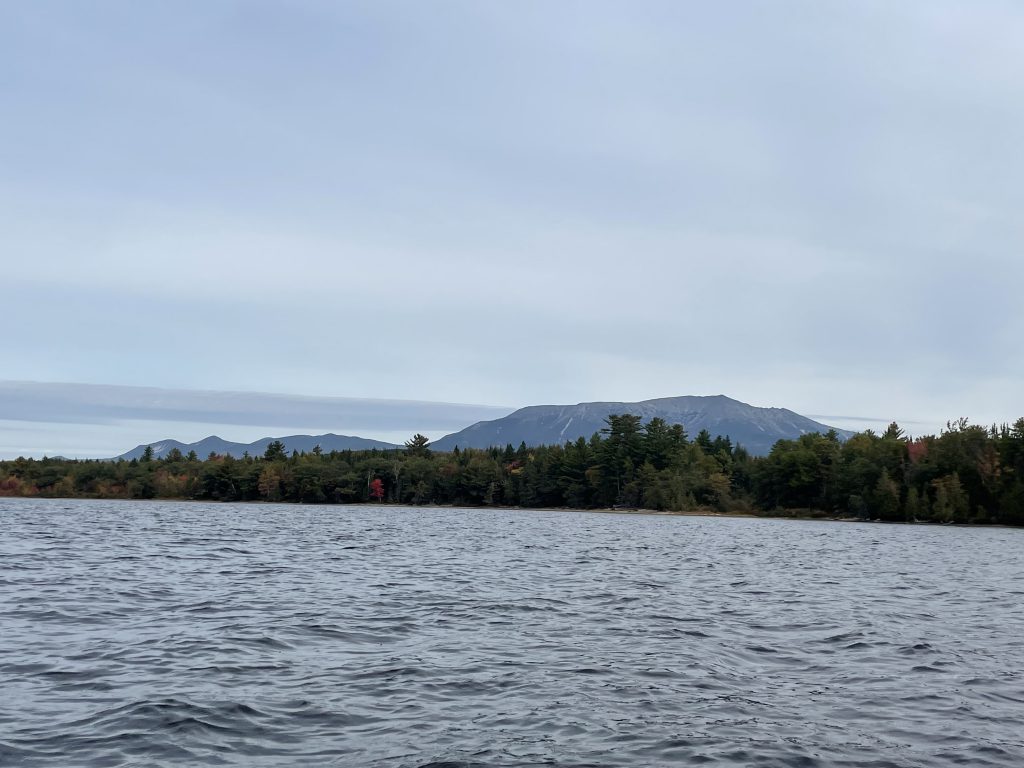
    Katahdin over Debsconeag Deadwater
    Katahdin over Debsconeag Deadwater

    My trip started off wonderfully. Katahdin loomed over me in background. The water was calm. The sun came out after a little while, and paddling was gorgeous.

    The problem arrived on the lower portion of Passamagamet Falls. I took out and portaged the first section, but could find no marked or unmarked portion. They didn’t look that bad at the onset, but I quickly realized even mild rapids are not good in these foldable rigs.

    The chop submerged the bow of my kayak several times. Finally, I banked on a rock, and as I wiggled myself off, the bow completely submerged, and the front of the kayak folded, taking me and the kayak under. Only my dry bag, wedged in the back of the kayak, kept it all buoyant, and it’s a good thing it did.
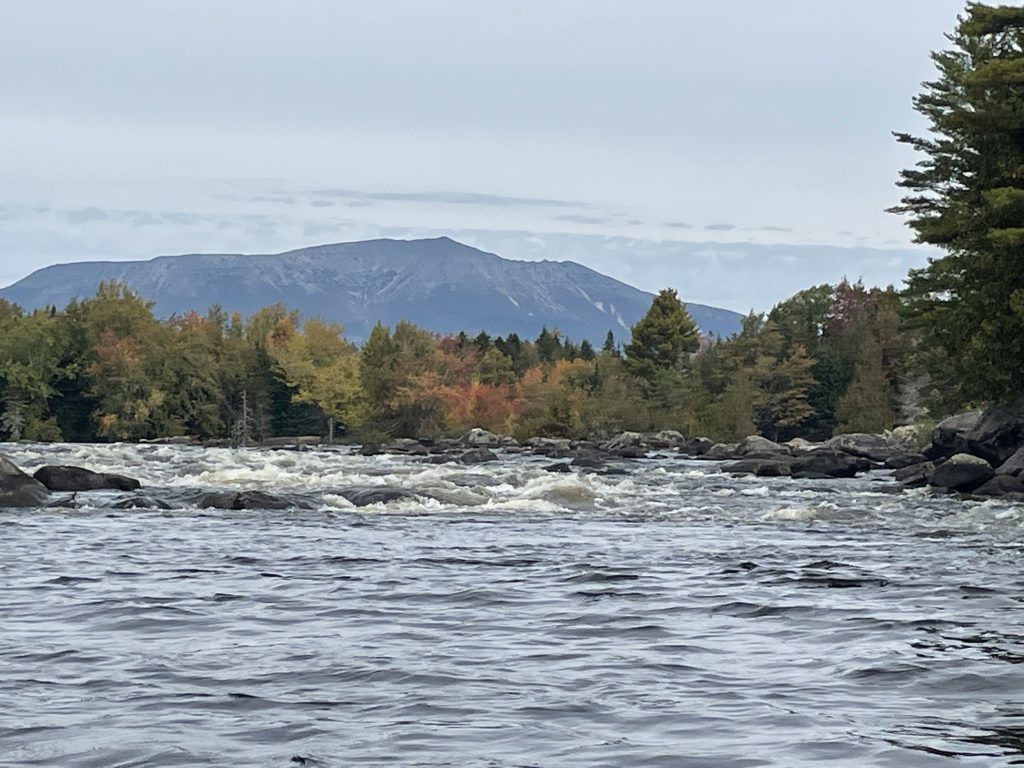
    The upper Passamagamet Falls I portaged. The lower weren’t much better than this!

    A Note on Recovery in a Tucktec

    Where I went under, recovery was all but impossible. For one, at the very least, you need to be able to touch bottom. I am 5’9″, and this spot of the river was too deep. My PFD kept me afloat (and alive), but the river was freezing and f–king around with the kayak in the water was just going to prolong the possibility of hypothermia. I kicked it to shore, again, able to keep it afloat with its aft sticking out of the water.

    An enterprising fellow demonstrated the possibilities in a great YouTube video a few years ago:

    After drying off, I continued on, but the wind picked up to around 10 mph on Ambajejus Lake. As I rounded the last little peninsula on Ambajejus into Pemadumcook, the wind-driven swells were again submerging the front of my kayak.

    I made the choice at that point to hug the shore, paddle back up Ambajesus and take out at a bridge I went under earlier in the trip. Along the way, a husband and wife on their fishing boat sent me over the side again when they didn’t slow passing me.

    From there, it was an 8 mile walk back to my Jeep. I was passed by a bunch of logging trucks as the sun set, and I walked the final 4 miles in the dark, back the horrid road back to “Omaha Beach”, a campground and carry-style put-in on the Deadwater.
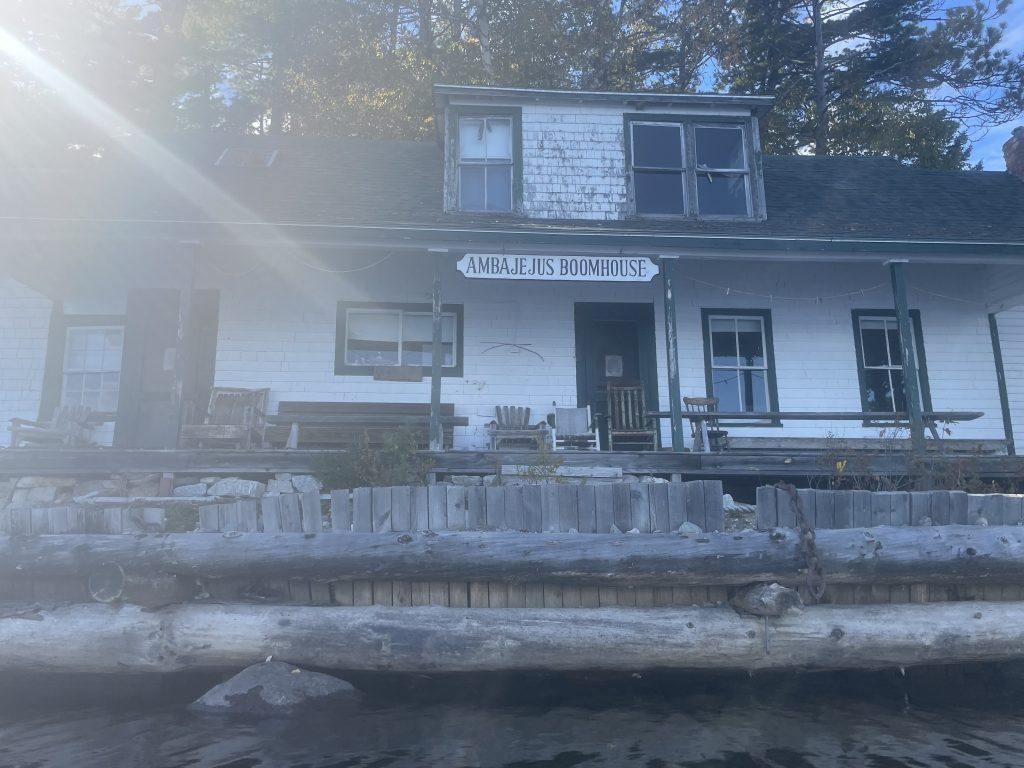
    The Ambajejus Boomhouse is one of many historical remnants from the logging era you can see on this trip.

    The Verdict

    This trip would have been fine had I portaged the lower falls. It is almost all flatwater otherwise. I am not disappointed in Tucktec in the least. They are quite clear about the idea conditions for a foldable kayak.

    They are durable. The plastic is hard and resilient, and if banking on the rock in the Penobscot put me under, the kayak was fine after I recovered.

    They are meant for close-to-shore paddling with flat, calm conditions. They are not a good fit for wind-swept lakes, rushing rivers, or the ocean, all of which are tempting, especially here in Maine.

    I will continue to use them and just exercise more caution, with more preparation for harsh conditions.

    Oddly enough, the “rock star” of my adventure was my iPhone 12 Mini. I forgot to bring its little waterproof pouch, so it went under with me. The waterproofing on these models is no joke. While the TrueDepth camera no longer works, everything else does.

    I filmed the entire experience with my GoPro, and I made a movie to highlight the experience, which you may view below.
  • On Tranquil Waters: Debsconeag Lakes

    On Tranquil Waters: Debsconeag Lakes

    After a test of my RAV4’s tires and suspension coming down a 4.5 mile stretch of rocks and pits, Amelia and I stood on the perhaps manufactured beach along the Debsconeag Deadwater at Omaha Beach.  We were swarmed immediately by Maine’s patent cocktail of black flies and mosquitoes, in spite of our best efforts with bug spray.  The nearby campground was filled with loud people.  I try not to be terrifically negative about “car campers,” as I’ve been one, but I find their presence in the wilderness intrusive, since they merely trade tent for house and drag along generators and radios.  Attempting to duplicate the comforts of home in a wilderness setting is, to me, ridiculous.  I’m not sure what bothered me more:  the insects or the blaring country music.  I could understand this at a trashy trailer lot “campground,” but given the inaccessibility of this serene locale off of the Golden Road, it was horribly out of place and diminished the character of the wilderness.

    Amelia enjoys some wading with Katahdin in background.

    Amelia enjoys some wading with Katahdin in background.

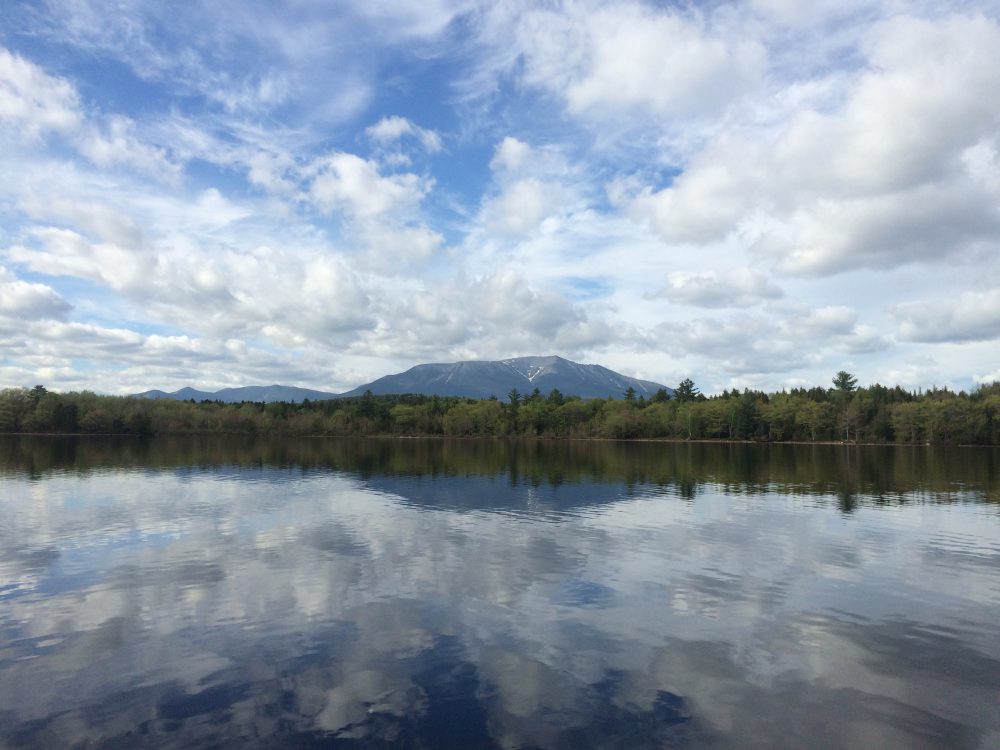
    This part of the West Branch of the Penobscot barely had a discernible current (hence “Deadwater?”).  As we put in and paddled away from shore, the bugs subsided. We headed west towards the inlet into First Debsconeag Lake, the alternating depths affording Amelia an opportunity for some wading.  The water was so still, and in the distance, the clouds cleared and we could see the lingering rivulets of ice in the spurs on Mt. Katahdin in the distance.  Once we got away from the din of the campground, the quiet was only broken by our conversation and our wooden paddles breaking the water.

    As we paddled towards the inlet from the Deadwater, on the left bank we saw some tell-tale sign of beavers.  Gnawed stumps, trees that were obviously “works in progress” by the prodigious rodents, and logs fallen into the water, but no sign of actual beavers.  As we rocked back and forth in the wake of a motor boat, we didn’t speculate long on the beavers’ invisibility.
    Our goal was to make it across the First Debsconeag Lake, take the portage to the Second, and find a wilderness campsite there.  The campsites along the First Debsconeag were generally occupied by waterborne variants on the class of campers at Omaha Beach.  They arrived with larger, motored watercraft, unloaded their “camp,” and polluted with noise ill-suited for the wilderness.  We knew taking the path to the Second Debsconeag Lake would take us away from this, as it was unattainable for people accustomed to easy travel.
    Unfortunately, the portage was unattainable for us, as well.  Amelia was determined to do it.  As I scouted ahead, she tested the scag-wheel built into the aft of our vessel by pulling it a good distance down the trail on her own.  Sadly, our canoe is 94 lbs with no yoke, our gear was slightly heavy, and it just wasn’t realistic, even for a quarter of a mile.  We ran the risk of scraping the bottom of the canoe absent a decent terrain-friendly cart.  Next time we’ll be better prepared.
    We acknowledged as we retreated back across the first lake that we would have to look for an empty spot alongside the offensive sprawl of the other campers.  We found one initially, only to have the helpful residents of one camp point us to a quieter, less obvious spot on the other side of their camp.  For all the fault I find with their form of camping, I’ve never encountered a group that are not marvelously friendly.  They even gave us some of their wood and lit a fire while we set up camp as twilight descended.
    We celebrated both Shabbos and Havdalah on our down day.  We ended Shabbos with Havdalah at our campfire, singing the Carlebach niggun for the introductory verse, and the Friedman tune for the blessings.
    After that, we roasted KforP marshmallows from our considerable stash Leah gathered from the Pesach clearance at Shaws or Hannaford.  Amelia relaxed in the hammock, until we went to bed.  In the morning, I woke up for my morning ablutions and laid tefillin under the cover of trees, after which I took in the morning light and looked without success for a moose or two.  When Amelia woke up, we had a breakfast of oatmeal and coffee singles, then put in, and returned home.
    This trip was why we moved to Maine.  Amelia and I have put our feet to most of the hikable east coast.  I’ve put my feet to most of the the continent, from Alaska to Florida, but there’s nothing quite like the tranquility of paddling in Maine.