Category: Appalachian Trail

  • Court Denies Pipeline on AT in Virginia

    Court Denies Pipeline on AT in Virginia

    (RICHMOND, Va.) — A federal appeals court on Monday denied a request to reconsider a ruling throwing out a permit for the Atlantic Coast Pipeline to cross two national forests, including parts of the Appalachian Trail.

    The 4th U.S. Circuit Court of Appeals rejected a request from lead pipeline developer Dominion Energy and the U.S. Forest Service to hold a full-court rehearing.

    <a href=”http://time.com/5537783/court-rejected-request-hearing-pipeline-appalachian-trail/”>More here!</a>

  • Matot-Masei: Promises

    Matot-Masei: Promises

    This parsha contains the most voluminous treatment of vows in Torah.

    In common parlance, we think of a vow (in the Hebrew, neder) as a commitment made using G-d’s name.  We ascribe it the same importance as adherence to Jewish law.  It can be a commitment to do something or a commitment to not do something.  In Judaism, we further define it as a verbal declaration.  An internalized vow to G-d is not binding.

    There are conditions and ways that we can annul these kinds of vows.  In Judaism in general, making these kinds of vows really isn’t part of our religious life anymore, most especially the vows of a Nazirite.  Yom Kippur, with Kol Nidre, gives us an opportunity to undo unwitting vows.  Some of us will, when making promises to others, will add b’li neder (without a vow), to make sure we’re careful not to elevate something we might break to the status of a neder.

    It got to me thinking about backpacking, as most everything does.  We make so many personal commitments about our hikes, the shape we’re in, how many times we’ll hike a year.

    Next year, I’ll do that thru-hike.

    Next year, I’ll lose so much weight hiking.

    While these aren’t “vows” by how they’re defined in this parsha, they’re still commitments we often find ourselves breaking.

    Every Appalachian Trail thru-hiker, and I know this from experience, makes those commitments on the approach to Springer.  We make them as we meticulously pore over our gear lists.  We make them when we hit Fontana Dam.  We do it at the base of a mountain, steeling ourselves for the ascent ahead.

    We start confronting the weight of our resolve once we hit the unbearable crop of blisters, the trick knee, the weariness of the trail, the aggravation of groups in shelters and campsites, and the unyielding weather.

    For me, my commitment to continue was tested when I was less than 45 minutes from home on the Pennsylvania section.  Now, since moving to Maine, my next thru-hike will be easier to commit to.  I’m walking home!

    I wonder sometimes if making hiking goal-oriented isn’t foolhardy.  “I’m going to get to Katahdin,” we tell ourselves.  HYOH people say.  I don’t know about making those kinds of commitments anymore.  With every hike, I try to take the approach that I am going for a walk.  I’ll have a general sense of how far I want to go, and if I don’t, I don’t.

    It doesn’t always work.  A fixed distance hike with limited camping means, yes, I’m adhering to a set of goals for that hike.  But next time I start off from Springer, I don’t need to visualize and commit to summiting Katahdin.  There are over 2000 miles to cover before making good.  There are so many reasons, with few of them being wrong, to get off the trail, that making such a commitment only compounds the sense of disappointment when one has to quit.

    You’re not failing yourself.  You’re not failing the Divine.  You simply found a compelling reason not to carry forward.

    This portion, to me, has always underscored with its comprehensive treatment of vows, the importance of being calculated in what we sign ourselves up for.  Goals that are nebulous or distant in achieving are especially difficult to live up to.

    Before you start your next hike, consider what you’re committing to.  Is it completing a trail, or is it something more esoteric you’re seeking?  Depending on your answer, consider not holding yourself to anything more than communion with nature.

     

  • Conservation deal protects 10,000 acres in Western Maine

    Conservation deal protects 10,000 acres in Western Maine

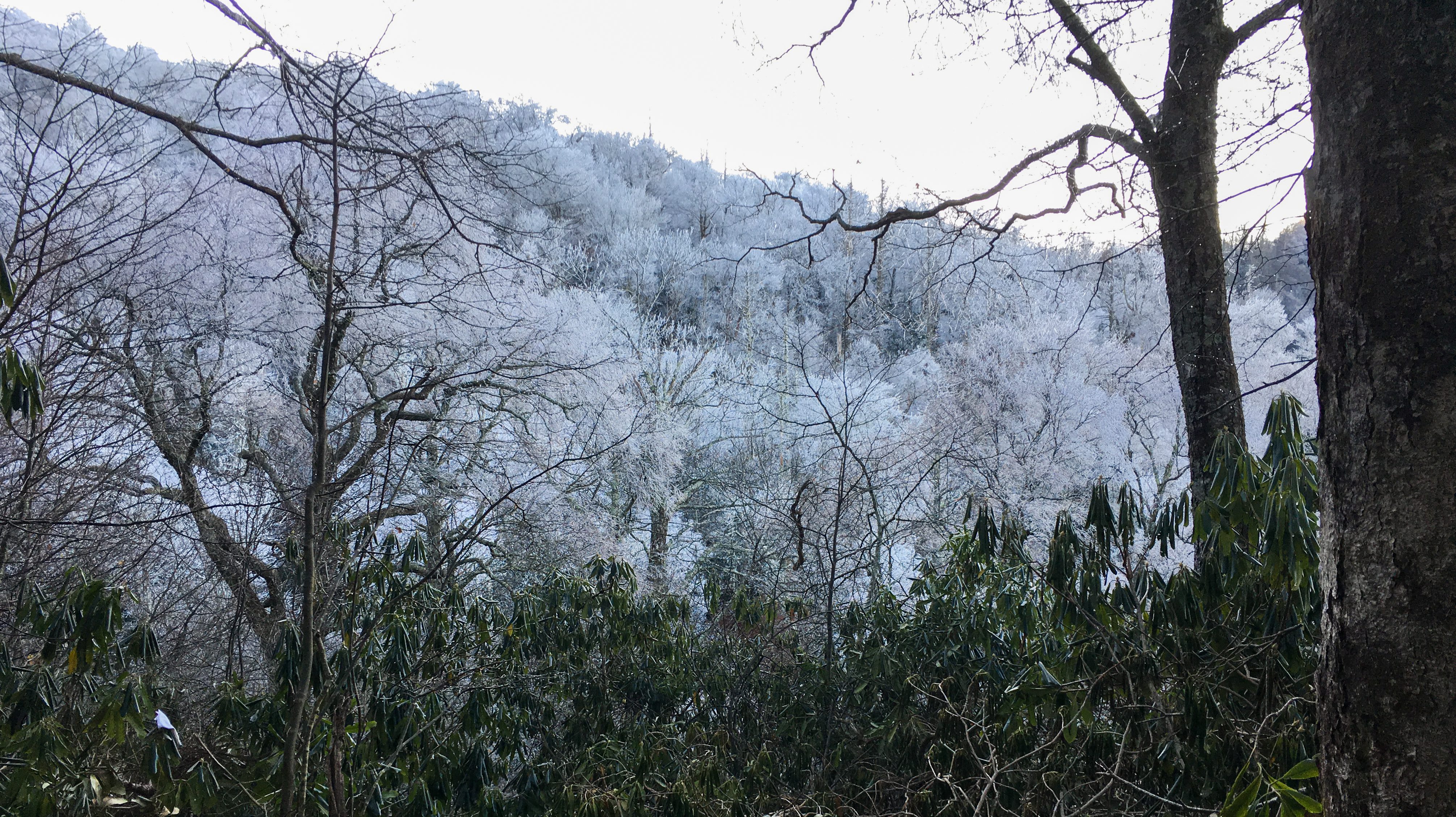
    The Trust for Public Land, partnering with the Maine Appalachian Trail Land Trust and the U.S. Navy, announced that more than 10,000 acres along the Appalachian Trail in the mountains of Western Maine will be protected through conservation easements acquired on two properties.

    The majority of funding for the acquisition of the conservation easements came through the U.S. Navy and the Readiness and Environmental Protection Integration Program.

    The two properties are adjacent to a Navy remote wilderness training facility. Protection of these tracts prevents incompatible development that could negatively affect the military’s training goals and overall readiness. The REPI program is geared to ensuring dual military and conservation successes in communities surrounding installations.

    More here…

  • Daughters of Tzelafchad: Women’s Voice in the Wilderness

    Daughters of Tzelafchad: Women’s Voice in the Wilderness

    This week’s parsha is Pinchas, Numbers 25:10 – 30:1

    There is a candidate for a state house race here in Maine, she’s what I’d call a “super Christian.”  Along with that comes, for good or for ill, a profound ignorance of other faiths, possibly even within her Christian fold.  I noted one of her (incidentally) anti-Semitic social media posts was that Judaism was “terrible for women” until Jesus Christ came along.  Naturally, I disagreed, but I checked with my wife first, to see if I did really disagree.

    My true response is a snort, and a pointing finger at Parsha Pinchas, specifically the Daughters of Tzelafchad.  A census is taken, counting only the men, and the daughters of Tzelafchad, who didn’t join Korach’s rebellion, stand before the tent, and petition Moses (and subsequently, G-d), to allow them to inherit their father’s portion, rather than divvy it up among their clan and tribe.  The law of inheritance is modified, by G-d, to allow women to inherit their father’s land if he has no sons.

    I always love this parsha for two reasons:  Divine law is mutable, and divine justice is available to anyone, even in our own sometimes male-dominated tradition.

    There is a chassidic tradition that each generation of Jews relives (I found this here) a measure of the Israelite time in the wilderness on the way to inheriting the land. The daughters of Tzelafchad make their plea in Moab, right after Balak retains Bilaam to curse Israel, right before they come into the land. Accordingly, they believe this will be one of the last stages on the way to messianic redemption…is the explosion of female rabbis in all denominations, and the increasing presence of learned women in Orthodox Judaism a messianic portent?

    This is a hiking website, so we’re not going to delve into that here.  It’s just fascinating to me, personally.

    Instead, I’d like to focus on a recent obituary (long in coming) that appeared in the New York times about the pioneering early thru hiker of the Appalachian Trail, Emma Gatewood.  This was a woman that survived abuse, and humbly but firmly staked her claim on the Appalachian Trail, just as the daughters of Tzelafchad did.  The shame of it is, many of us knew of Gatewood first as the veteran voice, channeled to disapprove of overly geared thru-hikers.  What we find out is that like the daughters in Parsha Pinchas, Gatewood emerged from out from under an androcentric 1950s world to assert her role; and it’s still shaping perceptions of the Appalachian Trail to this day.

    One thing I’ve observed since the 1990s, from the Appalachian trail to the Alaskan backcountry, women are starting to take up their wilderness inheritance as well.  There are setbacks.  Geraldine Largay’s wrong turn, the double homicide of Julie Williams and Lollie Winans (still unsolved), or the murder of Rebecca Wight, to name a few.  These things easily happen to men as well, but there is often an undercurrent of sexualized violence against women when it occurs, and a greater sense of urgency to lost female hikers.

    Today, at least 25% of thru hikers on the Appalachian Trail are women.  I didn’t research statistics for the Continental Divide Trail or Pacific Crest Trail, but based off video diaries and travel blogs, my sense is they’re on the rise on those trails as well.

    Emma Gatewood slept under a shower curtain.  Women are breaking thru-hike speed records.  I’m seeing groups of women on trails.

    In the Jewish world, just as we’re seeing spaces for women opening in scholarly pursuits, just as we’re seeing female infantry units in Israel, we also need to ensure we’re creating the space for frum Jewish women in the woods.  We face challenges (some of which we talk about in our book, The Kosher Backpacker), but they can be overcome.

    We must strive to add Jewish women’s voices to our American wilderness inheritance.