Category: Appalachian Trail

  • Pesach on the Trail

    Pesach on the Trail

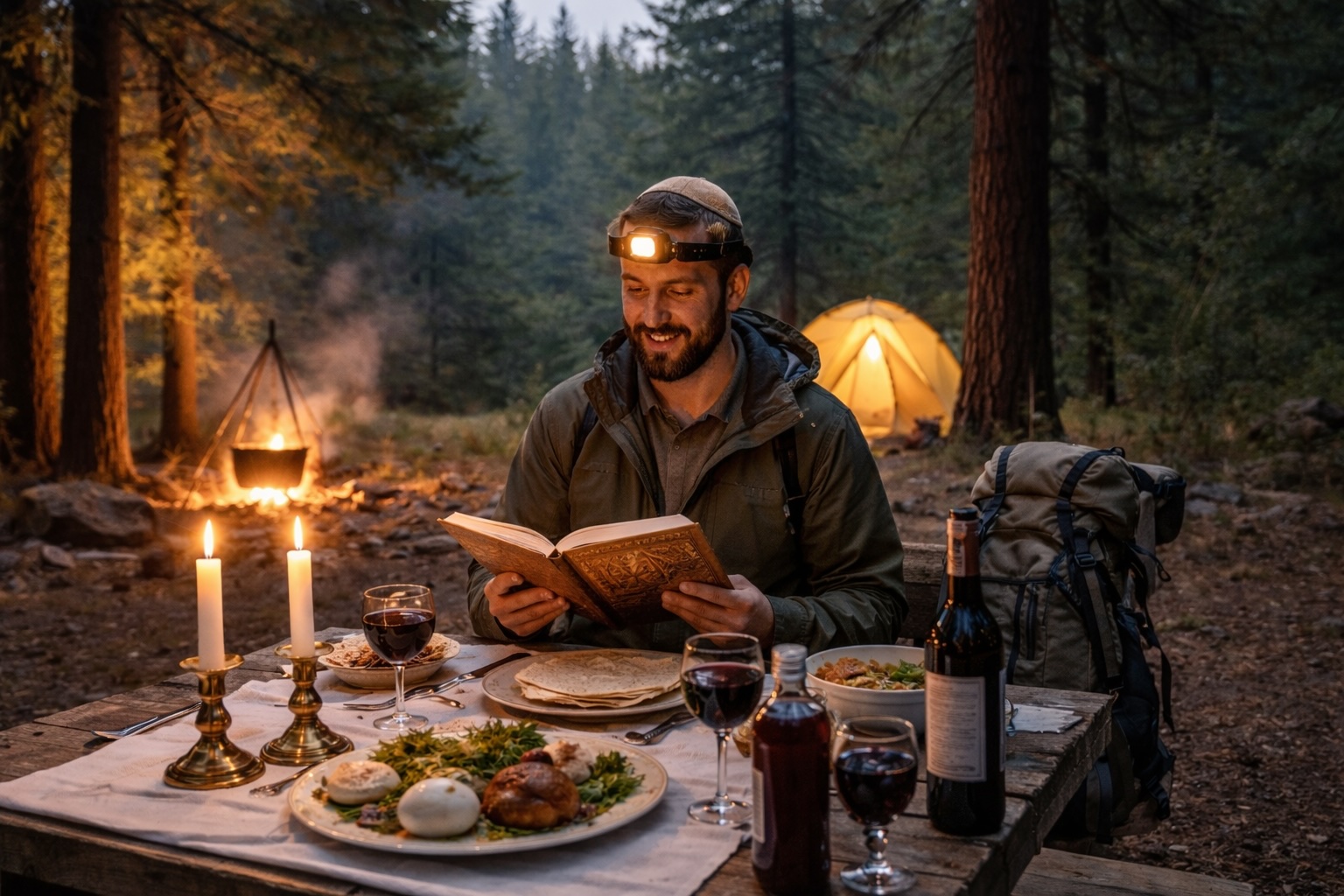
    The fire burned down to a bed of coals by the time they reached Maggid, recounting the story.

    The Appalachian Trail stretched nort hand south in a narrow corridor of shadow and pine, a ribbon of dirt that held what little warmth collected during the day, even as the April night cooled around them.  Somewhere below the ridge, water moved steady and unseen.  Above, the sky had opened between naked branches, a scatter of stars caght in black limbs.

    Eli adjusted his headlamp, then clicked it off.

    “It’s too bright,” he said.

    Nearby, Jonah was wrapped in his sleeping bag like a cocoon, only his nose and glasses visible.  Gripping his Haggadah from within his down casing, he looked like a weird amusement park mascot.

    Eli got to “ha lachma anya…” and hesitated.

    The words stayed in the cold air, colliding with the smell of woodsmoke and damp earth.

    “This is the bread of affliction,” he finished softly, putting back down the matzah, which lived in a plastic freezer bag.  It had broken into uneven shards during the hike.  “…which our ancestors ate in the land of Egypt.”

    Miriam laughed.  “Also, it’s the bread we packed badly, and this is what survived.”


    They did not plan it this way.

    The original idea was simple: finish the stretch from Springer Mountain to Hot Springs by early April, then catch a bus to Atlanta in time for Passover.  Weather, blisters, and a stubborn insistence on “just one more ridge” stretched their timeline until the calendar caught up with them somewhere in the Smokies.

    So, they stayed and resolved to do a seder on the trail.  A friend met them around Fontana Dam and delivered a 5-lb box of matzah, which the travelers distributed among them.  It would carry them, along with some tuna, through both the Yom Tov and chol chomoed days of Pesach.

    “Freedom is wherever you are,” Eli declared loftily that afternoon, unpacking supplies at the shelter.  “Or at least whevever you decide to stop walking.”

    They had improvised everything.  The seder plate was an old mess kit lid.  Bitter herbs were dandelion greens Miriam insisted were “definitely edible.”  The charoset was a mixture of apples given by a “trail angel” at the last major road crossing, and some nuts carefully picked out of trail mix, with a splash of Manischewitz for effect.

    They had a chicken bone with some gore on it for the shankbone.  The egg…the egg had been the hardest.  Jonah carried it for two days, nested in a sock, protecting it like contraband.  When he finally pulled it out, it was miraculously unbroken.  There had been a moment of genuine awe.


    Now, deep into the telling, their voices rose and fell with the rhythm of the text.

    “We were slaves to Pharoah in Egypt…”

    “Now we’re slaves to this trail,” Jonah muttered.  He was the least enamored of their thru-hike, coming along mostly for fear of missing out.

    “No,” Eli corrected.  “We’re choosing it, and that’s the whole point.”

    Miriam leaned back on her hands, looking past them into the trees.

    “My grandmother at our seders used to say every generation has its own Egypt,” she said.  “Not always a place.”

    They thought for a moment about some of the hostility they had met from other hikers on the trail.  A kid on Blood Mountain sporting a kaffiyeh and a lot of opinions.  The trio didn’t have an answer for him, but he harassed them for a solid day until severe chafing took him off the trail.  They weren’t there to talk about Israel or Gaza, though they had all done Birthright together.  They were there to hike.  Not that they minded when they heard he came off the trail.

    Jonah gestured all around, possibly to the dark woods, their worn packs, the endless miles behind and ahead.  “All of this is definitely suffering.”

    Miriam was quiet for a moment, and said, “I think it might actually be the leaving, which was actually headed towards something else.”

    None of them were particularly religious, but as Jews are wont to do, they still were finding meaning in both Passover and their thru-hike.

    When they reached the Four Questions, they again paused.

    “None of us are kids, really,” Jonah said.  “Who asks?”

    Miriam and Eli put their fingers on their noses and declared, in unision, “Not it!”

    Jonah sighed, straightened slightly in his sleeping bag, and said, “why is this night different from all other nights?”

    They let the question hang for a moment.  The forest definitely wasn’t going to answer.

    The night was different than all other nights, and all other Passovers.  It wasn’t the improvised ritual objects.  It wasn’t that they lit the Yom Tov candles in a windproof candle lantern that they planned on using for the next two stationary days on the trail.  No, they weren’t religious, but there was something they wanted to get right.  They were in the middle of a long journey largely defined by continuous movement north, always north.

    Yet here they were, taking a moment to choose the freedom of stillness and a memory of their people.


    Later, they sang.  At first they were quiet, possibly a little intimidated by boisterous choral work in the middle of nowhere.  As “Dayenu” echoed through the trees, it was somehow softened by pine needles and moss.

    “It would have been enough,” Eli said, translating the obvious.

    Miriam smiled.  “Would it, though?  I could do with something a little better than matzah for the next eight days.”

    “Probably thats a ‘no’,” Joshua chimed in helpfully.

    Then they sang it one more time.


    By the time they said, “next year, in Jerusalem,” the fire was nearly gone.

    They poured themselves one more mug of the Manischewitz.

    “To freedom,” Eli said.

    “To getting to Maine before I lose interest,” Jonah added.

    Miriam lifted her cup last.

    “To knowing when to stop walking,” she said.

    Somewhere, in the dark, an owl hooted.

    The shelter was only a quarter of a mile from the Appalachian Trail, which waited.  It was indifferent and patient, stretching onward from Georgia to Maine.

    For that night, though, they stepped out of it.  A thru-hike is often a race filled with variables and questions.

    Are the contents of my pack necessary to take me to Katahdin?  Do I have the right shoes?  How many miles do I need to do per day to get to Maine by September?

    For the early weeks of a thru-hike, the conversations are in orbit around gear and plans and the hike, insufferably banal conversation that loses track of the beauty of place and time.  The point was the journey itself, not the destination as a goal, and stepping out of it for a night was useful.

    They made a small circle of light in the vastness of the woods.  They remembered that very little in the Exodus story talked about the distance the Hebrews put between themselves and Egypt, just the leaving itself.  The meaning was in the motion, and now, the meaning was in the pause for the space of memory.

    When they finally crawled into tents or the shelter, the words lingered as something that would carry forward beyond the trail.

    Next year…

    Maybe not in Jerusalem, or maybe so, but definitely further along the path, closer to whatever freedom might be.
  • New Permit Requirements on AT in Shenandoah

    New Permit Requirements on AT in Shenandoah

    Starting this month, you will now be required to buy a permit at Recreation.gov in order to complete the Shenandoah National Park portion of the Appalachian Trail.  The previous system, where you could obtain a paper permit either at the website or at locations within the park, no longer exists.

    For more information about Shenandoah’s backpacking regulations, you may visit here: https://www.nps.gov/shen/planyourvisit/backcountry-regulations.htm

    For now, the purchase of permits may be made here: https://www.recreation.gov/permits/4675336

    This also adds a cost to this permit:

    $15 park entrance fee – if you have a military, veteran, or Golden Eagle pass
    $9 recreation fee
    $6 backcountry camping fee

  • Elul’s End

    Elul’s End

    A Synagogue President Reflects on the Appalachian Trail

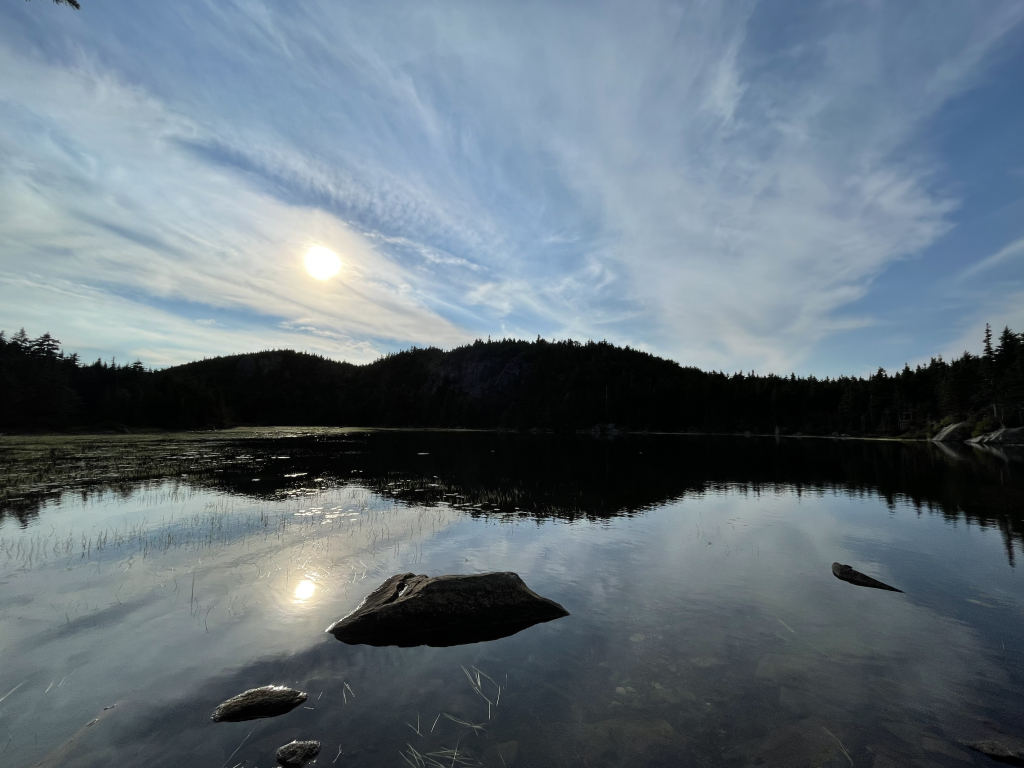
    The sun finally set on The Horns Pond in the Bigelow Range. I returned to my campsite, with my hammock strung between two sturdy trees, and retrieved a small sandwich bag. Inside was a small portion of a havdalah candle, a couple of cinnamon sticks, and a small bottle with the requisite amount of Manishchewitz.

    In November, I’ll likely be entering my third year as president of Maine’s oldest continuously operating congregation. We’re one of only two synagogues in the state affiliated with the United Synagogue of Conservative Judaism.

    These last two years have been hard work. Our previous president left me with an unfulfilled strategic plan and a looming renovation to our social hall. We discovered a possible budget shortfall, and then the pandemic hit. To top it off, in spite of an extensive leadership resume—26 years in the military, an MBA and business leadership background, not to mention several years as Vice President and board member of a larger synagogue in Pennsylvania—there’s a difficulty admitting that I was well-suited for the role. We’ve had imbroglios over gifts, dramatic resignations from the board, deaths we couldn’t properly honor, and of course, everything in orbit around COVID-19. And while at times I feel like a Welsh sin-eater and not so much a functional leader, I do enjoy the role, because I care so much about my community.

    Throughout Elul this year, I davened the requisite liturgy. I did selichot. I blew my shofar. It’s a far cry from when I was a ba’al t’shuvah waving a chicken around my head. Back then, I was just trying to find Jewish authenticity. Today, I’m trying to find true communion with the Divine, and it is elusive. My “Jewish headspace” has been fully consumed by my role.

    I search for that communion in a place where I always find it: on the Appalachian Trail.


    I’m a year out from having left the military, and I’m acutely aware that I’m out of shape. The climb up the Bigelows on the Appalachian Trail off of the Maine Route 16 Trailhead is, for me, brutal. It’s not the hardest hike I’ve ever done, but right now, as I feel the loss of 26 years of muscle tone, it’s not the easiest, either.

    Davening in the Bigelows

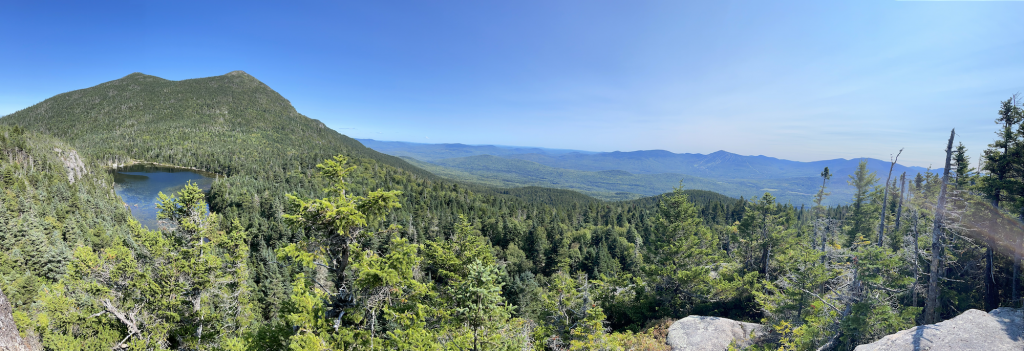
    Through the trees, as I hike, I catch glimpses of Sugarloaf, and on the north side of the range, Flagstaff Lake.

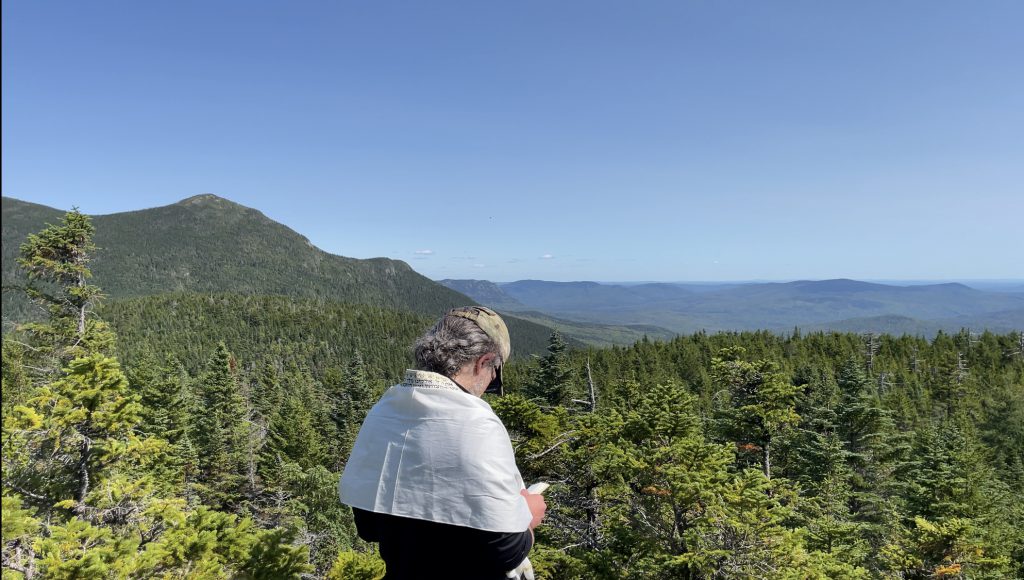
    I davened shacharit at my campsite in the morning, and davened mincha atop a smaller peak overlooking The Horns, all the while being buffeted by the winds. It’s the first time in a while that I’ve truly felt in touch with the Divine.

    It hasn’t happened for me this year in shul.

    Are you vaccinated? Where is your mask? How many people can we safely accommodate in the sanctuary? What about breakthrough cases?

    I am occasionally asked by our gabbaim to conduct the Torah service or Musaf, since I’m familiar with the liturgy. That’s a moment when I sort of feel close to the Divine. I’m merely competent. My Hebrew is functional, but I get performance anxiety, and I’m certainly not the practiced service leader our rabbi is.

    On top of a high Maine peak, however, it’s just my voice against the wind, and the wind wins. I ask for healing for my friends and loved ones who are ill. I ask for all the things we ask for in Shemoneh Esrei, and I mostly mean it. I think God hears. I hope God hears. I can’t hear myself.

    Sometimes I envy people who say they hear the voice of God. Most of the time, I’m suspicious of their mental health or their honesty. On this day, face into the wind, looking across the breadth of Maine’s mountains, I’m wishing I could hear even a whisper in return.

    The beauty and serenity does make me feel in communion with a Creator, albeit in a unidirectional, appreciative sense. Our illogical value we place on the aesthetic is one of the characteristics that is to me evidence of our intelligent design. We are not taught that a view is “breathtaking.” We innately know that when we look up on an incredible vista, that it is “good.” I cannot understand the evolutionary advantage in such an adaptation, not when we are so ill-informed by such an instinct that we still poison our living world.

    I stand on the precipice overlooking the valley below. I manage to put out of my brain all of the sour thoughts about the past two years, and just think about the exertion that brought me there. The simplicity of the effort and its reward.

    Surely, there’s a metaphor in there.


    John Prine’s last album, The Tree of Forgiveness, is my new Elul staple since his passing in 2020. The album itself starts with a wrenching song, “Summer’s End.”

    “Well you never know how far from home you’re feeling
    Until you watch the shadows cross the ceiling
    Well I don’t know but I can see it snowing
    In the car the windows are wide open.

    Come on home.
    Come on home.
    No you don’t have to be alone
    Just come on home.

    The moon and stars hang out in bars just talking
    I still love that picture of us walking
    Just like that ol’ house we thought was haunted
    Summer’s end came faster than we wanted.

    Come on home.
    Come on home.
    No you don’t have to be alone.
    Just come on home.”

    Elul’s end collided with summer’s end this year.

    Coming down the Fire Warden’s Trail from Bigelow Mountain, this song was stuck in my head. It wasn’t just that I was returning to my wife, Leah, and our girls. I came off that mountain this Labor Day weekend, which meant that tonight, at erev Rosh Hashanah, I’d be standing at the door to our shul with our list of vaccinated attendees, and demanding proof of vaccination for the rest.

    I’ll be doing last minute work with our audio and live-streaming service. The lighting will be just so. I’ll receive the litany of complaints from congregants about this or that, who are less concerned with solutions to problems than just the sense that they are heard.

    These people, like me, have probably felt just as or more isolated across the last two years. This year, we at least have the opportunity to be together.

    No, you don’t have to be alone.

    Some of us will just enjoy the pageantry of the the liturgical experience. Others may well try and get right with God and each other. We’ll come on home, and begin the cycle anew for the following year. Some of the faces we see tonight and tomorrow won’t be with us for the next go round.

    Next year, I wonder if I’ll again be standing on a mountain peak, trying again to hear God, to touch the infinite unknowable.

    As I head to my campsite at Avery Col, I realize it’s been 15 years since I’ve thru-hiked a major trail. Hiking this late in the season in Maine on the Appalachian Trail, I encountered thru-hikers (and their pungent stench) making their mad dash to Katahdin before the first snow arrives. As I spoke with other hikers this weekend, where our only commonality was nature, I realized how much more important the deeper connections we have to our other humans are. If I can build a temporary relationship with a stranger in the woods merely because we both travel by foot, how much more can I build with someone who generally believes what I believe?

    I know I need my congregation, and my congregation needs me to continue to try and be the best and most responsible leader I can be.


    As I load my pack into the back of my Jeep, I’m still left with questions about my relationship to God. Though the Appalachian Trail will always be the holiest place I can find to try and reach the Unknowable, I still feel like I’m missing something.

    When the desperate final prayers of neilah end and the ark closes on Yom Kippur, all the questions of the holiday will still linger for me.

    Who are we to God? Who am I to God? Does God hear this? Did I do all right? Am I in the book? Will my kids be alright?

    And I won’t know.

    That’s how things are always between God and me.

    Unresolved.

  • Thoughts on “2,000 Miles Together”

    Thoughts on “2,000 Miles Together”

    In 2018, the Crawford Family, consisting of two parents and six children, hit my “Appalachian Trail / lives in Maine” radar, over a debate as to whether they should be allowed to summit Katahdin with their two-year-old son, Rainier.

    There were many thoughts on this, separated into a variety of camps.  The Baxter elite, often already resentful of the thru-hiker set, of course said no.  Another group believed “the rules are the rules.”  The libertarians among us said, “who is anyone to tell anyone else what they can’t do with their kids?”

    If you don’t know that outcome, I’ll leave it to you to find out in this book.

    As critical as I am of the book, I am not critical of the Crawfords as parents.  I stand in stark admiration of them for undertaking this with their children.  I don’t know if I’d call them role models, but as is often pointed out, and will continue to be pointed out, getting kids off of the couch and into the wild is widely celebrated.

    If the Crawfords are guilty of anything, it’s that they chose to make their family hike a social media spectacle, with vlogs, drones in all the wrong places, concerning themselves with trolls, etc. You could follow their attempt on YouTube, under “Fighting for Together.”

    As both a thru-hiker and a parent of (fewer) children within similar age ranges, I could admire the family undertaking. Perhaps I could even envy it. My wife, Leah, is not even remotely outdoorsy. She’s of the packaged vacation, Disney World, cruise, time-share variety. My oldest, who is now a college student, has likely never slept in a tent. My 16-year-old took one overnight trip with me in Camden River Hills State Park one cold December, and that was her last trip with me. My youngest, who is five and a half, is ready for these adventures, but I will be competing against focus-grouped and colorful animated brand marketing as she ages.

    Any parent who wants to push back against “screen time” and childhood obesity should admire the Crawfords. At the same time, the social media focus in turning their “adventure” into a commoditized affair partly undermines the message of unity and turns it into “look at our family unity.”

    This does not mean they deserve scorn, or having child protection bureaucrats descend on them in the Smokys.

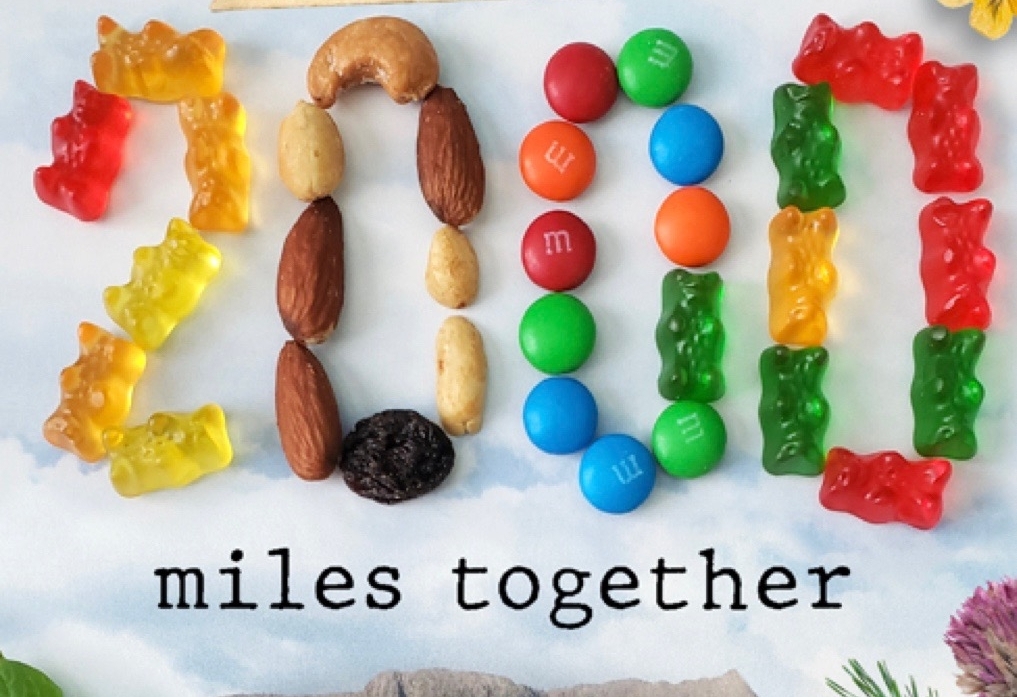
    If you read their new book, 2,000 Miles Together: The Story of the Largest Family to Hike the Appalachian Trail, you understand that just because an undertaking is novel and admirable, doesn’t mean that it’s particularly enriching.

    No Insights or Deeper Meaning

    The thru-hiking world is littered with poorly-constructed documentary videos. To his credit, Ben Crawford and his children put together competent videos, and similarly, this book is competently written.

    The continued emphasis on “the largest family to hike the Appalachian Trail” almost highlights that this is the only real achievement of the hike. Perhaps the Crawford family internalized deeper meanings of the hike and family that they didn’t expose in video or in this book, but you won’t find them.

    In many cases, it’s Jon and Kate Plus Eight meets the Appalachian Trail. Another generic white, Christian (non-denominational) family manages to successfully market being a generic white, Christian (non-denominational) family.

    I don’t think it’s a harsh judgment of Ben or Kami Crawford to say this, either. We don’t go into the reality show approach to these events with high expectations. It’s the bland inspirational pabulum that gets stenciled on dining room walls (“Live, laugh, love!”) or superimposed on stirring photographs.

    Self-Absorption and the Need for Validation Permeates

    I don’t want to call this book self-aware, as it would imply a sense of objective introspection that’s just not there.

    Crawford spend considerable parts of the narrative attending to what the outside eye, be it commenters on YouTube, Vegas-oddsmakers, and strangers along the way must think about the Crawfords.

    No doubt, they were wondering the same thing about our family. We’d even heard there was a line drawn in Vegas and people had placed some very low odds to bet on our failure.

    The repetitive citations of YouTube commenters in almost every chapter and their thoughts on the Crawford hikes can only be described as aggravating. It serves two purposes, to either validate their undertaking, or to augment the sense of “us against everyone” that seems vitally important to Ben Crawford for one reason or another.

    It’s hard to accept that Ben Crawford doesn’t, in fact, thrive on Internet critiques when he devotes so much literary real estate to it.

    Even the descriptions of the personalities they meet along the way circle back to commentary on The Family and their hike. Arnie-1-mile, “The Degenerates”, and others all receive dutiful biographical treatments, but they are only accorded narrative significance if they relate positively to the family undertaking.

    “I am so blown away by what you guys are doing…”

    “We’ve been watching your family for a while…not many adults could do what I’ve seen you guys do.”

    “God bless you guys…you’re living life your own way. That’s so important.”

    Scant Descriptions of the Landscape

    In many ways, the only way you know, throughout the narrative, that the Crawfords are on the Appalachian Trail is that it’s ostensibly the subject of their hike.

    There are few descriptions of the natural environment they are traversing. Names of landmarks and towns are listed, but if there’s a moment where the Crawfords are humbled by the mythical beauty of the trail, it’s in short supply.

    We get mileages. We get the day-to-day. We get when Kami is on her period or how they have sex.

    We get vast descriptions of the challenges of motivating children, which is understandable.

    Everything is Overcoming Adversity if you Frame it as Such

    Really, what this book boils down to is a recounting of how The Crawford Family overcame adversity. The 2200 mile hike is not enough. It’s Internet haters, it’s kids that grumble about getting up. It’s the logistics.

    What it is…is banal.

    I’m not sneering at this book, really, I’m not. I’m not sneering at the achievement of moving 6 kids and 2 adults from Georgia to Maine on foot. Having done this hike by myself, it’s challenging enough without having to fold parenting into the mix.

    It exists on a continuum endemic of this day and age, where achievement is deeply connected to exhibition. With the attention paid to online voices, with the emphasis on how others they meet relate back to them, it becomes very clear that at least for Ben Crawford, this was the takeaway. I don’t know if it’s true of his whole family, but it comes through in the videos and this book that Ben Crawford absolutely thrives on an enhanced and artificial sense of obstacles.

    There’s no attempt to really engage the reader and say, “this is something you can do with your family.” It is, from start to finish, an exercise in navel gazing.

    And to that end, I say, “Hike Your Own Hike.” The beauty of the Trail is that it bears the weight of the superficial as much as it does those in search of a deeper, and less effusive connection with the Earth and other humans.

    TLDR: If you are looking for deeper insights into parenting, the Appalachian Trail, or anything else, really, “2,000 Miles Together” is not your book. If you’re looking for a travelogue through Appalachia, this book will be deeply unsatisfying. If you’re looking for what an Internet-aware, meta-narrative about a family that sought an achievement, this book adequately captures what their video logs already exposed.

  • A Parsha Insight, and COVID-19 Hiking

    A Parsha Insight, and COVID-19 Hiking

    Many a drash on the Torah this weekend will deal with the little alef in “Vayikra.” We’ll hear the Ba’al HaTurim’s take on it, which tackles Moshe Rabbeinu’s humility in “the Lord called to Moses” vs, “the Lord happened to talk to Moses.”

    I like Rabbi Lord Jonathan Sacks’ take on this a little better. Alef isn’t only the last letter in “vayikra,” but is the first letter of the alef-bet, and also the first letter of the 10 Commandments. “Anochi” – I am the Lord your God. Rabbi Sacks posits that the alef is written puny to emphasize that God’s presence isn’t always grand and obvious, but sometimes just the small moments.

    Obviously, since this is a website with a Torah-centric outdoor mission, we’re all about finding the Divine in small moments.

    What you shouldn’t do right now

    The Appalachian Trail Conservancy is urging hikers not to undertake thru hikes or section hikes. Similar constraints are recommended for the Continental Divide Trail and the Pacific Crest Trail.

    The reality is, none of these trails can be undertaken without risky travel to and fro the trail. You cannot avoid exposure and violations of social distancing in trail shelters. You cannot avoid exposure during resupply.

    The trails will still be there.

    You should leash your dog while hiking. While dogs cannot, so far as we know, be infected and spread the infection, they can be contact conduits, given how long the COVID-19 virus is known to live on surfaces.

    This is not the only problem with unleashed pooches. If your dog does not respond well to vocal commands, and is sniffing around another hiker, you may have to violate safe distance in order to retrieve your dog.

    Put a leash on your dog, or stay home.

    Consider avoiding crowded trails. If you see a parking lot full of cars, consider how well you might maintain social distancing on narrow footpaths. If you have to step off-trail to avoid contact, consider the ecological damage you might do, and how this violated the Leave No Trace ethic.

    If your hike involves a long drive, think about fuel purchases and how you’ll handle those.

    What you should do right now

    Go for a hike with all the caveats in mind. Since our synagogue has shut down, I’ve taken my daughter, Nezzie, for a hike every weekend since social distancing was recommended.

    My daughter, Nezzie, is content just tossing rocks in the stream on our property.

    This is a good time to try that obscure, unpopular trail.

    It’s a good time to try a paddling adventure.

    It’s a good time to find the Divine in those small, everyday experiences with your kids, with your spouse, or even by yourself.

  • Water Crossings

    Water Crossings

    EDITOR’S NOTE: This article was started well before the tragic drowning and ensuing images of the father and daughter who perished crossing the Rio Grande. We will translate this article into Spanish as well, as information herein can be used to help safely cross rivers. We do not intend any insensitivity to the humanitarian crisis at our southern border, and as Jews, our concerns lie with treating the stranger in our land with dignity and decency.

    After a recent long hike in Maine’s 100 Mile Wilderness, I was confronted with my first serious set of river and stream crossings in many years. Indeed, not since crossing the glacier-fed, braided rivers of Alaska’s hinterlands have I been so challenged by moving water.

    We had a late-lingering winter in Maine this year, coupled with a relatively wet spring, and so water levels as I crossed the Pleasant River into the Gulf Hagas area a few weeks ago were almost thigh-high.

    On a stream crossing approaching the Carl A. Newhall Lean-To, I slipped on a rock and took a mighty, soggy dunk, which as we know in 50 degree weather, can bring hypothermia and death to the untrained traveller.

    I am not, however, an untrained traveller. I went to two mountaineering courses while stationed in Alaska, and would be classified as an “assault climber.” Further, I have many experiences in deep wilderness and mountainous terrain with river crossings. It’s just a decade or two stale, I write with a chuckle.

    Crossing Site Selection

    On East Coast trails (ahem, Maine), site selection isn’t particularly necessary, as trails will generally take you to the spot determined by trail planners to be the best crossing. It doesn’t hurt to look, of course, as conditions can change, depending on nature and frequency of trail maintenance.

    A dry crossing is always the best. In western or northern areas, the closer you are to the end of winter, the more likely you can find icy or snow-covered crossings. Fallen trees or log jams can also be used for a dry crossing.

    If that’s not possible, it’s decision time. First, time of day should be considered. Early morning can be the best for a variety of reasons, except for after heavy rains. Water levels are usually lower, and you have the rest of the day for things to dry after the crossing.

    As far as where to cross, the widest point is usually the most shallow point of a river or stream. You should avoid bends, as the water is usually deep and will have a strong current on the outside of the bend.

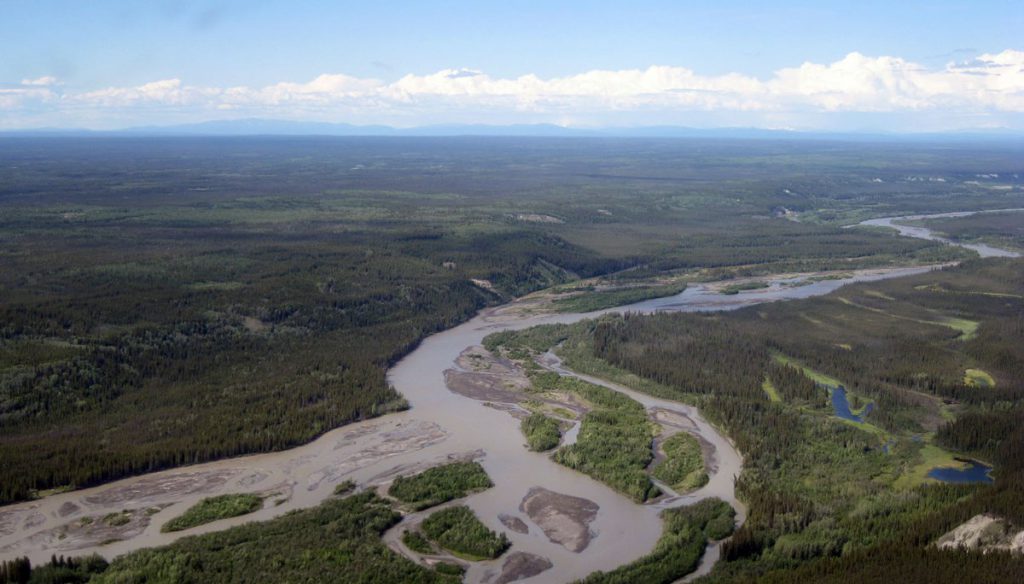
    Mountain rivers, especially ones fed by glaciers, will often be braided with numerous channels. These are often an ideal spot to cross rivers. When I did a multi-week backcountry excursion in Wrangell-St.Elias National Park, this was de rigueur. When we took an excursion up the Savage River in Denali National Park, we mostly walked the gravel bars of the river for ease of walking.

    The beautiful Copper River in Alaska.

    When you do select a site, look for one where you can easily get in or out of the river. Low banks that one can walk into and out of are preferred to a climb in and out of the water.

    Preparing Gear and Clothing for Crossings

    Waterproof all the things! In this day and age, hikers are carrying far more electronics than ever, and those must be waterproofed. Generally, I keep my entire backpack inventory inside a waterproof, sealed bag inside my backpack.

    A lot of people cover these things, but I’ve learned some additional things from military water crossings. If you are wearing pants with cargo pockets, button those or zipper those up. Pockets fill up with water and can weigh you down, and in swift currents, and minimizing that can make an astounding difference.

    DON’T WEAR FLIP-FLOPS or OTHER SLIP ON SANDALS. This goes for “crocs,” too. In mild crossings, they may be fine, but in strong currents, they can be sucked right off of your feet, leaving you to walk barefoot on possibly sharp shoes.

    I don’t take chances. I take my socks off and inner soles out of my boots, and wear the boots for the crossing. I get the greatest purchase on slippery rocks this way, and I don’t have to worry about a bleeding wound or just stubbing my toe.

    Unbuckle the waist and chest straps on your backpack. If you go under, you’re going to want to shed that quickly, lest it drag you down and drown you.

    Crossing By Yourself

    As an avid solo-hiker, this has been the bulk of my experience.

    You should face upstream, slightly sideways. Lean a little bit into the current, which will help you maintain balance. Sometimes, depending on the strength of the current, you may even want to turn sideways, because you’ll be pushed less.

    Shuffle your feet along the bottom. Put your downstream foot in the lead. If the water is really cold and the current strong, you may have a temptation to rush, but you’ll want to be slow and deliberate. In Maine, I’ve discovered, the rocks beneath you are often slimy, and it’s very easy to lose balance and fall. With your lead foot, you should also be probing for bigger rocks, holes, downed branches, etc. If you find one, you should try and move around it on the upstream side, as especially in the case of rocks, the turbulence won’t be as significant as it will be on the downstream side.

    When possible, you should cross at a downstream angle. Otherwise, you end up fighting the current more than you need to.

    This is a strong argument for trekking poles. In recent years, since moving to hammock camping, I’m less inclined to carry trekking poles, but for water crossings, they are very helpful. Put your pole (or a downed branch, never cut a live one) on the upstream side of you, and leaned upon for support. Move the staff first, then slowly shuffle your feet towards it.

    Crossing with Others

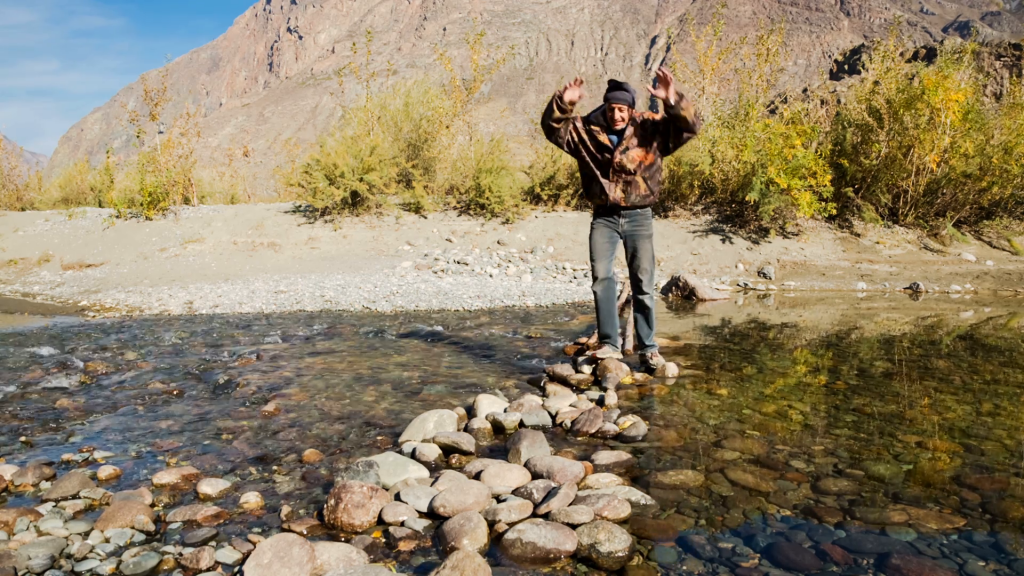
    Fording one of my old favorites, the Eagle River on the Crow Pass trail in Alaska.

    Sometimes, a swift river calls for friends. When the river is thigh deep or higher, or the current is heavy, linking arms and taking a go is the best way short of finding another route or crossing.

    The largest person should be positioned on the upstream end of the line, with arms interconnected. The group should then cross parallel to the direction of the current, but still at a slight downstream angle. The individual movements are similar to the individual crossing techniques.

    It is advisable to put your poles away, unless you are on the ends of the line.

    Crossing with Ropes

    I would note that it is possible to set up a crossing for others with a rope or ropes, but I strongly discourage it. For backcountry or even major trail travel, if the current is so swift, and there is no permanent fixture, either bridge or wires, it is simply too hazardous a location for crossing.

    Swimming Across

    Don’t, especially solo. You can certainly float your pack and doggie paddle across, but it’s a terrible idea if you aren’t in a group. Depending on the season or the temperatures, hypothermia becomes a very real concern. I always keep a dry set of things (or at least not too damp) to change into after crossings. I took a dunk on my last trip in the 100 Mile Wilderness in a deluge-swollen creak, and if I hadn’t immediately changed out of soaked clothing, I could have lost too much heat to safely continue.

    If you are a solo hiker, please do know everything you can about self-rescue, and how to warm yourself up in case things go sideways.

  • Memorial Day Weekend in Gulf Hagas

    Memorial Day Weekend in Gulf Hagas

    We’ve been at war for 18 years. I’ve been in the military, between the active duty Army as a paratrooper and the National Guard as a paratrooper, Stryker infantryman, and transportation manager, for 25 years this July. Like any service member with any period of service, there are names we read on Memorial Day that are familiar. It’s a hard weekend, replete with survivor guilt for both combat deaths and suicides.

    On Shabbos, I read the names of Jewish members of the American armed forces who have perished since 9/11. It’s a list that continues to grow, and because of “Jewish geography”, more than a few names on that list are people we knew and loved.

    My tradition on Memorial Day weekend in recent years has been to eschew crowds, parades, pomp and circumstance, and indulge a period of quiet reflection in the woods. I’ve written on the blog my wife and I maintain about living a Jewishly observant lifestyle in the Maine woods about Judaism having a salve for moral injury, and for me, hitbodedut is a crucial component of that.

    Hitbodedut

    Rabbi Nachman of Breslov envisioned hitbodedut (“self-seclusion”) as a self-directed means to build a stronger relationship to Hashem. This works for me. On long slogs in the wilderness, I find it easier to talk to the Divine. It’s a little awkward when you walk past a party of other hikers who heard you coming, and then are curious about who you were talking to.

    But I have questions.

    In October, one of the former members of my old National Guard unit shot himself. He was living with his parents. He came downstairs one morning to where his mother was eating breakfast, told her, “I am in so much pain,” and pulled the trigger.

    This hit his friends that knew him more than anyone, I imagine. He’s not the first suicide from my old unit, either, and at this point, we’ve lost more friends to suicide than combat operations.

    I needed some time to talk to the Divine, to ask those questions we always ask when we feel like the world is allowed to careen towards oblivion. Why? And for once, I feel like I can tell Hashem that I feel like I’ve been doing my part…so why does the Divine feel like an absentee landlord?

    Crossings

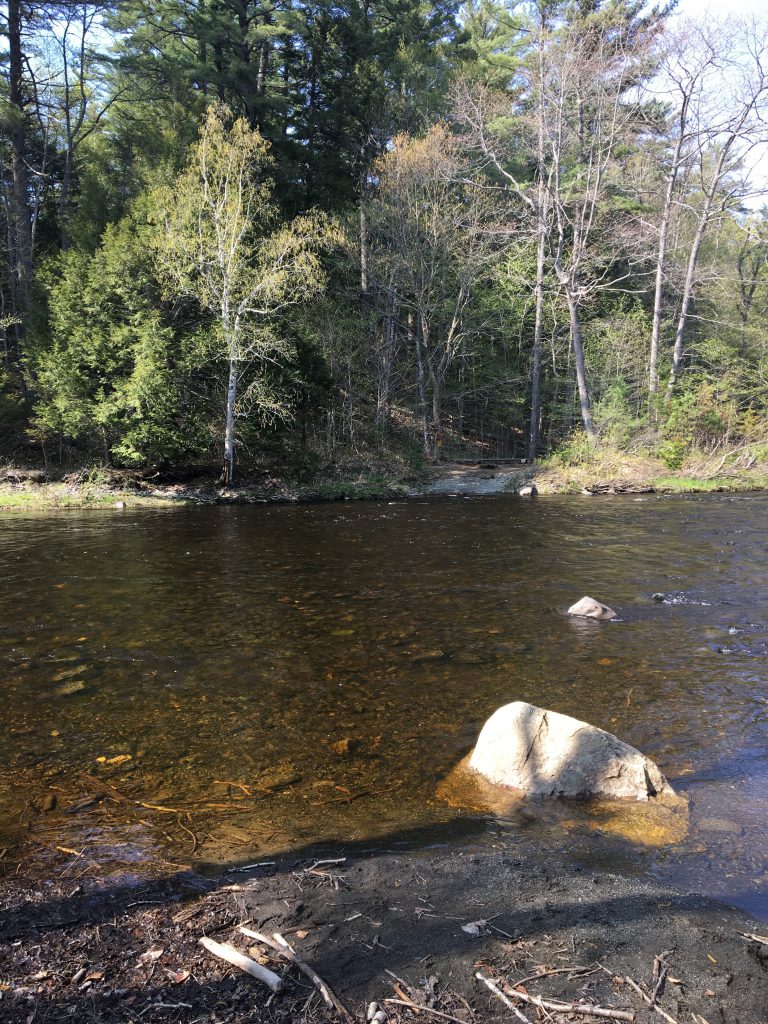
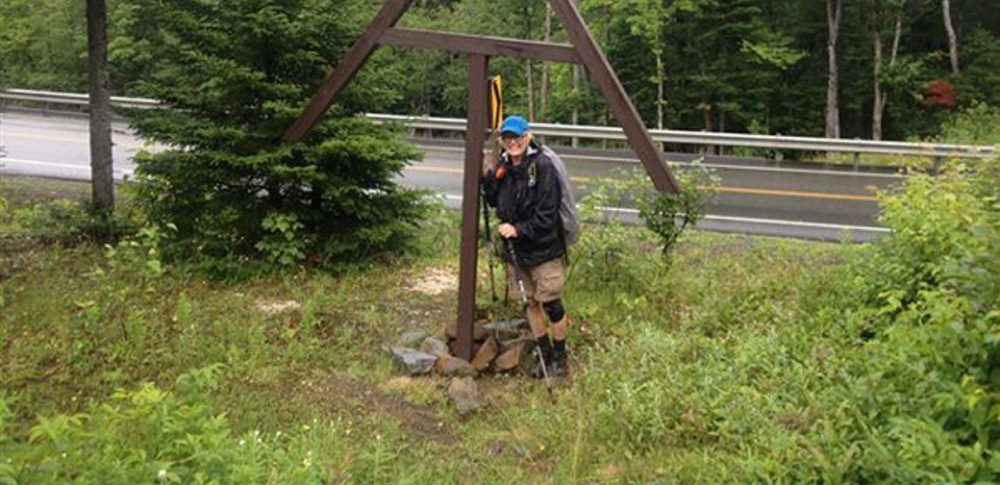
    The ford of the Pleasant River on the AT in Maine

    Enter the heavy and obvious metaphor. My trip started and ended with the ford of the Pleasant River along the Appalachian Trail. It was bad when I entered the wilderness from the Gulf Hagas parking lot. I lost my water shoes, ended up barefooting more than half of the ford, stumbling across slimy rocks that cut into the bottom of my feet.

    When I returned the same way at the end of my trip, the river had swollen even more due to overnight thunderstorms. A couple of fishermen watched incredulously as I crossed the thigh-high water. It was a bad decision on my part, but returning to my car after the miles I put in in the previous days meant either the ford or adding 5-9 miles to my last day. I was exhausted at the end, and made the choice just to risk it. After all, I had made wilder and more dangerous crossing in Alaska’s backcountry, no? What was a rain-laden river compared to a rain-, snowmelt-, and glacial melt-fed river in Alaska?

    Well, that was 20 years ago, and I’m not in the same shape, no matter how rugged I believe myself to be. But the crossing – I felt like I was entering something and departing something special. And most would I agree that I was – Gulf Hagas is one of the natural wonders if Maine, and in a world where we’re accustomed to high degree of accessibility, the sense that one has to “earn” those views added a sense of almost holiness to the experience.

    The Fall

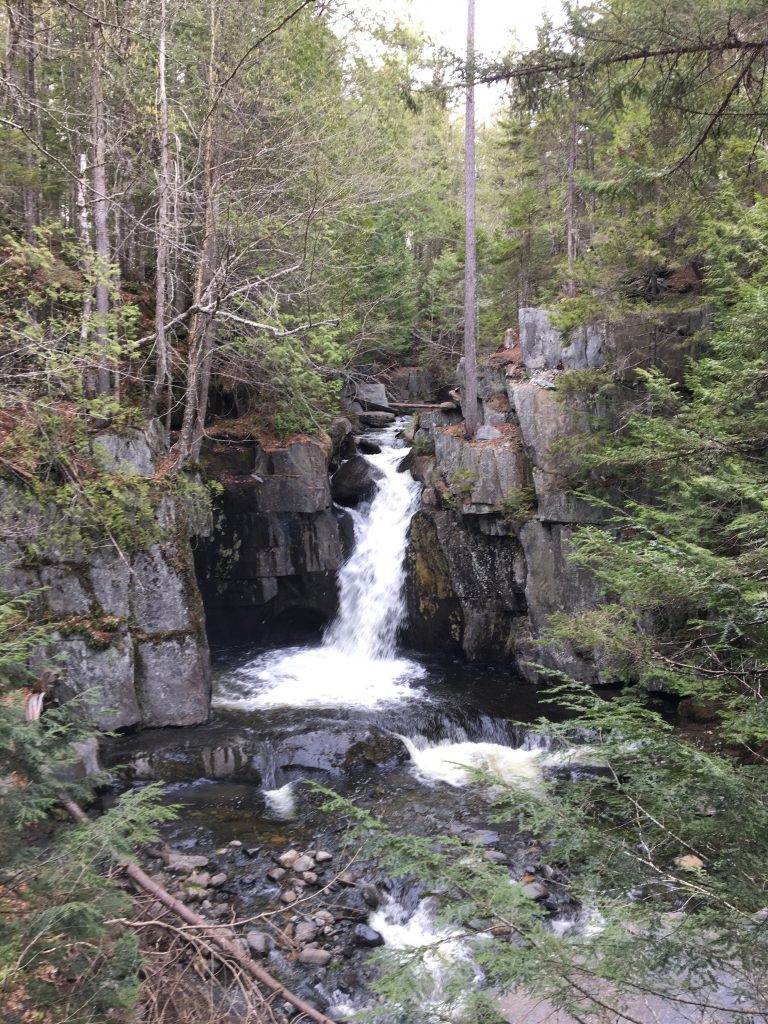
    Gulf Hagas is, of course, spectacular. As I stood before each cataract, like Screw Auger falls, I’m reminded that the world that I believe was set in motion by a benevolent Creator is itself transcendent. We spend so much time inhabiting these moments in time, and I can only wonder if we got more veterans with the same blight on their souls in front of natural wonders, if they could gain some helpful sense of perspective?

    But then, I think that trivializes how people relate to their every day. For the veteran, or anyone, struggling with addiction and mental issues beyond their immediate control, perspective doesn’t alter brain chemistry the way we’re finding that trauma does. It may well be a component in healing, but only magical thinking affords us the concept of a single, cathartic experience, or set of experiences, that bring people closer to healing, or at least, the elusive Golden Mean.

    A gorgeous backcountry waterfall isn’t going to end the ongoing intrusive thoughts we live with. It’s not going to undistort the way a veteran suffering from PTSD sees themselves.

    It’s such a nebulous thing, what causes this trauma for veterans. Perhaps it’s an easy answer – a firefight, a battle, an IED that blew up a comrade. Perhaps it’s the sustained tension of day after day of long patrols, and the repeated delve into that anxiety.

    Really, can anything offset the loss? The loss of friends, the loss of sense of self, the loss of any semblance that one is safe and secure…these things are haunting.

    Journey’s End

    As I approached the Carl Newhall shelter after hiking the Gulf Hagas trails followed by 3.5 miles on the AT heading north, most of what I felt was fatigue. My brain stopped lingering on names like James C. Wilson, Chad Edmundson, Stuart Wolfer, Daniel Agami, Blake Miller, Eddie Zorak, and focused on putting one foot in front of the other.

    A small pond along the trail echoed with the chirping of spring peepers and birds as evening fell. The air was pregnant with a looming storm.

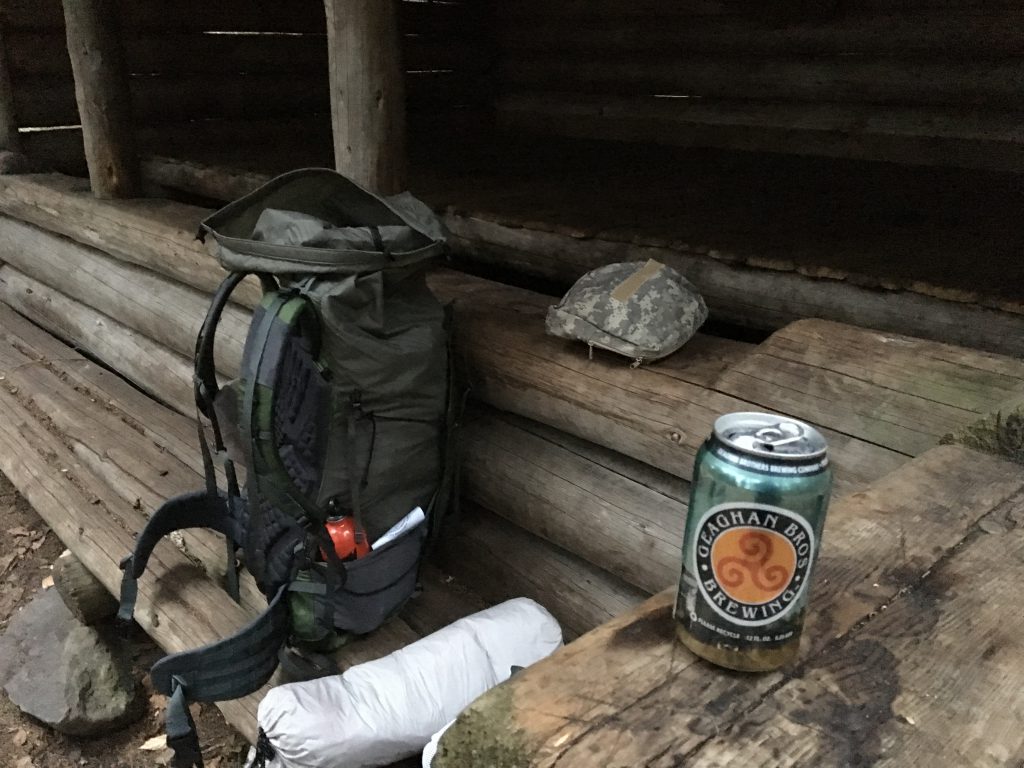
    One stream remained between myself and the shelter, and a well-earned Bangor-brewed beer (a favorite of my rabbi’s), and some Tasty Bites Vindaloo.

    I start unpacking at the shelter.

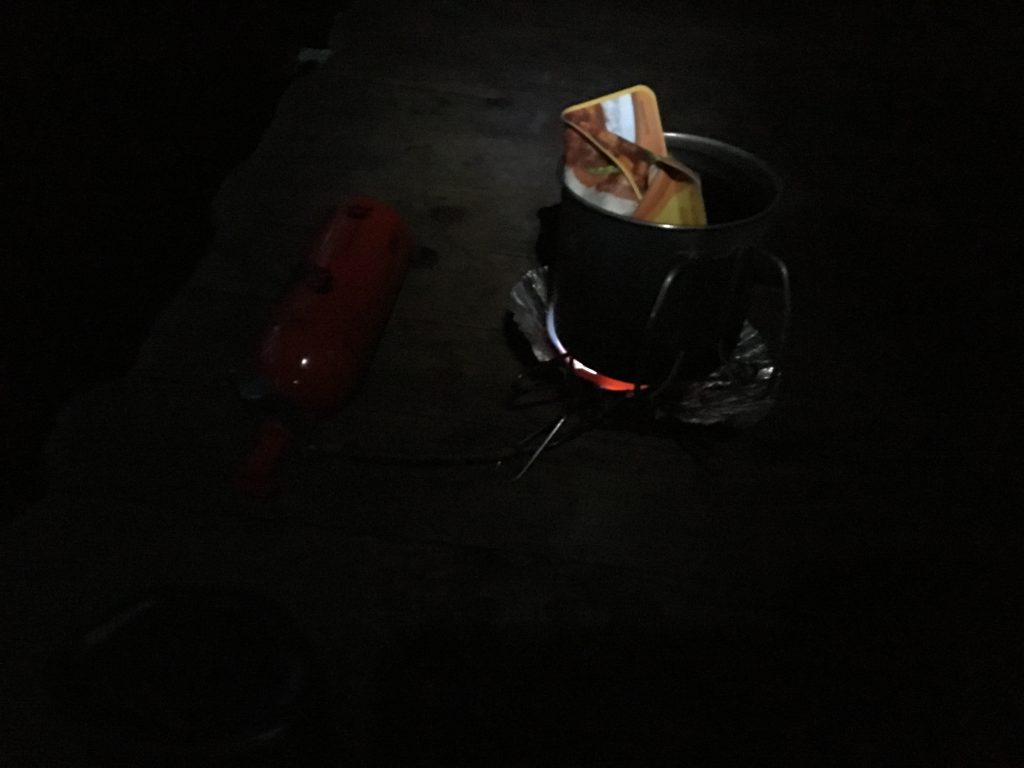
    The rain didn’t start right away. I changed out of sweat dampened clothing into the dry things I kept in my bag. The temperature began to drop into the mid 40s, so I put on my down jacket. I finished my beer and started boiling the water for my vindaloo, as well as some hot cider.

    Not from the Battle of Winterfell, my 20+ year old WhisperLite heats my vindaloo.

    The darkness came on quickly. The vindaloo caused heartburn as I settled into my sleeping bag. The pain in my stomach made it harder to sleep than the percussion of the rain on the shelter’s tin roof.

    When the heartburn finally subsided and I did fall asleep, I realized that my own soul was once again at peace, at least in that moment. Still, something gnawed at me.

    In a year’s time, Memorial Day will come around. New names will be on our lists that we read. More veterans will have taken their own lives. The war will likely still rage on at the fringes of American awareness, and little will change.

    That’s how life is between Memorial Days, even punctuated by soul-inspiring dips into the raw parts of Creation. It’s just like humankind’s perpetual relationship to our Creator.

    Unresolved.

  • 2019 Thru Hiker Profile:  Hugs and Fecteau

    2019 Thru Hiker Profile: Hugs and Fecteau

    The 2019 Appalachian Trail thru-hiking season has begun, and at The Kosher Backpacker, we want to profile long distance hikers of interest.

    There’s nothing more near and dear to my heart than the role of national treasures like our National Trails play in emotional, physical, and spiritual healing for our veterans.

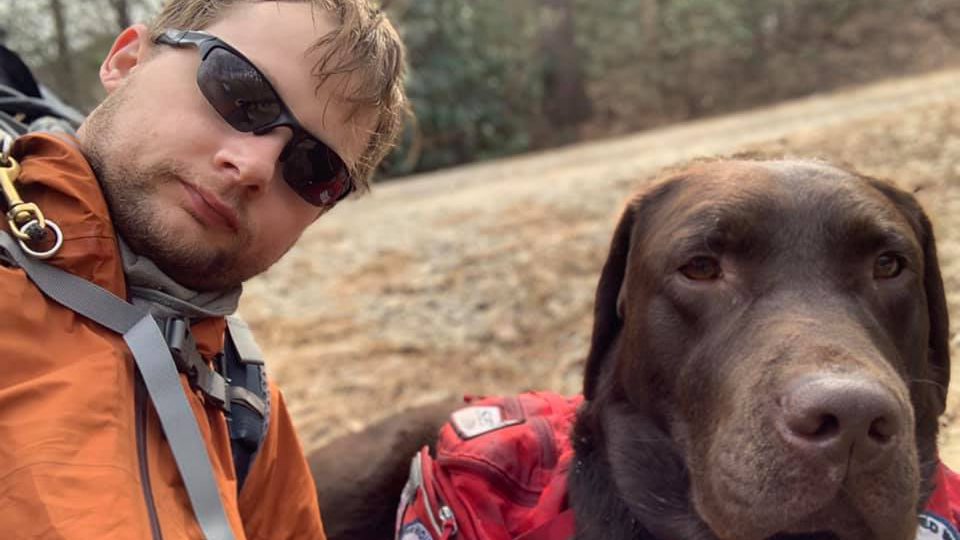
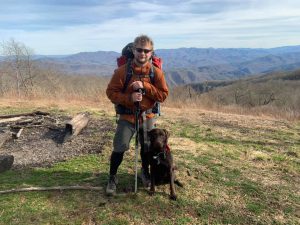
    So meet Michael Thorpe, AKA Hugs, and Fecteau, his pooch.

    Michael is a 12-year veteran of the Marine Corps and the Army.  He deployed three times to Iraq (Fallujah and Al-Asad) and Afghanistan (near Ghazni and Paktika Province).  He was first diagnosed with PTSD in 2007 on his second deployment.  He didn’t do much with that diagnosis, thinking of it as “normal,” finally seeking treatment after a motorcycle accident in 2015.  He was medically discharged from the military in 2016, and continued treatment.

    In his own words:

    Life with PTSD is not easy. In fact, it’s an everyday struggle. I am hiking this year to raise awareness for people who struggle with PTSD. To show that you can have a quality life. Some people who struggle with PTSD tend to feel trapped inside the walls of their home, doctors offices, treatment centers and anything that keeps them from really enjoying their life. I want that to change. I want them to know that you CAN live a life without fear. I want to be open about my PTSD and be an ear for those struggling. I want to share my struggles in hopes of helping others. I also want to share the things that have made impacts on my life and the biggest one to date is Fecteau. I see multiple doctors on a weekly basis to treat my PTSD so, for me, hiking is a great vacation. In 2017, when I was on the trail last, I dealt with some issues that come with PTSD. My anxiety and nightmares kept me from sleeping in the beginning, but as I went along the trail, it mostly subsided. So now, I hike. I hike because it is my escape. Nature is my freedom from it all.

    Hugs and Fecteau are hiking to raise money for Paws Assisting Wounded Warriors (PAWWS).  This organization’s purpose is to aid military veterans afflicted with PTSD or TBI (traumatic brain injury) by pairing them with service dogs.  These dogs help a veteran regain their place in civilian society and cope with their triggers or lingering issues, in order to help them achieve more independence.  Dogs are given to veterans free, covering also their food, veterinary care, and equipment.

    At the time I write this, they’ve been on the trail for roughly 20 days, reaching Fontana Dam.

    Please, consider donating to this program in the name of Hugs and Fecteau.

    Also, follow their progress on Facebook here: https://www.facebook.com/pg/Fecteauandhugs.