Category: Featured

  • Pesach on the Trail

    Pesach on the Trail

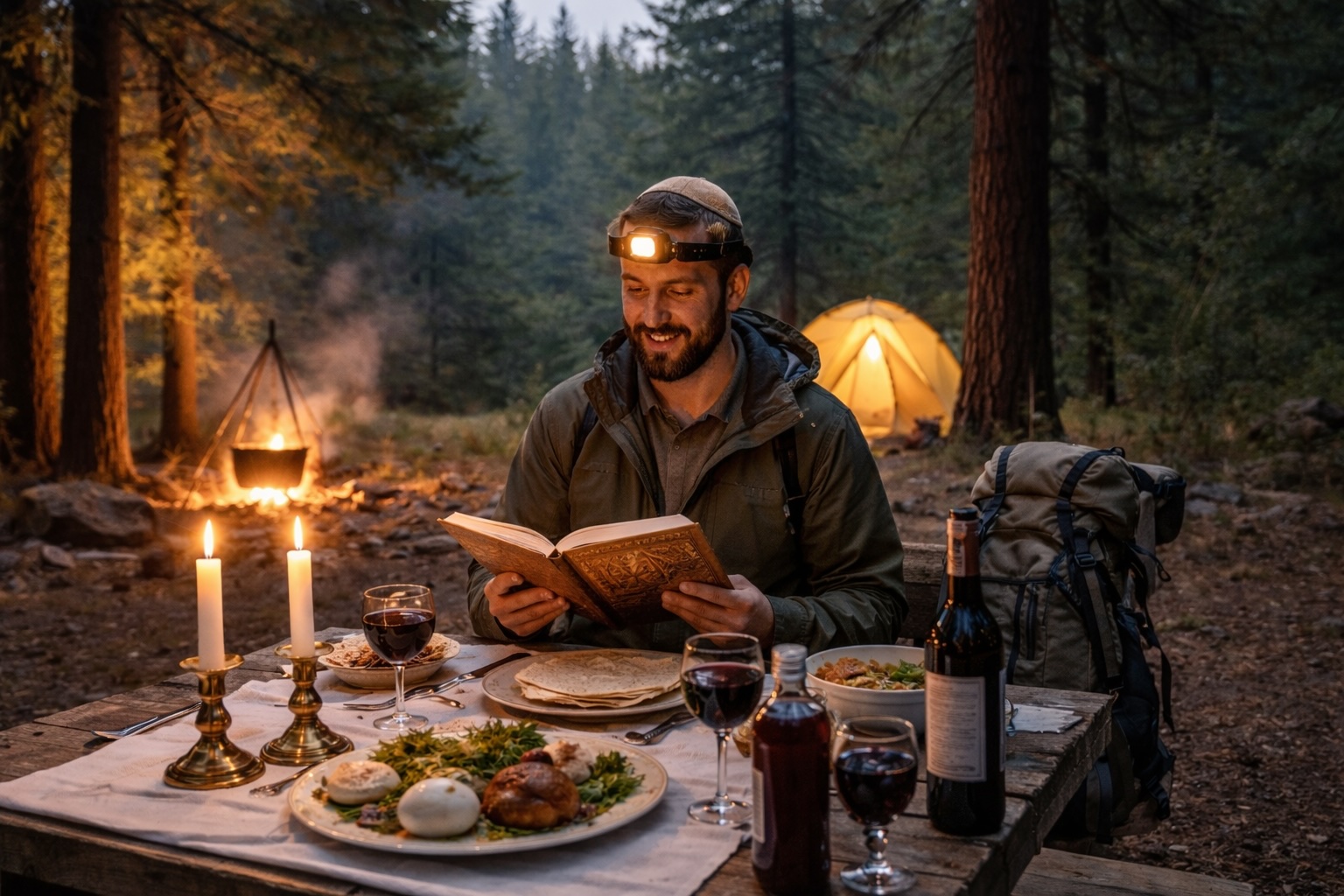
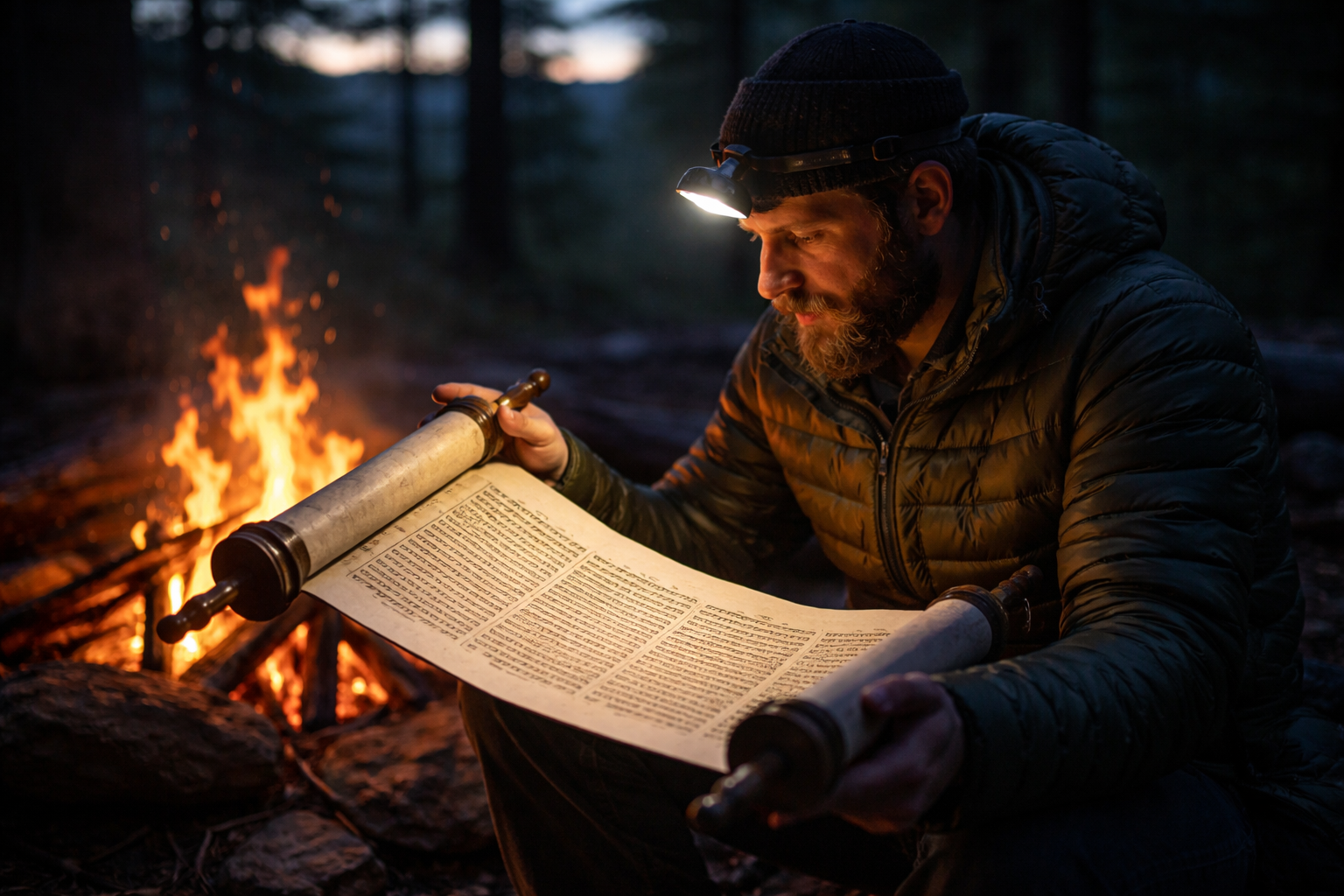
    The fire burned down to a bed of coals by the time they reached Maggid, recounting the story.

    The Appalachian Trail stretched nort hand south in a narrow corridor of shadow and pine, a ribbon of dirt that held what little warmth collected during the day, even as the April night cooled around them.  Somewhere below the ridge, water moved steady and unseen.  Above, the sky had opened between naked branches, a scatter of stars caght in black limbs.

    Eli adjusted his headlamp, then clicked it off.

    “It’s too bright,” he said.

    Nearby, Jonah was wrapped in his sleeping bag like a cocoon, only his nose and glasses visible.  Gripping his Haggadah from within his down casing, he looked like a weird amusement park mascot.

    Eli got to “ha lachma anya…” and hesitated.

    The words stayed in the cold air, colliding with the smell of woodsmoke and damp earth.

    “This is the bread of affliction,” he finished softly, putting back down the matzah, which lived in a plastic freezer bag.  It had broken into uneven shards during the hike.  “…which our ancestors ate in the land of Egypt.”

    Miriam laughed.  “Also, it’s the bread we packed badly, and this is what survived.”


    They did not plan it this way.

    The original idea was simple: finish the stretch from Springer Mountain to Hot Springs by early April, then catch a bus to Atlanta in time for Passover.  Weather, blisters, and a stubborn insistence on “just one more ridge” stretched their timeline until the calendar caught up with them somewhere in the Smokies.

    So, they stayed and resolved to do a seder on the trail.  A friend met them around Fontana Dam and delivered a 5-lb box of matzah, which the travelers distributed among them.  It would carry them, along with some tuna, through both the Yom Tov and chol chomoed days of Pesach.

    “Freedom is wherever you are,” Eli declared loftily that afternoon, unpacking supplies at the shelter.  “Or at least whevever you decide to stop walking.”

    They had improvised everything.  The seder plate was an old mess kit lid.  Bitter herbs were dandelion greens Miriam insisted were “definitely edible.”  The charoset was a mixture of apples given by a “trail angel” at the last major road crossing, and some nuts carefully picked out of trail mix, with a splash of Manischewitz for effect.

    They had a chicken bone with some gore on it for the shankbone.  The egg…the egg had been the hardest.  Jonah carried it for two days, nested in a sock, protecting it like contraband.  When he finally pulled it out, it was miraculously unbroken.  There had been a moment of genuine awe.


    Now, deep into the telling, their voices rose and fell with the rhythm of the text.

    “We were slaves to Pharoah in Egypt…”

    “Now we’re slaves to this trail,” Jonah muttered.  He was the least enamored of their thru-hike, coming along mostly for fear of missing out.

    “No,” Eli corrected.  “We’re choosing it, and that’s the whole point.”

    Miriam leaned back on her hands, looking past them into the trees.

    “My grandmother at our seders used to say every generation has its own Egypt,” she said.  “Not always a place.”

    They thought for a moment about some of the hostility they had met from other hikers on the trail.  A kid on Blood Mountain sporting a kaffiyeh and a lot of opinions.  The trio didn’t have an answer for him, but he harassed them for a solid day until severe chafing took him off the trail.  They weren’t there to talk about Israel or Gaza, though they had all done Birthright together.  They were there to hike.  Not that they minded when they heard he came off the trail.

    Jonah gestured all around, possibly to the dark woods, their worn packs, the endless miles behind and ahead.  “All of this is definitely suffering.”

    Miriam was quiet for a moment, and said, “I think it might actually be the leaving, which was actually headed towards something else.”

    None of them were particularly religious, but as Jews are wont to do, they still were finding meaning in both Passover and their thru-hike.

    When they reached the Four Questions, they again paused.

    “None of us are kids, really,” Jonah said.  “Who asks?”

    Miriam and Eli put their fingers on their noses and declared, in unision, “Not it!”

    Jonah sighed, straightened slightly in his sleeping bag, and said, “why is this night different from all other nights?”

    They let the question hang for a moment.  The forest definitely wasn’t going to answer.

    The night was different than all other nights, and all other Passovers.  It wasn’t the improvised ritual objects.  It wasn’t that they lit the Yom Tov candles in a windproof candle lantern that they planned on using for the next two stationary days on the trail.  No, they weren’t religious, but there was something they wanted to get right.  They were in the middle of a long journey largely defined by continuous movement north, always north.

    Yet here they were, taking a moment to choose the freedom of stillness and a memory of their people.


    Later, they sang.  At first they were quiet, possibly a little intimidated by boisterous choral work in the middle of nowhere.  As “Dayenu” echoed through the trees, it was somehow softened by pine needles and moss.

    “It would have been enough,” Eli said, translating the obvious.

    Miriam smiled.  “Would it, though?  I could do with something a little better than matzah for the next eight days.”

    “Probably thats a ‘no’,” Joshua chimed in helpfully.

    Then they sang it one more time.


    By the time they said, “next year, in Jerusalem,” the fire was nearly gone.

    They poured themselves one more mug of the Manischewitz.

    “To freedom,” Eli said.

    “To getting to Maine before I lose interest,” Jonah added.

    Miriam lifted her cup last.

    “To knowing when to stop walking,” she said.

    Somewhere, in the dark, an owl hooted.

    The shelter was only a quarter of a mile from the Appalachian Trail, which waited.  It was indifferent and patient, stretching onward from Georgia to Maine.

    For that night, though, they stepped out of it.  A thru-hike is often a race filled with variables and questions.

    Are the contents of my pack necessary to take me to Katahdin?  Do I have the right shoes?  How many miles do I need to do per day to get to Maine by September?

    For the early weeks of a thru-hike, the conversations are in orbit around gear and plans and the hike, insufferably banal conversation that loses track of the beauty of place and time.  The point was the journey itself, not the destination as a goal, and stepping out of it for a night was useful.

    They made a small circle of light in the vastness of the woods.  They remembered that very little in the Exodus story talked about the distance the Hebrews put between themselves and Egypt, just the leaving itself.  The meaning was in the motion, and now, the meaning was in the pause for the space of memory.

    When they finally crawled into tents or the shelter, the words lingered as something that would carry forward beyond the trail.

    Next year…

    Maybe not in Jerusalem, or maybe so, but definitely further along the path, closer to whatever freedom might be.
  • Purim on the Trail: Hidden Miracles in the Backcountry

    Purim on the Trail: Hidden Miracles in the Backcountry

    If you’ve ever spent a night in the backcountry, you already understand Purim in a way most will not.
    It’s not the costume parade version, not the getting sloshed, and not the children’s sugar rush.
    It’s the deeper meaning beyond graggers and the mitzvot and megillah. Those are so important, but we’re an outdoor effort, so we’re going to make it about that.
    Megillat Ester reads like a palace drama set in Shushan. It’s full of royal decrees, political intrigue, banquests, betrayal, and ultimately, vindication. It’s urban and imperial.
    And yet, I would assert it is still a wilderness text.

    When You’re Far from Power

    Backcountry hiking begins with the decision to leave infrastructure behind for a time.
    You won’t have a cell signal or data service. There are no quick exits, and definitely not even a guarantee that the weather will hold and you will be safe.
    I think that is the position of the Jews we find in the Megillah, which consequentially, is perhaps the first book where they are specifically referred to as Jews. They are scattered across 127 provinces of the Persian Empire. They are far from their sovereign, exiled from their Temple, far from any control over their lives. They are living under someone else’s system, dependent on forces they cannot control.
    Anyone who has watched a weather front roll in faster than expected knows this feeling. No matter how carefully you plan, no matter how well prepared you may be, ultimately, you are small under the sky.
    Purim begins with precisely that same sense of scale.  Jews don’t even factor in to the start of the story until Mordecai refuses to bow to an officer of the court.

    The God Who isn’t Named

    If you have a “things rabbis will say about Purim drinking game,” invariably, it will be pointed out that God doesn’t appear in Esther’s story anywhere.
    I think we constantly point this out because there’s a degree of theological discomfort in that. Last year, Nezzie and I pitched on a ridge in the Maine mountains after running out of daylight, it’s actually a familiar feeling.
    In the backcountry, God isn’t any more obvious. There is wind, rocks, hunger, fatigue, beauty, risk, and so many other things. You don’t see providence the way you see a blue or white blaze on a tree. You infer it. You see patterns. You look back and realize a narrow escape down a ridge from a lightning store may have been the hidden hand of something, well, bigger.
    I think Purim trains us in that kind of noticing.
    God is concealed in coincidence, the right people in the right place at the right time. Circumstances turn favorable. The king’s insomnia, a conversation overhead, Esther’s improbable escalation to a place of prominence with the king…it’s all there.
    Concealment isn’t the same as absence, we learn. There’s a reason why we find God in the wilderness so often, because the subtleties of Creation stack up.

    Esther at the Trailhead

    There is a moment in the Megillah when Esther stands at a threshold. She has to decide whether to approach Ahashverosh without being directed to, which is a potentially capital offense.
    It’s kind of a trailhead moment.
    I don’t feel this on a weekend hike, but I do feel it on undertakings like a thru-hike of the John Muir Trail or the Appalachian Trail.
    Am I really doing this? you ask yourself as you sling your pack on your shoulders and leave the gravel parking lot behind you.
    Esther’s decision is not triumph, but rather, “if I die, I die.”
    That’s the language of risk!
    Most backcountry travellers understand this innately. Risk mitigation, training, preparation do not eliminate uncertainty. I don’t think hiking is courageous, not in any useful sense, but you move forward with a certain degree of surrender.

    Costumes and Camouflage

    I’m not one for the clamor of Purim. I also don’t like synthetic Halloween costumes recycled for this holiday. My daughter, Nezzie, makes her own costumes, which I love, avoiding the intrusion of the consumer mindset into the holiday.
    The deeper theme, of course, is concealment.
    In the wilderness, concealment is about survival. In Maine, snowshoe hares change color with each season. Seeds lie dormant underground for months before breaking open. The forest in the winter can look dead (unless you live in Maine with its surplus of pines), but it’s still teeming with life.
    Esther conceals her identity while Mordecai urges tactics and strategy from background. Even the divine presence is camouflaged in the folds of ordinary events.
    The backcountry teaches me the same lesson: what looks empty is often full. The white silence is still very much alive. There’s a whole ecology in play that isn’t immediately obvious.

    Joy After Survival

    When the danger is over in the Megillah, the response isn’t quiet relief, although I’m sure there was some. Our response is festive and celebratory, a time to exercise generosity and public joy.
    You can find the same joy, I think, standing atop Mount Katahdin at the end of the Appalachian Trail. Breaking through the treeline and to an open summit, there’s an earned sense of excitement and jubilation you don’t find at the foot of the mountain.
    You’ve got sore muscles, windburn, sunburn, but you’re going to have the best memories of it. The experience of the Jews in Persia, I imagine, was like that. We were vulnerable. There was a real threat to our survival, and just as today, the persistent realization that the outcome could always go differently, in no small part because we know it has.
    I don’t think the Megillah’s “light and darkness and joy and honor” is naive optimism, just post-storm rays of light peaking through.
    I do think the optimism is trite, to a certain degree. We do the “they tried to kill us, we survived, let’s eat” thing, but the subtext is that our celebrations are a therapuetic salve to our national soul. Sometimes, they really did kill us, and there was no hanging of Haman and his sons at the end. Either the killing stopped or they ran out of Jews to kill. The celebrations are our way through.
    And for me, that’s the same story. I get back to the trailhead on a Sunday. The next day, I’m back in “real life,” where I lose that connection I find in the wilderness. Reality sets in at the end of Purim.

    Reading the Megillah Under Open Sky

    What if we read the story outside this year?
    I mean, here in Maine, we still have a couple of feet of snow that hasn’t melted yet. It’s end of February, beginning of March. We still have more than a month of winter conditions.
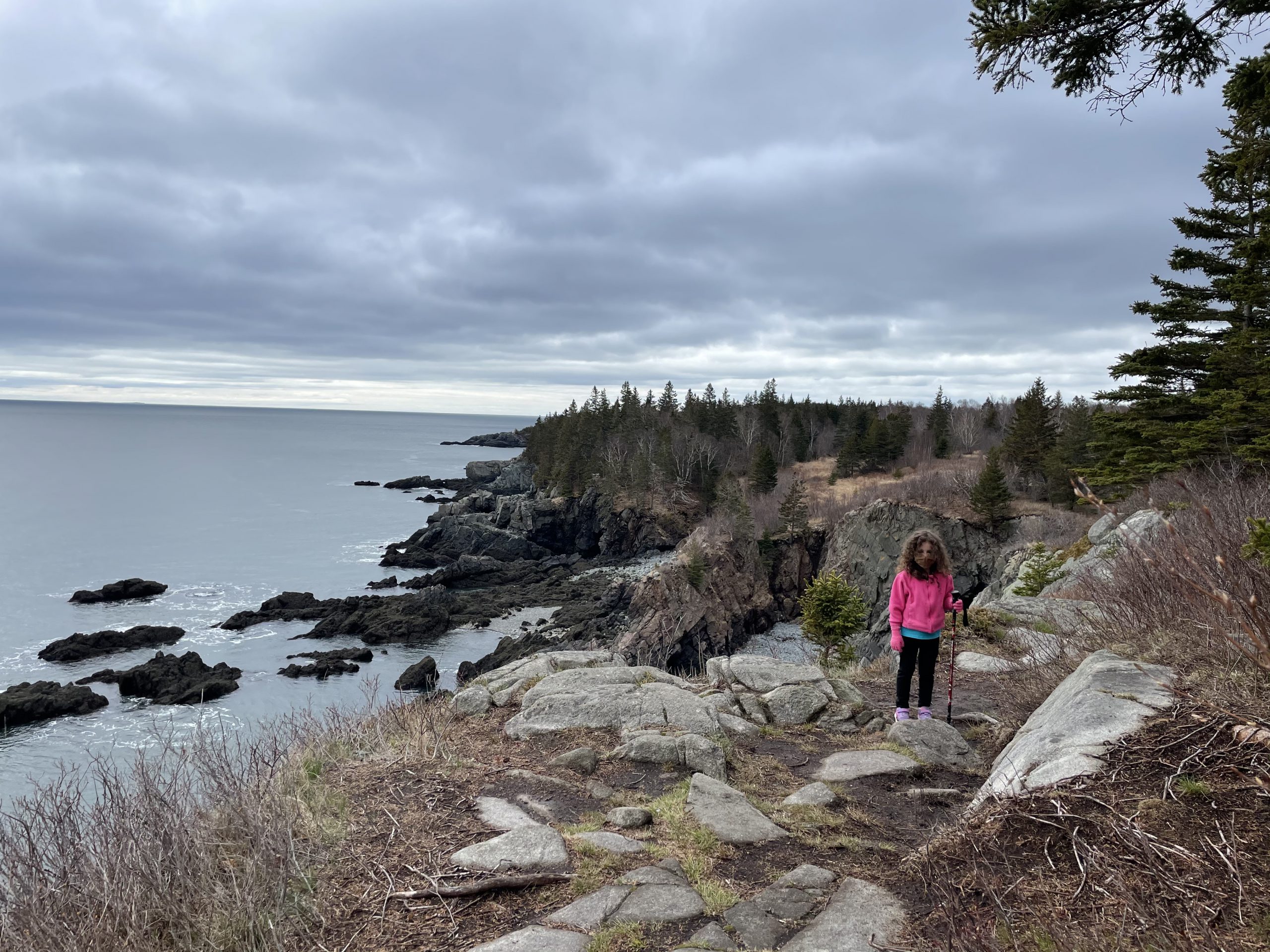
    But imagine reading the Megillah by a headlamp. Hearing Haman’s name swallowed by wind instead of graggers and sactuary acoustics. Passing mishloach manot from pack to pack. On the Appalachian Trial or Pacific Crest Trail, which sees hikers embarking about now, giving gifts to those in need as a “trail angel.”
    Purim teaches about survival when we don’t control our circumstances, and the outdoors is always a master class in that truth.

    The Hidden Trail

    There’s a final wilderness connection that feels very Purim-like.
    Years and years ago, we did a two week ramble across the breadth of Wrangel-St. Elias National Park in Alaska. There was no trail to follow, just a nebulous route with a compass and a map. You had to look for terrain features, find identifiable points in the distance as a reference, and use a compass and maintain a pace count.
    The divine in the Megillah works much like that.
    Purim isn’t about obvious miracles. It’s about assuring us that even in exile, and especially in times of political chaos, when God’s name is nowhere on the page, there is still a story unfolding around us.
    On a long hike, where you’re following the gravel braids in a river, you only recognize the miracle after you’re at journey’s end.
    For me, that’s why Purim belongs outdoors.
    (In fairness, I think every Jewish holiday belongs outdoors)

  • 2nd Night Seder in the Maine Wilderness

    2nd Night Seder in the Maine Wilderness

    This year, the Maine Israelite Outdoor Society is hosting a wilderness seder on the second night of Pesach.

    We will use the ArtScroll Haggadah for a traditional seder, recline and drink our wine or grape juice by a fire (conditions permitting), a vegetarian (not vegan) shulchan orech, and camp out under the stars in tents or the on-site Adirondack shelter.

    This is an extremely rustic seder experience, and because it takes place at the beginning of April in Maine, sleeping bags and tentage with appropriate seasonal temperature ratings are recommended. We have a limited supply of extra tents and equipment.

    The event is free but limited to 12 registrants on a first come, first served basis.

  • When Wilderness Turns Deadly

    When Wilderness Turns Deadly

    This year, at the Maine Conference for Small Town Jewish Life, I’m teaching a course on basic orienteering.  If you follow this site, you know that I’m a big advocate for the Jewish outdoors.  The cheeky title of my class belies a commitment to making wilderness adventure safer for those who undertake it.

    If it weren’t for the twenty years I was an infantryman, a significant chunk of that spent as a “light fighter,” in either parachute or “air assault” units, I would not be as well-prepared for the wilderness as I am.  Our bread and butter, so to speak, as light infantrymen, was significant land navigation skills.  Additionally, with mountaineering courses and great experiences in Alaska when I was stationed there, the only place I’m sure I’m capable of being lost is at sea.

    Here in Maine in recent years, we’ve seen some tragic stories of wilderness loss.  Geraldine Largay died in Maine on her Appalachian Trail thru hike.  Known by the trail name Inchworm, she successfully made it from Harpers Ferry to Maine in April of 2013.  She was doing a semi-supported hike with the aid of her husband.  In late July of that year, she disappeared from the trail.

    People kindly describe her as an experienced hiker.  As a former nurse, she was definitely equipped to survive.  I’d argue, however, that the definition of “experienced hiker” includes enough basic orienteering to get yourself out of a jam.  She journaled for 26 days after she became lost.  She died just two miles from the Appalachian Trail.  If she had known which direction to go, and how to find that direction, she could have easily found herself back on trail.

    In this age of cell phones, we ought not confuse walking trails that are carefuly curated by trail teams with viable experience.  The Appalachian Trail has become a sort of hermetically-sealed, illusion of a wilderness experience…until you get to Maine.  Maine is still a place where you can get lost and, as evidenced by the two year gap between Largay’s disappearance and discovery, not be found.

    A New Tragedy

    Tim and Esther Keiderling
    Tim Keiderling and his daughter, Esther Keiderling. Photo Credit: Baxter State Park

    It’s too early to tell for sure what went wrong for Tim and Esther Keiderling, a father and daughter pair who set out to climb Mount Katahdin on Sunday, June 1st, and disappeared.  Both of their bodies have since been found.  Again, we’ve seen them described as “experienced hikers” who have hiked other mountains in the Adirondacks and the Alps.

    But again, I suspect “experienced hikers” means they hiked a number of well-marked trails, which does not connote any particular outdoor savvy.  Baxter State Park can be very unforgiving of navigation error, and with the combination of inclement weather, things can go pear-shaped very quickly.

    Remember The Rules

    Avoid going hiking alone (says a guy that never takes this advice).

    Bring everything that you need to survive.

    If your experience doesn’t match the conditions, stay home.

    Have recent first aid and CPR courses.

    Know how to use a map and compass.

    DON’T GO EXPECTING SOMEONE TO SAVE YOU IF YOU GET IN A JAM.  A cellphone feels like a lifeline in civilized country, but in the wilderness, it’s hit or miss.  If you want to use technology, there are GPS devices and rescue beacons that can help you, but even with those, have a plan.  Have emergency whistles and some sort of visual signaling device, like a mirror or a piece of highly visible fabric that can possibly even be seen through a forest canopy.

    Conclusion

    I’m not here to bash the dead.  Wilderness travel comes with risk.  I took an accidental dip in a river on a backcountry excursion in Alaska that almost killed me with hypothermia.  I’ve had falls.  I’ve never gotten lost, but I’ve lost the trail and had to find it again.  One time, I lost the trail so thoroughly that I shot a compass azimuth towards where I knew there was a road.  But the point is, I have the experience and training to get myself out of jams.

    Take care of yourselves, and be safe out there.

  • Getting Back to Fundy-Mentals

    Getting Back to Fundy-Mentals

    From where I live in Maine, I have an embarrassment of hiking riches.  I’m four hours or so from Jacques-Cartier, an hour from both Baxter State Park and Katahdin Woods & Waters National Monument, a half hour to forty-five minutes from Acadia.  Looking for my usual Memorial Day escape this year, I entertained doing Evans Notch, a DIY loop trail in White Mountain National Forest between New Hampshire and Maine.  The only problem was, with a rare, spring Nor’easter on its way, there was snow in the forecast.

    Looking around, I saw that Fundy National Park was within striking distance, a mere four hours away from where we live near Bangor.

    The Journey May Be the Best Part

    If you’re coming up I-95, you can cross at Houlton and take Trans-Canada Highway 2 most of the way.  Coming from our area, we take the venerable Airline, Maine Route 9, to Calais and cross there, taking the Fundy Coastal Route.  I stopped at all the “Saint” towns along the way, culminating with St. John as Shabbos approached.

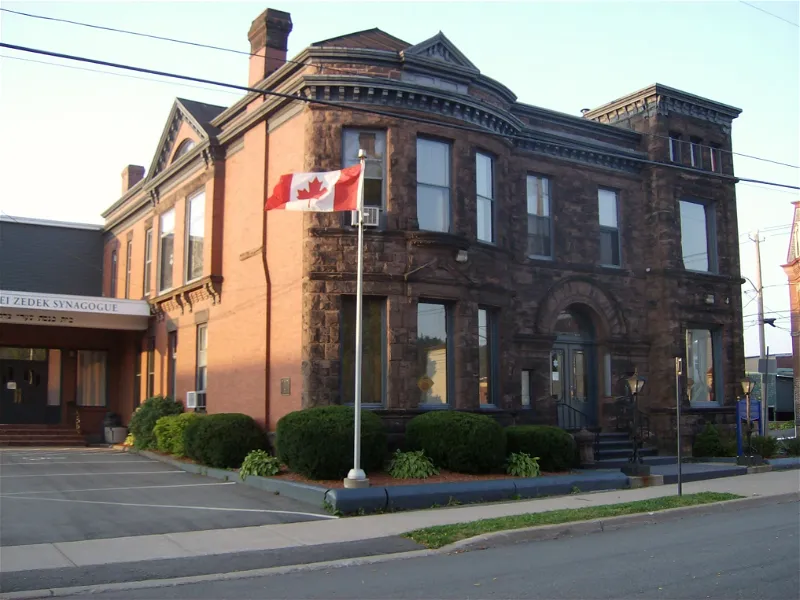
    I always like to visit Shaarei Zedek, a Conservative synagogue in St. John with a lovely building and an attached museum.  After services, I checked out the Reversing Falls.

    Saint John Jewish Historical Museum (Saint John) - Visitor Information ...
    Shaarei Zedek in St John

    Reversing Falls in St John

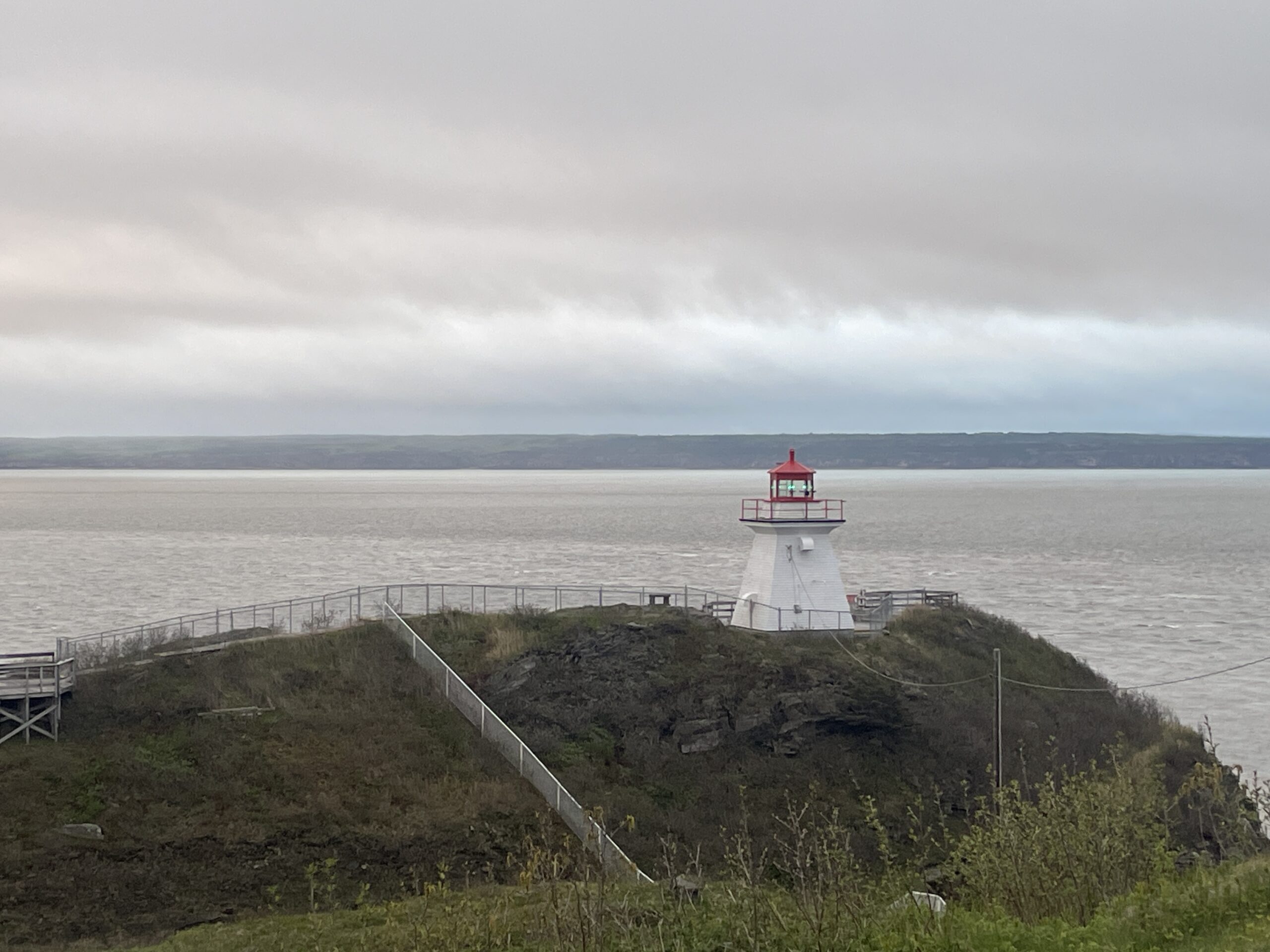
    After Shabbat, continued on to Moncton, and then stopped at Cape Enrage.  I was too early for the iconic Hopewell Rocks, but it’s nice to save something for another trip.

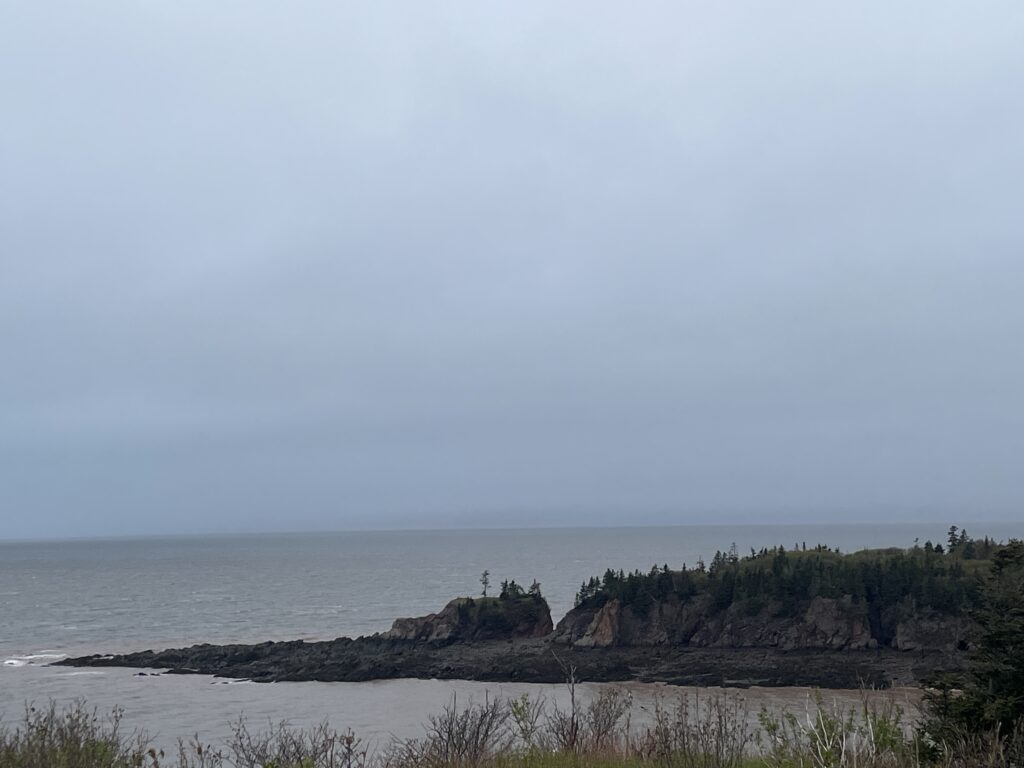
    Finally arriving at the Alma entrance to the national park, I took in the coastline, checked in with the park, and started my hike in a mild downpour.

    The Fundy Circuit

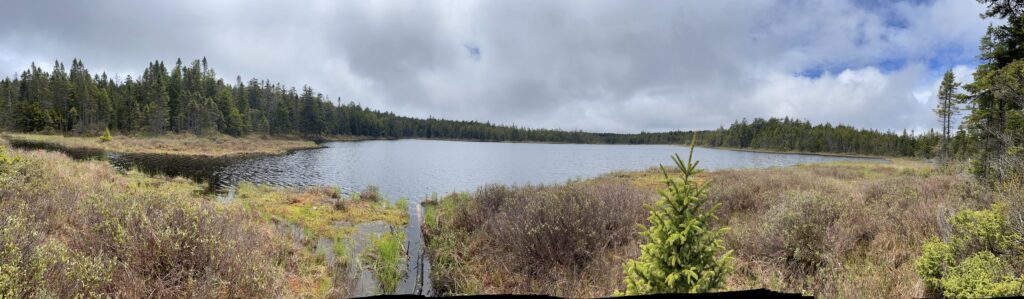
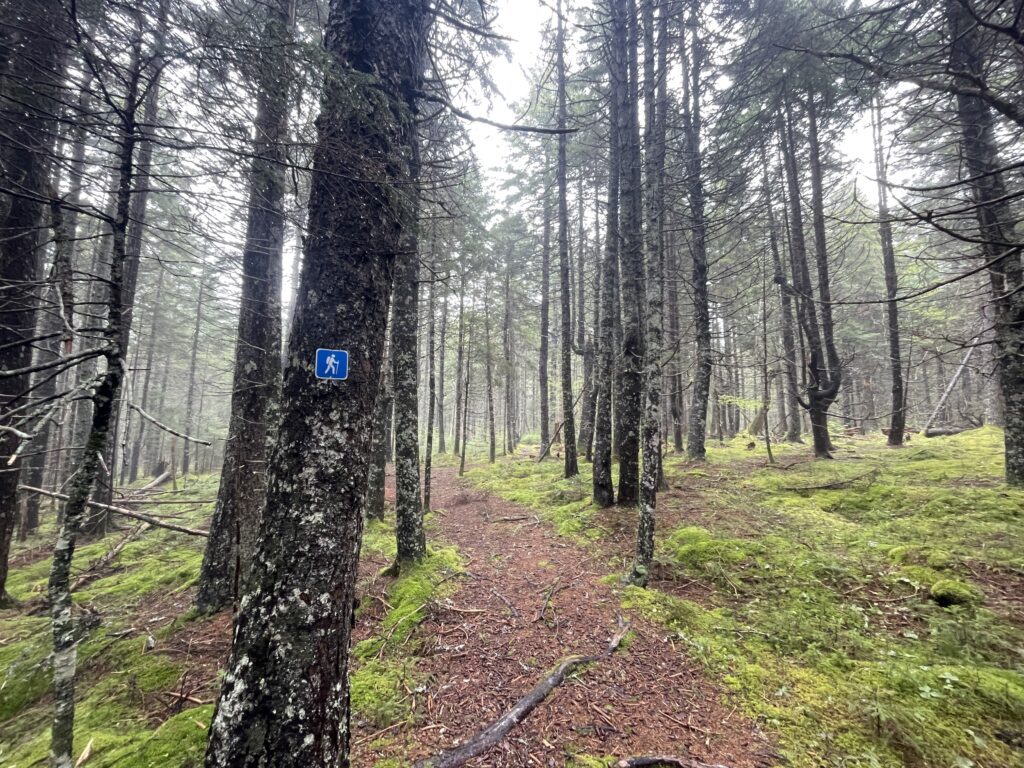
    This 28 mile hike was, to me, kind of “meh.”  There are some unbridged river crossings, but as far as a backcountry experience goes, even the Cutler Coast in Maine’s Washington County felt a little more dramatic.  Most of the hiking is inland, which is fine, but the scenery was limited to some lovely lakes, a gorge, both slow and fast-flowing rivers, and green tunnels.
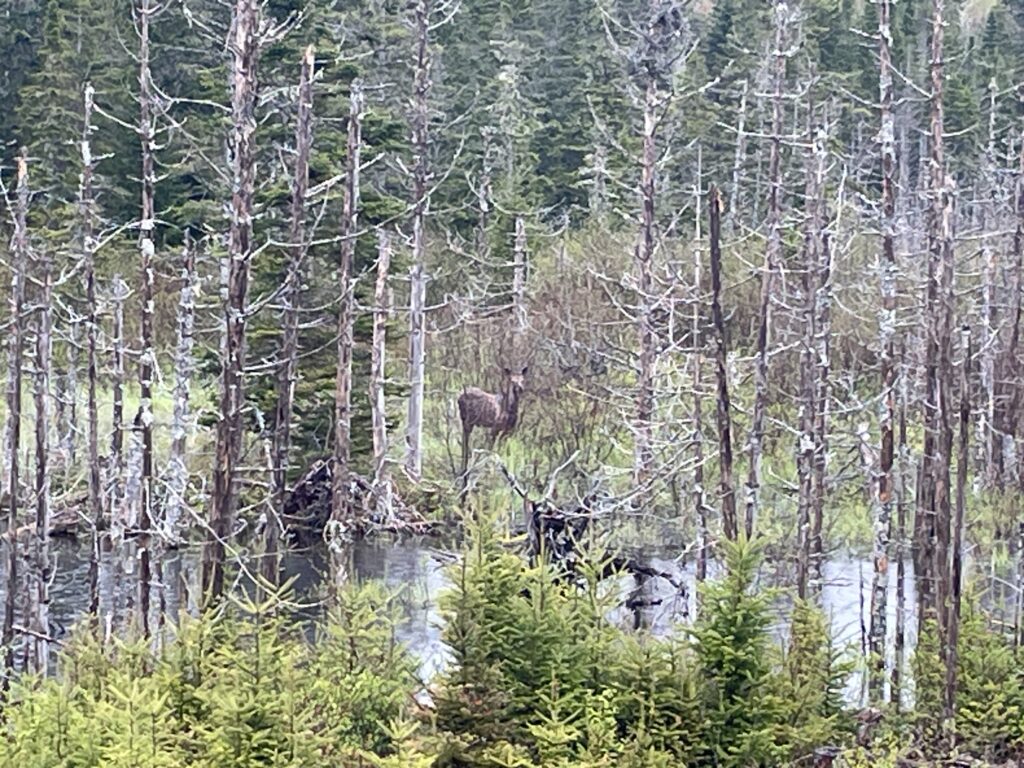
    Still, I sighted any number of moose.

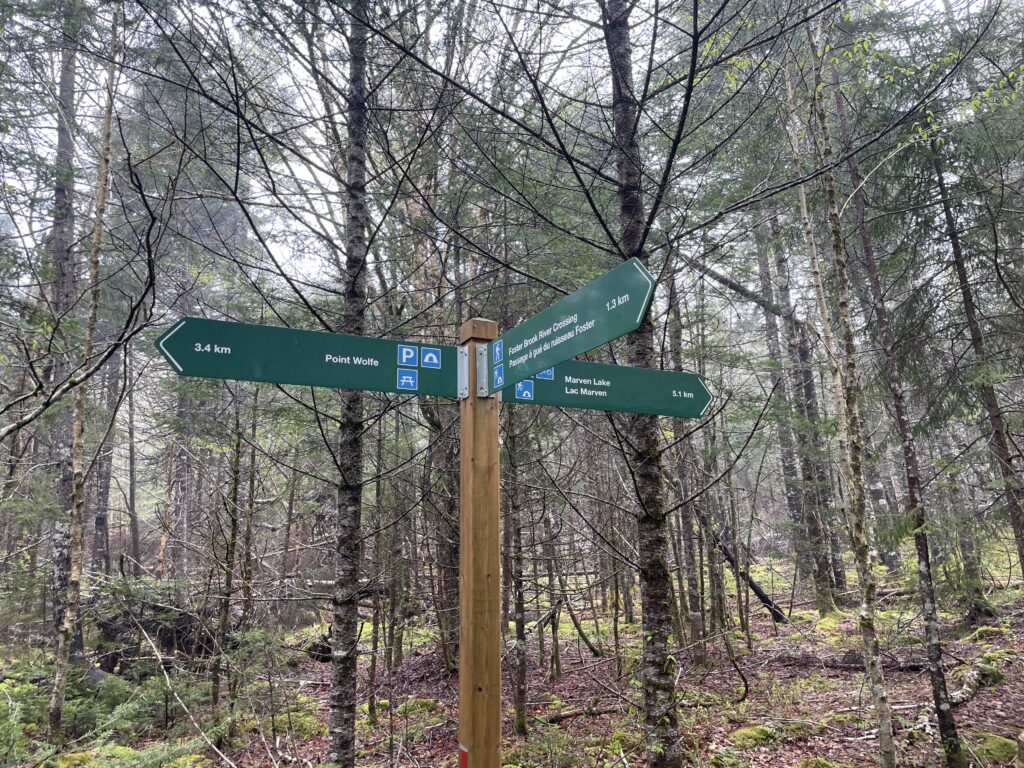
    Some notes about hiking in Fundy…backcountry sites require a fee-based, prior reservation with Canada’s national park system.  For the circuit, there are only a handful of options.  For me, I did day one at Marven Lake, and day 2 at Tracy Lake.  There are no options past that, so I recommend doing the hike clockwise, and saving the heavy Salmon River crossings for the end of the hike.  You spend less time with wet feet as a result.

    I beat black fly season by a hot minute, which was already in full swing in Maine.  It was also very rainy, which made the river crossings a little more hazardous.  One was cabled, another was not.  I watched a guy with a small dog attempt one of the crossings a few times, forcing his small dog to try and swim it.  Don’t be that guy.

    A Note About Jewish Safety

    Israel has issued a revised travel advisory for Jews in Canada.

    Travel Advisory
    Tel Aviv: The National Security Council (NSC) of Israel on Sunday issued a travel warning for Canada, citing an occasional threat to its citizens and Jews in the North American country. Issuing a message to Israeli citizens residing in or visiting Canada, the NSC requested them to take extra precautions, especially in public areas. It also suggested not to display Israeli or Jewish symbols, remaining alert for any kind of threats. The guidelines were issued following a rise in anti-Israel incidents targeting Jewish institutions in Canada over the past 18 months. The anti-Israel incidents included shooting, direct threats to Israelis or Jewish people and Molotov cocktail assaults.

    There was some serious vandalism at the synagogue in Fredricton, New Brunswick in recent months, so this may or may not extend to the Canadian Maritimes.  I thought hard about hiding my yarmulke when crossing the border, but my license plate literally has “JEW” in it so, kind of hard to obscure something so key.  At any rate, the Canadians I met were very kind.  My Jeep left the Fundy parking lot with yet another duck on the door handle.  Don’t believe the hype, it’s probably places like Toronto or Montreal.  We’ve visited Quebec several times, however, since October 7th with no problems.

  • From Soldier to Wilderness Rabbi

    From Soldier to Wilderness Rabbi

    We can never sneer at the stars, mock the dawn, or scoff at the totality of being. – Abraham Joshua Heschel

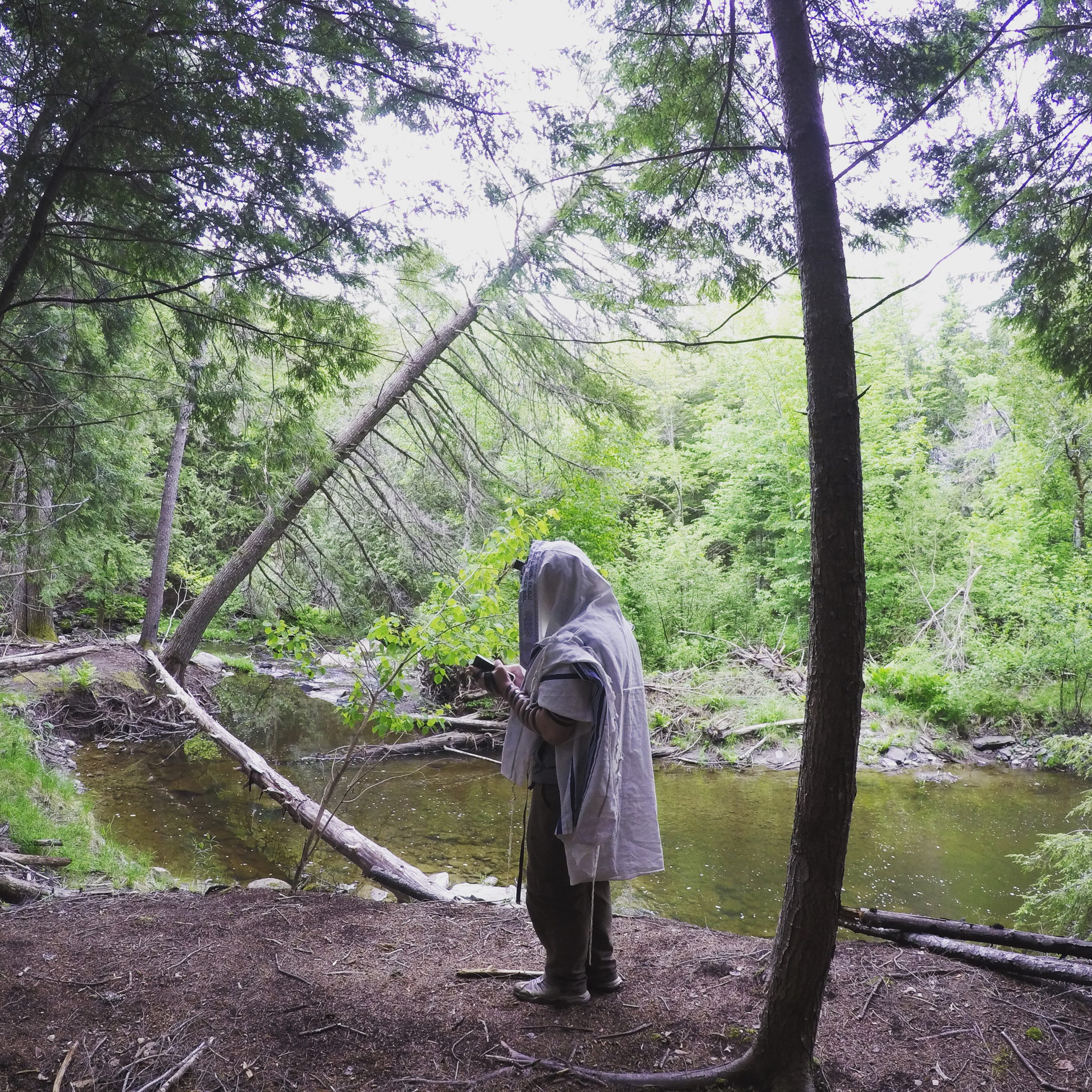
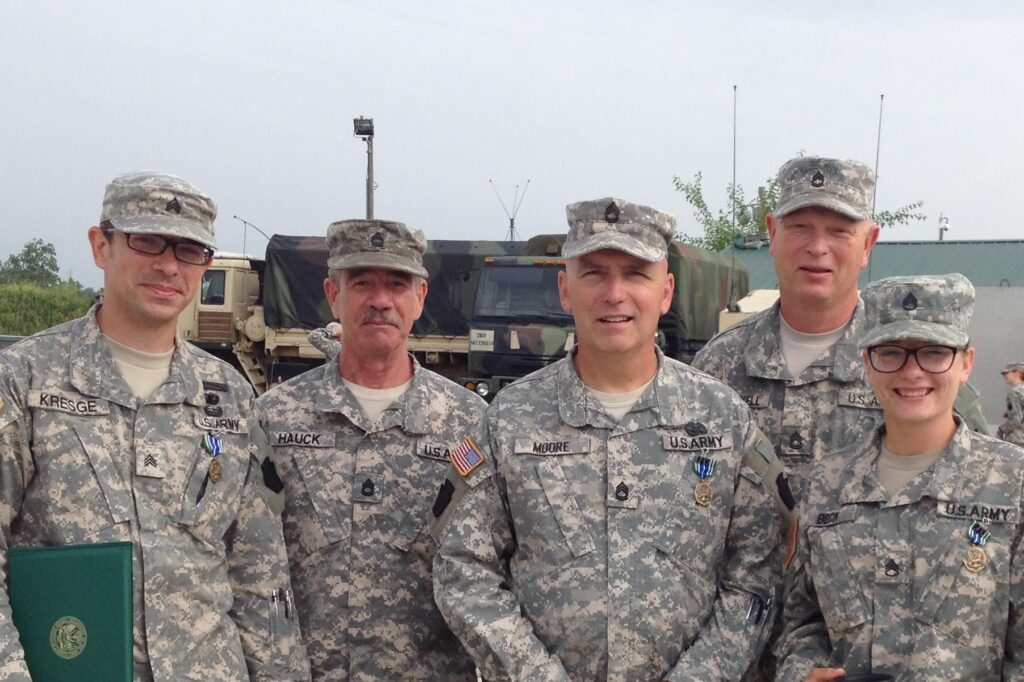
    Over a span of thirty years, I served in the active-duty Army, the Pennsylvania National Guard, and retired from the Maine Army National Guard. I held many jobs: rifleman, radio operator, machine gunner, team and squad leader, transportation manager, movements supervisor, and on one occasion, platoon sergeant. For almost a decade of that service, I was on jump status.

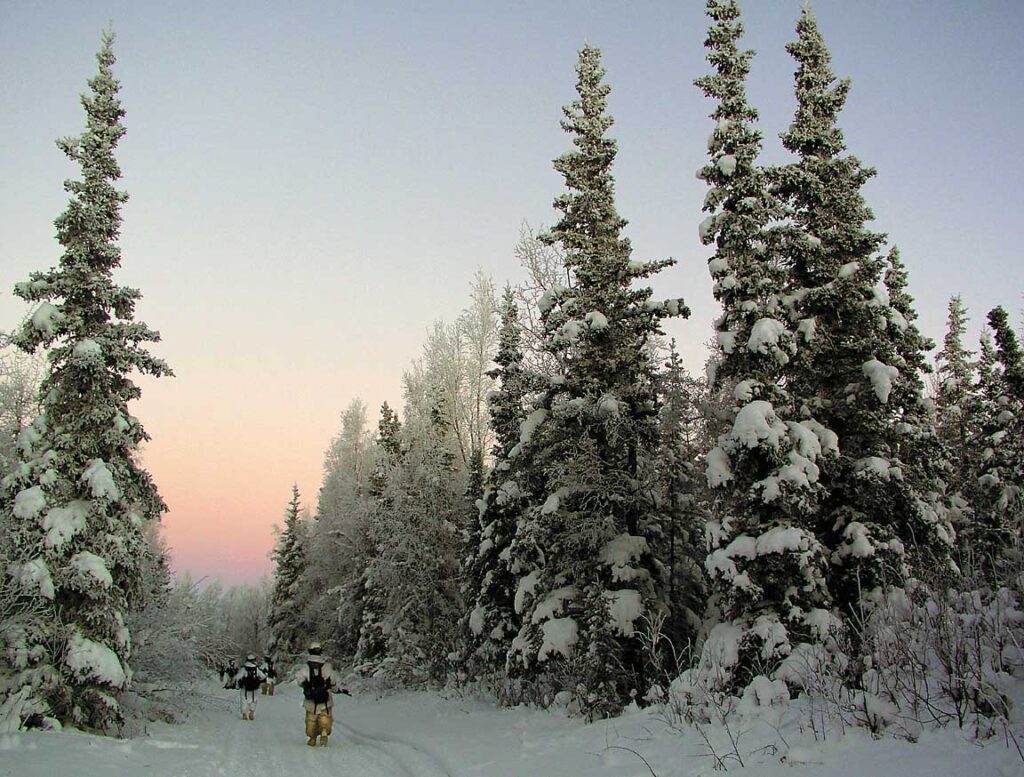
    Something amazing happened to me during my active-duty days: I was stationed at Fort Richardson (now Joint Base Elmendorf-Richardson). It was there that I went to Basic and Advanced Military Mountaineering Courses at Fort Greeley. I took up telemark skiing. I climbed mountains and glaciers and had what I consider to be the ultimate form of outdoor experiences.

    Concurrent with joining the Army, I fully embraced Judaism through Chabad Lubavitch.  When I came off of active duty, for a time I attended a ba’al t’shuvah yeshiva, but the life of a shaliach was not for me.

    In 2016, Leah and I moved to Maine.  For the duration of our marriage, we wanted to move to New England.  We visited Bangor, Maine, fell in love with the state’s oldest synagogue, Congregation Beth Israel in Bangor, Maine.  We loved the rabbi, we loved the congregation, and as beshert would have it, their religious school was in need of a new director.  Leah took the job, and I started working remotely in my civilian profession as a software engineering leader.  Within two years, I became president of the congregation.  I’m starting my sixth term.

    Shortly after we moved to Maine, I began work on this website, a book, and an Appalachian Trail Guide mobile application (which we will be updating this year).  Wilderness travel is so important to me.  While my Jewish community is fantastic, there is nothing better to me than being outdoors.

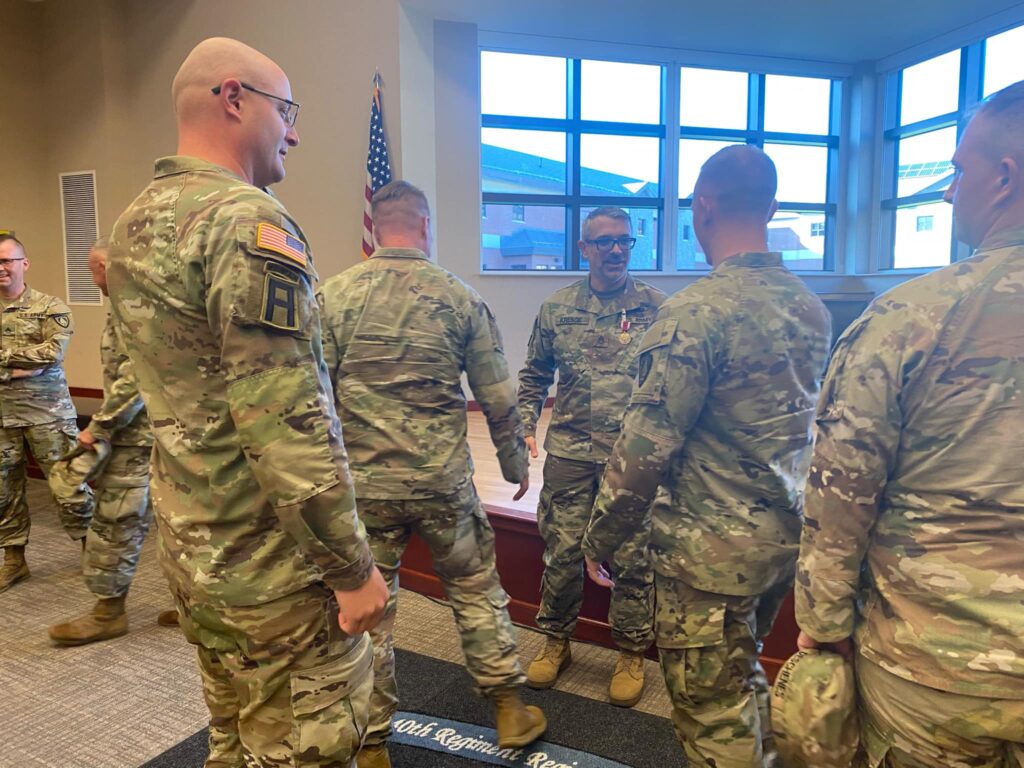
    When I retired from the Army at the beginning of October in 2024, I received a lovely send-off, complete with a Meritorious Service Medal.  I previous have been awarded three Army Commendation Medals, five Army Achievement Medals, the Good Conduct Medal, 5 Reserve Components Achievement Medals, the Armed Forces Reserve Medal with a Silver Hourglass and “M” device, the Humanitarian Service Medal, the Global War on Terror Exp and Serv Medal, the Multinational Force Observer Medal.  I earned the Expert Infantryman Badge, Basic Parachutist, Air Assault, Thai and British Jump Wings.  There’s more, but needless to say, I had a great time.  I learned so much, saw so much, and made the best friends a dude could ever ask for.

    Last year, I finally settled on an online rabbinical program.  I had two criteria.  There had to be a heavy emphasis on asynchronous learning, and it had to be a serious course, not just a degree mill.  And I have that with the Pluralistic Rabbinical Seminary.  My two current academic instructors are both amazing graduates of the Jewish Theological Seminary.  My peers span the United States and the globe, from all backgrounds of Jewish life.  I’ve already written a number of articles for their sister organization, Darshan Yeshiva.

    After receiving smicha in 2026, I plan on thru-hiking the Appalachian Trail again for a documentary called—gasp–”The Kosher Backpacker.”  You can see a teaser for it here.

    We’re also trying to build a wilderness experience for special needs young people right here, on our 12-acre Winterport, Maine homestead.  I’m working on cultivating beets and potatoes this year and working on increasing our off-grid capabilities with wind, solar, and even mild hydropower.

    I have no interest in being a pulpit rabbi.  I would like to work with the Bangor (and Maine) Jewish community on programming, pastoral care, bereavement, and especially wilderness programming. I am simultaneously working on becoming a Registered Maine Guide.  Torah on the Allagash, hitbodedut on Katahdin…this is the stuff.

    Thanks for following this website.  We try to promote the outdoors for all walks of Jewish life, most especially finding ways to the wilderness for the most observant among us.  The wilderness is obviously part of our tradition, and it’s easy to see the handprint of the Divine when we’re on a mountaintop on a clear day.

  • Autumn in Parc National de la Jacques Cartier

    Autumn in Parc National de la Jacques Cartier

    Where I live in Maine, for weekend adventures, I have a “can I get there and back again on a single tank of gas” philosophy.

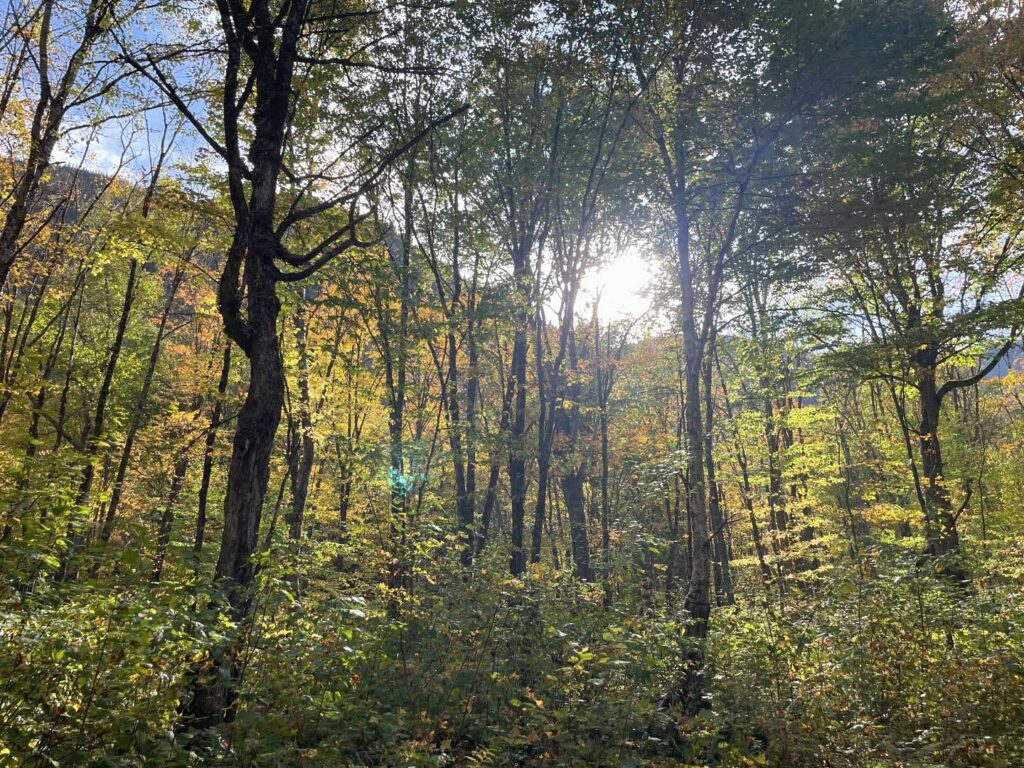
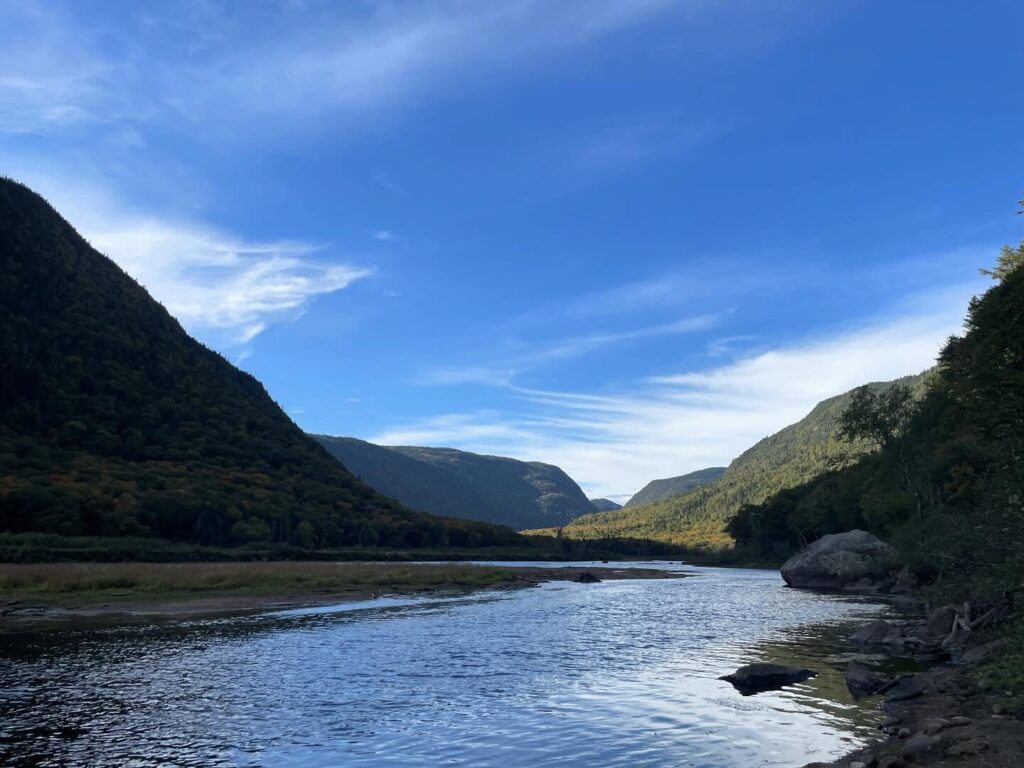
    Autumn light through a strand of trees.

    As it turns out, just north of Quebec is a gem of a Canadian National Park: Parc National de la Jacques Cartier

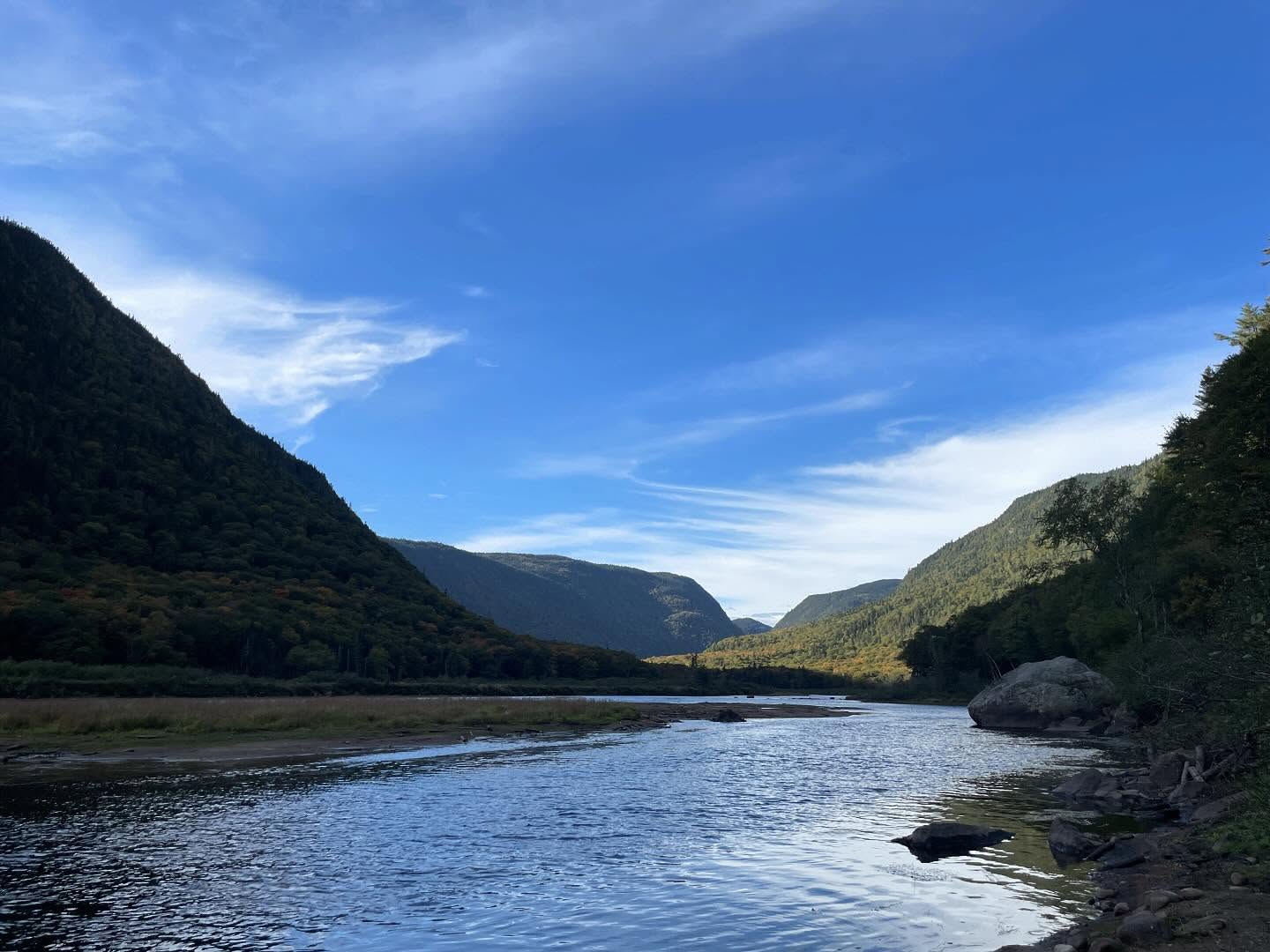
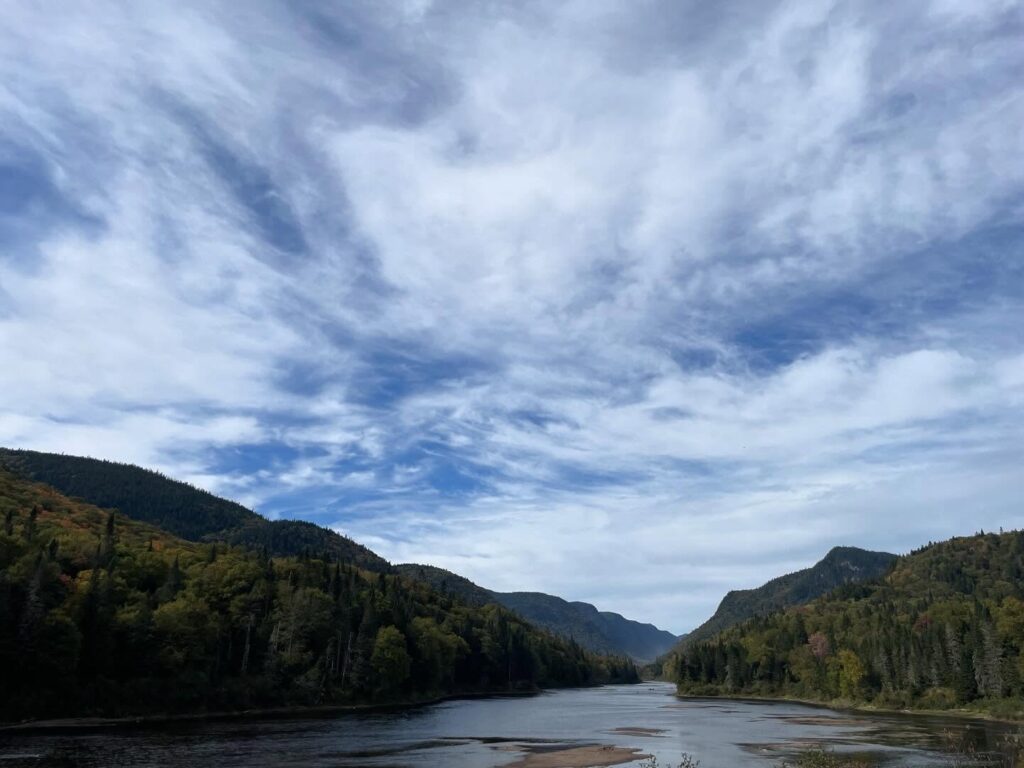
    The area is a giant mountain plateau carved with deep valleys during the last ice age. The Jacques Cartier Massif is within the Laurentides, part of the Laurentian Mountains that extend from Quebec to Newfoundland. Coming from Maine with its drowned coast and northern Appalachians, it reminds me more of the Poconos than anything, with its deep valleys.

    There are over 100km of trails in this park, several of which lead out the river that lends the place its name.  There are both back and front country camping options, though you must get your permits in advance.  I arrived too late to start my backcountry hike, and the rangers at the desk offered me an option to pay $6 Canadian to stay in the parking lot overnight.  I chose to go back to Quebec City and see the city at night, sleep in a parking lot (my Jeep works well for overnight stealth camping), and start fresh the next day.  The park is around 30 minutes from the city.

    It is a very accessible park, more so if you have a high-clearance, four-wheel drive car or truck, as a dirt-and-gravel road takes you deeper into the park and some amenities further up the river, like stables and such.

    How to Get There (From the Park Website)

    Valley Sector

    From Quebec City:

    • Take Route 73 North (follow the signs for Saguenay) which will become Route 175 North. The entrance to the Valley sector is located at exit 182, Chemin du Parc-National. From downtown Quebec City to the entrance to the Valley sector, it is 40 km. Add to that 10 km to the Discovery and Visitors Centre.

    Public charging stations for electric vehicles

    Six Level 2 charging stations are available at the Discovery and Visitors Centre parking lot. Details

    Transportation Service

    A transportation service is offered by Quatre Natures from Quebec City.

    Additional information

    Traffic coordinates

    Exit 182, Chemin du Parc-National
    Route 175
    Stoneham and Tewkesbury

    GPS:
    47° 06′ 30” N
    71° 20′ 50” W

    The park is open year-round. For better planning of your activities, take note of the period of operation of the services according to the sector.

    Valley Sector

    Opening of the National
    Park Trail From mid-May to the first snow: accessible up to km 33, depending on weather conditions
    From the first snow to mid-May: accessible to the Discovery and Visitors Centre (km 10)
    From the first snowfall, the Chemin de la Vallée is open only to the Discovery and Visitors Centre (km 10) which is open every day of the year, with the exception of December 25 and January 1.

    These dates are subject to change depending on weather conditions. We strongly advise you to contact us at 418 848-3169, ext. 6 to ensure the state of the road.

    Discovery and Visitors Centre

    Services: reception and information, equipment rental, general store, first aid service

    Periods:

    • November 1, 2024 to May 8, 2025
      • Daily, 9 a.m. to 4:30 p.m.
    • May 9 to June 12, 2025
      • Monday to Thursday, 9 a.m. to 4:30 p.m.
      • Friday, 9 a.m. to 7 p.m.
      • Saturday, 8 a.m. to 7 p.m.
      • Sunday, 8 a.m. to 5 p.m.
    • June 13 to August 24, 2025
      • Daily, 8 a.m. to 8 p.m.
    • August 25 to October 13, 2025
      • Monday to Thursday, 9 a.m. to 4:30 p.m.
      • Friday, 9 a.m. to 7 p.m.
      • Saturday, 8 a.m. to 7 p.m.
      • Sunday, 8 a.m. to 5 p.m.
    • October 14 to December 1, 2025
      • Daily, 9 a.m. to 4:30 p.m.

    At all times, it is mandatory to purchase your daily access online before your arrival. Be sure to keep proof with you at all times.

    Shoulder sector (fishing in accommodation at the Devlin cabins and the Pavillon du lac à l’Épaule)

    Sautauriski and Jumeau sectors (day fishing)

    Shoulder sector (winter accommodation at Devlin chalets)


  • Backpacking Nagano Prefecture in Japan

    Backpacking Nagano Prefecture in Japan

    A flower of snow
    On your shoulder seems to say:
    Welcome to Nagano!

    Keiko Yoshida – Nagano City

    My middle daughter, Avi, is a student at Temple University’s Tokyo campus.  She’s entering her junior year, but this was the first I’ve had the opportunity to come visit her in Setagaya.  Going inland proved to be a wise move after my arrival in Japan.  We lucked out and had a perfect evening on Enoshima, but a named typhoon was descending upon Tokyo, and we wanted to maximize our walking tours.

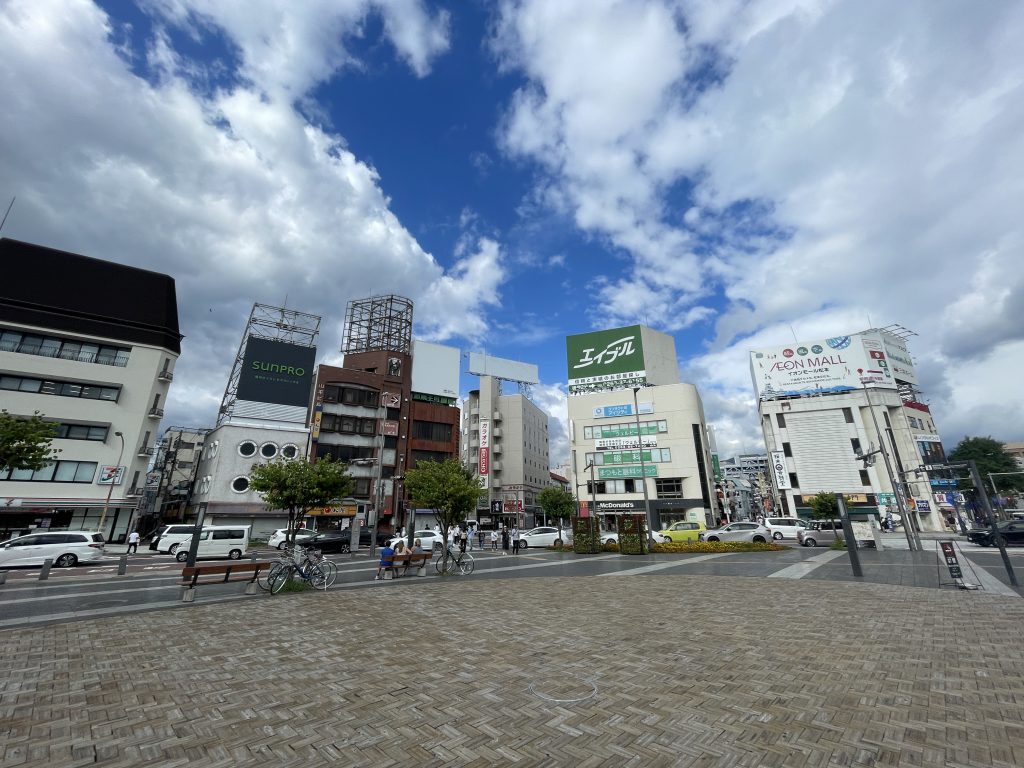
    Getting to Karuizawa Station

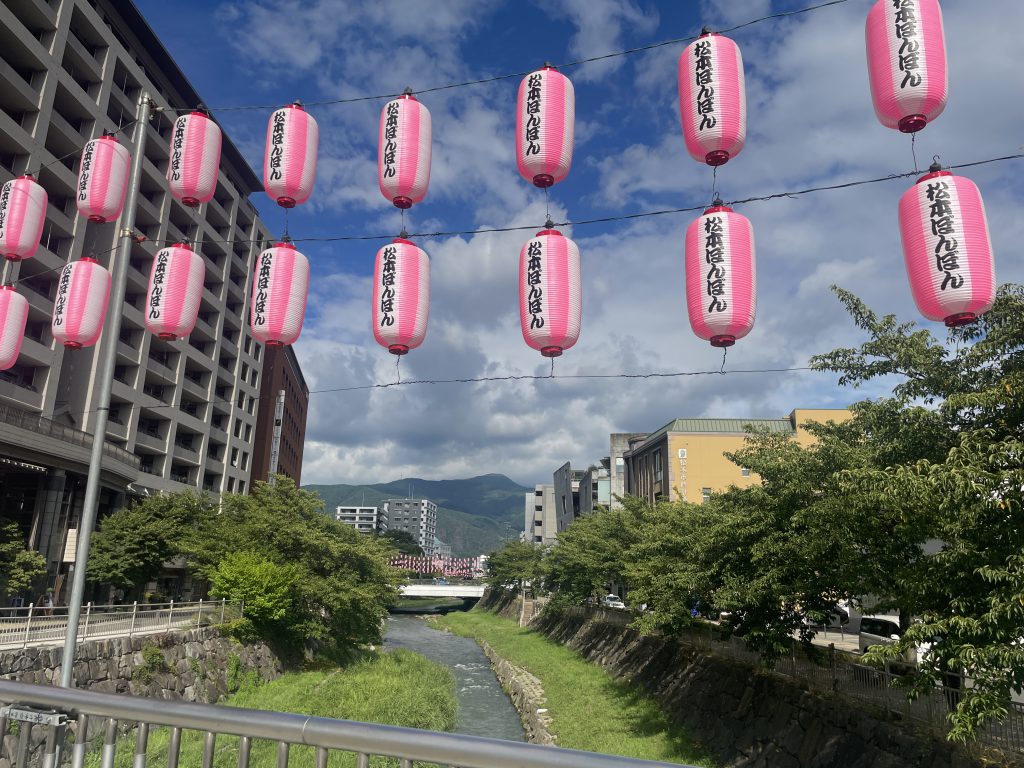
    We booked bus tickets from the Shinjuku Expressway Bus Terminal to Karuizawa.  The bus ride offered an interesting experience of Tokyo neighborhoods on its way out of town, and the ride into the mountains, with views of Mt. Miyogi and other named peaks was fantastic.

    There are three ways to get to Karuizawa from Tokyo: train, bus, or car.  Bus is the cheapest, between $3-20 USD.  Train is the shortest, especially if you take Japanese Railways Shinkansen (the famed “bullet train”).

    Karuizawa is itself a lovely resort town in the mountains.  From Karuizawa Station alone, you can see nearby ski facilities.  It’s also home to fantastic outlet mall shopping, and plenty of restaurants.  The Shiraito Waterfall and Mount Asama are both worth the visit.

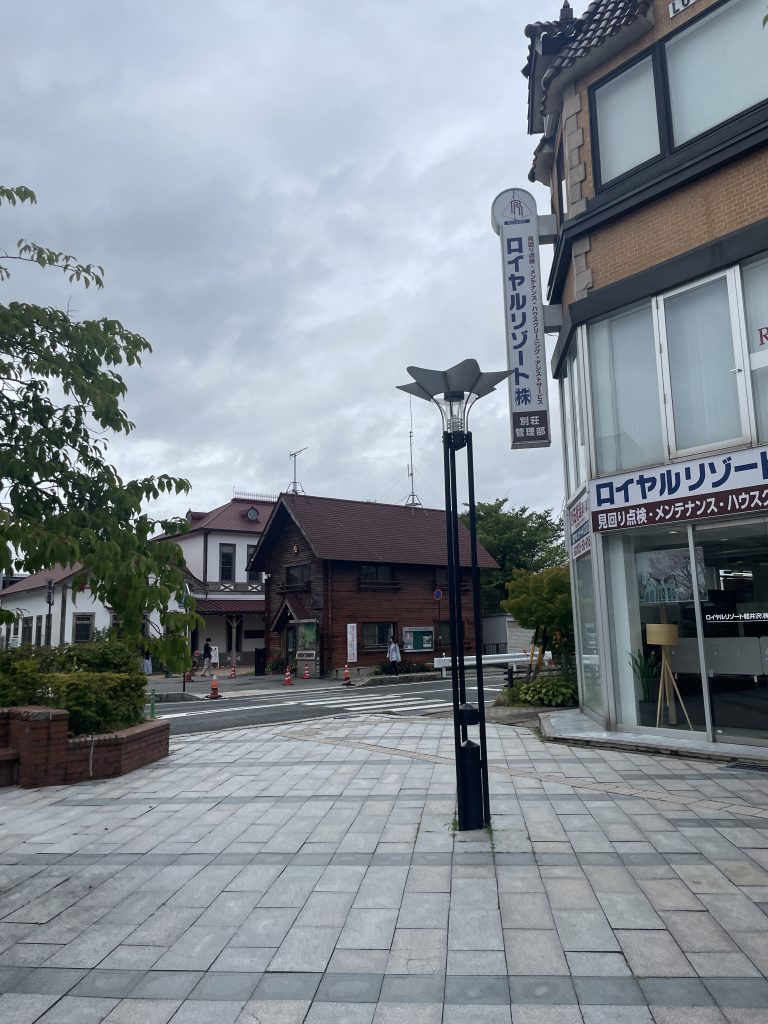
    A view of Kuruizawa including the original train station in background.

    Getting around Nagano Prefecture

    The primary train around the prefecture is the Shinonoi Line, operated by East Japan Railway Company (or JR East).  We could have taken the bullet train from Karuizawa to Nagano, and then the Shinonoi Line, but we instead took the local line from Karuizawa Station to the station in Shinonoi, and transferred to the train that took us to Matsumoto.  This trip took around two hours, but it was worth it.

    Later, we took the same line all the way from Matsumoto to Nagano.  In all cases, the local trains will cost you no more than $5-35 USD.

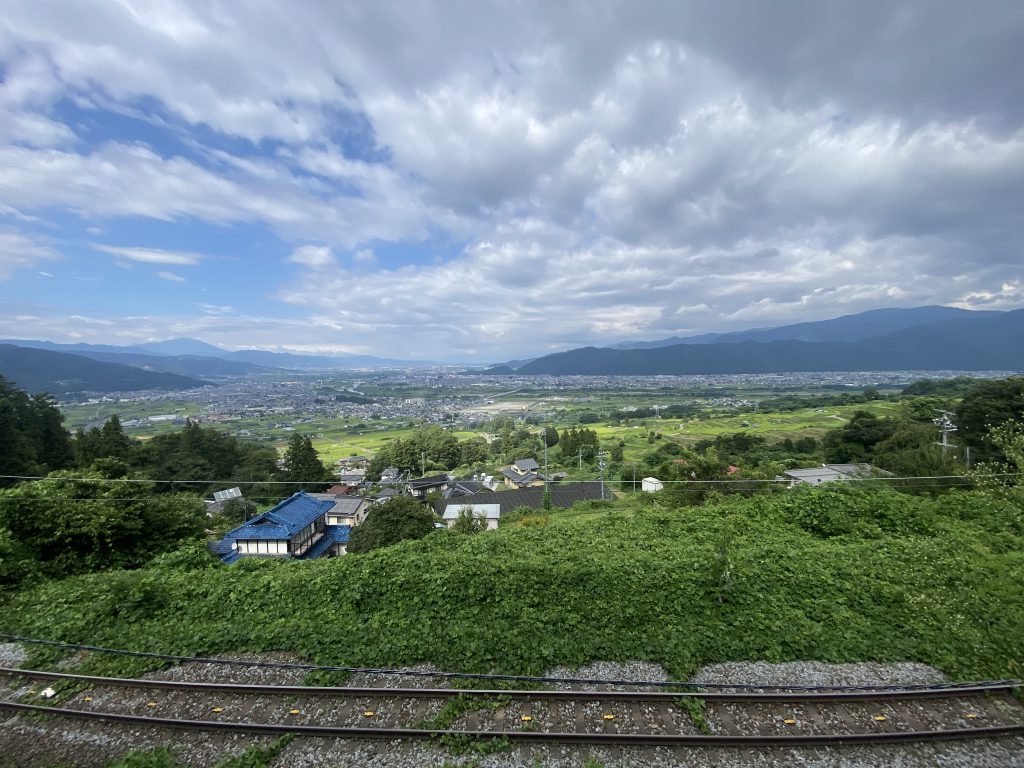
    A spectacular view from the Sinonoi Line in Nagano Prefecture.

    Matsumoto

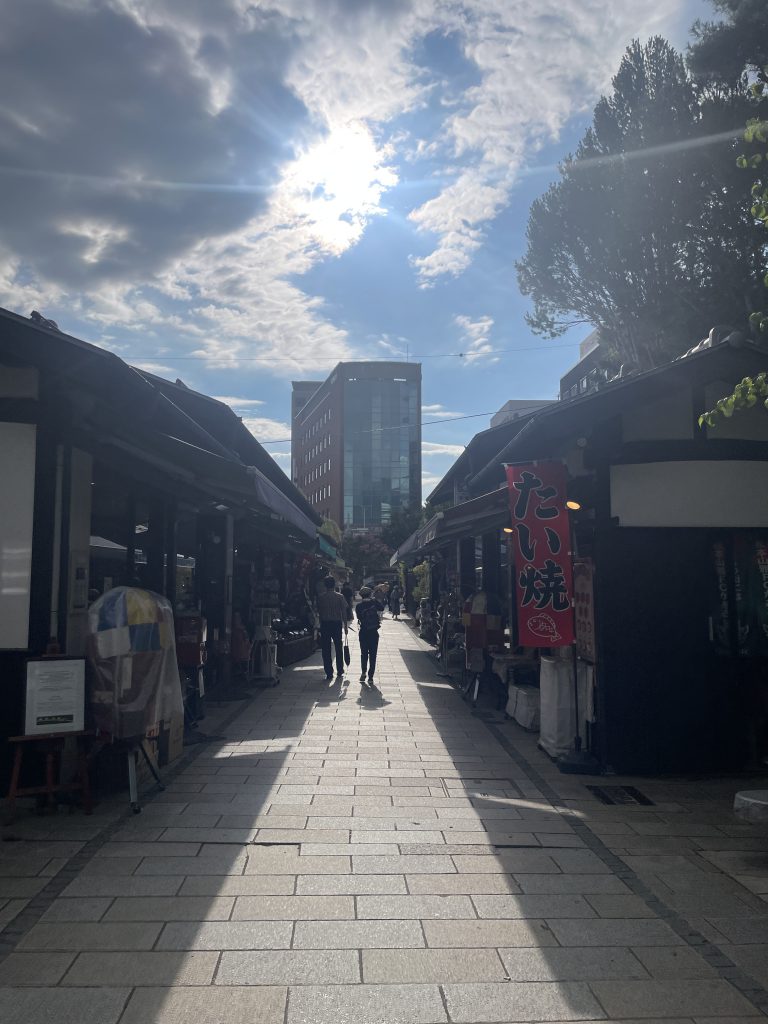
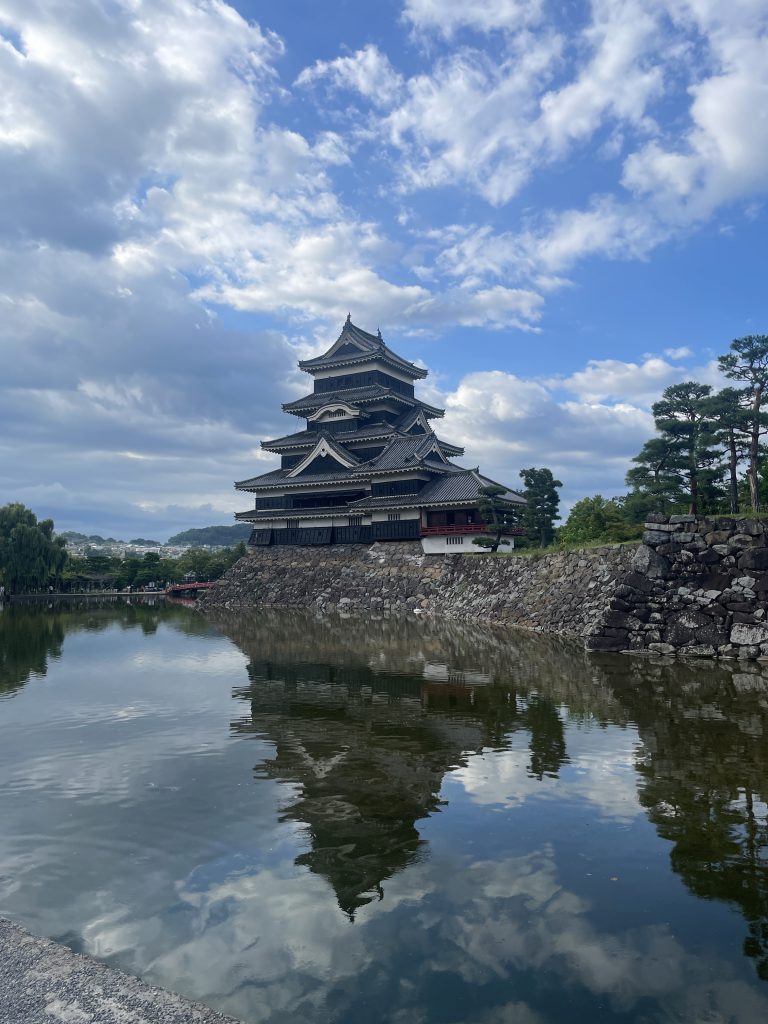
    Matsumoto is home of Matsumoto Castle, built by Ishikawa Norimasa and his son, Yasunaga in 1593-1594.  They were daimyo of Matsumoto under the Tokugawa shogunate.  It is a wonderful tourist destination, with its shopping and cultural experiences.  The castle is inexpensive to tour ($5 USD), but be prepared for hour-long wait times.

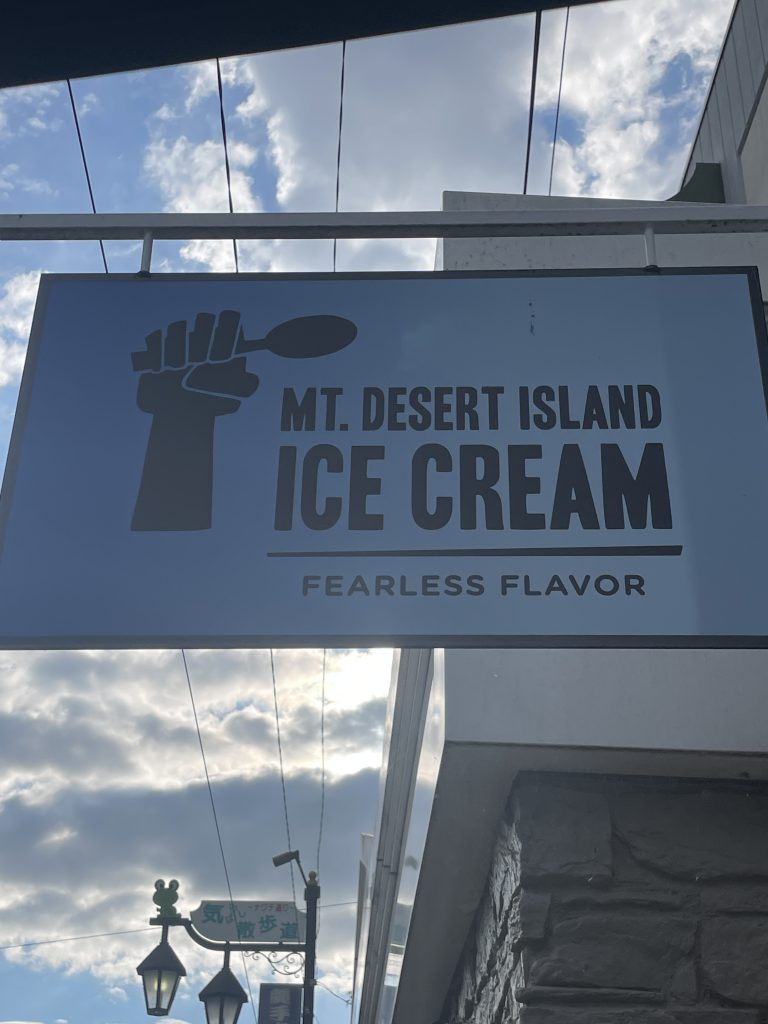
    Being good Mainers, to our surprise, we found Mt. Desert Island Ice Cream.  The flavors were a little bit different than what we’ve had before in Bar Harbor, but the staff were pleasantly surprised to have visitors from Maine.  I ordered a strawberry sorbet, and Avi ordered a peach combination which wasn’t to her liking.

    Mt. Desert Island Ice Cream is not under kosher supervision.  Cholov Yisroel is impossible to find in Japan, but Japan’s milk is wholly produced by dairy cows.  I doubt Rabbe Feinstein’s leniency applies to Japanese dairy.

    Nagano

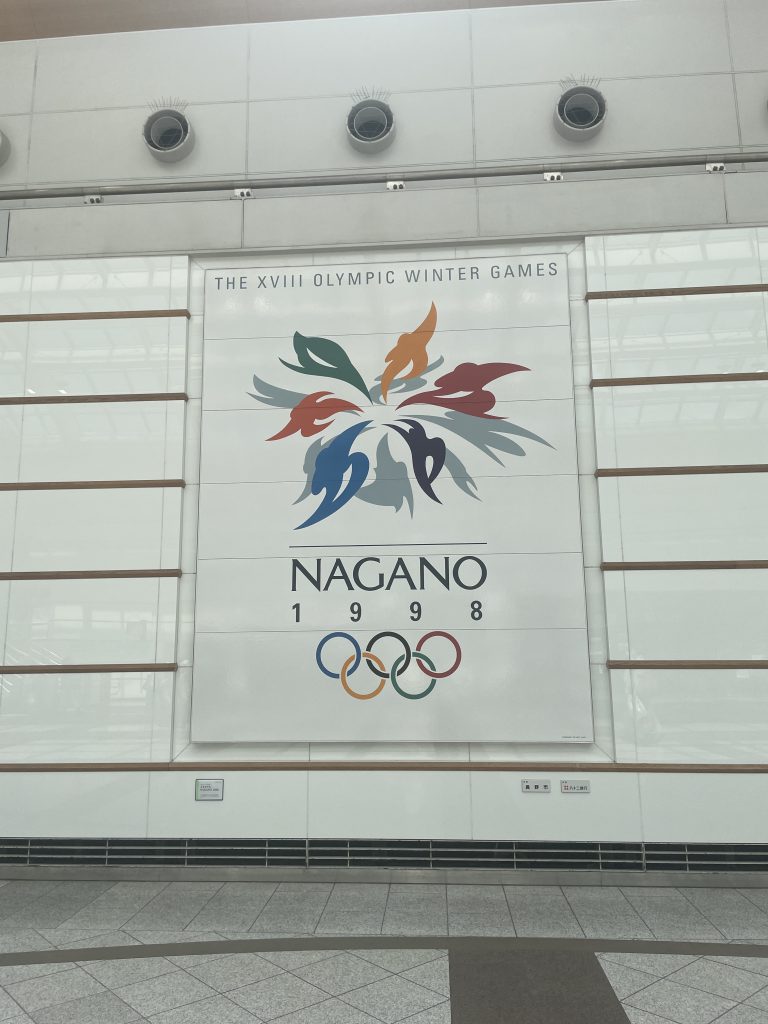
    Our overnight destination in Nagano Prefecture was the city of Nagano itself.  After a day in Matsumoto and enjoying the lovely train ride from Matsumoto to Nagano, we arrived in time to check into our hostel, Moritomizu Backpackers and Sharehouse, a quaint little place close to Nagano Station.  It was very low cost (around $50 USD a night for two of us), and within walking distance of many things.  The room was nothing special, futons, pillows, sheets, etc.  Common showers and bathrooms on the second floor.  A common dining room on the ground floor with a guitar, a mix of English and Japanese games and books, and tea/coffee service.  Sorting your trash is required.

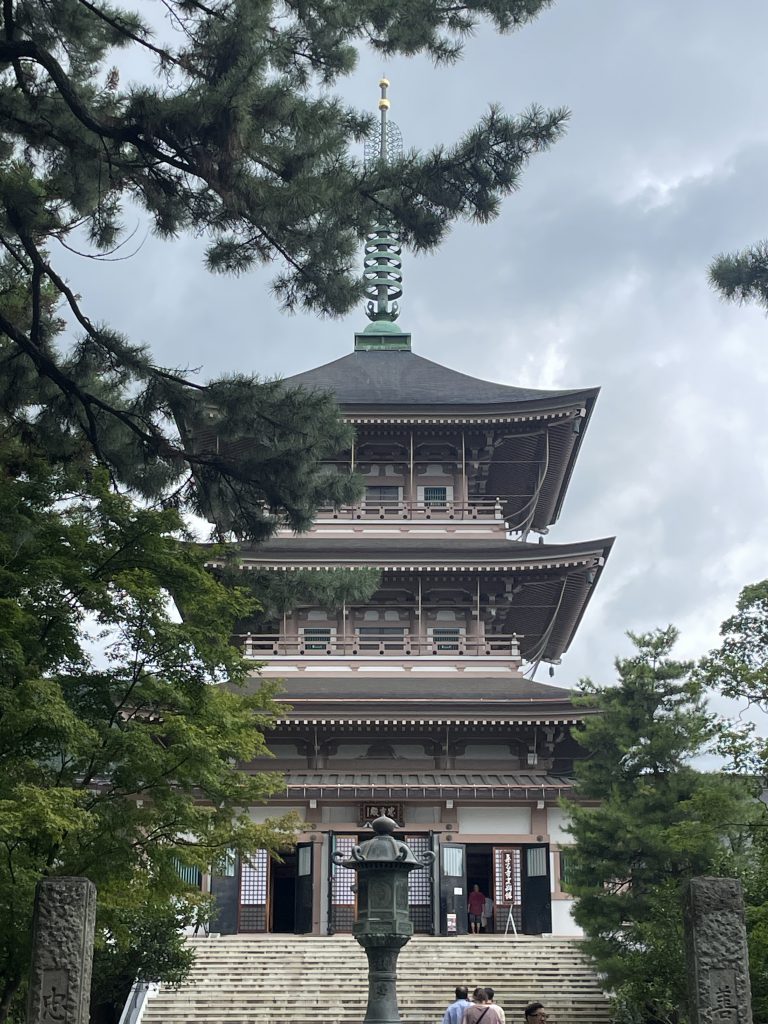
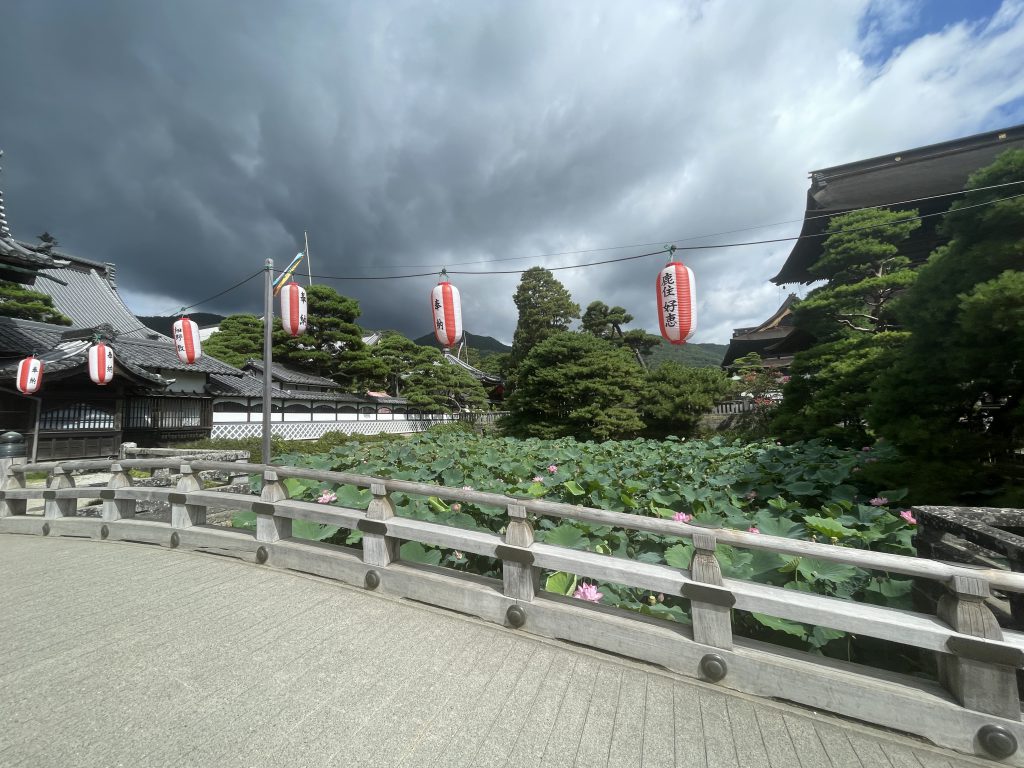
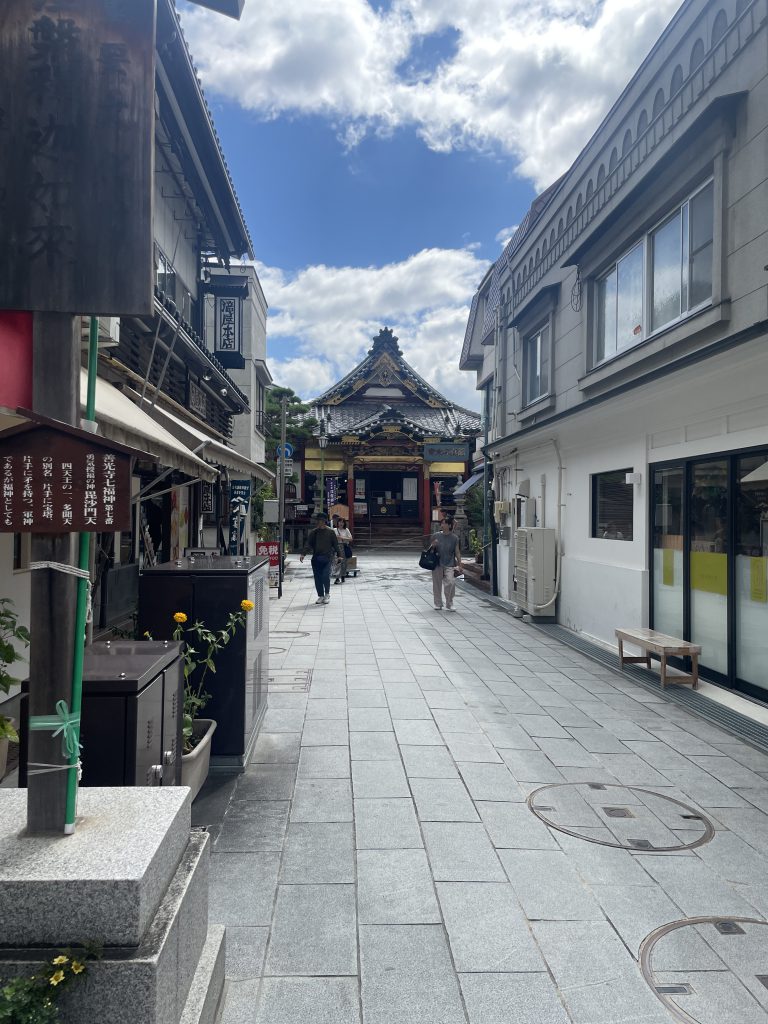
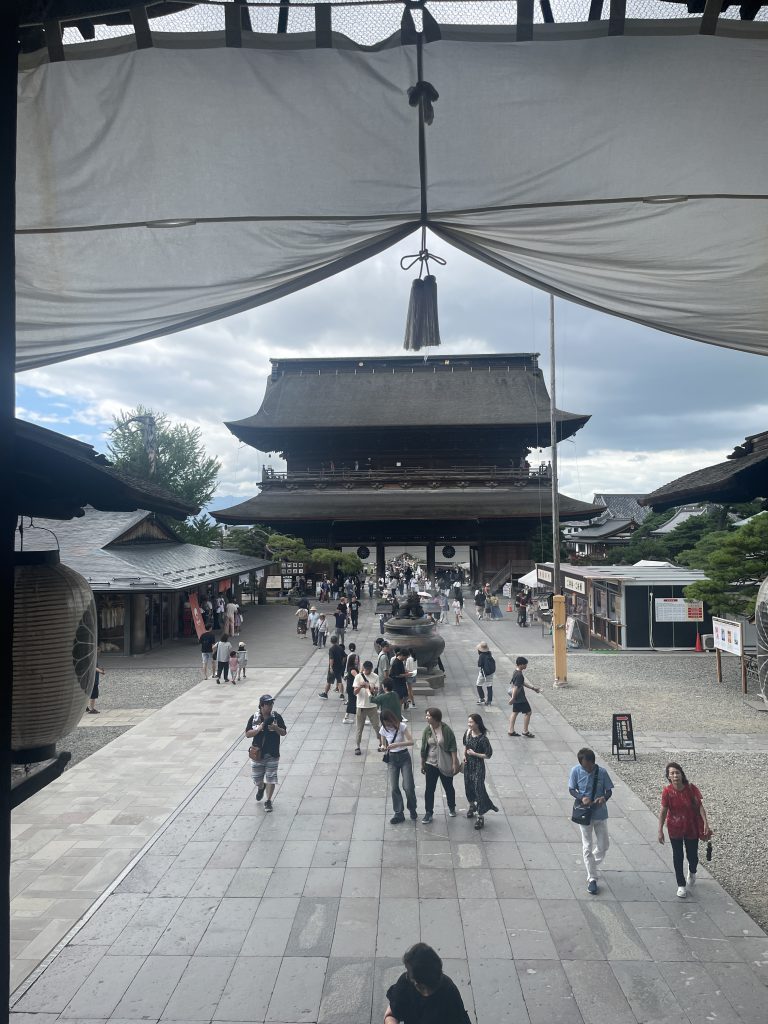
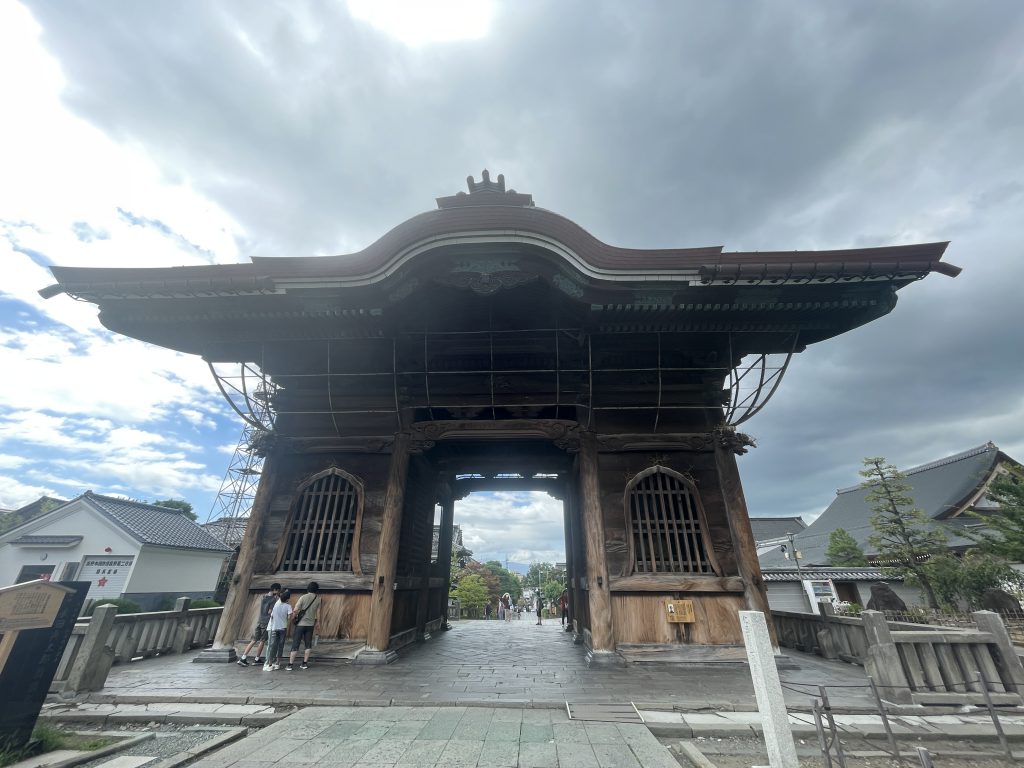
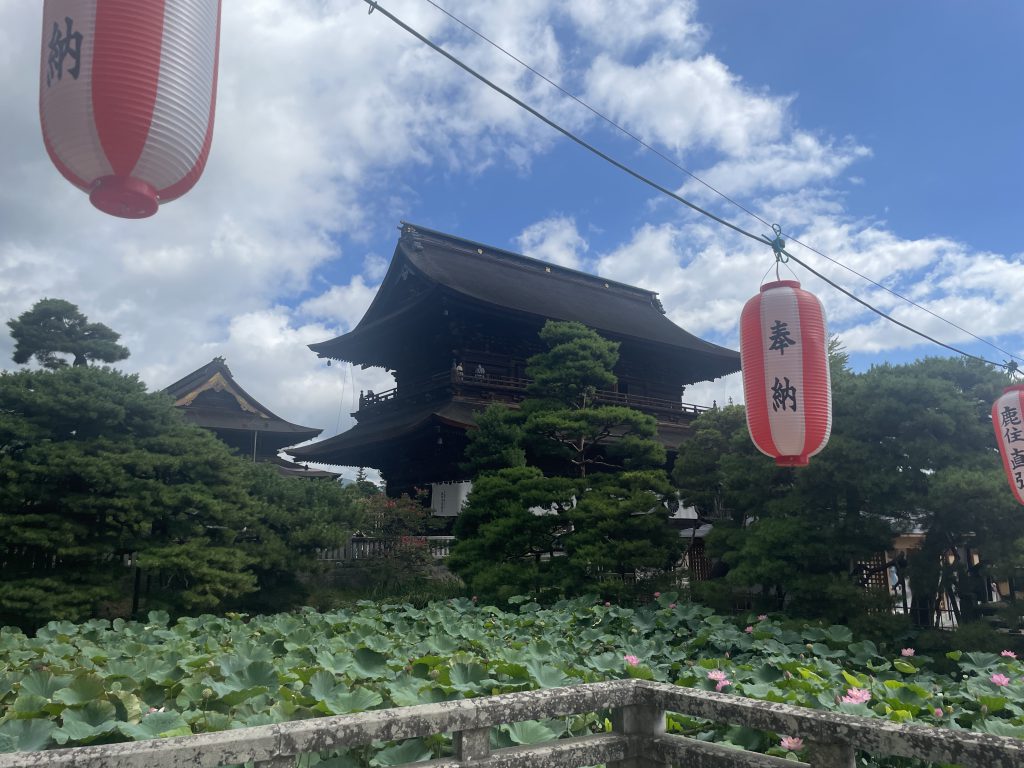
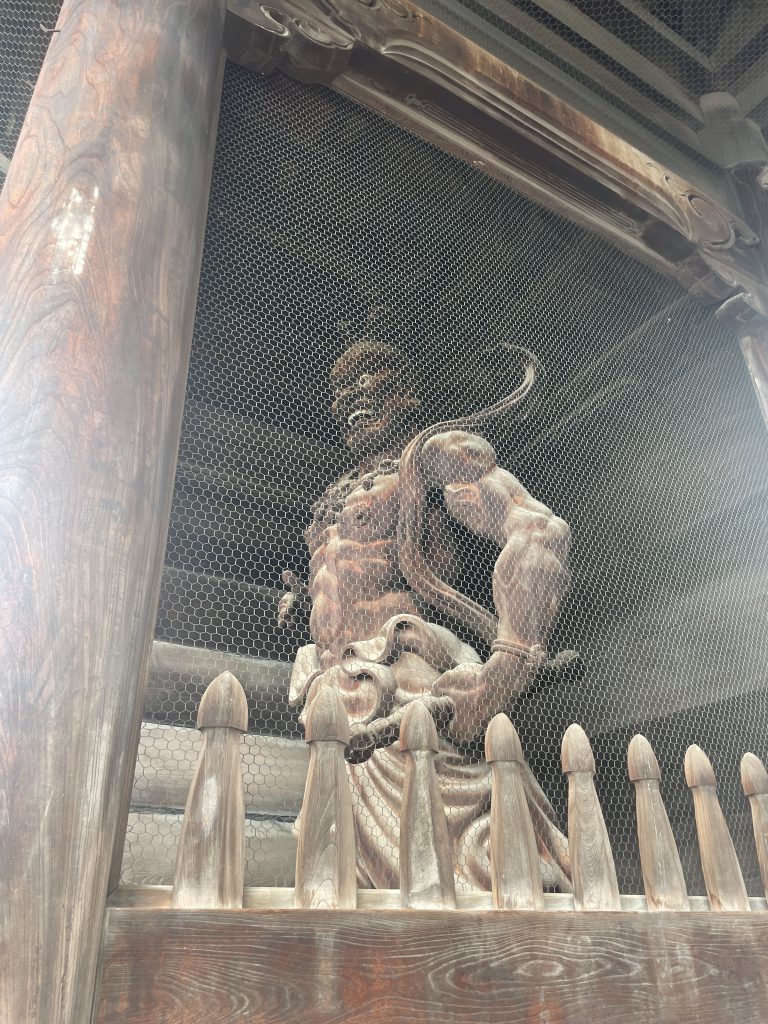
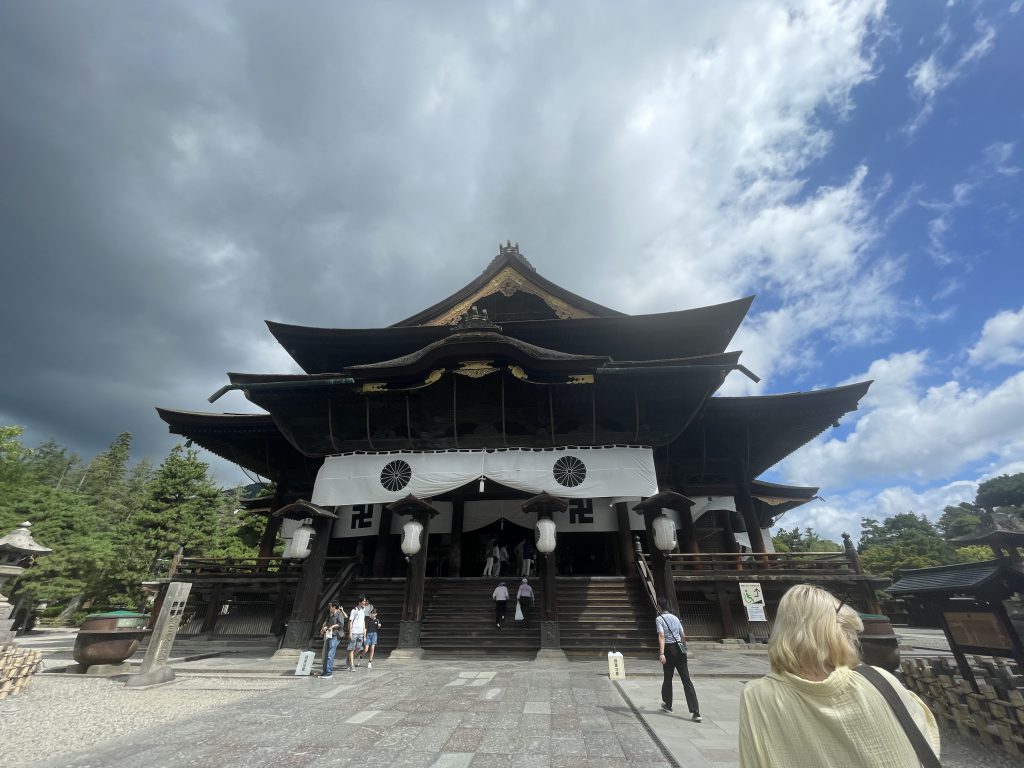
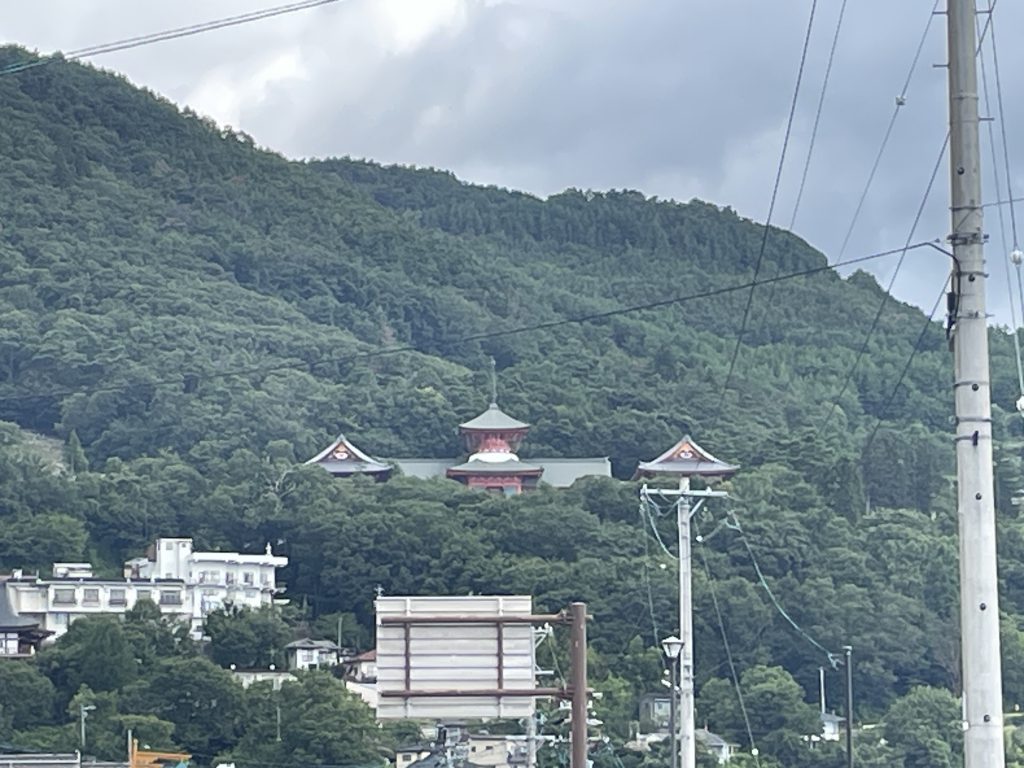
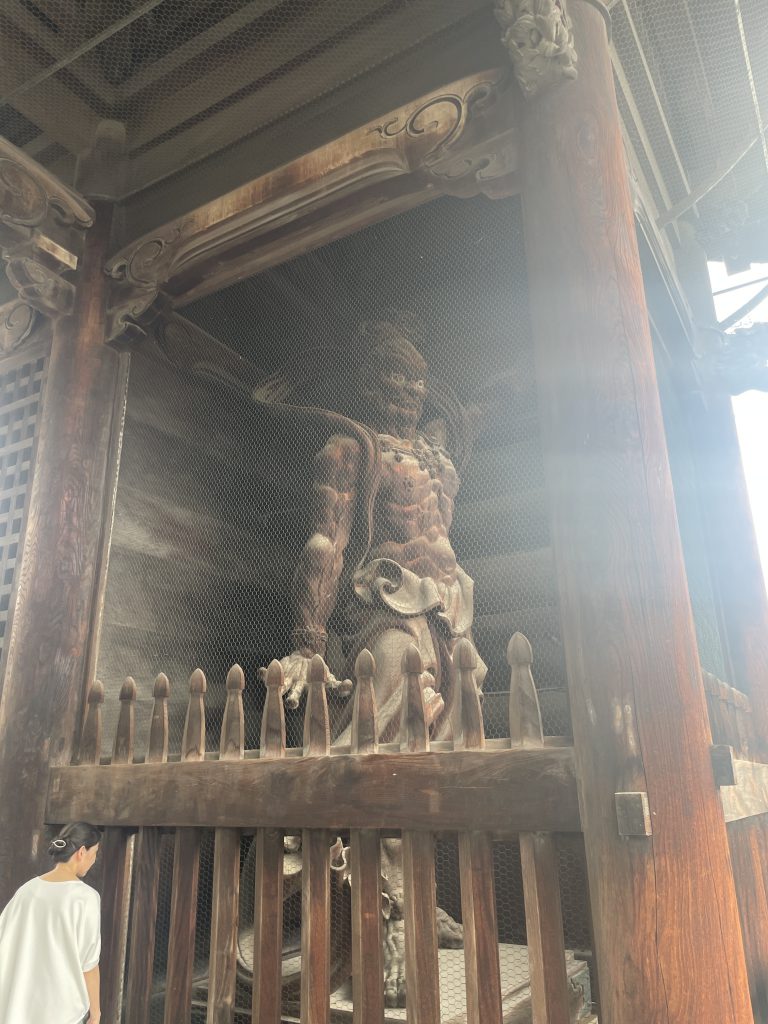
    There are many attractions in Nagano.  We focused our morning on the walk to Zenkoji Temple. There is a national park with snow monkeys that is a popular draw.   Skiing in the winter is fantastic.

    Komoro

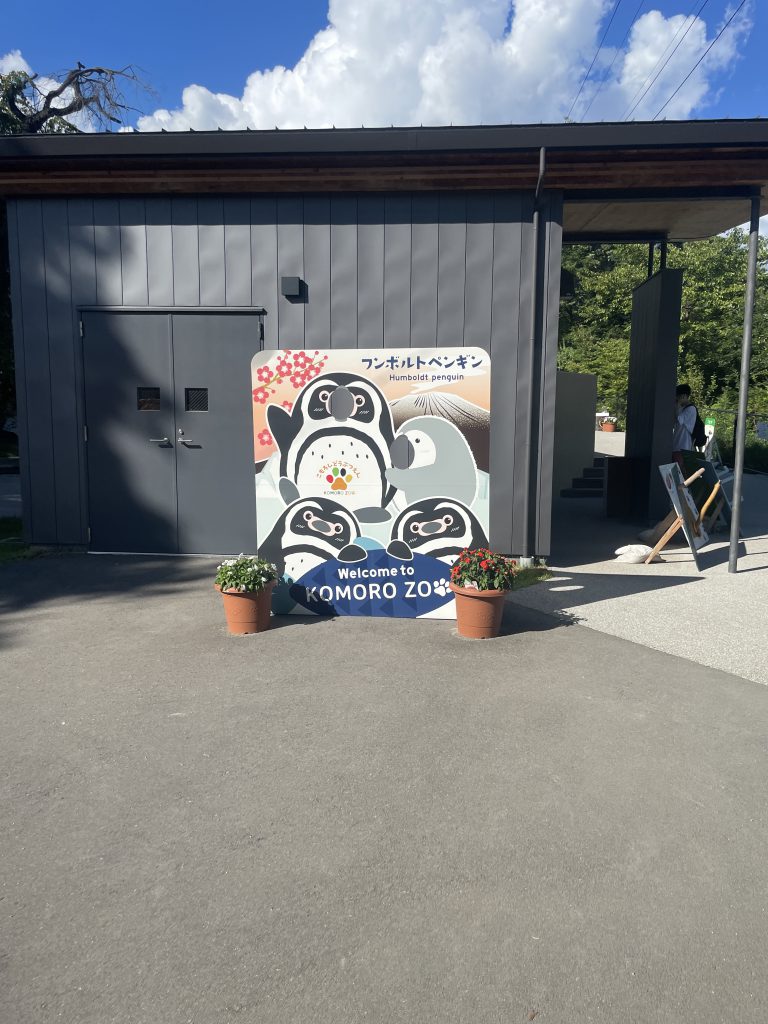
    Our final destination in Nagano Prefecture before returning to Karuizawa Station and ultimately Tokyo was Komoro.  Komoro has a small little amusement park, the saddest little zoo imaginable, and the grounds of castle ruins.  It is a beautiful area with the convergence of two mountain ranges and plenty of scenic views.

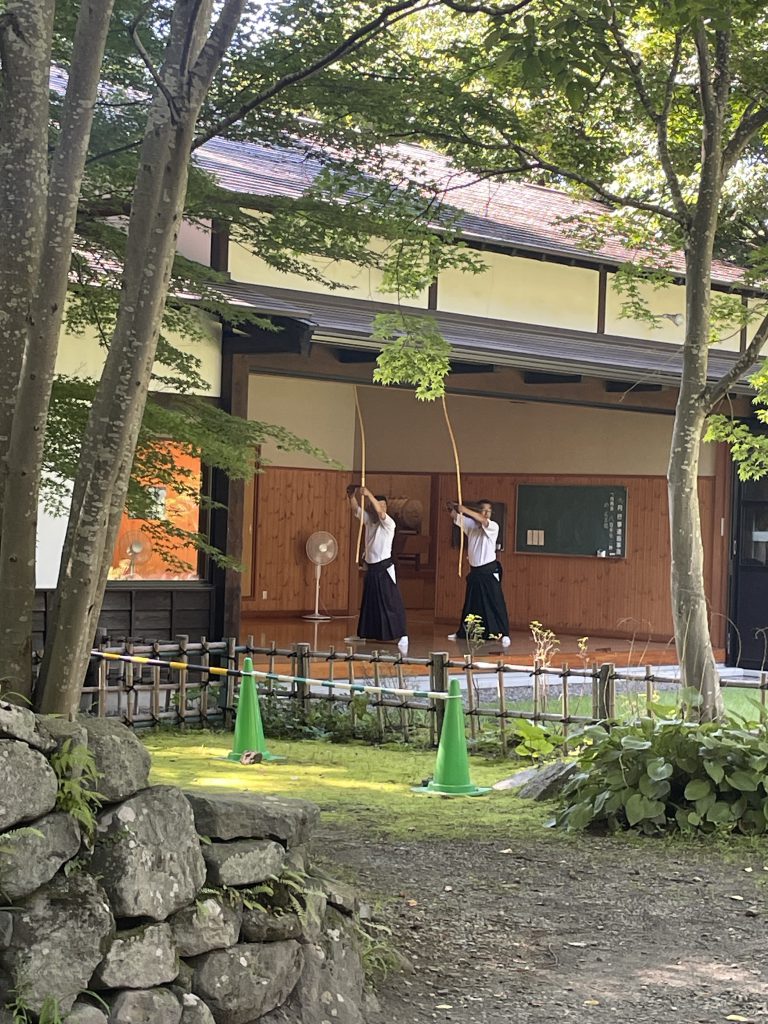
    We were really fortunate to see two men training in Japanese archery, kyudo.  The cost to tour the ruins and zoo was $5 USD.

    Kosher

    Kosher in Japan is difficult.  Given that if you’re a Jewish traveler in the country, you probably came through an airport in Tokyo, you’ll need to stock up on your trip in the city before you head elsewhere, as it’s hard to find hecshered products outside of Tokyo, Kobe, or Okinawa.

    National Abazu, a chain of three grocery stores in Tokyo, carries many imported hechshered goods.  Chabad of Japan in Tokyo also has a mini market.

    In Kobe, the community of Kansai can help with kosher food.

    Brian Kresge is a rabbinical student with the Pluralistic Rabbinical Seminary and president of Congregation Beth Israel in Bangor, Maine.

  • Memorial Day

    Memorial Day

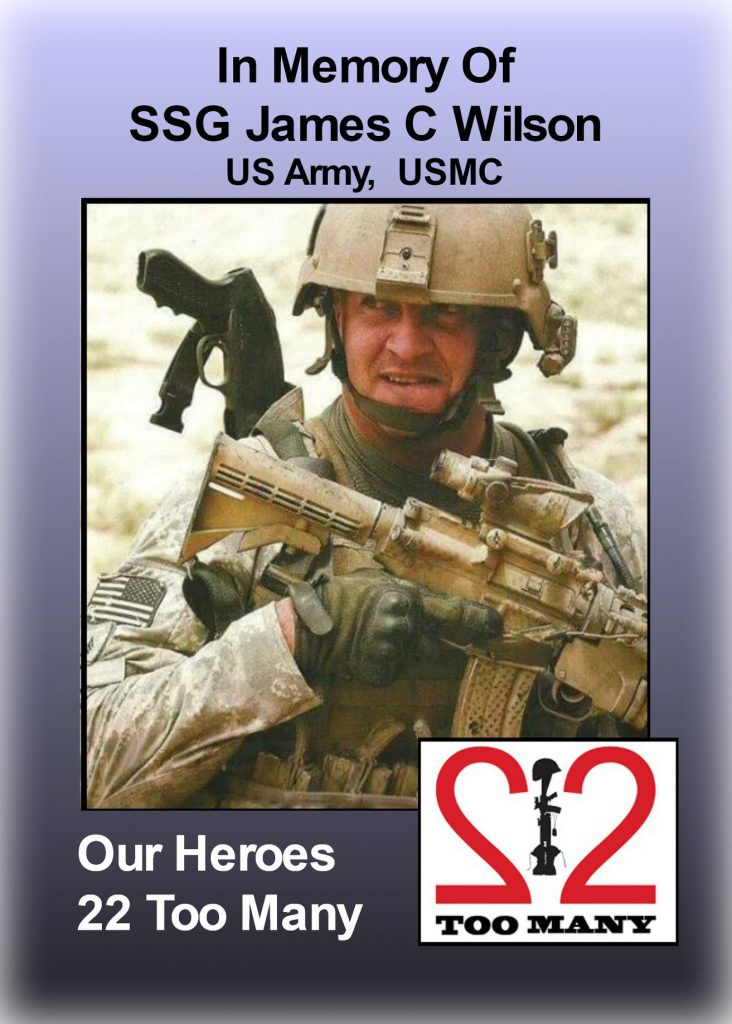
    When my unit returned from its Operation Iraqi Freedom mobilization, I had a conversation with my friend, Jimmy. I came home early due to a custodial matter, but we stayed in touch for the duration of the tour. He did well, he really came alive in Baghdad. He wanted me to volunteer and come with him for the Afghanistan mission with another unit from the Pennsylvania Guard. For a variety of family reasons, I could not, but I wish I would have.  He was a good friend and a cunning warrior.

    Shortly after his return from Afghanistan—we hadn’t reconnected—after wrecking his vehicle, while waiting for responders, Jimmy took his sidearm and took his own life.  There’s been a lot of speculation in the decade-plus that’s followed.  Many think PTSD.

    I’m never sure about that diagnosis.  Jimmy was a loud, obnoxious, prior-service Marine with a heart of gold buried deep.  I often share the story of what a soft touch he was with the citizens of New Orleans when we helped out in the aftermath of Hurricane Katrina.

    I think that in many cases, it’s the return to the mundane that does many soldiers in.  The sharp contrast between The Most Important Thing You Will Ever Do In Your Life that comes with wartime service and the rest of your world after.  It was something my late, great-uncle, a Marine veteran of Iwo Jima and Guadalcanal, warned me of, the sense that the only noble purpose he would ever have boils down in his own words, “in how many Japs I killed and how many friends I lost until we won.”   He found the truth:  a life well-lived and enjoyed, being a husband and a father, far surpassed the horrors of war in terms of nobility.

    What dignifies and reflects your belief in God? This question posed by my great uncle was expressed somewhat differently, but that’s what I took away from his letters to me when I was in infantry school.

    I think Jimmy couldn’t detach his assumed value from being wound up in his martial professions.  With the possibility of consequences in the Guard and in his job as a police officer for drunk driving, I don’t think he could see his worth extending beyond the immediate troubles.  I wish he could have asked any one of his good friends for help.

    And while we honor him, Memorial Day ends up being a paean to the virtues of sacrifice in combat.  Jimmy may be mentioned, but there’s always going to be an asterisk.  He’s fodder for anti-suicide campaigns, but in that he’s only a pitiable figure, not a resolute combat leader that bravely led successful missions and brought his men home safely.

    *

    She sobbed in the passenger seat of my car.

    I drove her to a town an hour away where she faced a hearing for driving under the influence.  We managed to get things transferred to the Lancaster County Veterans Court.

    Rabbi Jack Paskoff of Shaarai Shomayim in Lancaster pushed me towards this a few years before, in a role as a “veteran mentor.”  He knew I was looking to act on the open wound that was Jimmy’s suicide, and my own struggles with overseas service.  A local judge, whose wife was a member of the congregation, was standing up a diversion program specifically for veterans in our county, an opportunity to give them a second chance rather than saddle them with felonies and misdemeanors that would follow them.  All a veteran had to do was have an honorable discharge; combat veterans were not the sole recipients of this legal largesse.  As a mentor, I was like an AA sponsor, helping them stay on a path of sobriety, helping them with a restorative justice project that was required, and if they had license suspensions or probationary sanctions, helping them deal with those.

    I had some qualms about giving people who served in peacetime a chance when there were veterans whose criminality was directly associated with their service, until I met this young woman.  As more female and trans veterans came through the program, it became obvious that a court modeled after drug court or a 12-step program was not going to be sufficient for helping those with Military Sexual Trauma.  She never deployed, but she suffered greatly at the hands of her fellow Marines.  This program was never going to help this young woman so long as it forced her to relive the trauma of her rape, the details of which are only ever her story to tell.  And what was done to her cost her so much, including a presence in her children’s’ lives.

    That day that she cried in my car, I worried that she’d opt out on living in the same way so many of my friends have.  Today, she is doing well.  She is health and happy, and it’s not because of anything the system has done for her.  It’s her own strength, and reuniting with her community and family.

    That time I spent with her was deeply affecting.  I decided after that I would strive to make a difference as a non-commissioned officer, especially after I moved from infantry, which was all male at the time, to logistics.  I took my final break in service from 2020-2022, during which a former soldier contacted me about her own rape, and the insufficiency of the Maine National Guard’s response was exposed by the Bangor Daily News.  When I came back in the service in 2022, I was told during my initial counseling in my unit that some felt “I had betrayed the Guard” in both speaking to the paper and testifying before the state legislature about the culture of misogyny I witnessed.  In many ways, I wear that like a badge of honor.  Very few male soldiers speak up or spoke up about what they’ve seen or done themselves, or their own status as survivors of sexual assault.  It’s something I see improving in terms of training and a “see something, say something” culture in uniform.

    During my testimony, I told a highly personal experience of my assault, when during a hazing ritual 30 years ago at the 101st, I was subject to an act of a sexual nature, causing humiliation and bleeding.  I hadn’t spoken of that in 25 years.  I even became close with my team leader, who did it.  It’s a strange, horrible thing, and I am glad our military culture is reshaping itself.  We’re trying to drive a stake through the heart of the “good old boy” system, and it’s working.

    Nevertheless, I still see the cost to people still harmed by toxic culture every drill weekend.  I hear it in the voices of survivors who will never see justice.

    I’ve become treasurer of The Sisters in Arms Center, Maine’s only female veteran focused transitional living.  We’re working hard to provide a home for female and trans veterans, but we’re also trying all the time to expand our services to survivors of Military Sexual Trauma.  Most of my work centers on budgeting and fundraising.  The heavy lift is done by our Executive Director, who also is a commissioned member of the Maine Army National Guard.  It’s purposeful work, and while I hate that there’s a need for it, it’s not a legislative priority, in spite of the attention on it for over a decade, and funding is in short supply.  Outpatient services from the VA are difficult.  The reporting system, to my mind, is still broken, especially in the Guard or Reserves.

    We held a well-attended viewing of a documentary about Vanessa Guillén at Congregation Beth Israel in Bangor.  I invited speakers from the military and agencies.  The needle moves slowly.  I worry it will be lost when the committed leaders with immediate command of soldiers move on to new roles.  It’s an institutional change that has to be embraced in the same way we treat each generation as having left Egypt themselves.

    We don’t even mention survivors of MST on Memorial Day.  Their service cost them so much, and yet, we’re squeamish about raising the subject.

    *

    These are among the reasons why I struggle with the ceremonies of Memorial Day.  Whether it’s the somber pomp and circumstance of a parade or memorial service, or the festive beginning of summer motif, I feel like there’s so much that was lost to remember.

    It’s that the Reservist or Guard member that deployed, fought, and bled in a Baghdad neighborhood and goes back to an unremarkable career as at best box store middle management, drinking himself to death and driving loved ones away.

    It’s that a woman who was gang raped and driven from the service by the trauma has to watch people who assault her honored with awards and retirement ceremonies.

    You can only hear “freedom isn’t free” by a young essayist so many times before you realize our memorials are as superficial as our concern for an all-volunteer force that is still immersed in a military action that started 23 years ago.  People are often surprised to find out soldiers are still deploying to active combat zones on the same Congressional Authorization for Use of Military Force that kicked off our invasion of Iraq.

    And it’s that much more acute when it comes on the heels of Yom HaZikaron.  Israel puts us to shame with how it memorializes its war dead and the cost to its veterans.

    Every year, I find it harder and harder to abide the way we do Memorial Day.  So I retreat to the woods, and dwell on it by myself standing atop a mountain or by a wilderness brook.

    This year, I’m trying something new. I wrote my thoughts on how Judaism has a salve for moral injury a few years ago, an idea I continue to refine.  Now I’m combining it with enrollment at the Pluralistic Rabbinical Seminary in pursuit of smicha.

    Years and years ago, I finished daf yomi at Siyum HaShas in 2005. I tried my hand at hadar with Chabad Lubavitch, but the movement wasn’t for me any more than the life of a shaliach, though it took me fifteen years to figure that out.  While Leah and I maintain a kosher home and live very Jewishly, inhabiting leadership roles within our community, affixing a label to what kind of Jews we are is less important than producing measurable results in our Jewish community and its intersection with the local non-Jewish world. With the influence and help of two non-Orthodox rabbis I hold in high regard, I was accepted into PRS’ program this year. I want to work on combining the concepts of hitbodedut and the answer Judaism has for trauma in ways that help Jews and non-Jews alike.

    We have the tools in our tradition to do this with. Gemilut chassadim, tzedakah, study of Torah, or a combination of these things “avert the decree” during the Days of Awe, but they also carry manifest obligations.  We are explicitly told what we must do in the rhetorical question posed by a High Holy Days haftarah, “is this the fast I seek?”

    There’s Rambam, too, with his semi-Aristotelian “golden mean.”

    Those substantive tools and concepts may help others get through trauma, in no small part because our traditions have been shaped by millennia of hard times.  I hope to bring that to bear as part of my capstone project, expanding on Nachman of Breslov’s hitbodedut in a manner tightly wound with our tradition and ritual to help others.  There is so much work to do to ply our tradition to sexual assault, which is problematic when it comes to rape—the penalty in Torah is unfathomable today—but October 7th reminds us it is not new to us.  How we heal is so important.

    *

    On the clearest days, with the bluest of skies, and the most aesthetic punctuation of fluffy, white clouds, I stood atop Sunday River Whitecap in Maine and cried.

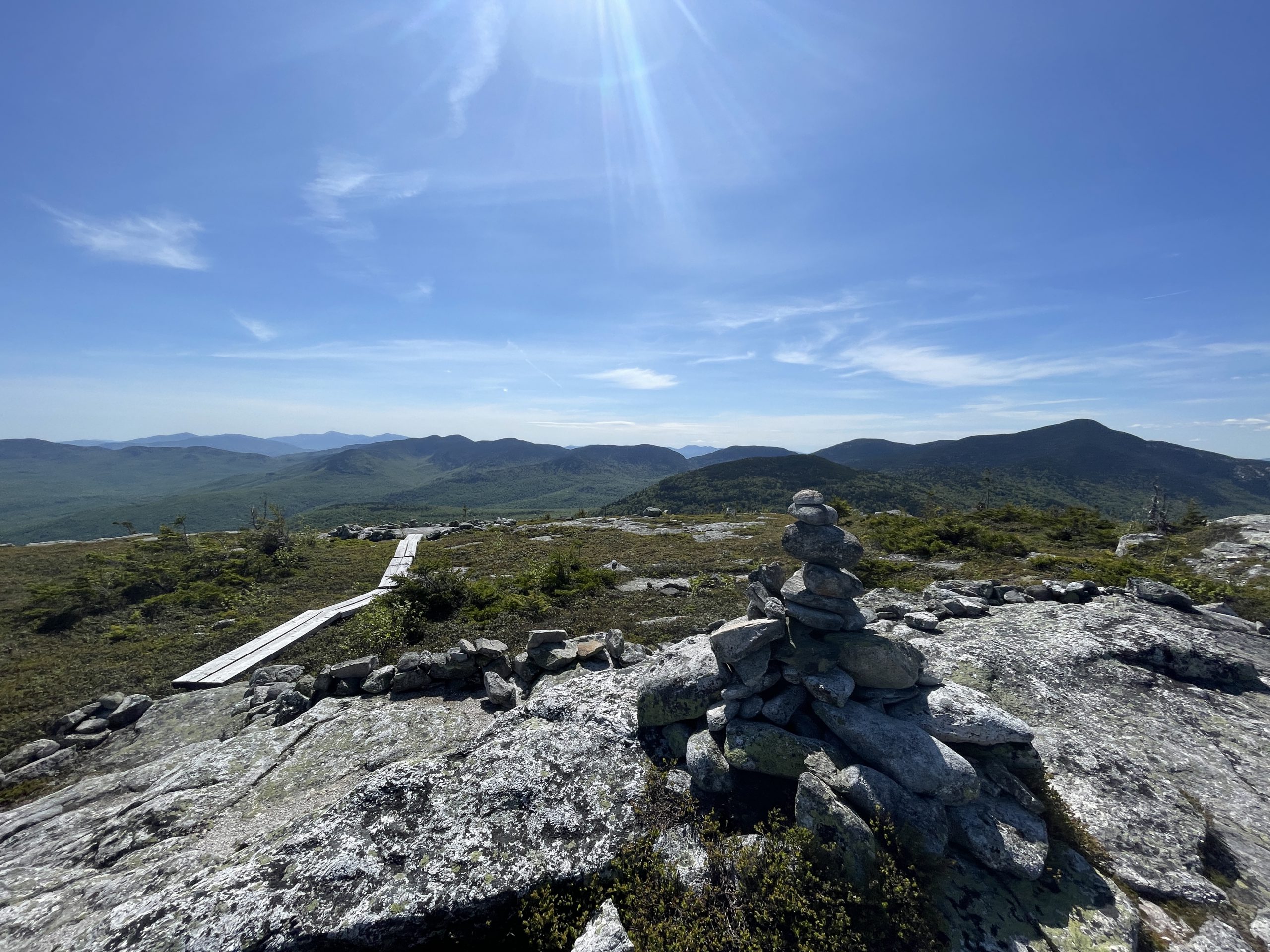
    The wind was blowing strong.  I adjusted my hat so it fit snugly against my scalp.  From the top of this beautiful peak, I could see the White Mountains in New Hampshire and Maine, the Mahoosuc Range, the valley carved by the Androscoggin River, and the nearby Sunday River ski resort.  It was so beautiful.

    This year I picked the Grafton Notch Loop for my Memorial Day weekend outing.  I invited others, but everyone had other plans or limitations.  Ultimately, this was fine.  I was grateful for the solitude.

    I remembered something from Man is Not Alone by Abraham Joshua Heschel.

    We can never sneer at the stars, mock the dawn, or scoff at the totality of being.  Sublime grandeur evokes unhesitating, unflinching awe.  Away from the immense, cloistered in our own concepts, we may scorn and revile everything.  But standing between earth and sky, we are silenced by the sight.

    Today I feel residual awe.  Today I feel like the world was created for me.  And if it was created for me, it was created for Jimmy.  It was created for every survivor of MST.

    How is there space for self-revulsion and self-hatred when we realize we’re a part of a beautiful Creation?

    I know it’s very reductionist to assume that if I could have stood Jimmy on a mountain top on a clear day, that he’d still be with us.  Nor could a mossy forest floor undo the damage done by rape.

    Finding a Jewish answer to these things is possible.  I know time spent outdoors, reconnecting with natural beauty, is a catalyst for finding goodness within ourselves.  Perhaps I can come one day soon to Memorial Day and feel like I have a contribution in the face of the things I hate.

    Until then, I will honor my friends by saying their names into the wind upon a mountain.

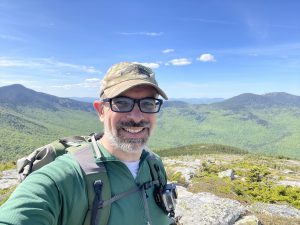
    Brian is President of Congregation Beth Israel in Bangor (Maine’s oldest synagogue), Treasurer for the Sisters in Arms Center in Augusta, a former paratrooper and transportation manager in the Maine Army National Guard, and a director of software development for a healthcare provider.  He’s also an author, musician, and now a rabbinical student!  He lives in Winterport, Maine with his wife, Leah, and their daughter, Nezzie.

  • Backcountry with Dogs

    Backcountry with Dogs

    Knowing Where to Go

    When I was stationed in Alaska, my ex-wife and I adopted a dog from the Anchorage shelter.  We named him D’Artagnan.  He was a Husky mix, former sled dog.  He was lovable, energetic, and old.

    I took him everywhere, with the exception of Denali National Park, where he was not allowed.  He came with, including on a flight into the Wrangell-St. Elias backcountry for a long, cross-country ramble.  He came with for shorter trips, like Crow Pass from Girdwood to Eagle River, where he proved problematic when it came to scaling ladders, even if he could handle complex glacial river crossings elsewhere.  When he passed away after a good life, I was broken-hearted.

    My Labrador Retriever, Max, went everywhere “good”.  When we were stationed in California, we really became experts at finding where backpacking with dogs is legal.  Yosemite and Sequoia / King’s Canyon were out, but the Emigrant Wilderness in Stanislaus National Forest was a fantastic, dog-friendly place to go.  Closer to our home in Monterey, the Los Padres National Forest offered excellent backcountry opportunities for people and canines.

    When Max and I moved back east, we made trips to the Adirondacks, to Shenandoah National Park, and places in Pennsylvania and the Catskills.
    Max has long-since passed.  Of our two dogs now, Bramble and Nanook, Bramble is the adventurous hiker.  Bramble enjoys rambles in Acadia National Park, so long as they don’t involve climbing ladders.  He loves Katahdin Woods and Waters National Monument as much as I do.  There are numerous public lands we visit and love here in Maine, both on foot and by canoe.
    There are a few epic trips I’ve made that necessitate leaving the dogs at home with my wife and kids, but for the most part, I try to tailor trips that include Bramble.  For one, they ease the loneliness of what is for me almost always a solitary endeavor.  Two, having a dog in your life imparts serious commitments.  You want them by your side at home, where we expect their domestic nature to kick in.  Why deny them the free-ranging experience of their lupine ancestors?

    It can feel, at times, like your destinations in the backcountry are limited by the presence of your dog.  I look at it this way…often you get lesser-travelled destinations that afford the one quality we all often look for—more general solitude.  The Emigrant Wilderness, for instance, never had the crowds of Yosemite, but arguably similar in terms of granite moonscapes, snowpack, and alpine meadows.

    I don’t whine about this.  People deserve backcountry spaces where dogs are not allowed, like Baxter State Park.  And let’s face it, there are more than enough people with dogs who don’t obey leash laws, or they don’t clean up after themselves, that we should understand tight regulation around their presence in the backcountry.  The bad apples continuously ruin this for us more than any other factor.

    Photo by Patrick Hendry on Unsplash

    The B.A.R.K. Principles

    • Bag your pet’s poop
    • Always leash your pet
    • Respect wildlife
    • Know where you can go.

    These are very simple rules to live by, but you’re trying to ensure that as you have a good time, you’re not ruining someone else’s good time.   You need to know your dog.  If it’s aggressive, if it’s a constant barker, if it’s not leash-trained…stay home.  These are not good fits for the wilderness.

    I learned my lesson with D’Artagnan in particular very quickly.  I left him off-leash on the Johnson Trail on the Kenai Peninsula in Alaska, and he ended up with a face full of porcupine quills.  The last thing you want is your dog agitating wildlife.  Some of it can hurt your dog, but more likely they can disturb vital animal habitats.  It’s also a matter of profound consideration for other hikers.  As much as I love dogs, nothing upsets me more than someone that thinks just because their dog is mostly under voice command and friendly, that I want them approaching me and sniffing me.

    Dog Gear

    Photo by Alexander Paul on Unsplash

    Your dog has needs in the backcountry, too.

    First and foremost, you need a bowl for your dog.  We filter our water on the eastern seaboard and other places because of giardia.  Did you know your dog can contract this parasitic protozoa as well?  Your dog is also vulnerable to leptospirosis, blue-green algae, cryptosporidium, and pythiosis…all things we filter water for our own drinking.  Bring water for your dog. Filter water for your dog.

    Since my dog refuses to sleep anywhere but right on top of me, I don’t bring him a dog sleeping bag or pad, except for during winter excursions.  I’ll augment with a fleece throw.

    You also should up your dog’s feeding amounts, because they, like you, will likely be burning more calories.  This means carrying extra weight.  My dog carries his own with his own little pannier set.

    For long canoe trips or gunkholing, I put my dogs in a life-vest.  I’m a strong swimmer, they’re strong swimmers, but they, like humans, get tired.  If I’m not trying to swim the English Channel, neither is my dog.  A lot of folks take for granted that as instinctual swimmers, there’s no issue here, but that is simply not true.  Make the investment.