Category: Featured

  • Backpacking with Autistic Children

    Backpacking with Autistic Children

    Backpacking is a really exciting experience for a lot of kids.  For children with Autism Spectrum Disorder (ASD), it can be fraught with anxiety, as it involves multiple changes in routine, unfamiliar environment, and a significant amount of sensory overload.

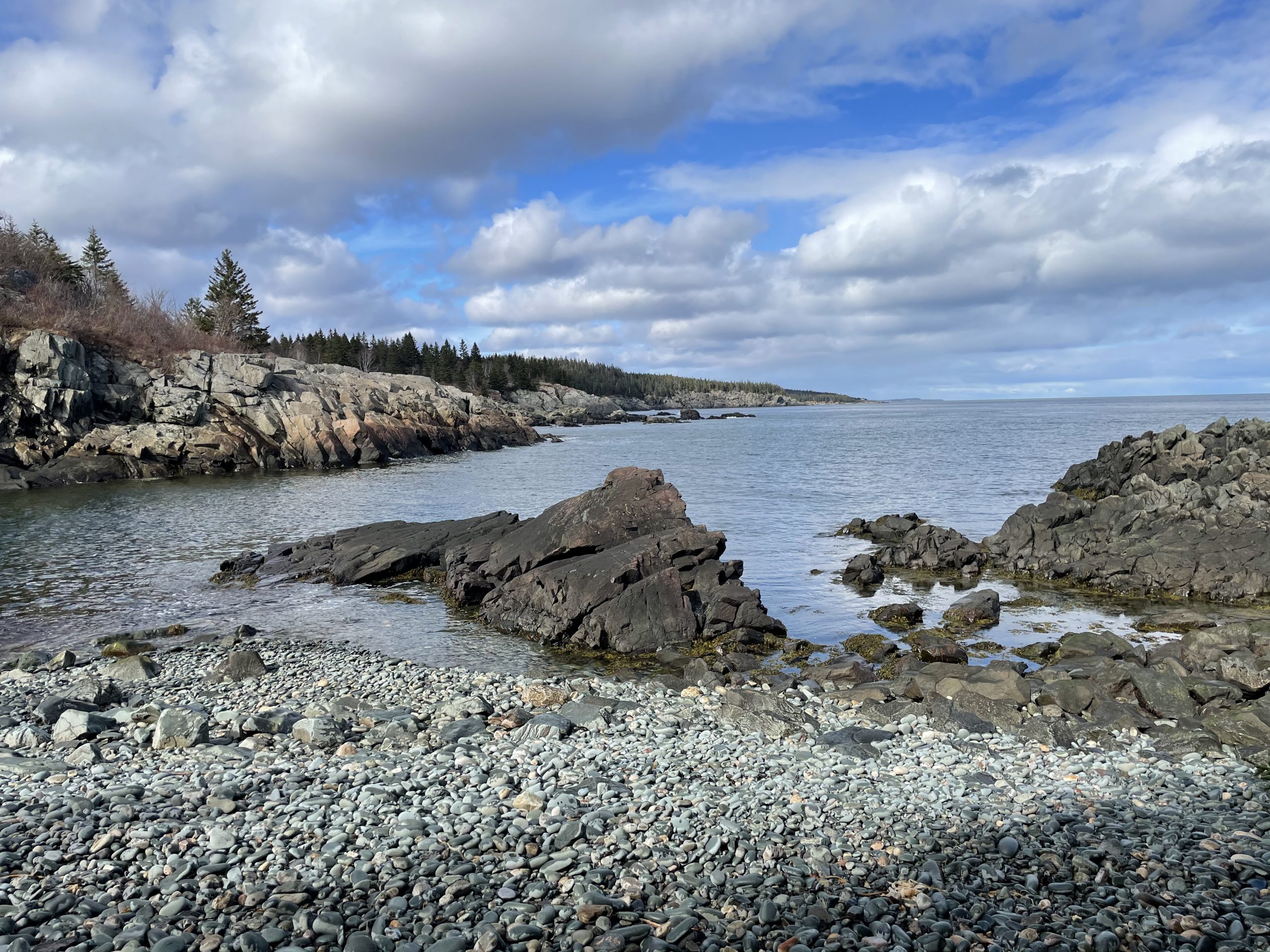
    When my daughter, who hadn’t yet been diagnosed with ASD, joined me on a hike to Maine’s Cutler Coast, she found camping at a spot overlooking the ocean to be awful, as scenic as it was.  As it turned out, the constant noise of the surf was simply too much for her.  Creekside or noisy riverside campsites similarly work on her nerves.  The tranquil waters along the East Branch Penobscot River, on the other hand, do not pose a problem.  The silence of winter camping is especially attractive to her.

    We’ll delve into the ways we can make a backpacking trip successful for your ASD child.  Your mileage may vary, of course, but we’ll start with what tips we anecdotally know work.

    Before the Trip

    First, let’s say this: I am accustomed to seat-of-your pants, throw a bag in the back of the car and go style trips.

    This does not work with my child.  She requires at least a week’s lead time.  My older, adult child was flexible, able to pop in the car and head from our home in Pennsylvania to a nearby Appalachian Trail entry point, to Shenandoah National Park, Assateague, or even the Adirondacks with little notice.  We did it all, and I was spoiled by her agility.

    On the other hand, the more meticulous planning I have to put in for my youngest child often yields a less tumultuous trip.  A late May excursion in the High Peaks that we were ill-prepared for was just another thing for my older kid.  We adapted and overcame.  My younger child found getting her feet wet on a beaver dam traversal along the International Appalachian Trail in Maine to be completely debilitating, even though she crossed a wide river just a half hour prior.

    Informed by these experiences, this is what works for us.

    Create a Narrative

    In the days and weeks leading to your excursion, create a narrative—with pictures or with words—that captures the start-to-finish elements of your backpacking trip.  Where you park, what time you’ll arrive, how far you’ll hike to camp, what the campsite will be like.  Make note of the sensory experiences they’ll find, like a noisy river, windy conditions at the top of a mountain, muddy water seeping into their shoes.  What will we do in the event of a downpour?  Or a thunderstorm?  Go over this narrative with them often before your trip starts.

    Predictability for a child with autism is imperative.  We go through this day to day just in school.  It doesn’t end just because we deem an activity to be recreational.

    Put it on the Calendar

    We don’t actually have a calendar in our household, but daily reminders, in conjunction with going over your narrative, present your backpacking trip in a concrete way.  We do have a chalkboard in our living room which my wife assiduously puts the daily school “special” (like music, art, gym, etc.) which helps our kid visualize the looming change in routine.

    Do Not Wash Comfort Items

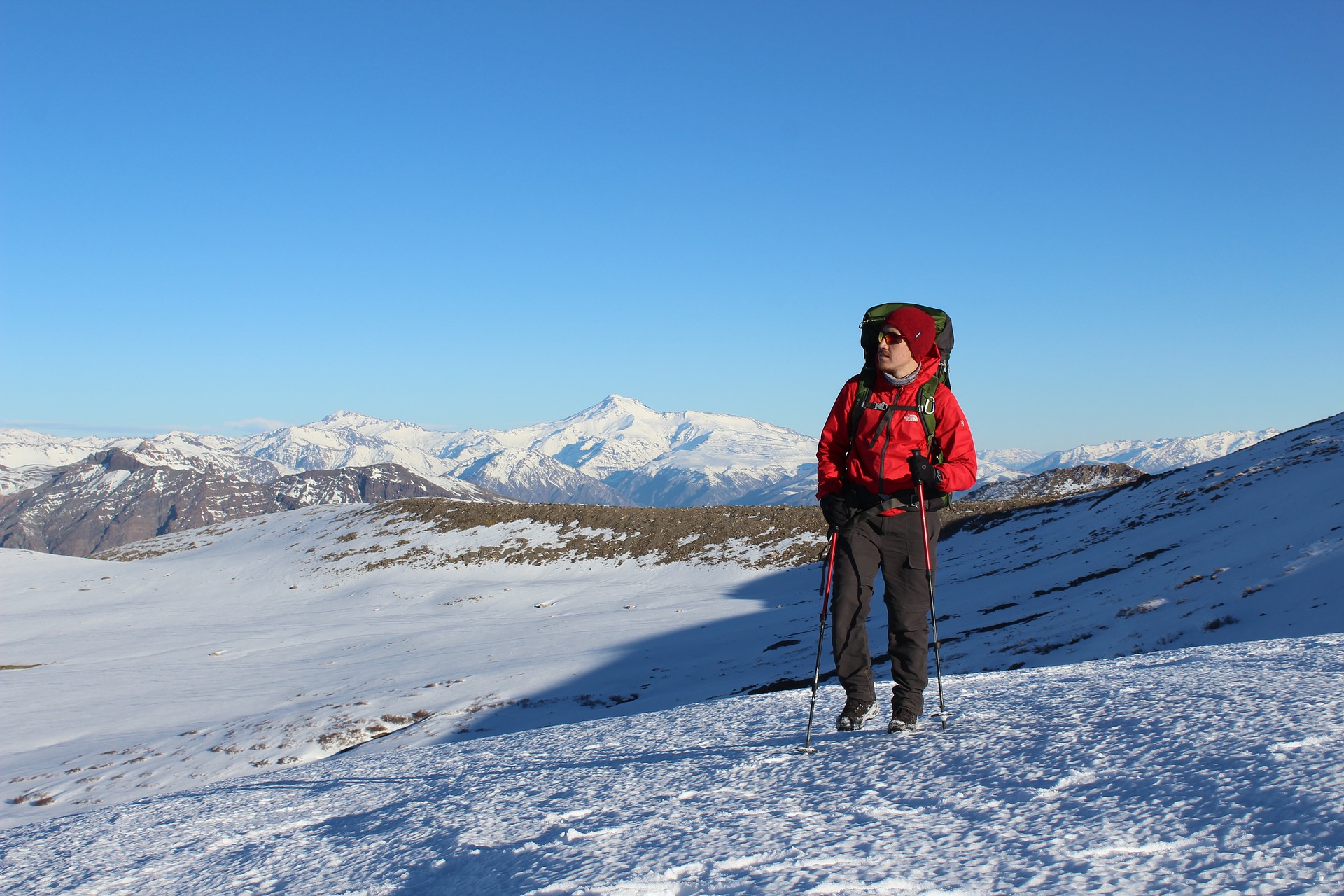
    In our household, it’s “Pink Blankie.”   If you note the picture from our most recent winter excursion, Pink Blankie™ is clutched even during the hike through oodles of snow.
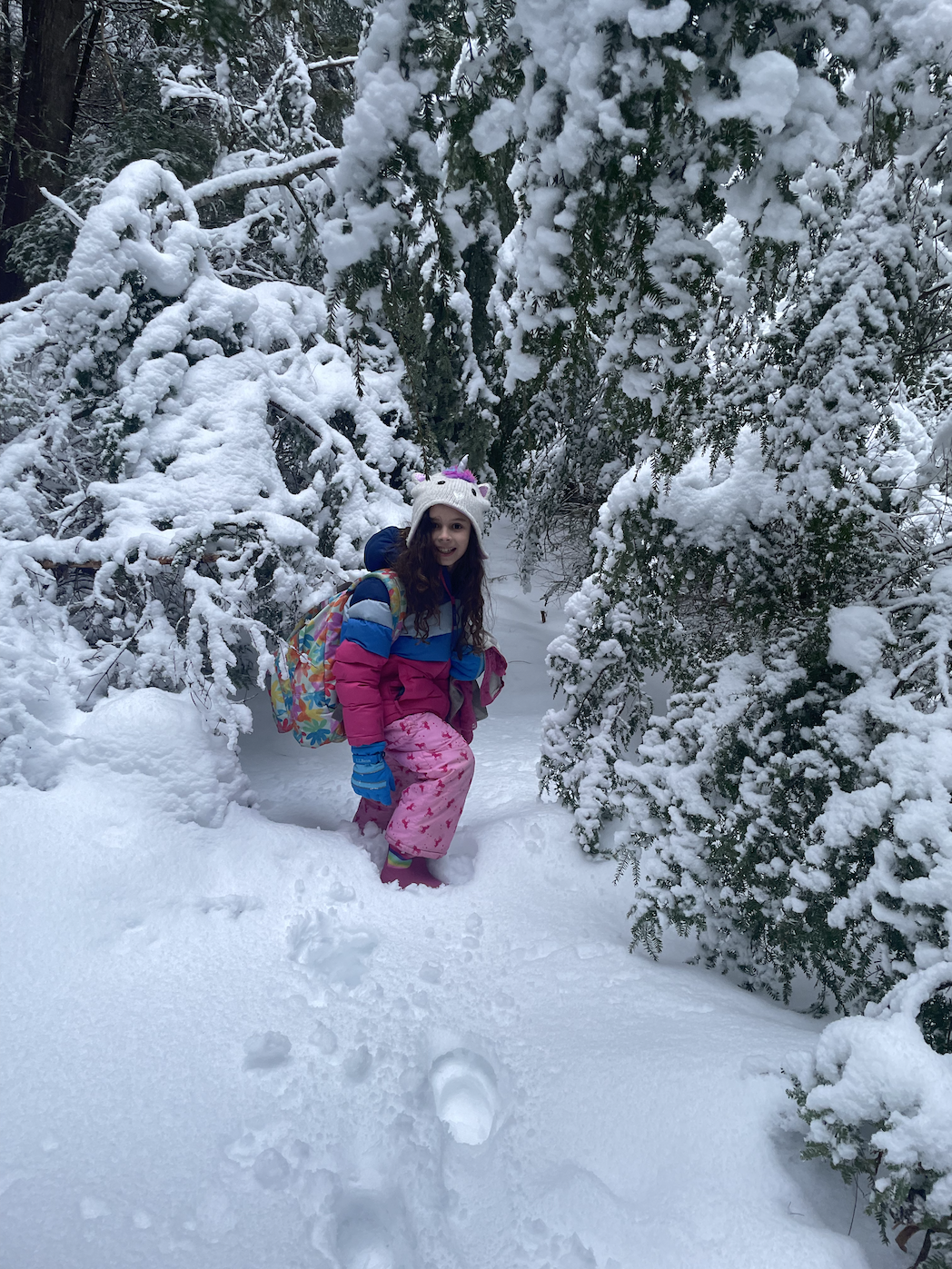
    This little thing is often of such comfort to our precious little girl.  There are times when it smells absolutely terrible, but knowing what it does for her makes it easy for us to fight for the watery eyes it induces.

    Extensively Plan Meals and Snacks Ahead of Time

    In an age when people really emphasize ultra-light backpacking, when I go with my daughter, my pack is assured to be heavy.  The largest reason for this is that her favorite camping meal is condensed tomato soup from a can.  It is the only thing I can be certain she will eat.  Some children (not mine) like things like gummies because they like oral stimulation.  She’ll nosh on Goldfish.  Yes, I know they are not hechshered, but the whales are not something she’ll eat.
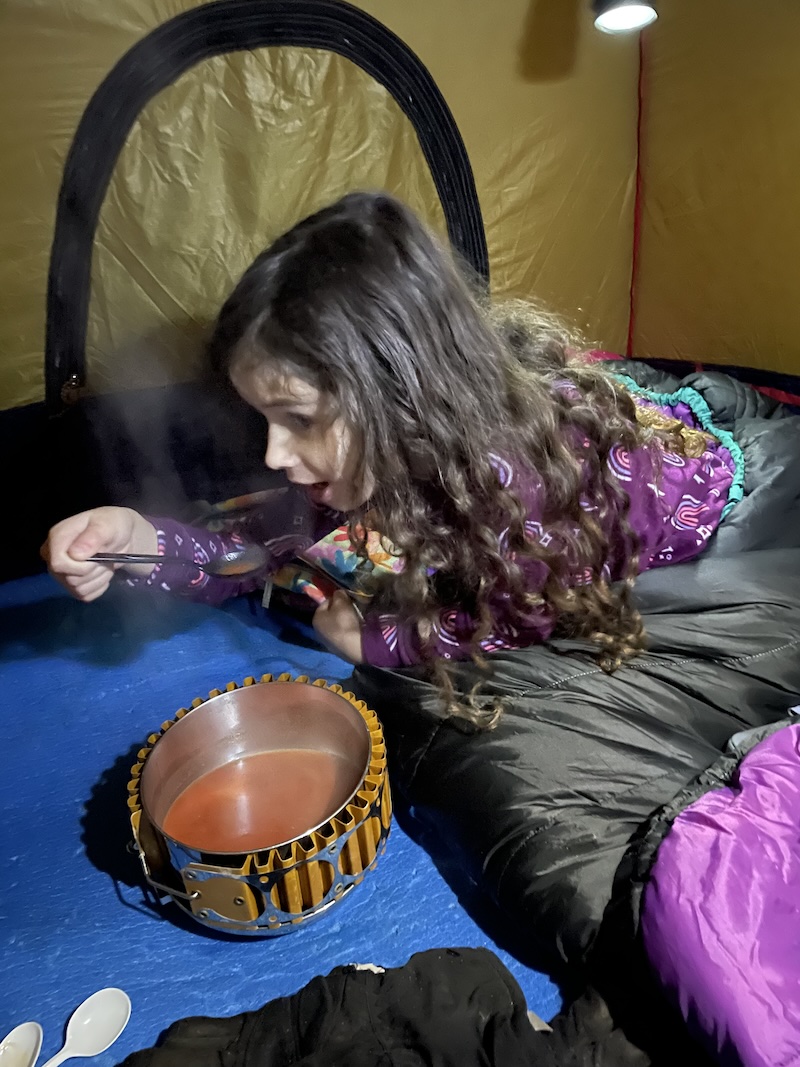
    My daughter eating tomato soup

    On the Trip

    Let a Weary Kid Take Breaks at a Predictable Interval

    It’s so important for your child to know when a rest break, especially one involving a pre-determined snack, is going to take place.  Let them know it’s coming at time.  “We’ve been walking for twenty minutes since our last break, we will break again in ten minutes,” with a similar warning again in five minutes.

    The break can be timed, too.  It’s important to set expectations at all points.

    Audio/Video Device with Noise Cancelling Headphones

    Some children without autism struggle with sleeping in the woods.  My child does best with her iPad, which yes, we schlepped, and a few familiar films downloaded to Disney+ or Netflix for watching.  This lets them block out the crickets, the beaver activity, the hail against your rainfly, or rumbling thunder.

    Recount Exciting Parts of Your Adventure and their Bravery

    One of the things I do in the age of these electronic devices that are so ubiquitous is give my child the space and time to recount their key achievements on the trail.  On a trip this past summer to Katahdin Woods and Waters, our hike began with a crossing of Wassataquoik Stream.  This is a day ending in “Y” for most backpackers, but for my wee child, it was The Most Exciting Thing Ever.  So I recorded her reaction to her achievement after we made it across.  This will always be one of my cherished memories, too.

    Don’t Refuse to Bail

    The most important thing is your own flexibility with regards to your plans.  It’s very easy for any child’s willingness to go on these excursions to take a beating if things go sideways.  It’s that much more debilitating for children who have no out from sensory overload and other experiences.  For my daughter, one trip where her feet were wet for a little longer than she expected threw a wrench in her ability to enjoy herself.  I committed to turning around after only one night on a multi-day excursion.

    Your child’s well-being comes before your trip, and the reality is, children (and adults) with autism deserve just as much as anyone else to be able to enjoy our wilderness.  With a little bit of consideration, you can enrich your children’s lives with the great outdoors.
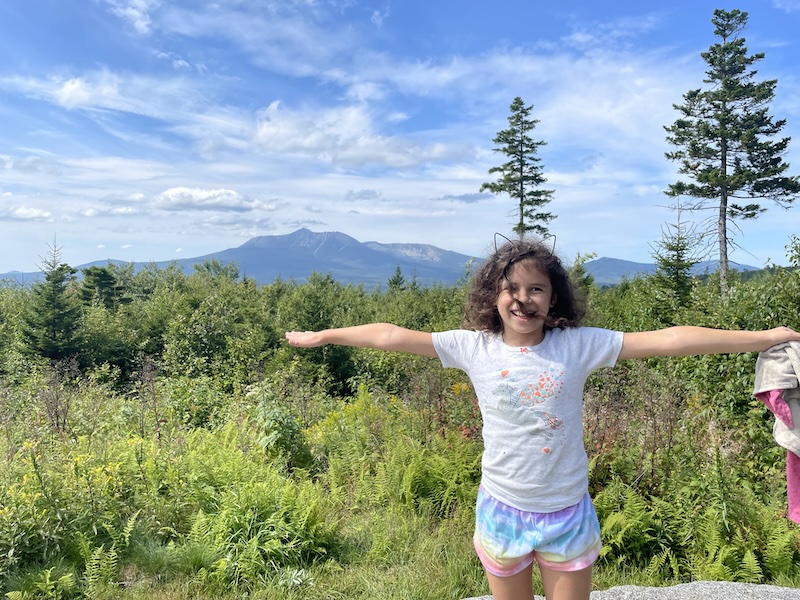
    My daughter in front of Mount Katahdin.

  • A Snowshoe Buying Guide – 2024

    A Snowshoe Buying Guide – 2024

    The ground in Maine exists in three states:

    • Lovely, moss-covered, and solid
    • A muddy, boggy, colloidal mass
    • Frozen over and bound in snow

    Subsequently, a key feature of living in Maine is a sturdy pair of snowshoes.

    Ideally, snowshoes should allow you to travel the frost-laden world of Maine without undue turmoil.  No post-holing, sinking up to your knees, and taking the Lord’s name in vain as you struggle to move several yards.

    There are things you need to know before you buy snowshoes.

    • The weight of yourself and the things you plan on carrying
    • The kind of snow-covered terrain you will traverse
    • The nature of the snow you’re walking upon

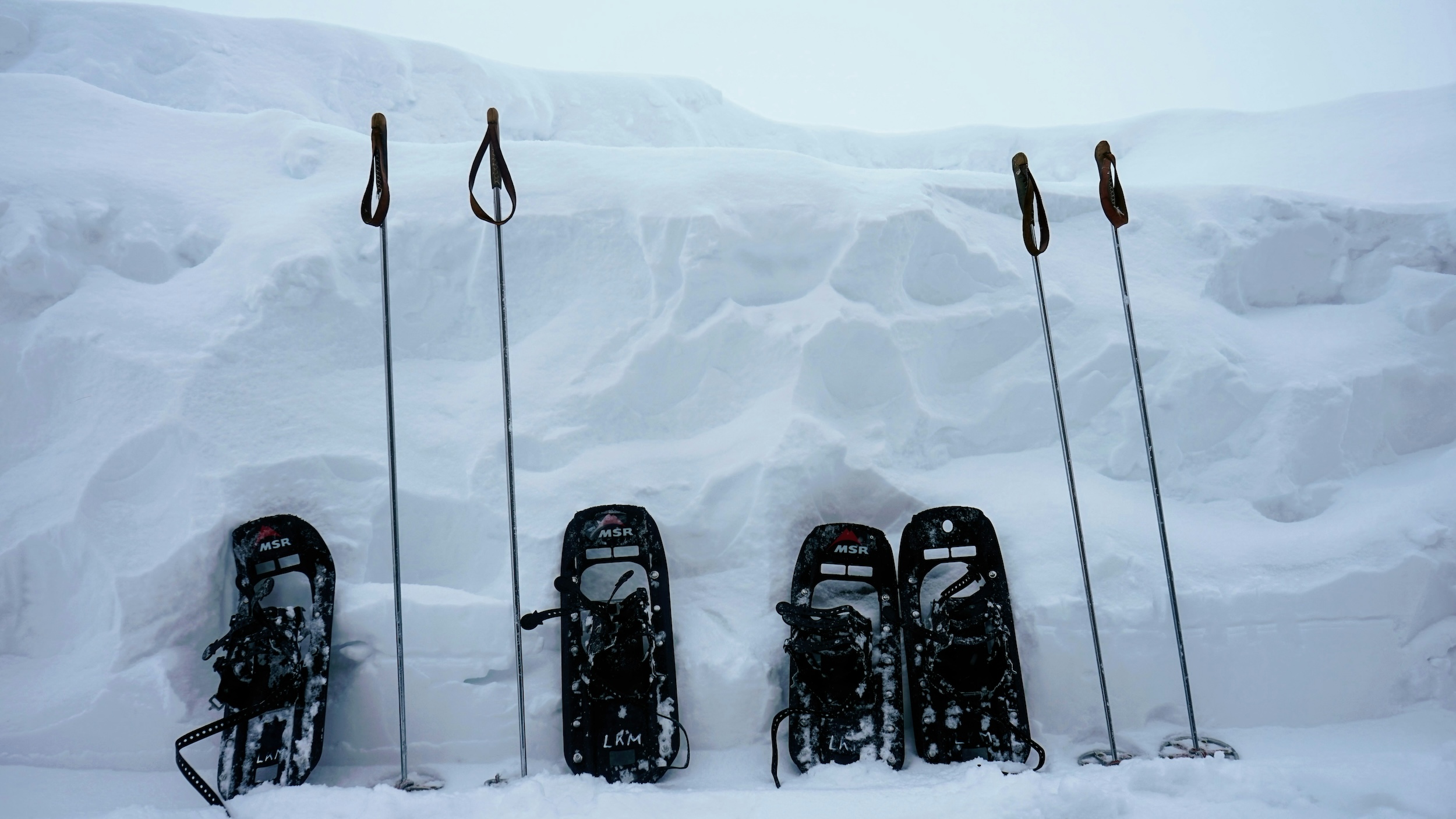
    For the years I was stationed as a paratrooper in Alaska, I jumped out of planes with the Army’s old magnesium tennis rackets strapped to my weapon case.  Inelegant though binding and snowshoe may have been, they offered decent flotation for an infantryman burdened by a 50 lbs rucksack full of ammo and gear.  They had little to no traction however, which is why when the Army moved to the injection-molded MSR snowshoe in recent years, I’ve been happy, as I’ve been using the same pair of MSR snowshoes since 1996.

    For casual walks on hard-packed snow, like groomed trails, you can usually opt for lower-cost snowshoes with simple bindings and little in the way of traction.

    For 2024: Crescent Moon Luna

    Luna Running

    • Light weight
    • Great on packed, flat trails for running
    • Expensive for limited versatility
    See Price on Amazon

    Bindings

    Understanding bindings is important.  There are basically two kinds of bindings, rotating or floating bindings, and fixed bindings.  As you can see with our 2024 recommendation, the Crescent Moon Luna, that is a fixed binding.  A rotating binding will pivot, and may or may not have a crampon attached to the toe.  Most wooden snowshoes, too, have a pivot like this on the binding, for greater traction walking uphill, thus reducing fatigue.

    Some models, particularly mountaineering focused snowshoes, will have an additional “heel lift” to reduce strain on your calves.

    Additional Traction

    As we mentioned, some snowshoes will have toe crampons, heel crampons, and traction bars running along the side.  My MSR snowshoes have “breaking bars”, a feature that seems to exist only on injection-molded or plastic snowshoes, that help prevent sliding backwards on ascents.

    For 2024: MSR Evo Ascent, 22-inch
    Lightning Ascent 22-Inch
    • Great for Maine backcountry
    • Can add tails for additional flotation
    • Very expensive
    Check Price on Amazon

    There is a lot to be said for versatility.  In addition to the two other models we recommend here this year, there’s one more model we recommend for maximum versatility.  We encourage you to shop around, especially at L.L. Bean or REI.

    For 2024: MSR Evo Trail
    MSR Evo Trail Snowshoes
    • Great for Maine backcountry, albeit not robust mountaineering
    • Can add tails for additional flotation
    • Decent price point
    Check Price on Amazon
  • New Permit Requirements on AT in Shenandoah

    New Permit Requirements on AT in Shenandoah

    Starting this month, you will now be required to buy a permit at Recreation.gov in order to complete the Shenandoah National Park portion of the Appalachian Trail.  The previous system, where you could obtain a paper permit either at the website or at locations within the park, no longer exists.

    For more information about Shenandoah’s backpacking regulations, you may visit here: https://www.nps.gov/shen/planyourvisit/backcountry-regulations.htm

    For now, the purchase of permits may be made here: https://www.recreation.gov/permits/4675336

    This also adds a cost to this permit:

    $15 park entrance fee – if you have a military, veteran, or Golden Eagle pass
    $9 recreation fee
    $6 backcountry camping fee

  • Tucktec Kayaks: A Wet, Freezing Review

    Tucktec Kayaks: A Wet, Freezing Review

    Autumn in Maine

    Hot apple cider.

    Pumpkins and the array of reds, oranges, and yellows that dot the Maine landscape.

    I fell in love with autumn in grade school at Lafayette Elementary in Lancaster, Pennsylvania. Our art teacher, Mrs. Mushlitz, had us paint fall landscapes with sponges. I couldn’t get enough of it then, and I cannot now.

    Last year, just prior to the High Holy Days, I went for a hike in the Bigelow Range of Maine. The leaves that time only just began to turn, though the biting chill awaited in the morning.

    This year, I opted for a 28-mile canoe/kayak trail in the shadow of Katahdin in the Debsconeag Wilderness. The trail, for me, started on the Debsconeag Deadwater portion of the West Branch Penobscot River. It flowed south towards Ambajejus Lake, across Pemadumcook Lake, and with a couple of portages, a series of backcountry lakes.

    This turned out to be more than I bargained for.

    The Vessel

    In 2019, I bought a Jeep Wrangler JLU with a soft top, and suddenly my trustworthy canoe was too heavy for my roof-top. I love lake and river paddling almost as much as I love backpacking, and I wasn’t ready to give it up. I started researching folding boats, but many of them were at obnoxious price points, and the reviews were mixed.

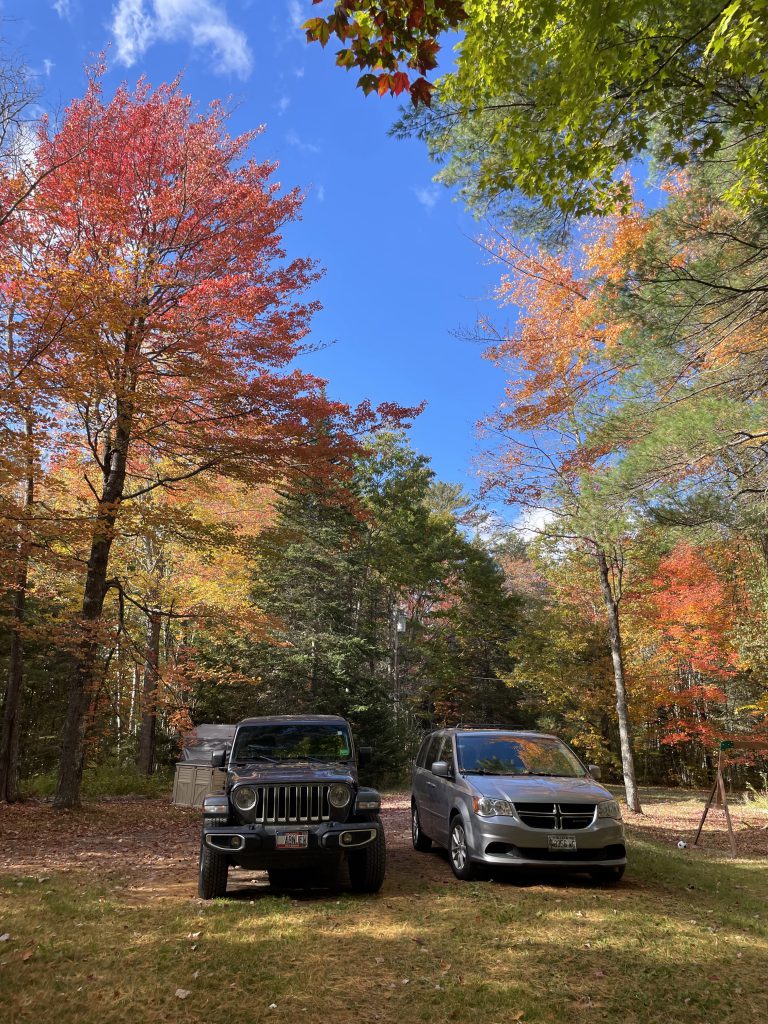
    The Jeep is soft on the top, and I don’t like taking our Caravan on rugged roads. Also, the fall colors on our acreage are da bomb.

    Then I stumbled on a Kickstarter campaign for these novel boats, and I’ve never looked back.

    I’ve had our Tucktec kayaks, one tan, one pink, since last year. I’ve put them through the paces with flatwater paddling all around Maine. I used it, after dropping my middle daughter off for her last Habonim Dror trip, at Nockamixon State Park in Pennsylvania. I took it out on the Intracoastal Waterway in North Myrtle Beach, not far from where they are manufactured.

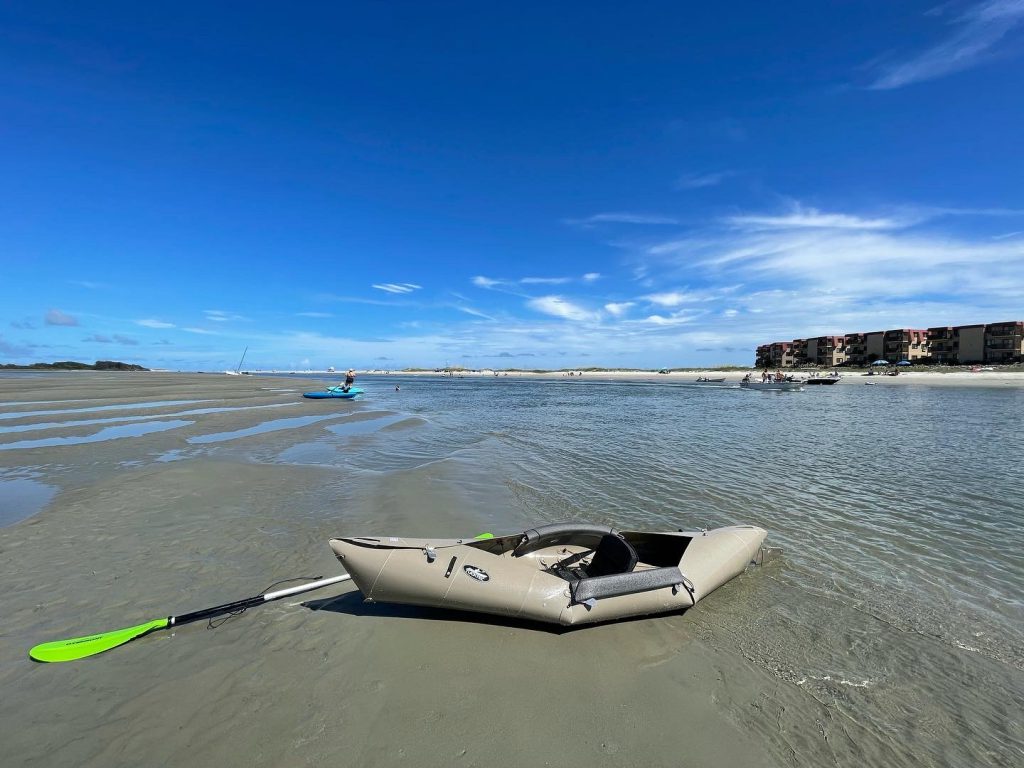
    Parked on a sand bar in North Myrtle Beach.

    I’ve had it on the Allagash, and any number of lakes in Maine. Both of them have performed admirably.

    In one instance, the careless wake of a boater on the Intracoastal knocked me out of the kayak and into the water.

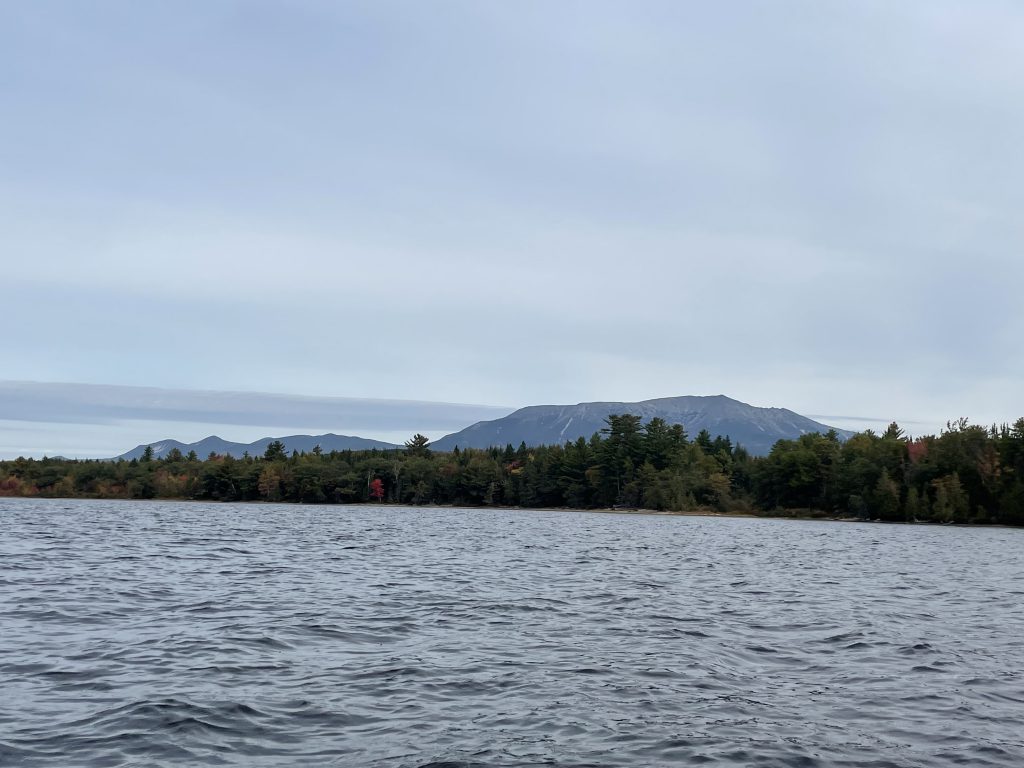
    Katahdin over Debsconeag Deadwater
    Katahdin over Debsconeag Deadwater

    My trip started off wonderfully. Katahdin loomed over me in background. The water was calm. The sun came out after a little while, and paddling was gorgeous.

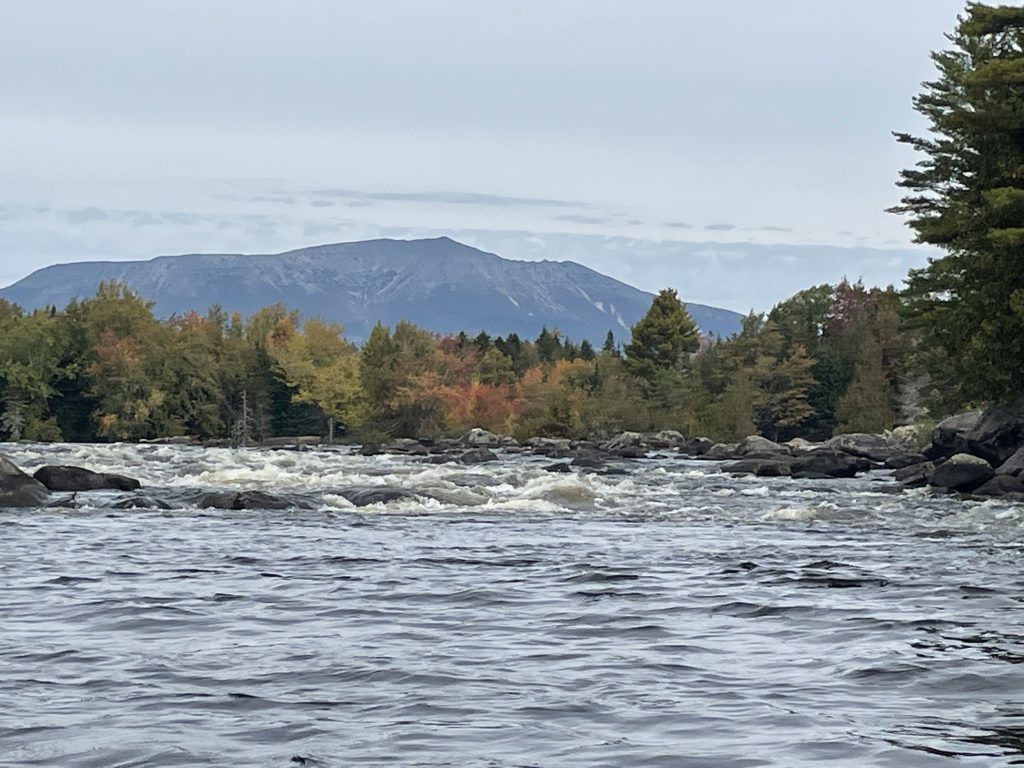
    The problem arrived on the lower portion of Passamagamet Falls. I took out and portaged the first section, but could find no marked or unmarked portion. They didn’t look that bad at the onset, but I quickly realized even mild rapids are not good in these foldable rigs.

    The chop submerged the bow of my kayak several times. Finally, I banked on a rock, and as I wiggled myself off, the bow completely submerged, and the front of the kayak folded, taking me and the kayak under. Only my dry bag, wedged in the back of the kayak, kept it all buoyant, and it’s a good thing it did.

    The upper Passamagamet Falls I portaged. The lower weren’t much better than this!

    A Note on Recovery in a Tucktec

    Where I went under, recovery was all but impossible. For one, at the very least, you need to be able to touch bottom. I am 5’9″, and this spot of the river was too deep. My PFD kept me afloat (and alive), but the river was freezing and f–king around with the kayak in the water was just going to prolong the possibility of hypothermia. I kicked it to shore, again, able to keep it afloat with its aft sticking out of the water.

    An enterprising fellow demonstrated the possibilities in a great YouTube video a few years ago:

    After drying off, I continued on, but the wind picked up to around 10 mph on Ambajejus Lake. As I rounded the last little peninsula on Ambajejus into Pemadumcook, the wind-driven swells were again submerging the front of my kayak.

    I made the choice at that point to hug the shore, paddle back up Ambajesus and take out at a bridge I went under earlier in the trip. Along the way, a husband and wife on their fishing boat sent me over the side again when they didn’t slow passing me.

    From there, it was an 8 mile walk back to my Jeep. I was passed by a bunch of logging trucks as the sun set, and I walked the final 4 miles in the dark, back the horrid road back to “Omaha Beach”, a campground and carry-style put-in on the Deadwater.

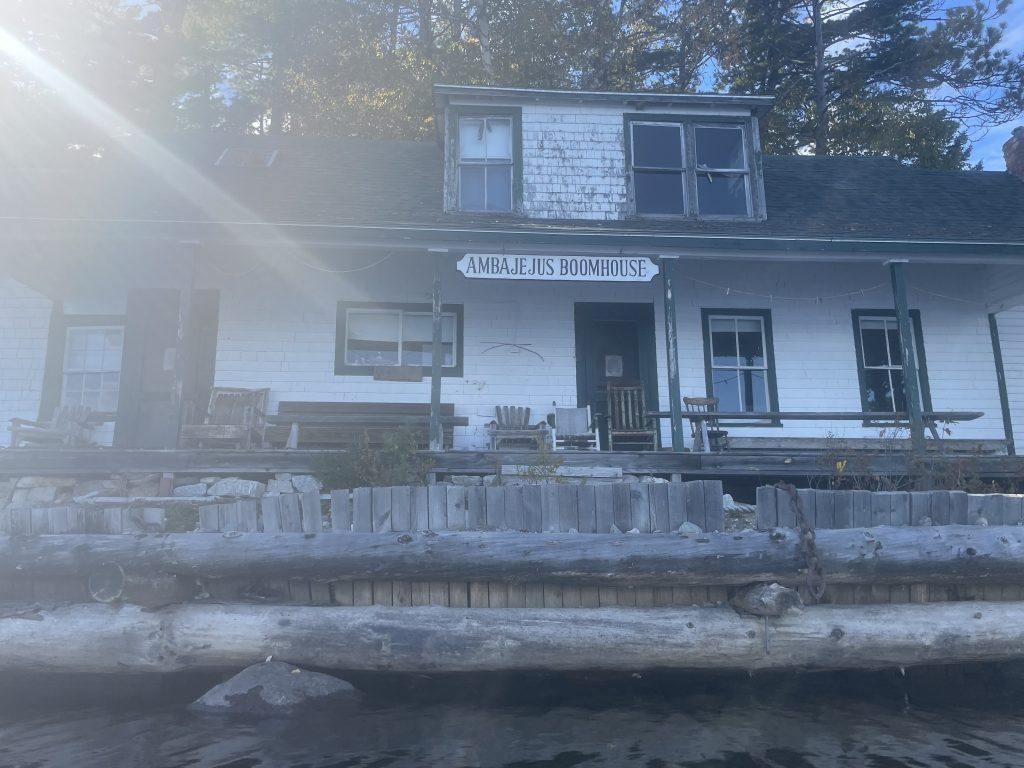
    The Ambajejus Boomhouse is one of many historical remnants from the logging era you can see on this trip.

    The Verdict

    This trip would have been fine had I portaged the lower falls. It is almost all flatwater otherwise. I am not disappointed in Tucktec in the least. They are quite clear about the idea conditions for a foldable kayak.

    They are durable. The plastic is hard and resilient, and if banking on the rock in the Penobscot put me under, the kayak was fine after I recovered.

    They are meant for close-to-shore paddling with flat, calm conditions. They are not a good fit for wind-swept lakes, rushing rivers, or the ocean, all of which are tempting, especially here in Maine.

    I will continue to use them and just exercise more caution, with more preparation for harsh conditions.

    Oddly enough, the “rock star” of my adventure was my iPhone 12 Mini. I forgot to bring its little waterproof pouch, so it went under with me. The waterproofing on these models is no joke. While the TrueDepth camera no longer works, everything else does.

    I filmed the entire experience with my GoPro, and I made a movie to highlight the experience, which you may view below.

  • The Best Thru-Hiking Videos

    The Best Thru-Hiking Videos

    User-created thru-hiking videos are a great way to get through winter, even as early-bird Appalachian Trail folks gear up to head out as early as February.

    We’ve rounded up some of the best ones we’ve found on YouTube.  Some are feature length, others are shorter but equally impactful.

    We haven’t included videos from the hiker Dixie.  She gets more than enough traffic on her own, and we didn’t find the quality to be the quasi-cinematic experience we were looking for.  She does a great job reviewing gear and doing things for first-timers, but it’s not hitting our criteria.  We also didn’t include the Crawfords.  We reviewed their book on this site, and there are very self-absorbed behaviors, including his use of drones, that we highly discourage along the trail.  No need to give them more of an audience.

    Shepherd

    Australian Hiker Brad McCartney is a personal favorite. On the trail, he’s known as Shepherd. He approaches thru-hiking with an indefatigable attitude. He seldom talks about gear (but he does review it, check his website www.bikehikesafari.com). It’s all about his experiences on the hike.

    Shepherd has done the Triple Crown, and he’s recorded videos of his attempt to ride his bike from Alaska to Argentina. The journey isn’t yet complete, but it’s still incredible.

    When you do visit his website, note that he’s documented his experiences on a variety of hikes, even if he doesn’t have complete videos of them. Pictures and experiences on the Triple Crown and the Te Araroa Trail in New Zealand are an awesome bedtime read.

    Walking Home

    As Mainers, this is one of our favorites. A documentary created for Boothbay public television follows a father and son from Boothbay in their trip from Georgia to Maine. They’re joined by UMaine alumna Emily Leonard, AKA “Black Bear” (who has written her own book about her trail experiences). It’s a great effort that couples progress on the trail with the various concepts along the way.

    Jupiter

    Hiker “Jupiter” is a very mellow dude, the only “ultralight” hiker we have in our platter of videos. He conveys positivity as he tackles many trails. His channel on YouTube is worth watching, but we’ve included his monumental achievement, hiking the Eastern Continental Trail, from Canada to the Florida Keys.

    From REI: Paul’s Boots

    This video tugs at the heart, though it’s perhaps the shortest video on this list. After watching the video, you can ruminate on just what our national trail system means to so many people, connecting our population to wonderful wilderness experiences.

    Paul was an Australian who didn’t live to fulfill his dream of hiking the Appalachian Trail, but a trail community of strangers honored him in an amazing away, showing the connective tissue wilderness can be for humankind.

    Some Dutch Folks Hike the PCT

    Set to a stirring soundtrack lifted wholesale from video games and Hollywood, an affable couple from Europe thru-hikes the Pacific Crest Trail in a year of wildfires. They’re sweet people, fun to watch, even if they abuse Copperplate fonts.

    Finding Brothers

    Australians and New Zealanders seem to love our trails. Who can blame them? In this fun video, two blokes from New Zealand, an Australian, and a fella from Boston walk the Pacific Crest Trail. Great video quality, some interesting experiences.

    There are so many more documentary videos on YouTube.

    On one hand, we gripe when we encounter folks on the trails, narrating their experiences into a smartphone camera. They crowd the vistas, gabbing in a way that many of us are already trying to get away from when we hike to begin with.

    On the other hand, not everyone can break away from life for a thru-hike. For many, especially during this never-ending pandemic, even breaking away for a long section hike or trip seems out of reach. Given that, we’re grateful these folks took the time to collect the footage and then edit into long-form videos for our enjoyment.

    Do you have a trail video that resonated with you? Share in the comments.

  • Elul’s End

    Elul’s End

    A Synagogue President Reflects on the Appalachian Trail

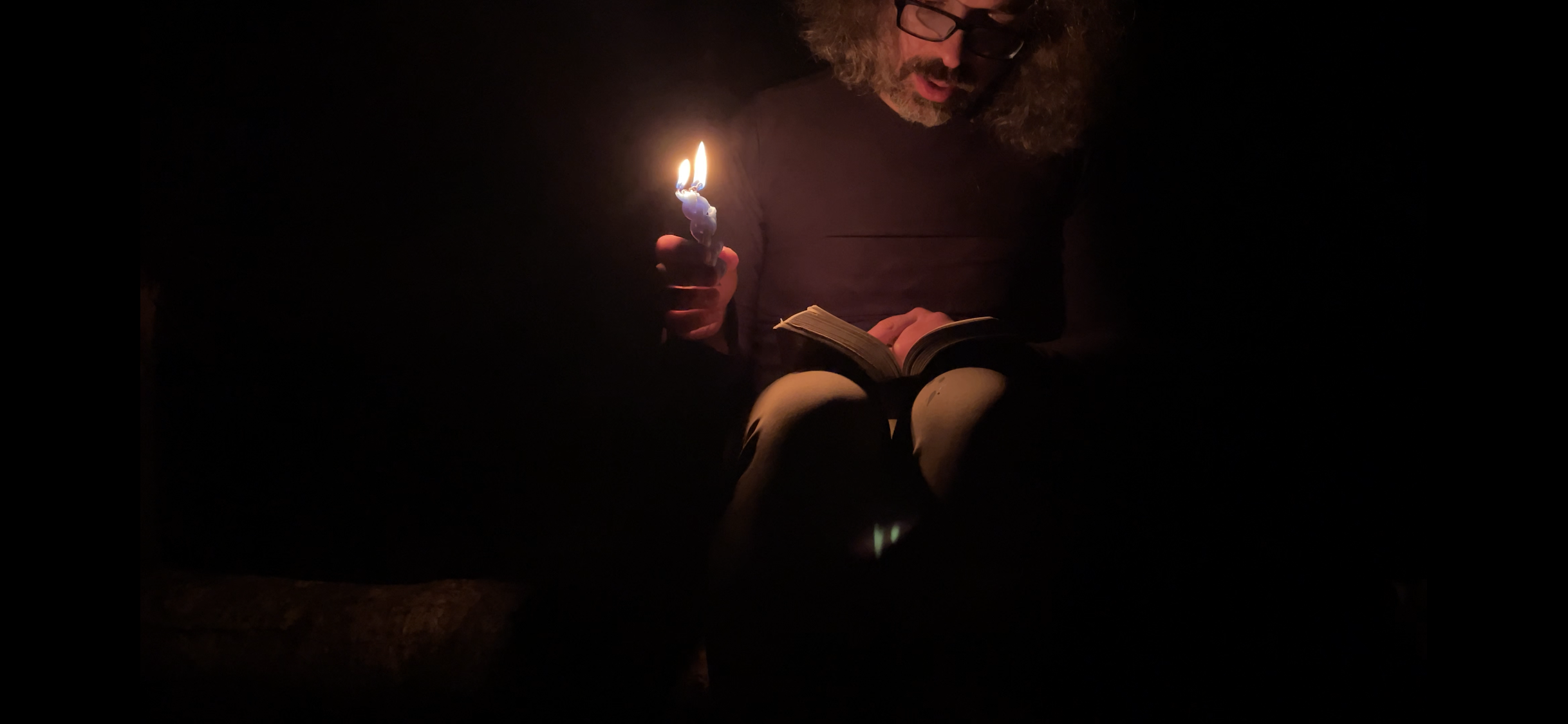
    The sun finally set on The Horns Pond in the Bigelow Range. I returned to my campsite, with my hammock strung between two sturdy trees, and retrieved a small sandwich bag. Inside was a small portion of a havdalah candle, a couple of cinnamon sticks, and a small bottle with the requisite amount of Manishchewitz.

    In November, I’ll likely be entering my third year as president of Maine’s oldest continuously operating congregation. We’re one of only two synagogues in the state affiliated with the United Synagogue of Conservative Judaism.

    These last two years have been hard work. Our previous president left me with an unfulfilled strategic plan and a looming renovation to our social hall. We discovered a possible budget shortfall, and then the pandemic hit. To top it off, in spite of an extensive leadership resume—26 years in the military, an MBA and business leadership background, not to mention several years as Vice President and board member of a larger synagogue in Pennsylvania—there’s a difficulty admitting that I was well-suited for the role. We’ve had imbroglios over gifts, dramatic resignations from the board, deaths we couldn’t properly honor, and of course, everything in orbit around COVID-19. And while at times I feel like a Welsh sin-eater and not so much a functional leader, I do enjoy the role, because I care so much about my community.

    Throughout Elul this year, I davened the requisite liturgy. I did selichot. I blew my shofar. It’s a far cry from when I was a ba’al t’shuvah waving a chicken around my head. Back then, I was just trying to find Jewish authenticity. Today, I’m trying to find true communion with the Divine, and it is elusive. My “Jewish headspace” has been fully consumed by my role.

    I search for that communion in a place where I always find it: on the Appalachian Trail.


    I’m a year out from having left the military, and I’m acutely aware that I’m out of shape. The climb up the Bigelows on the Appalachian Trail off of the Maine Route 16 Trailhead is, for me, brutal. It’s not the hardest hike I’ve ever done, but right now, as I feel the loss of 26 years of muscle tone, it’s not the easiest, either.

    Davening in the Bigelows

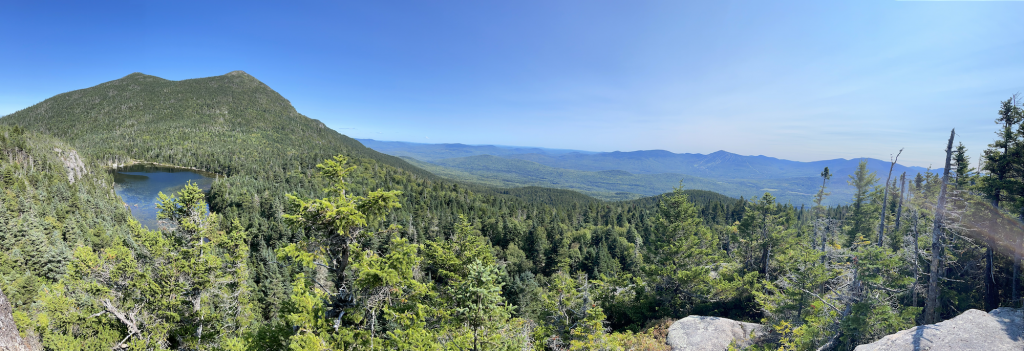
    Through the trees, as I hike, I catch glimpses of Sugarloaf, and on the north side of the range, Flagstaff Lake.

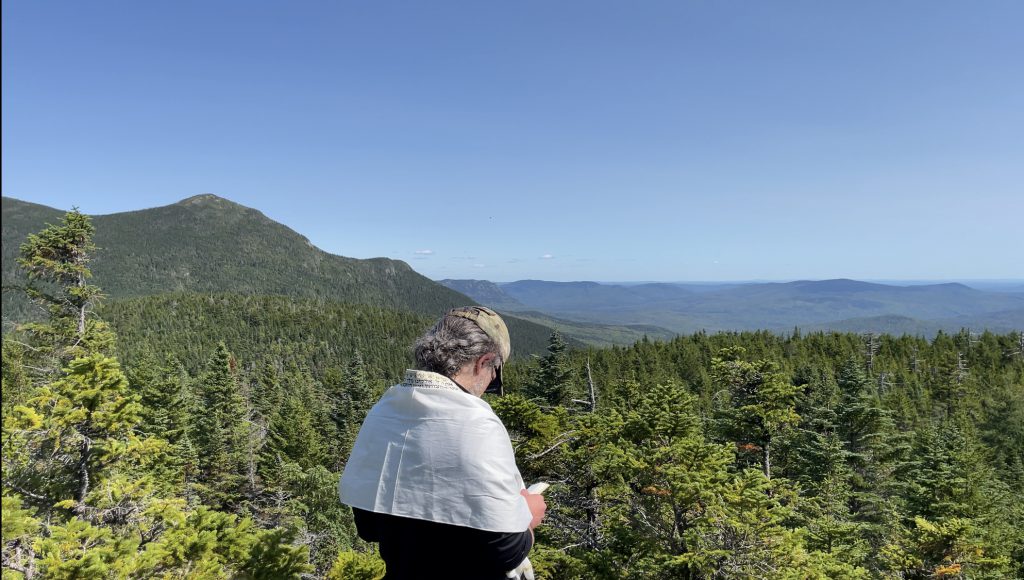
    I davened shacharit at my campsite in the morning, and davened mincha atop a smaller peak overlooking The Horns, all the while being buffeted by the winds. It’s the first time in a while that I’ve truly felt in touch with the Divine.

    It hasn’t happened for me this year in shul.

    Are you vaccinated? Where is your mask? How many people can we safely accommodate in the sanctuary? What about breakthrough cases?

    I am occasionally asked by our gabbaim to conduct the Torah service or Musaf, since I’m familiar with the liturgy. That’s a moment when I sort of feel close to the Divine. I’m merely competent. My Hebrew is functional, but I get performance anxiety, and I’m certainly not the practiced service leader our rabbi is.

    On top of a high Maine peak, however, it’s just my voice against the wind, and the wind wins. I ask for healing for my friends and loved ones who are ill. I ask for all the things we ask for in Shemoneh Esrei, and I mostly mean it. I think God hears. I hope God hears. I can’t hear myself.

    Sometimes I envy people who say they hear the voice of God. Most of the time, I’m suspicious of their mental health or their honesty. On this day, face into the wind, looking across the breadth of Maine’s mountains, I’m wishing I could hear even a whisper in return.

    The beauty and serenity does make me feel in communion with a Creator, albeit in a unidirectional, appreciative sense. Our illogical value we place on the aesthetic is one of the characteristics that is to me evidence of our intelligent design. We are not taught that a view is “breathtaking.” We innately know that when we look up on an incredible vista, that it is “good.” I cannot understand the evolutionary advantage in such an adaptation, not when we are so ill-informed by such an instinct that we still poison our living world.

    I stand on the precipice overlooking the valley below. I manage to put out of my brain all of the sour thoughts about the past two years, and just think about the exertion that brought me there. The simplicity of the effort and its reward.

    Surely, there’s a metaphor in there.


    John Prine’s last album, The Tree of Forgiveness, is my new Elul staple since his passing in 2020. The album itself starts with a wrenching song, “Summer’s End.”

    “Well you never know how far from home you’re feeling
    Until you watch the shadows cross the ceiling
    Well I don’t know but I can see it snowing
    In the car the windows are wide open.

    Come on home.
    Come on home.
    No you don’t have to be alone
    Just come on home.

    The moon and stars hang out in bars just talking
    I still love that picture of us walking
    Just like that ol’ house we thought was haunted
    Summer’s end came faster than we wanted.

    Come on home.
    Come on home.
    No you don’t have to be alone.
    Just come on home.”

    Elul’s end collided with summer’s end this year.

    Coming down the Fire Warden’s Trail from Bigelow Mountain, this song was stuck in my head. It wasn’t just that I was returning to my wife, Leah, and our girls. I came off that mountain this Labor Day weekend, which meant that tonight, at erev Rosh Hashanah, I’d be standing at the door to our shul with our list of vaccinated attendees, and demanding proof of vaccination for the rest.

    I’ll be doing last minute work with our audio and live-streaming service. The lighting will be just so. I’ll receive the litany of complaints from congregants about this or that, who are less concerned with solutions to problems than just the sense that they are heard.

    These people, like me, have probably felt just as or more isolated across the last two years. This year, we at least have the opportunity to be together.

    No, you don’t have to be alone.

    Some of us will just enjoy the pageantry of the the liturgical experience. Others may well try and get right with God and each other. We’ll come on home, and begin the cycle anew for the following year. Some of the faces we see tonight and tomorrow won’t be with us for the next go round.

    Next year, I wonder if I’ll again be standing on a mountain peak, trying again to hear God, to touch the infinite unknowable.

    As I head to my campsite at Avery Col, I realize it’s been 15 years since I’ve thru-hiked a major trail. Hiking this late in the season in Maine on the Appalachian Trail, I encountered thru-hikers (and their pungent stench) making their mad dash to Katahdin before the first snow arrives. As I spoke with other hikers this weekend, where our only commonality was nature, I realized how much more important the deeper connections we have to our other humans are. If I can build a temporary relationship with a stranger in the woods merely because we both travel by foot, how much more can I build with someone who generally believes what I believe?

    I know I need my congregation, and my congregation needs me to continue to try and be the best and most responsible leader I can be.


    As I load my pack into the back of my Jeep, I’m still left with questions about my relationship to God. Though the Appalachian Trail will always be the holiest place I can find to try and reach the Unknowable, I still feel like I’m missing something.

    When the desperate final prayers of neilah end and the ark closes on Yom Kippur, all the questions of the holiday will still linger for me.

    Who are we to God? Who am I to God? Does God hear this? Did I do all right? Am I in the book? Will my kids be alright?

    And I won’t know.

    That’s how things are always between God and me.

    Unresolved.

  • A Spring Trip to a Bold Coast

    A Spring Trip to a Bold Coast

    We were looking for a spring destination, and we found an excellent trip along Maine’s dramatic Bold Coast.

    Situated between Milbridge and Calais in Maine is a not-so-hidden gem of public lands along Maine’s Bold Coast. Hidden along the Bold Coast Scenic Byway, the Cutler Coast Public Lands are a fantastic backpacking, hiking, or off-roading destination.

    Spring on the Bold Coast is a “can’t miss” adventure, whether you’re a day hiker or a backpacker.

    Our Spring Bold Coast Itinerary

    Nezzie (my adventurous, 6 year-old daughter) and I started off on the Sunday morning of Patriots Day weekend on the Coastal Trail, a 1.4 mile hike out of a parking lot on Route 191 in the village of Cutler.

    Nezzie is surrounded by mossy forest.
    Nezzie is surrounded by a forest floor blanketed in moss.

    The trails in these public lands are not strenuous, though there are some steep and rocky sections. There are high cliffs that can make it somewhat dangerous for reckless, younger children. In wet conditions, some portions of the coastal trail could be extremely treacherous. Fair warning, too, that in May and June, black flies could be off the hook, especially in the bog-ridden inland sections of Cutler Coast.

    One of many stunning views on the Coastal Trail
    Steep climbs lead to rewarding views.

    Nez still isn’t acclimated to longer trips, or backpack camping, for that matter, so we opted for a shorter trip. We took the Coastal Trail to the Black Point Brook Cutoff trail. The Black Point Campsite sits astride a bluff overlooking Black Point Cove. It has a terrific view, but is only suited for a small tent or hammock pitch. There is a nearby open toilet, which is disgusting but necessary in this high-use area. Our hike still came in just under 7 miles. Not bad for spring on the Bold Coast!

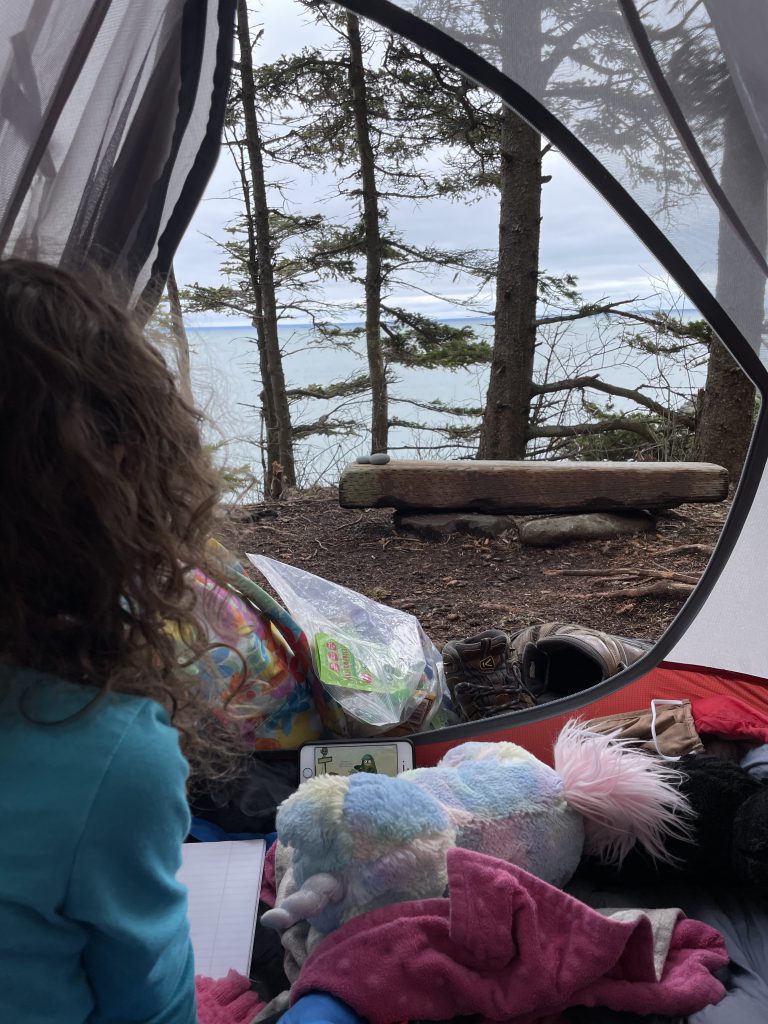
    The view from our tent on Black Point
    The view from our tent on Black Point

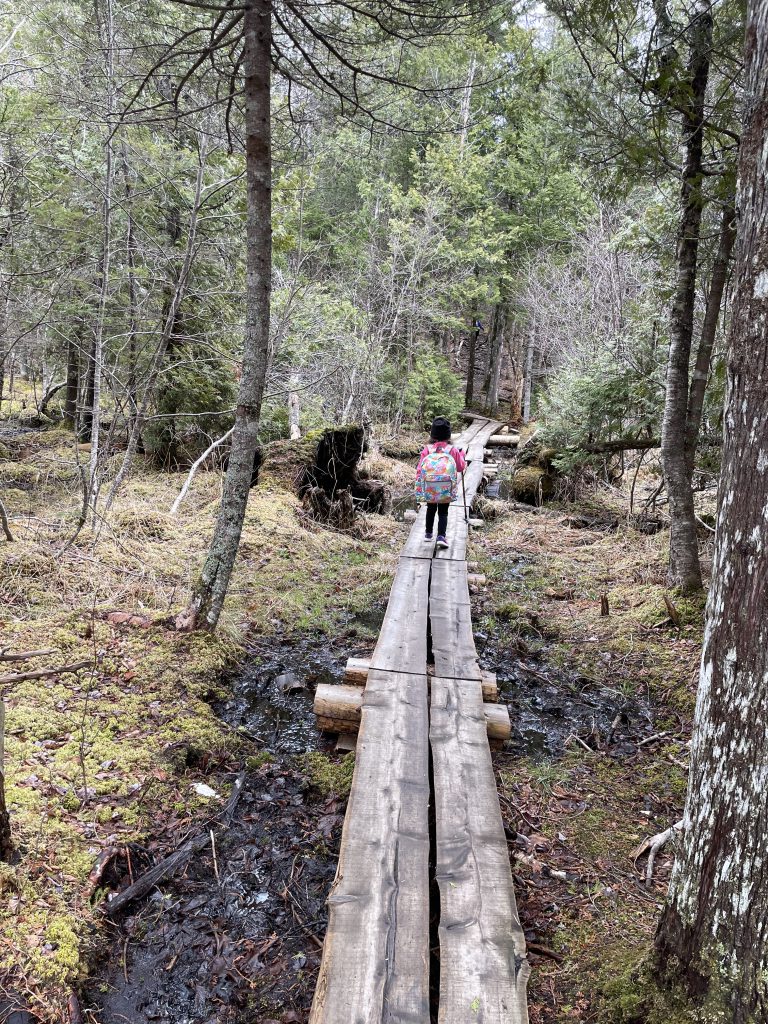
    The Inland Trail reroutes around a beaver bog. Still in the throes of mud season, we could not avoid boot-sucking spots on the trail. Long stretches of the trail are on well-tended, elevated planks. The views, though not as dramatic as the coast, are typical Maine. Though we only saw numerous bird species, moose and beaver are not uncommon.

    Spring mud makes the Bold Coast fun.
    Well-tended boardwalks make the inland portions of this trail significantly better.

    Things You Should Know

    This trail system is not a place you will find isolation. In spite of being far Down East, the trail is quite popular. If you plan on camping in the backcountry, the sites are first-come, first-serve, and have limited capacity. You should consider a mid-week trip instead of a weekend trip. This April trip still saw the parking lot almost filled to capacity, with backpackers disappointed that we already claimed Black Point.

    It’s no surprise to Mainers, but you should be mindful of your cellular service in Cutler Coast Public Lands. I received text message notices from Bell Canada. Lest I incur international roaming charges, I placed my phone in airplane mode.

    Additional Reading

    Getting There

    Most tourists will only come from points south. We take US 1A N out of Bangor, towards Calais, and take ME 9E in Eddington. From there, we travel ME 9 E, head on ME 192 S to Machias, pick up US 1 N until ME 191 S. The trailhead will be on the right after 16 miles.

  • Thoughts on “2,000 Miles Together”

    Thoughts on “2,000 Miles Together”

    In 2018, the Crawford Family, consisting of two parents and six children, hit my “Appalachian Trail / lives in Maine” radar, over a debate as to whether they should be allowed to summit Katahdin with their two-year-old son, Rainier.

    There were many thoughts on this, separated into a variety of camps.  The Baxter elite, often already resentful of the thru-hiker set, of course said no.  Another group believed “the rules are the rules.”  The libertarians among us said, “who is anyone to tell anyone else what they can’t do with their kids?”

    If you don’t know that outcome, I’ll leave it to you to find out in this book.

    As critical as I am of the book, I am not critical of the Crawfords as parents.  I stand in stark admiration of them for undertaking this with their children.  I don’t know if I’d call them role models, but as is often pointed out, and will continue to be pointed out, getting kids off of the couch and into the wild is widely celebrated.

    If the Crawfords are guilty of anything, it’s that they chose to make their family hike a social media spectacle, with vlogs, drones in all the wrong places, concerning themselves with trolls, etc. You could follow their attempt on YouTube, under “Fighting for Together.”

    As both a thru-hiker and a parent of (fewer) children within similar age ranges, I could admire the family undertaking. Perhaps I could even envy it. My wife, Leah, is not even remotely outdoorsy. She’s of the packaged vacation, Disney World, cruise, time-share variety. My oldest, who is now a college student, has likely never slept in a tent. My 16-year-old took one overnight trip with me in Camden River Hills State Park one cold December, and that was her last trip with me. My youngest, who is five and a half, is ready for these adventures, but I will be competing against focus-grouped and colorful animated brand marketing as she ages.

    Any parent who wants to push back against “screen time” and childhood obesity should admire the Crawfords. At the same time, the social media focus in turning their “adventure” into a commoditized affair partly undermines the message of unity and turns it into “look at our family unity.”

    This does not mean they deserve scorn, or having child protection bureaucrats descend on them in the Smokys.

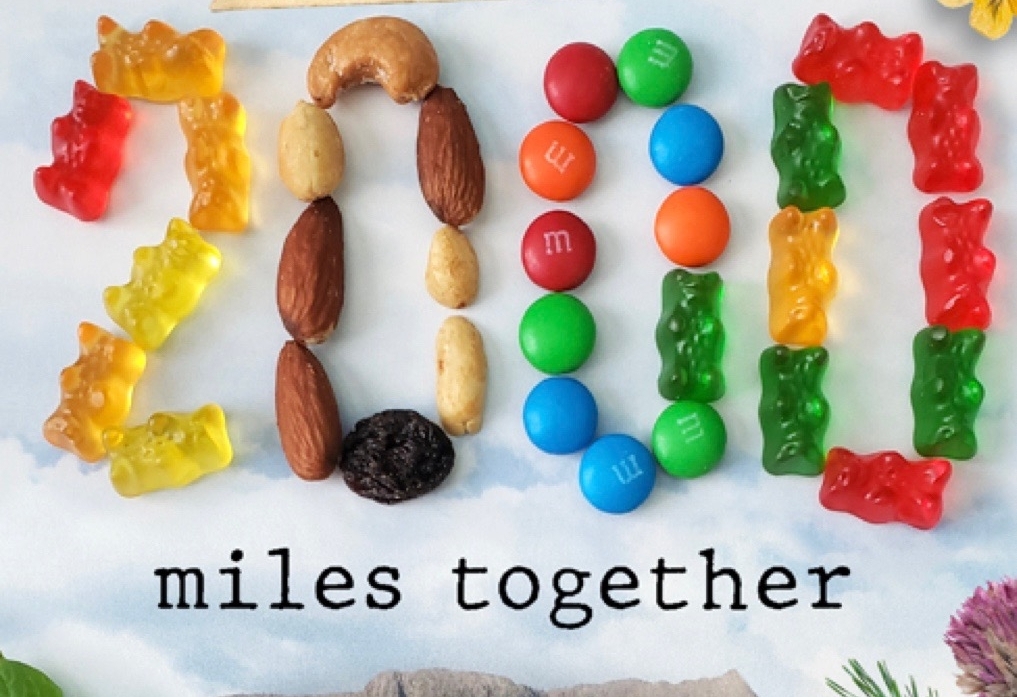
    If you read their new book, 2,000 Miles Together: The Story of the Largest Family to Hike the Appalachian Trail, you understand that just because an undertaking is novel and admirable, doesn’t mean that it’s particularly enriching.

    No Insights or Deeper Meaning

    The thru-hiking world is littered with poorly-constructed documentary videos. To his credit, Ben Crawford and his children put together competent videos, and similarly, this book is competently written.

    The continued emphasis on “the largest family to hike the Appalachian Trail” almost highlights that this is the only real achievement of the hike. Perhaps the Crawford family internalized deeper meanings of the hike and family that they didn’t expose in video or in this book, but you won’t find them.

    In many cases, it’s Jon and Kate Plus Eight meets the Appalachian Trail. Another generic white, Christian (non-denominational) family manages to successfully market being a generic white, Christian (non-denominational) family.

    I don’t think it’s a harsh judgment of Ben or Kami Crawford to say this, either. We don’t go into the reality show approach to these events with high expectations. It’s the bland inspirational pabulum that gets stenciled on dining room walls (“Live, laugh, love!”) or superimposed on stirring photographs.

    Self-Absorption and the Need for Validation Permeates

    I don’t want to call this book self-aware, as it would imply a sense of objective introspection that’s just not there.

    Crawford spend considerable parts of the narrative attending to what the outside eye, be it commenters on YouTube, Vegas-oddsmakers, and strangers along the way must think about the Crawfords.

    No doubt, they were wondering the same thing about our family. We’d even heard there was a line drawn in Vegas and people had placed some very low odds to bet on our failure.

    The repetitive citations of YouTube commenters in almost every chapter and their thoughts on the Crawford hikes can only be described as aggravating. It serves two purposes, to either validate their undertaking, or to augment the sense of “us against everyone” that seems vitally important to Ben Crawford for one reason or another.

    It’s hard to accept that Ben Crawford doesn’t, in fact, thrive on Internet critiques when he devotes so much literary real estate to it.

    Even the descriptions of the personalities they meet along the way circle back to commentary on The Family and their hike. Arnie-1-mile, “The Degenerates”, and others all receive dutiful biographical treatments, but they are only accorded narrative significance if they relate positively to the family undertaking.

    “I am so blown away by what you guys are doing…”

    “We’ve been watching your family for a while…not many adults could do what I’ve seen you guys do.”

    “God bless you guys…you’re living life your own way. That’s so important.”

    Scant Descriptions of the Landscape

    In many ways, the only way you know, throughout the narrative, that the Crawfords are on the Appalachian Trail is that it’s ostensibly the subject of their hike.

    There are few descriptions of the natural environment they are traversing. Names of landmarks and towns are listed, but if there’s a moment where the Crawfords are humbled by the mythical beauty of the trail, it’s in short supply.

    We get mileages. We get the day-to-day. We get when Kami is on her period or how they have sex.

    We get vast descriptions of the challenges of motivating children, which is understandable.

    Everything is Overcoming Adversity if you Frame it as Such

    Really, what this book boils down to is a recounting of how The Crawford Family overcame adversity. The 2200 mile hike is not enough. It’s Internet haters, it’s kids that grumble about getting up. It’s the logistics.

    What it is…is banal.

    I’m not sneering at this book, really, I’m not. I’m not sneering at the achievement of moving 6 kids and 2 adults from Georgia to Maine on foot. Having done this hike by myself, it’s challenging enough without having to fold parenting into the mix.

    It exists on a continuum endemic of this day and age, where achievement is deeply connected to exhibition. With the attention paid to online voices, with the emphasis on how others they meet relate back to them, it becomes very clear that at least for Ben Crawford, this was the takeaway. I don’t know if it’s true of his whole family, but it comes through in the videos and this book that Ben Crawford absolutely thrives on an enhanced and artificial sense of obstacles.

    There’s no attempt to really engage the reader and say, “this is something you can do with your family.” It is, from start to finish, an exercise in navel gazing.

    And to that end, I say, “Hike Your Own Hike.” The beauty of the Trail is that it bears the weight of the superficial as much as it does those in search of a deeper, and less effusive connection with the Earth and other humans.

    TLDR: If you are looking for deeper insights into parenting, the Appalachian Trail, or anything else, really, “2,000 Miles Together” is not your book. If you’re looking for a travelogue through Appalachia, this book will be deeply unsatisfying. If you’re looking for what an Internet-aware, meta-narrative about a family that sought an achievement, this book adequately captures what their video logs already exposed.

  • Old, Reliable Gear – Bal Taschit

    Old, Reliable Gear – Bal Taschit

    One of my biggest gripes about backpacking is the overstated focus on gear. When I completed my first thru-hike, I did it with “crap gear,” some of it replaced during the trip with more “crap gear”, namely whatever “backpacking-ish” tent was on sale at K-Mart. I bought my first pair of boots for the hike from Payless, and I finished my hike with another pair of boots from Payless, which interestingly, survived another decade after my hike.

    I didn’t have any of the name brand of anything. When I researched doing the Appalachian Trail, I checked out books from the library and had the assortment of maps from whatever trail association I could find.

    By the time I topped Katahdin, all of the gear I had pretty much went in the trash. If I remember any particular piece of gear, it’s because it flies in the face of today’s conventional wisdom on the long trails.

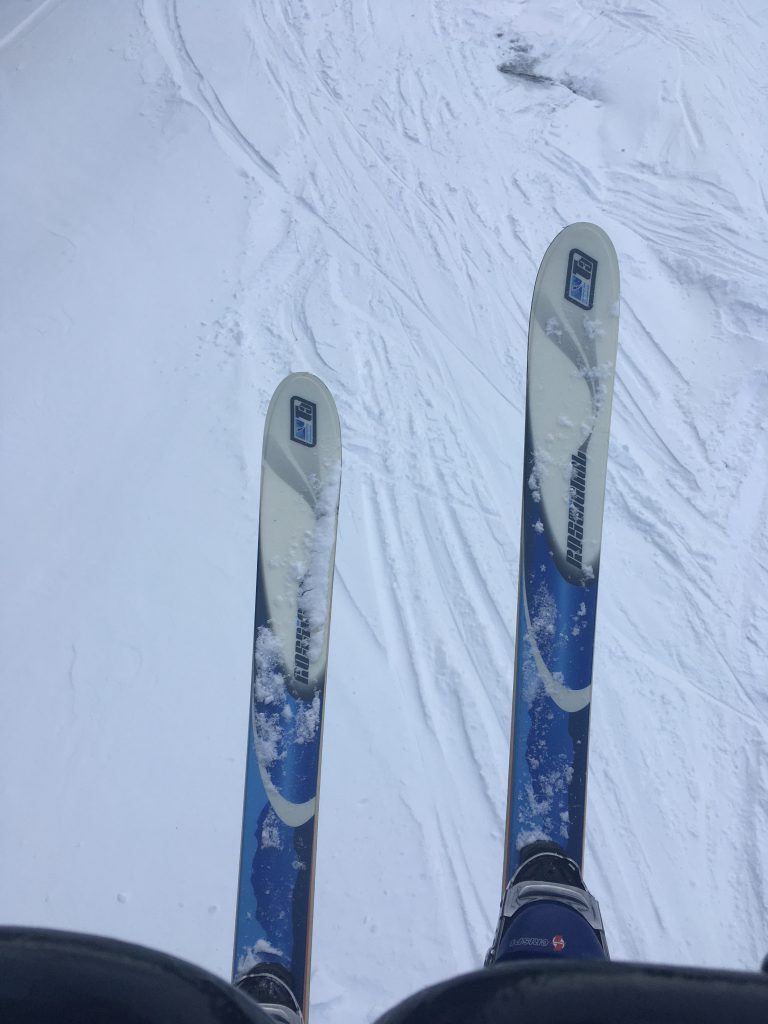
    I had an epiphany reading the latest issue of Backpacker. I noticed the new skis in the November-December issue, and looked over at my aging Rossignol T3s, which I’ve used at resorts and in the backcountry for almost a decade.

    In the shed I have a pair of Fisher skis with a 3-pin tele binding, and I’ve had those for over two decades.  I use those for romping around my Maine land in winter, if I don’t just use my late 1990s MSR snowshoes!

    The only pressure I feel to replace these workhorses comes from within when I see the shiny new as advertised.

    When I started “The Kosher Backpacker,” my goal was to perhaps do gear reviews, but really, there is only one thing I really want to focus on: the intersection of Torah and wilderness.

    There are other sites that do gear reviews. You can watch the “gear shakedown” videos of aspiring thru-hikers who most of the time will quit a few weeks into their trip. I wish they’d realize just how uninspired their trips seem when they drone on about the latest ultra-light tarp or tent.

    Does it work? Good. Shut up about it.

    It was brought home for me again this weekend. After a modest dump of snow last week, this weekend was almost 70 degrees in Maine. My daughter and I figured we’d pitch a tent on our acreage and enjoy some outdoors time.

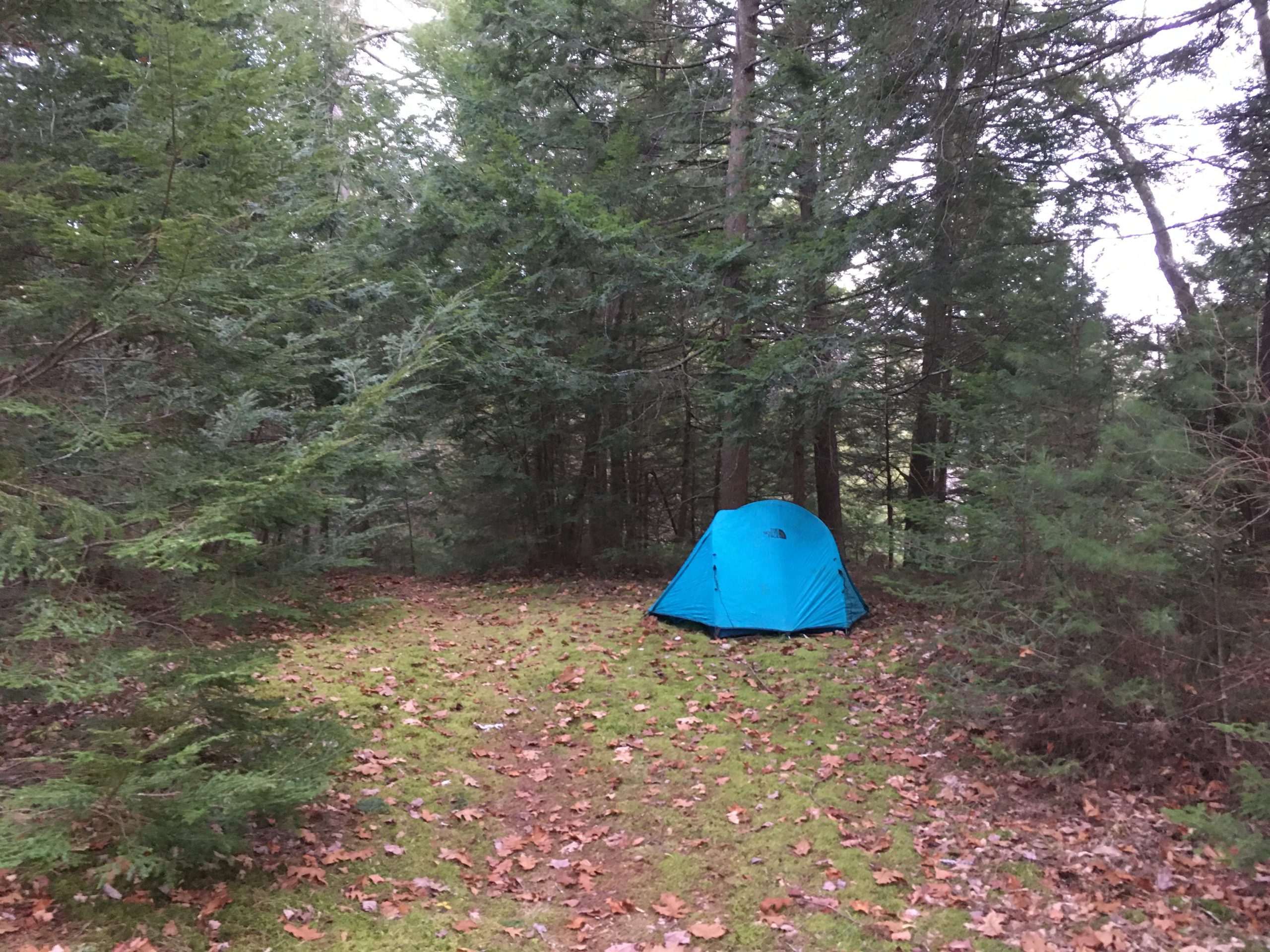
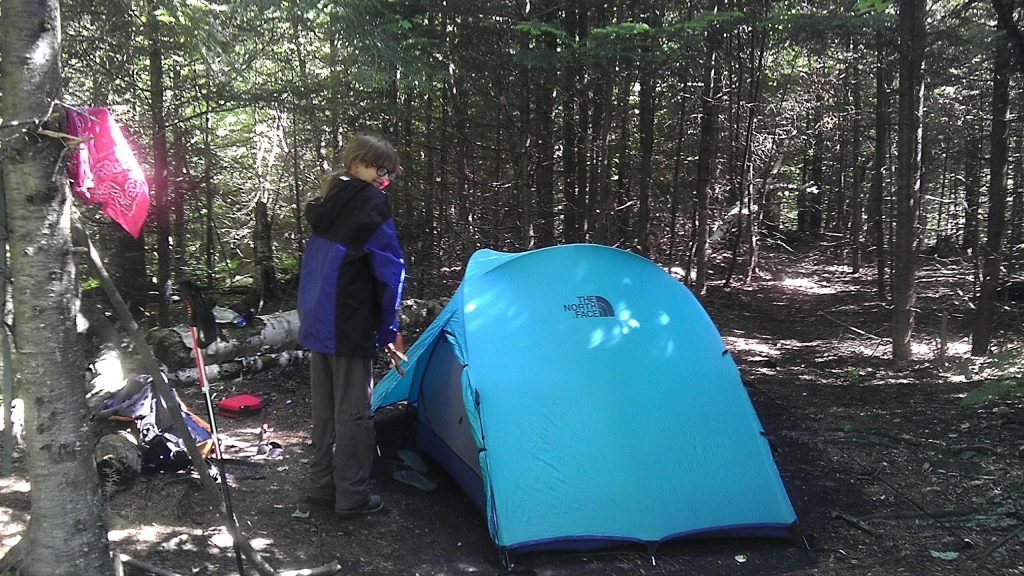
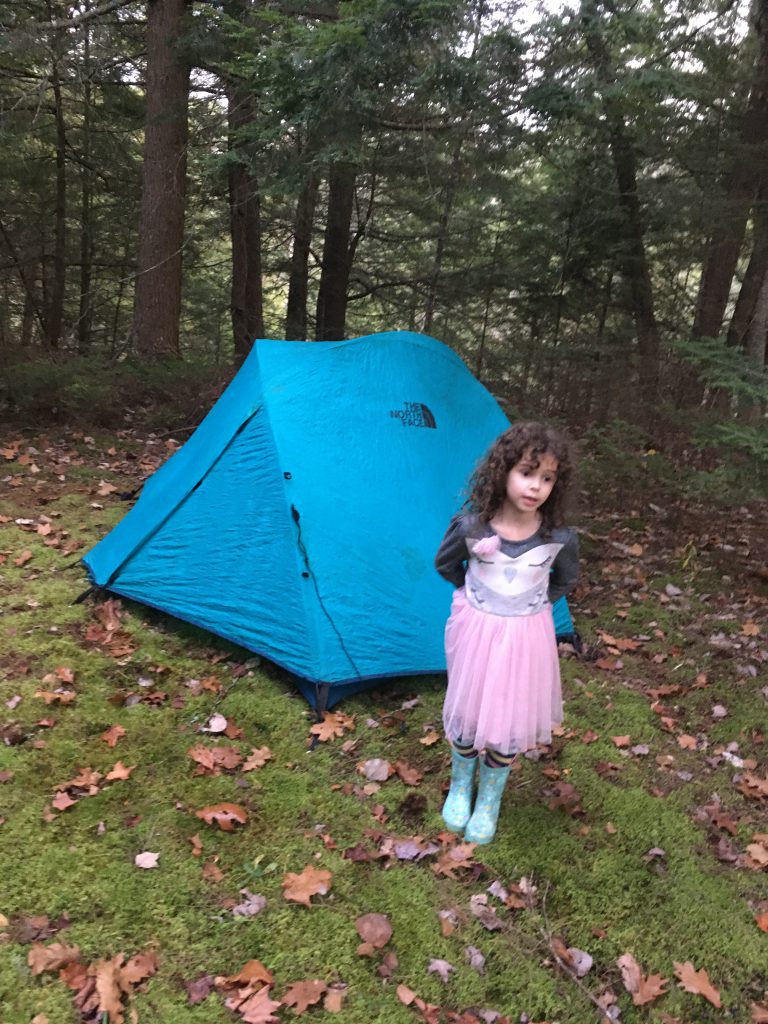
    On a lark, I grabbed my old The North Face Coriolis tent out of the shed. It smelled kind of bad, but I bought it in 1997 or 1998, like so much of my gear, at the Anchorage, Alaska REI. On its first outing, we stayed by an alpine tarn in Hatcher Pass. In the years to come, that tent went from the wilds of Alaska, several trips to the Adirondacks, section hikes of the Appalachian Trail in Pennsylvania and Virginia, all over the Sierras, and now, for the first time, in Maine.

    It needs some work. After 20 years, some of the netting is torn. There’s a hole in the floor I’ll need to patch. The seams on the rainfly definitely need resealed.

    Amelia and I in the Adirondacks High Peaks

    But the aluminum poles, even with a slight memory, still are properly shock-corded. The stitching still holds up.

    I recall a longer section hike, another traveller looked at me pitching this tent incredulously and said, “don’t you want to buy something lighter?”

    #1) After 20 years in Airborne or light infantry, my body will not feel the difference between a 2lb tent and a 5lb tent.  It will feel it if my tent topples in the rain or one of my kids has to sleep cramped right on top of me, which has happened in some of the smaller non-freestanding rigs I’ve field tested.
    #2) I sleep dry in this tent, same as I did in gale force winds and a downpour the first time I used it in Alaska.  That’s 20+ years of money well-spent.

    As Jews, we have an interesting body of law deriving from Deuteronomy 20:19-20. The text tells us not to destroy trees while we’re laying siege to a city.

    As our sages looked at this, it became the basis for injunctions against waste and unnecessary damage. While I’m more likely to apply these principles to the Leave No Trace ethic, it also goes for gear. “Bal taschit,” in a way, can be applied to gear. If your Gore-Tex jacket is a decade old and isn’t fashionable, one could argue that it would be wasteful to sideline it for something fancier. Maybe you give away or recycle your old gear, and that’s fine.

    There are other considerations. With the explosion of the outdoor gear market, manufacturers are required to update models on a yearly basis, like automobiles, in order to justify you, the consumer buying a new one. We seldom think of the carbon footprint in a yearly gear purchasing cycle. The generation and shipping of those textiles, the manufacture – all parts of the supply chain, even as many companies strive for carbon neutrality, will never approach the carbon neutrality of extending your own purchasing cycle out a decade.

    Two daughters have lived in this tent in the wilds, as have four dogs and this author.

    Gear is important. Knee deep in my career, with one kid in college and two on the way, another thru-hike may or may not be in the cards for me any time soon. I live vicariously through trail documentaries. Guys like Brad McCartney, who has extensively documented his Triple Crown and amazing bike tours, doesn’t ignore gear. He posts his reviews and gear lists on his website, but they’re never a focus of some trail video.

    For me, a Jew in the wilderness, it’s about hitbodedut. It’s about the view at the top of the mountain or the bottom of the valley, and feeling that connection to HaShem.

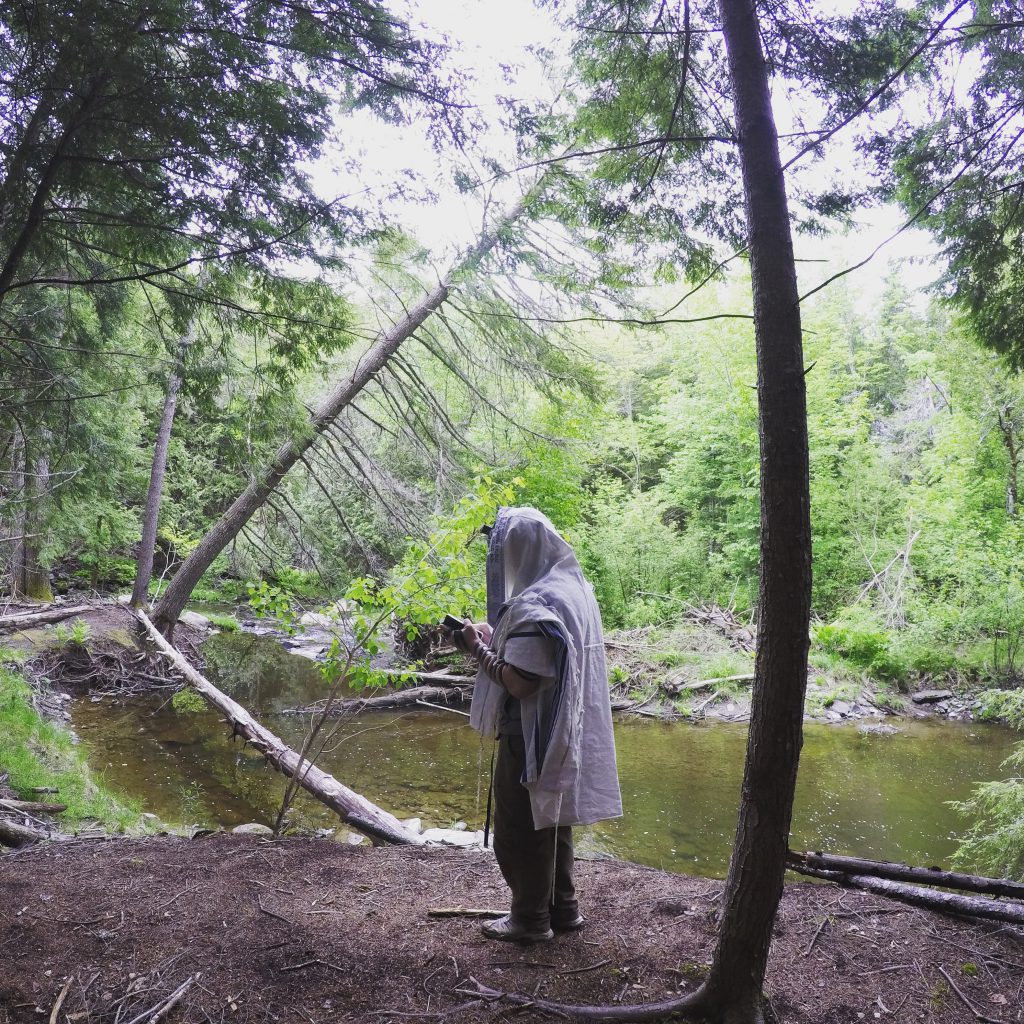
    Davening by Cove Brook in Winterport, Maine
    DCIM\100GOPRO\GOPR1264.

    The gear must be reliable and enhance your safety, of course, but it should be an afterthought.

  • Trail Recipe Series: Sephardic Trail Recipes

    Trail Recipe Series: Sephardic Trail Recipes

    In this piece, we share a couple of Sephardic recipes conducive to backcountry cooking. Common ingredients include chickpeas, ground lamb or beef, dried and fresh fruits, stuffed vegetables, and a wide array of flavorful spices.

    Just like the cuisine of Jews from Eastern Europe, Sephardic cooking includes slow-cook Shabbos recipes.

    I personally favor Sephardic to Ashkenazi cooking. Many who enjoy the broader range of flavors and ingredients feel this way. My middle daughter, who is descended from Iberian Crypto-Jews in addition to my Ashkenazi heritage, compelled us to broaden our horizons.

    For wilderness travel, we have some very exciting offerings.

    Shakshouka comes in many different forms. Tunisian Jews introduced the spicy egg variation to Israel after the mass exodus of Jews from Arab lands.

    Moroccan Jews have a variety of variations on paprika-sauced fish, and we have one that you can either use salmon (for an Ashkenazi twist) or wild-caught white fish.

    Shakshouka

    Prep & Cook: 20m
    Serves: 2
    Parve or Dairy Options

    Ingredients:
    1 tbsp olive oil
    1 red bell pepper
    1 banana or poblano pepper
    1 small onion
    3 cloves garlic
    2 tsp paprika
    1 tsp cumin
    12 oz can of tomatoes, diced
    2 eggs (or egg substitute equivalent)
    salt and pepper to taste

    1. Seed and slice your peppers.
    2. Dice your onions, mince your garlic.
    3. Heat oil over medium heat. Once hot, add peppers and onions, stir them to coat in oil, and cook for another 5 minutes (or browning). Add garlic and spices and cook until you can smell it, likely under a minute.
    4. Add tomatoes—do not drain can! Simmer for around ten minutes.
    5. Crack the eggs into the sauce, trying to keep them apart. Cover them with the mixture and cook until the whites solidify and the yoke is as consistent as you like. Try and perpetually cover the eggs with the sauce as you cook.
    6. Season to taste. Some folks like to pack feta or other cheese to top.

    KB’s Paprika Fish

    Prep & Cook: 25m
    Serves: 2
    Parve

    Ingredients:
    2 fillets of white fish, wild caught or packaged
    2 tbsp dried cilantro
    1 red bell pepper
    1-2 large garlic cloves
    1 dried red chili pepper
    Pinch tumeric
    1/2 cup water
    1 tbsp olive oil
    1/2 tbsp paprika
    salt and pepper

    Prior to cooking, you’ll want to seed and slice your bell pepper. Chop your garlic in big chunks.

    1. Place peppers and cilantro at bottom of a skillet, preferably as large a one as your pack allows.
    2. Put your fillets on top of those ingredients, and then season with salt/pepper and your pinch of tumeric.
    3. Add some of your water to the pan, cover it, and start your stove on high – bring to a quick boil, then immediately reduce to medium. Uncover your pan. Lightly simmer and baste your fish occasionally.
    4. Mix your olive oil and paprika together, and pour this red oil over your fish, trying to get them coated. Let it simmer for 10-15 minutes longer, basting again. Once the fish is red, and your water has reduced, it’s mostly good to go.

    Additional Recipes

    Do you have additional Sephardic recipes you’d like to share, especially ones you’ve made on the trail? Please comment below, or send them to us at mailadmin@kosherbackpacker.com.

    We highly suggest you try your hand at making some of the delicious Sephardic deserts, which work well with little honey packets.