Category: Hiking

A long, vigorous walk, usually on trails (footpaths), in the countryside.

  • Our (Basic) Guide to Hammock Backpacking

    Our (Basic) Guide to Hammock Backpacking

    After my go-to camping mattress deflated on a cold, winter night in a shelter in the Adirondacks, I was ready for a change.

    It was a long circuit around and up the Seward Range. I prefer tents to shelters for a variety of reasons, not the least of which is to try and mitigate airflow around me when I sleep. I’m a warm sleeper to begin with, so I like to go lean as possible on my cold weather stuff for the sake of weight. It’s a delicate balance, and any disruption can lead to a night of shivering for me.

    I couldn’t find a flat spot, though, that wasn’t saturated in a cold, early spring rain, and into the shelter I went. A side sleeper generally, the mattress deflation made a bad situation worse.

    Later, I got a couple of deals on lightweight, nylon camping hammocks, and after setting one up in a copse of trees on our 12-acre property, I was hooked. Crawling into it on a Maine summer afternoon (outside of black fly season), I fell asleep as quickly as I seem to fall asleep in the living room after 8pm. And unlike with my usual tent and mattress combination, I woke up without my 40+ body swearing at me in Yiddish.

    We’re blessed on our property that I have a trail system and some great places to experiment overnight with new gear without catastrophic failure.
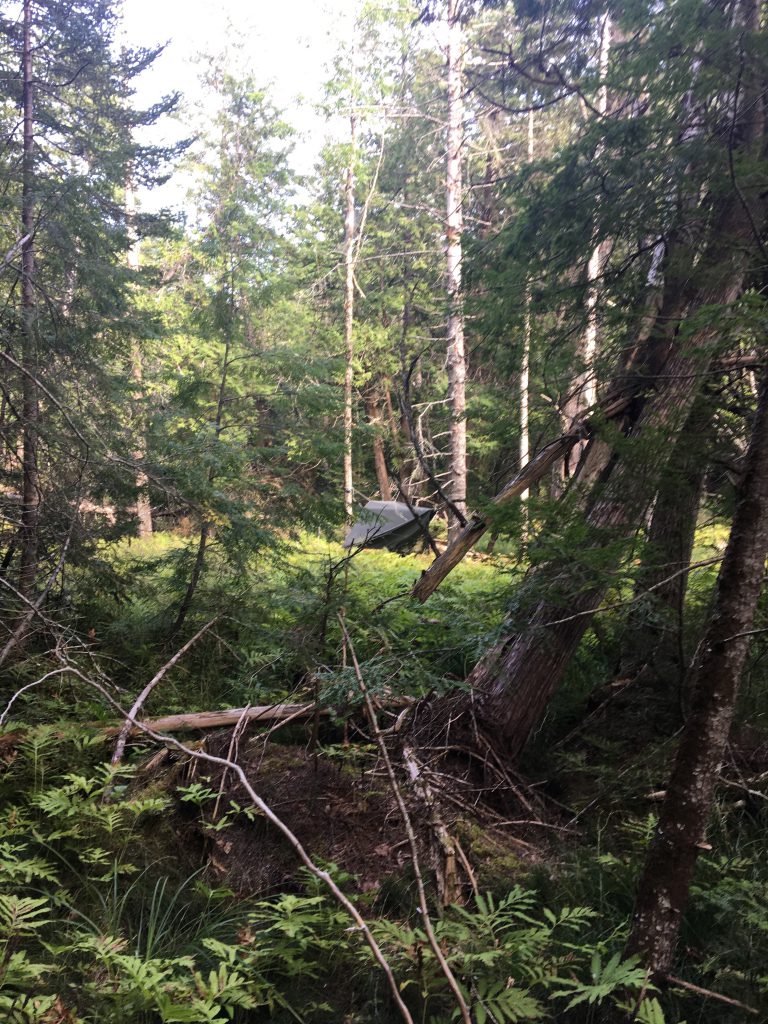
    Hanging around on the lower part of our acreage.

    I didn’t make a huge investment. I got a couple of deals on single and double hammocks, along with a lightweight bugnet, and I used the tarp from my National Guard issued gear. My toddler, Nezzie, crawled in me for the night. We were very comfortable, until the Maine chill set in.
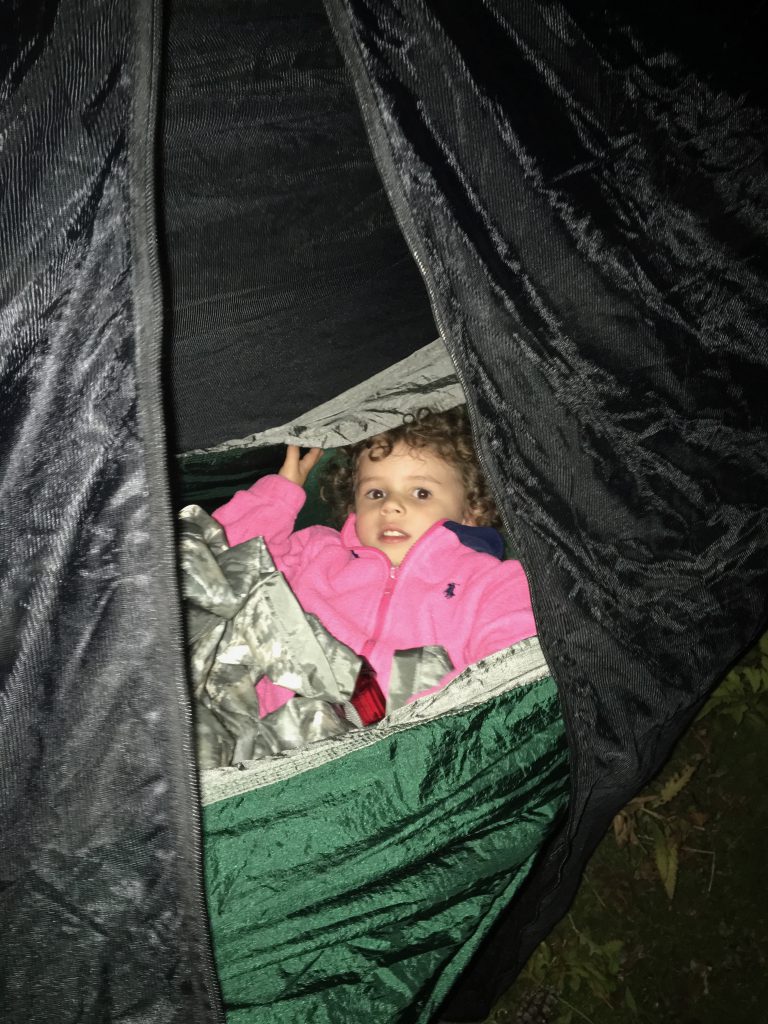
    The author’s daughter, Nezzie, loved the double hammock

    I’ve long known about the need for an underquilt, so in the pinch, I used my military issue poncho liner, to great effect.

    And that was that, I’ve decided that for my future adventures, a hammock is the way to go. And it’s worked out since.

    Staying Warm: Pad or Quilt

    One of the biggest problems is that your points of contact with the hammock have naught but a thin layer of fabric between you and the outside world, and the outside world is here to freeze your parts.

    There are those that say you can get away with a pad, and this will work. For me, a simple foam pad with cuts taped along the side to wrap the width of the hammock helped. However, it limited me to sleeping parallel with the lines of the hammock, when diagonally might have helped my back a little more on a tough night.

    The better option seems to be a quilt. I’m not listing brands here today, but I can say, you can get lightweight options without spending a ton of money. Look for products with decent reviews on Amazon. People that tell you to spend a small fortune are often correct: you get what you pay for. Still, we have options with online shopping that we didn’t have in the past, and if you look for the right keywords in reviews, you won’t be disappointed, unless you’re a serious ounce counter.

    What I like about the quilt is that it fully stops the breeze and suffers me some more sleeping options. In the middling seasons, I can still get away with a lightweight fleece throw in addition to a 30 or 40 degree underquilt. Experiences will very. Best to experiment.

    Hanging: Whoopie Slings or Daisy Chains
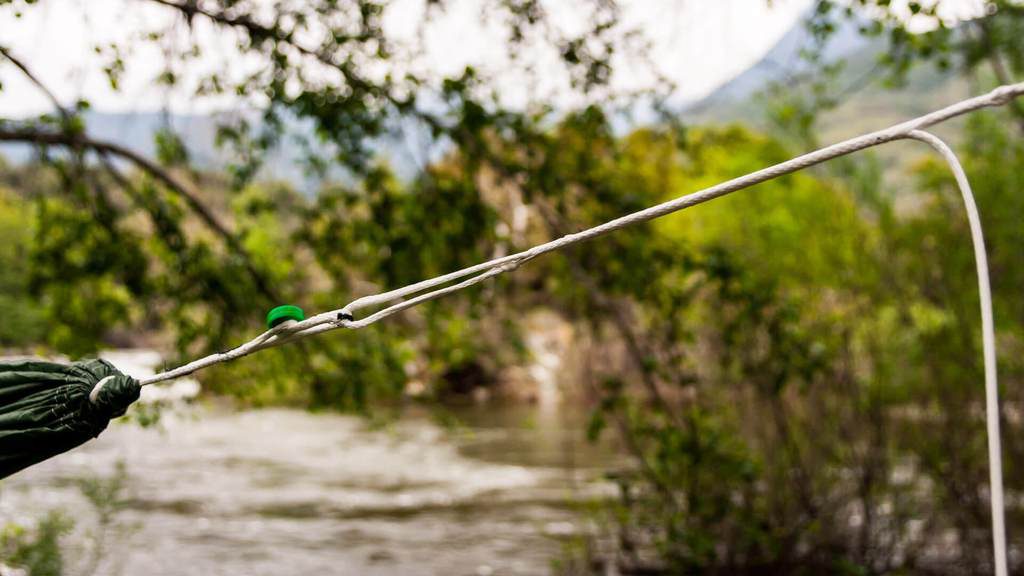
    from hummingbirdhammocks.com

    My hammocks have daisy chains, which have incremental places in either the webbing or the rope where I can place my carabiners in order to increase my hammock’s hanging tension.

    The whoopie sling is a lot more adjustable, and is sometimes lighter than the daisy chain option. The whoopie sling gives you an option for more refinement in your hang situation, and you need not break your bank buying them.

    The only thing I do discourage is using bark-damaging ropes for your hang. Do the right thing, buy or make straps that don’t eat into the trees you’re using.

    Bug Nets

    You could sleep with bug spray on you, or you can buy a bug net. Here in Maine, the black flies usually bite first and then think about the bug spray later, and even just the presence of a swarm is itself obnoxious.

    Again, you can find lightweight options without breaking the bank, or you can go all out with a combination hammock. I do like having mine non-integral to my hammock, because there are plenty of nights when I just haven’t needed it.

    Conclusion

    I like hammocks. The tarp/fly, bug net, underquilt, and straps will more than likely come in under the cost of tentage, if not in money, but also possibly in weight. And one thing I don’t struggle with on long thru-hikes is having a comfortable place to recline after a long day’s hike. It’s so eminently practical and comfortable.

    One thing that is difficult to overcome is the illusion of safety that comes with sleeping within the walls of a tent. These are fabric walls, people, not a structure fortified with sandbags. When I was stationed in Alaska, a wildlife photographer was pulled out of his tent and mauled/eaten to death. There is really not much of a security advantage in sleeping in a tent, on the ground.

    And if you’ve ever been woken up by a floating sensation, as I often have with tent camping, there’s a realization that there’s a dryness factor to hammock camping you may not have with a tent. And one thing I love a good deal is that if your fly is the last thing to come down in the morning when breaking camp, you can be reasonably sure that your gear can stay a smidge more dry than it would have otherwise.

  • Destination: Siem Reap

    Destination: Siem Reap

    Under 4 miles from the town of Siem Reap in Cambodia is one of the coolest UNESCO World Heritage sites in the world, Angkor Wat.

    Originally constructed as a temple to Vishnu in the 12th century by Suryavarman II of the Khmer Empire, Angkor Wat was converted into a Buddhist temple. Buddhist worship continues there now. It is arguably the most well-known symbol of the nation of Cambodia, a source of pride and a major tourist draw.

    Chabad Lubavitch in Phnom Penh photo courtesy Cambodia Chabad

    It is also swiftly becoming a Jewish tourist attraction, thanks to the efforts of the Chabad shaliach in Phnom Penh. There is no Chabad in Siem Reap, but they do hold Pesach seders there since 2015, and they try and hold Friday night Shabbos services in various cities throughout Cambodia, which sometimes includes Siem Reap. With proper arrangements, they can help provision the kosher travel prior to leaving Phnom Penh. You may find heschered items at local food markets. The Gershuni family can assist you.

    An important component of visiting Cambodia as a Jew is learning about the genocide under Pol Pot.  My mother worked in English as a Second Language classrooms when I was a child, so I grew up with many friends who fled the Khmer Rouge.  Learning about Cambodia’s dark times, where over 20% of their population was murdered, is very important, and you will hear first-hand survivor accounts from many Cambodians.

    Connected to the ugliness of war is the Cambodian Land Mine Museum.  Many of the guides in this museum are victims of lingering land mines.  Even if you make no plans to travel to Cambodia soon, consider a charitable donation, as it’s a worthy cause.

    Kampong Phluk

    Roughly 40 miles from Siem Reap is the floating village of Kampong Phluk.  This “village on stilts” is a rich cultural experience in Cambodia.  Plus, you can help Cambodia’s tuktuk (two-wheeled carriages pulled by motorbikes) by employing one for a cheap ride to this or numerous other lake villages near Siem Reap.

    It tickles.

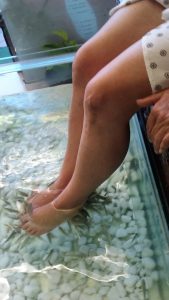
    Siem Reap itself is a real gem.  Consider visiting the Old Market, the Phare Circus, Pub Street, or even get a “fish massage” (it tickles).

    For considerably more information, visit Mad Monkey Hostel’s Siem Reap guide for backpackers!

  • 2019 Thru Hiker Profile:  Hugs and Fecteau

    2019 Thru Hiker Profile: Hugs and Fecteau

    The 2019 Appalachian Trail thru-hiking season has begun, and at The Kosher Backpacker, we want to profile long distance hikers of interest.

    There’s nothing more near and dear to my heart than the role of national treasures like our National Trails play in emotional, physical, and spiritual healing for our veterans.

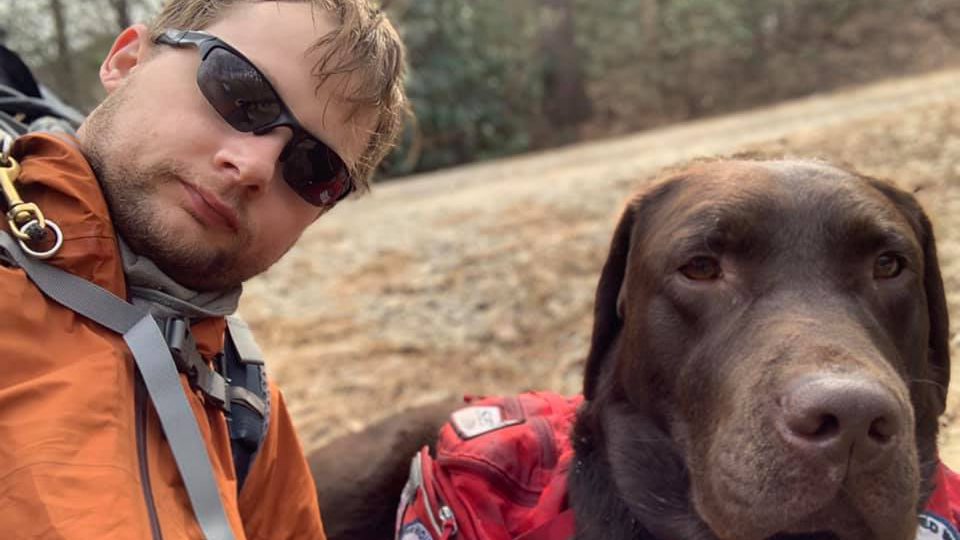
    So meet Michael Thorpe, AKA Hugs, and Fecteau, his pooch.
    Michael is a 12-year veteran of the Marine Corps and the Army.  He deployed three times to Iraq (Fallujah and Al-Asad) and Afghanistan (near Ghazni and Paktika Province).  He was first diagnosed with PTSD in 2007 on his second deployment.  He didn’t do much with that diagnosis, thinking of it as “normal,” finally seeking treatment after a motorcycle accident in 2015.  He was medically discharged from the military in 2016, and continued treatment.

    In his own words:

    Life with PTSD is not easy. In fact, it’s an everyday struggle. I am hiking this year to raise awareness for people who struggle with PTSD. To show that you can have a quality life. Some people who struggle with PTSD tend to feel trapped inside the walls of their home, doctors offices, treatment centers and anything that keeps them from really enjoying their life. I want that to change. I want them to know that you CAN live a life without fear. I want to be open about my PTSD and be an ear for those struggling. I want to share my struggles in hopes of helping others. I also want to share the things that have made impacts on my life and the biggest one to date is Fecteau. I see multiple doctors on a weekly basis to treat my PTSD so, for me, hiking is a great vacation. In 2017, when I was on the trail last, I dealt with some issues that come with PTSD. My anxiety and nightmares kept me from sleeping in the beginning, but as I went along the trail, it mostly subsided. So now, I hike. I hike because it is my escape. Nature is my freedom from it all.

    Hugs and Fecteau are hiking to raise money for Paws Assisting Wounded Warriors (PAWWS).  This organization’s purpose is to aid military veterans afflicted with PTSD or TBI (traumatic brain injury) by pairing them with service dogs.  These dogs help a veteran regain their place in civilian society and cope with their triggers or lingering issues, in order to help them achieve more independence.  Dogs are given to veterans free, covering also their food, veterinary care, and equipment.

    At the time I write this, they’ve been on the trail for roughly 20 days, reaching Fontana Dam.

    Please, consider donating to this program in the name of Hugs and Fecteau.

    Also, follow their progress on Facebook here: https://www.facebook.com/pg/Fecteauandhugs.

  • Court Denies Pipeline on AT in Virginia

    Court Denies Pipeline on AT in Virginia

    (RICHMOND, Va.) — A federal appeals court on Monday denied a request to reconsider a ruling throwing out a permit for the Atlantic Coast Pipeline to cross two national forests, including parts of the Appalachian Trail.

    The 4th U.S. Circuit Court of Appeals rejected a request from lead pipeline developer Dominion Energy and the U.S. Forest Service to hold a full-court rehearing.

    <a href=”http://time.com/5537783/court-rejected-request-hearing-pipeline-appalachian-trail/”>More here!</a>

  • The Kosher Backpacker, The Wandering Jew

    The Kosher Backpacker, The Wandering Jew

    This is a modified version of the foreword that appears in my book, The Kosher Backpacker, as an introduction to this site.

    – Brian Kresge, aka “Strings Attached”

    I saw a mountain lion in the Adirondacks.

    It was a long, humid weekend in the early 2000s.  My late Labrador Retriever, Max, and I took in a backpacking trip in the High Peaks.  The humidity became rain.  This seemed to discourage too much backcountry travel, as Max and I had the woods and peaks to ourselves.  The ceiling was still low enough to command decent views, so we still ascended Lower Wolfjaw.

    Coming down Bennies Brook Slide was shaping up to be a monotonous, slippery mess.  I happened to glance back up towards the peak, and I saw a brown shape saunter out of the woods on the right side.

    It looked at me.

    I looked at it.

    You hear sightings like this year after year, but none of them are proof that the Eastern Mountain Lion is not extinct.  I know what I saw, but I had a suboptimal digital camera, the kind that barely took decent resolution photographs, and in those days, I kept it in the top of my back, not easily accessible.  I cannot prove what I saw, and even if I had taken a picture, my candid-capable camera would have produced a questionable fawn splotch against the gray and green background.

    It’s still one more mountain lion than I’ve seen observant Jews on “the long trail.”

    When I’ve hiked through the northeastern Pennsylvania, New Jersey, and New York sections of the Appalachian Trail, or in the Catskills, or when I’ve been on hikes through popular areas of the White Mountains, I’ve met families of religious Jews.  In all cases, it was a day hike.

    I have yet to meet a Torah-observant Jew on a thru-hike.  I don’t believe it’s because Jews don’t have a relationship with the outdoors, or our summer camps wouldn’t be as central to young Jewish identity as they are.  This also isn’t to say there aren’t any or haven’t been any—after all, if you’re reading this, you know of at least one.  We may not literally have crossed paths.

    This website is designed to be a compliment to The Kosher Backpacker, but also as a resource to Jewish and non-Jewish hikers alike.  Kosher recipes, halachic guidance on aspects of hiking and thru hiking.  We’ll even help you with your own trail journal.  We have a suite of apps for kosher backpackers, including a GPS-enabled Appalachian Trail guide.  We will, as time permits, add Pacific Crest and Continental Divide Trail guide apps as well.